
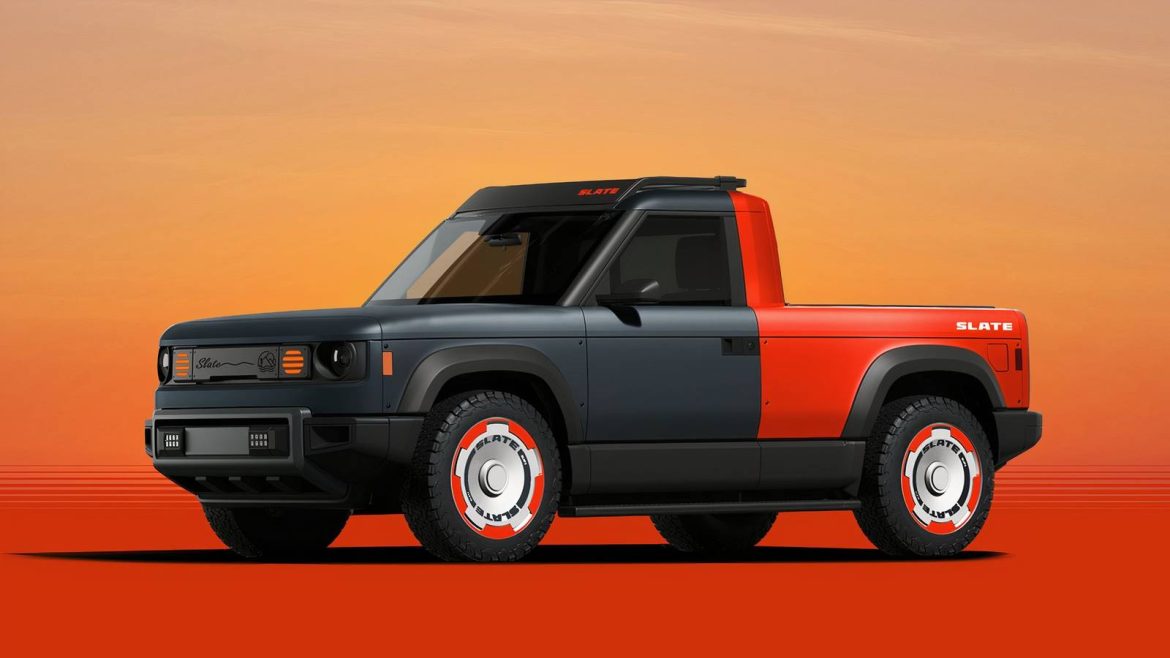
Carvana, the used-car platform known for online sales and vending machine dealerships, could take a financial stake in Slate Auto, the Jeff Bezos-backed EV truck startup targeting a $25,000 price point. SEC filings reported this week indicate Carvana holds a warrant to purchase shares in the company—a move that signals more than passive interest from one of the most recognizable names in vehicle retail.
For buyers who’ve heard Slate’s name but aren’t sure what the startup is actually building, the Carvana connection is a good reason to take a closer look. Slate is chasing something neither the Rivian R1T nor the Cybertruck has managed to deliver: an electric pickup truck that a regular person can actually afford.
What Slate Is Building—And What It Costs

Slate Auto’s truck is designed around a single, deliberately simple premise: strip the vehicle down to what a truck needs to be, price it under $30,000, and let buyers customize from there. The target starting price sits in the mid-$20,000s, which would make it the most affordable electric pickup on the U.S. market by a significant margin. The Rivian R1T starts north of $70,000. Even Ford’s F-150 Lightning, the mainstream benchmark, opened around $50,000 in its base configuration before being discontinued.
The truck’s proportions are deliberately conventional—a traditional cab-and-bed layout rather than the angular, polarizing wedge of the Cybertruck. Slate has been explicit about this design choice: the goal is a truck that looks like a truck, appeals to buyers who use trucks as tools, and doesn’t require a lifestyle commitment to own. Range figures haven’t been fully locked down publicly, but the company has pointed toward a base range in the 150-mile neighborhood with an extended-range option pushing further—a tiered approach that keeps the entry price low while giving buyers a path to more capability.
Uncovering The Hidden Features Of Slate’s Customizable Cabin Design
No infotainment, no radio, no fluff. The Slate takes a different approach to interior design, allowing you to decide exactly how to spend your money.
The Customization Angle That Sets Slate Apart

Where Slate gets genuinely interesting is its interior philosophy. The base truck ships with almost no infotainment—no built-in screen, no radio, no premium audio system. That’s not an oversight; it’s the point. Slate’s cabin is designed as a blank canvas, with a modular approach that lets owners add exactly what they want and skip what they don’t. Buyers who want a tablet-style display can add one. Those who just want a work truck can leave it bare and save the money.
This approach also extends to the exterior. Slate has leaned into the idea of a truck that buyers can personalize over time rather than spec out once at the dealership. It’s a meaningful philosophical departure from how most automakers—EV or otherwise—sell vehicles, and it’s one reason the startup has attracted attention beyond the usual EV-enthusiast circles. Michigan recently committed $5 million to support Slate’s operations, another signal that the company has cleared at least some of the credibility hurdles that trip up early-stage startups.
Why Carvana’s Stake Actually Matters

A warrant to purchase shares isn’t the same as a full acquisition or a formal partnership, but it’s not nothing either. Carvana built its business on frictionless used-car transactions, and a stake in an EV startup with an aggressive price target suggests the company sees Slate’s trucks eventually flowing through its ecosystem—either as used inventory or through some future retail arrangement. For a startup still working toward production, having a major retail-side player in its corner adds a layer of distribution credibility that pure venture backing doesn’t provide.
Slate already counts Jeff Bezos among its backers, which gave the company an early profile boost. Adding Carvana to the picture—even in a preliminary, warrant-based capacity—rounds out the story in a different direction. Bezos signals capital. Carvana signals that someone who moves cars for a living thinks Slate’s trucks will eventually be worth moving.
TopSpeed’s Take

The Bezos connection, and then the potential link to Carvana both have our interest piqued. What Slate is attempting is fascinating. It’s moving differently than the rest of the industry. Amazon and Carvana did things differently, too, and they shaped their respective industries in their own ways. Simply being associated financially with those companies doesn’t necessarily spell instant success for Slate, nor does it foretell industry disruption, but it’s hard not to notice the pieces aligning while we wait for the truck to actually reach the market.
Source: Carscoops
