
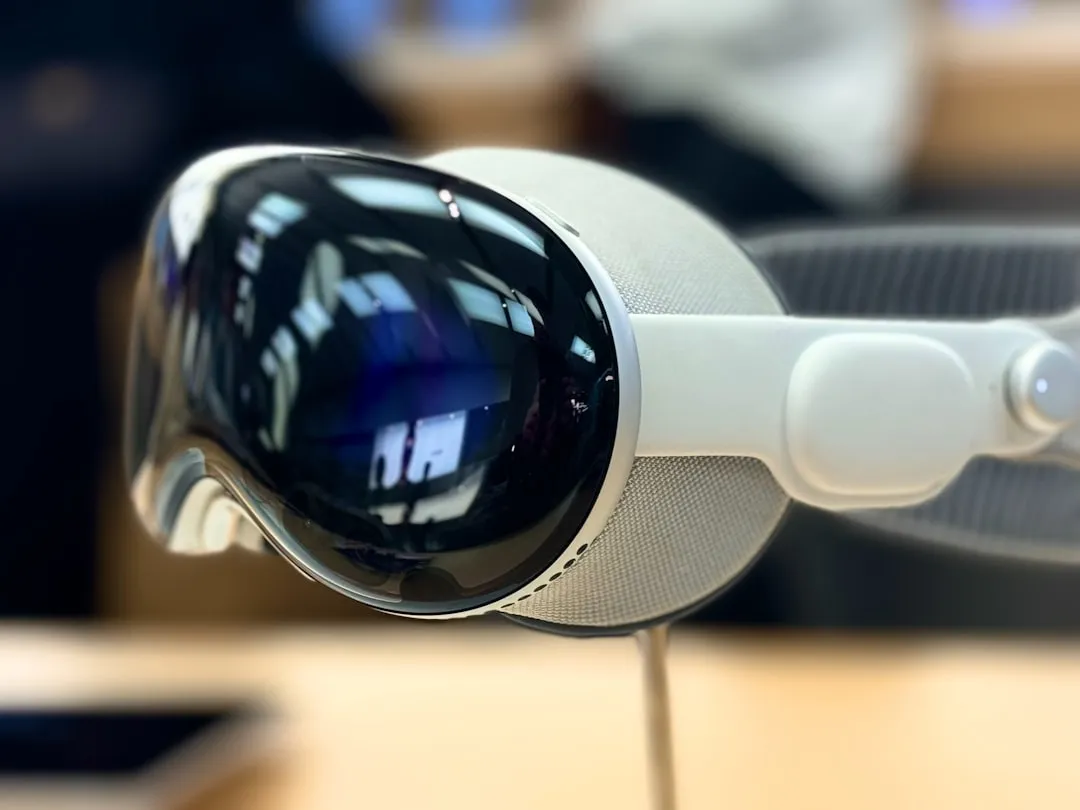
visionOS 27, announced at WWDC26 this week, opens Apple Vision Pro to third-party tracked spatial accessories for the first time, giving developers a formal framework for motion controllers and tracked physical hardware. The developer beta is available now. Apple did not announce any committed third-party controller products at the event, AppleInsider and Road to VR reported.
The framework exists. Shipping hardware does not.
Vision Pro launched with a clear philosophical bet: hands and eyes are sufficient. Physical controllers barely got a mention at launch, with only a standard PlayStation gamepad acknowledged for playing 2D iPad games, AppleInsider noted. visionOS 27 is a meaningful shift from that position, opening the platform to custom tracked hardware in ways the original release never contemplated.
Apple’s two-tier system for visionOS 27 spatial accessories
Apple draws a clear line between two categories of physical input, each with different hardware requirements and performance trade-offs.
A spatial accessory is an active electronic device defined by three required components: an LED constellation for optical tracking, an IMU chip for positional data, and a Bluetooth connection to the headset. Buttons and haptic feedback are optional. That combination of IR LEDs and IMU is the established industry standard for VR motion controller tracking, the same approach used by Meta, Sony, and Valve hardware, Road to VR reported. Spatial accessories can also send input data from buttons and thumbsticks, per the same report.
A tracked object can be tracked without any onboard electronics. Vision Pro recognizes and follows a physical item using an accurate 3D model embedded in an app. For better performance, a third-party fob can be clipped onto the object to supplement visual tracking. The WWDC26 flashlight demo illustrated the full spatial accessory path: trackable LEDs, an on/off button, Bluetooth, and a bundled 3D model reference let Vision Pro lock onto the prop reliably, according to the Apple Developer session. The globe demo took the simpler route a physical globe tracked entirely through a 3D model reference with no attached hardware, matching UI overlaid in real time as the globe spun.
The practical difference between the two tiers comes down to update frequency. Passive object tracking without LED markers runs at lower frequency than a full spatial accessory, which limits it for fast-moving or precision-sensitive applications, AppleInsider reported. Tracked objects are the low-friction path for developers who want spatial awareness without manufacturing custom hardware. Spatial accessories are the high-performance option when latency and positional accuracy genuinely matter.
This two-tier structure also reflects how the platform has evolved. Earlier visionOS versions supported passively tracked objects recognized by appearance, with no active communication with the headset. visionOS 26 introduced the first generation of spatial accessory support. visionOS 27 opens that full framework to custom third-party hardware for the first time, according to the Apple Developer session and Road to VR.
Tracking performance and developer APIs
Spatial accessories track at up to the headset’s display refresh rate, nominally 90Hz and possibly up to 120Hz, and can maintain lock even when partially obscured from the headset’s cameras, Road to VR reported. That occlusion resilience matters for gaming and physical simulation use cases, where a hand or body part frequently blocks the line of sight to a held controller.
Passive object tracking has also improved in visionOS 27. A new high-frame-rate tracking mode and extended model training through Create ML bring lower latency and more reliable tracking for objects in motion, per Road to VR and the Apple Developer session. Separately, a new metric-space pose option gives developers accurate real-world coordinate data rather than only display-corrected positions, which matters for applications that need to reason about physical geometry rather than just render something plausible. The same object tracking capability is arriving on iPhone through a new ARKit API, extending the toolset well beyond Vision Pro.
The API surface is specific and available now. GCSpatialAccessory handles accessory discovery; AccessoryTrackingProvider manages the ARKit session. One practically useful detail: accessories can be swapped in and out without restarting the session, which matters for training tools or games where a user switches between physical props mid-use. Apple describes the category as “custom tracked hardware that extends the Apple Vision Pro input model with plug-and-play physical controllers,” per the Apple Developer session.
Game engine support is also in place. Unity PolySpatial, Unreal Engine, and Godot all receive updates in visionOS 27 that include spatial controller plug-ins, per the Apple Developer session. That matters because most serious games and simulations targeting Vision Pro are likely to come through one of those pipelines rather than native Apple frameworks, and spatial accessory support needs to work there to be practically useful.
The ecosystem bet, and where it stops
Apple is pushing hardware makers to build the accessories rather than building them itself. The company has partnered with DFRobot and MIKROE on off-the-shelf tracker modules that serve as reference hardware and development kits, described in the Apple Developer session as usable immediately for testing or buildable into apps without custom hardware development. Both will be available later this year; pricing was not disclosed, Road to VR reported.
The system-wide registration model is the structural piece that could make a broader accessory market viable. A spatial accessory’s tracking profile, bundled in a companion app, registers the device across the entire visionOS platform: any app can then recognize and use it without separate integration work. As Apple put it in the WWDC26 session, the profile “registers your accessory system-wide, so any app on Apple Vision Pro can use it,” Road to VR reported. That changes the economics of building for the platform. A controller manufacturer publishes once and gets compatibility with every visionOS app automatically, with no per-title licensing negotiations.
The steering wheel demo shown at WWDC26 illustrated the most compelling application. A standard wheel rig with a tracking fob clipped on let an app overlay a full 3D vehicle around the physical hardware, the kind of setup that would work for racing simulators like iRacing, AppleInsider noted. Motion-controlled gaming, physical AR props for training environments, precision tools that benefit from held input these are the categories where hand tracking was always a poor fit, and where the new framework opens genuine possibilities.
They are also niche categories relative to Vision Pro’s already limited installed base. Apple’s system-wide registration model removes one integration hurdle, but not the hardware risk. Designing, certifying, and manufacturing a physical controller for a headset with a small installed base is a different calculation than registering a software profile. Certification requirements and commercial terms for accessory makers were not detailed in the WWDC26 sessions, AppleInsider and Road to VR noted. A platform that supports controllers is not the same as a platform that has them.
visionOS 27 ships to all Vision Pro users this fall, per 9to5Mac. What Apple has done is remove the platform-level excuse: developers and hardware partners who wanted to build tactile, controller-driven experiences for Vision Pro previously had no framework to do it. Now they do. Whether any of them decide it’s worth the investment is the question the WWDC sessions left unanswered.
