
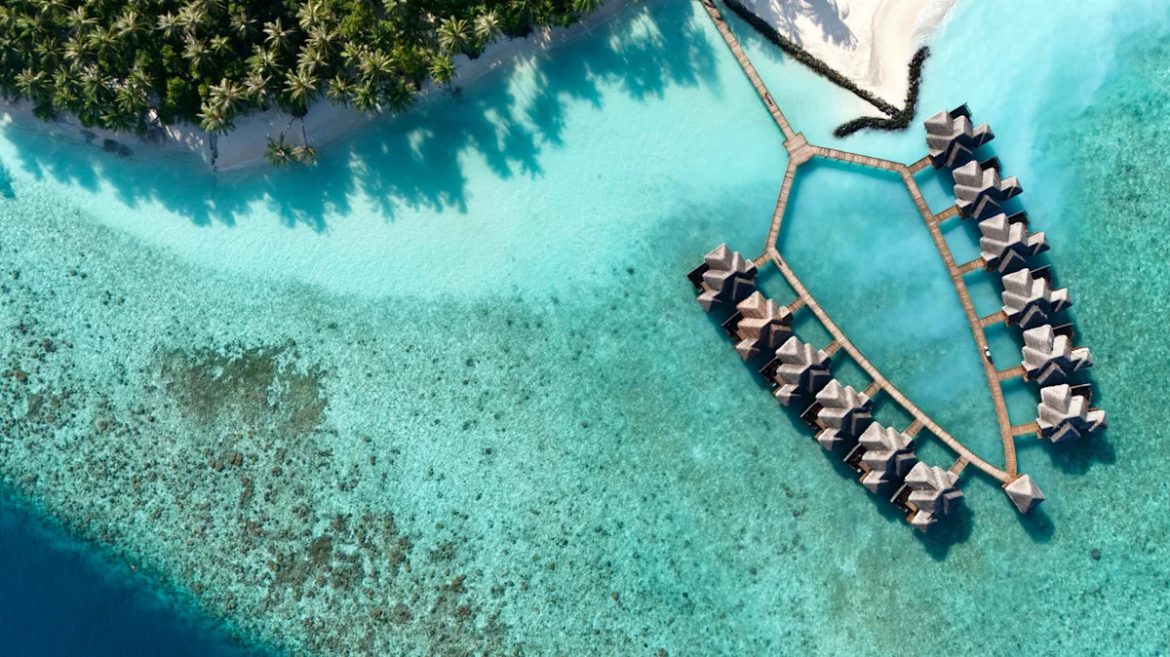
The Maldives has spent years cementing its reputation as one of the world’s ultimate luxury tropical destinations. The island nation’s postcard-worthy villas, jaw-dropping blue lagoons, and some of the world’s most luxurious private islands like Kudadoo and Velaa have helped turn it into a bucket-list destination for many tourists around the world. However, in 2026, more travelers appear to be reconsidering vacationing in the Maldives, with numerous factors driving this change. Between rising travel expenses, flight disruptions tied to instability in the Middle East, and shifting vacation preferences, the Maldives is facing a noticeable slowdown in tourism growth.
Recent tourism data paints a complicated picture. While some online claims dramatically overstated the situation by suggesting that the Maldives was “90% empty,” the country did see tourist arrivals fall by nearly 20% in March 2026 compared to the same month in 2025. However, it’s important to point out that arrival numbers steadily rose from mid-2025 to February 2026, but saw a sharp decline last March when 525 flights were canceled. In recent weeks, tourism arrivals have remained slightly below 2025 levels, which may be attributed to increasing fuel prices, geopolitical instability, and an overall change in travel habits. It’s also the start of the slow season in the Maldives, as high season typically ends in late April.
Read more: Florida Beach Towns That Could Pass For The Caribbean
Rising costs are making the Maldives less appealing
View of over the water bungalows and turquoise water in the Maldives – icemanphotos/Shutterstock
One of the biggest factors impacting Maldives tourism in 2026 has little to do with the islands themselves. Ongoing instability and regional tensions in parts of the Middle East have continued to ripple across global flight networks. Because many travelers reach the Maldives through Gulf carriers and Middle Eastern hub airports, disruptions, rerouted flights, and higher fuel costs are making the journey more complicated and expensive. For instance, Beond, a business-class-only airline, has temporarily suspended flights to the Maldives from Europe, which could last until the start of high season.
Added costs and reduced routes come on top of a destination that already carries a reputation for luxury-level pricing. Even travelers who score discounted resort rates often encounter additional costs after booking. Seaplane or speedboat transfers between the capital city of Malé and resort islands can add hundreds of dollars per person. Meanwhile, dining, excursions, and drinks at remote resorts often come with premium pricing. The departure tax cost is also dependent on the class you’re flying — fees went up significantly at the end of 2025. This means that if you’re flying business class from the Maldives, it will cost you twice as much in departure fees.
For some travelers, this value equation may no longer feel convincing. A single week in the Maldives can easily rival the cost of a multi-destination trip through Southeast Asia or Europe. Budget-conscious travelers, especially younger tourists, increasingly appear willing to sacrifice overwater villas in favor of destination dupes where their money stretches further, and experiences feel more varied — especially right now.
Travelers are choosing more experiential destinations instead
Reef manta ray under the water in the Maldives – Jan Leya/Shutterstock
Another reason some travelers are moving away from visiting the Maldives in 2026 is changing travel priorities and the rise of experience-first travel. Many tourists increasingly want vacations that offer unique experiences and more engaging activities. While the Maldives excels at privacy and relaxation, its isolated resort structure can feel limiting for travelers seeking a more immersive trip. That’s not to say that the Maldives doesn’t offer experiential travel options. Tourists can, for example, help injured turtles during their vacation at a Maldives resort or even take cooking classes to learn more about the local cuisine.
Nearby destinations are benefiting from this shift to experience-first travel. Sri Lanka, an island nation in Asia with verdant forests, forts, and beaches, is one of 2026’s fastest-growing destinations. It’s emerging as a popular alternative for travelers who still want tropical scenery without committing to Maldives-level prices. Visitors can combine beaches with wildlife safaris, mountain train rides, historic sites, surfing, and food experiences all within one trip. Other destinations, like Bali and Thailand, continue to attract travelers seeking a mix of luxury and flexibility at a lower overall cost.
Environmental concerns are also playing a role for some travelers. Eco-conscious tourism continues to grow in popularity, and some vacationers increasingly favor destinations where they can engage more directly with local communities or participate in lower-impact travel experiences. The Maldives remains heavily dependent on long-haul international tourism and imported goods, which can make some travelers question the sustainability of ultra-luxury resort vacations. That doesn’t mean the Maldives has suddenly become unpopular. The islands remain one of the world’s most recognizable luxury beach destinations. But in 2026, more travelers seem willing to admire the beauty of the Maldives on social media while booking a vacation somewhere else.
Ready to discover more hidden gems and expert travel tips? Subscribe to our free newsletter and add us as a preferred search source for access to the world’s best-kept travel secrets.
Read the original article on Islands.
