
We may receive a commission on purchases made from links.
Some breakthrough technologies still feel like they were brought to life from fiction, even when they’ve been around for a while. That’s because we learn to apply them in our daily routines through the apps and gadgets they power, but we never actually take the time to find out what makes these technologies tick.
In this roundup of technologies with magic-like qualities, we aim to give a simplified explanation of how they work. This isn’t to demystify them, as they will never fail to impress, but to better appreciate what lies beneath the software and hardware that use them.
We discuss generative AI that makes images and videos, bone conduction headphones that let you hear music without blocking your ears, and robot vacuums that map your entire home so they know where to go and what to avoid. If you want to take a peek at what makes these technologies work like magic, read on and find out a bit more about the digital sorcery that give them life.
Editing photos with AI
Just like how wizards can summon creatures or make things vanish by chanting spells, you can now easily edit pictures using generative AI. With your choice of photo editing app, you can add or remove objects and adjust brightness, color, and other nuances. You’ll be able to change backgrounds, erase photobombers, and make a gloomy day look sunny. These things take some time to do manually, but with AI, they’re done in seconds.
Like other AI deep learning models, generative AI that powers photo editing apps is trained on a massive volume of data. This enables AI to automate all kinds of tasks, and as learning continues, its accuracy and efficiency improve. So when you use an app to remove a person in a picture, AI completes the task by repeating what many photo editors have done before, but at warp speed.
Protecting assets with facial recognition
Similar to magical tools recognizing their masters, devices such as smartphones and laptops are using facial recognition to prevent unauthorized access. The technology also secures apps that contain sensitive information or provide access to money, such as those for banking and online shopping. While there are facial recognition features that are controversial, the technology is reliable and quick when used for gadget protection.
Facial recognition falls under biometric technology, which uses physical characteristics such as fingerprints and iris patterns to identify people. When using it to unlock your phone, it captures an image of your face through your device’s camera, identifies unique characteristics such as the shapes of your eyes and nose, and then compares them with those of the face that’s stored in its database when you set up the feature. If they’re identical, your phone unlocks. This whole process happens in the blink of an eye.
Understanding languages with translation earbuds
It’s pretty cool to understand foreign languages without having to take out your smartphone. Instead of having to rely on an app, wearing translation earbuds will let you hear unfamiliar words in your native tongue in real time. This will come in handy when you’re abroad, not just when speaking to locals but also to understand announcements such as in train stations.
Whether you choose to go with dedicated translation earbuds like the Soundcore AeroFit 2 AI Assistant, hook up Google Translate to your headphones or Google Pixel Buds, or use the Live Translation feature of Apple’s AirPods, the technology works in similar ways. Microphones in your listening device pick up speech in one language, which is then processed on the device itself or in your paired smartphone. The AI that powers the technology identifies the language, transcribes the speech to text, translates it to your language, then sends it back as spoken words. All of this happens in a second or two, and it’s helped by other features such as noise cancellation, which we’ll get to next.
Maintaining focus with noise canceling headphones
Wearing noise-canceling headphones is like casting a spell to place a protective bubble around you. Its name is exactly what it does — it cancels noise from the environment. Whether you’re in a cafe, a bus, or any public space, you’ll be able to focus on whatever show you’re watching, listening to, or working on.
Headphones with active noise cancellation (ANC) use microphones to listen to your surroundings, like translation earbuds. However, instead of identifying speech, they pick up ambient noise. A processor then inverts the soundwaves, and the output is transmitted through speakers inside the headphones to neutralize the noise. Some headphones have adaptive ANC, which is a more advanced form of the technology that automatically adjusts the level of noise canceling depending on the environment. Most ANC headphones also have a transparency mode that uses the microphones to let the sounds from around you through to your ears, without taking off your headphones or turning off your music.
Listening to music with bone conduction headphones
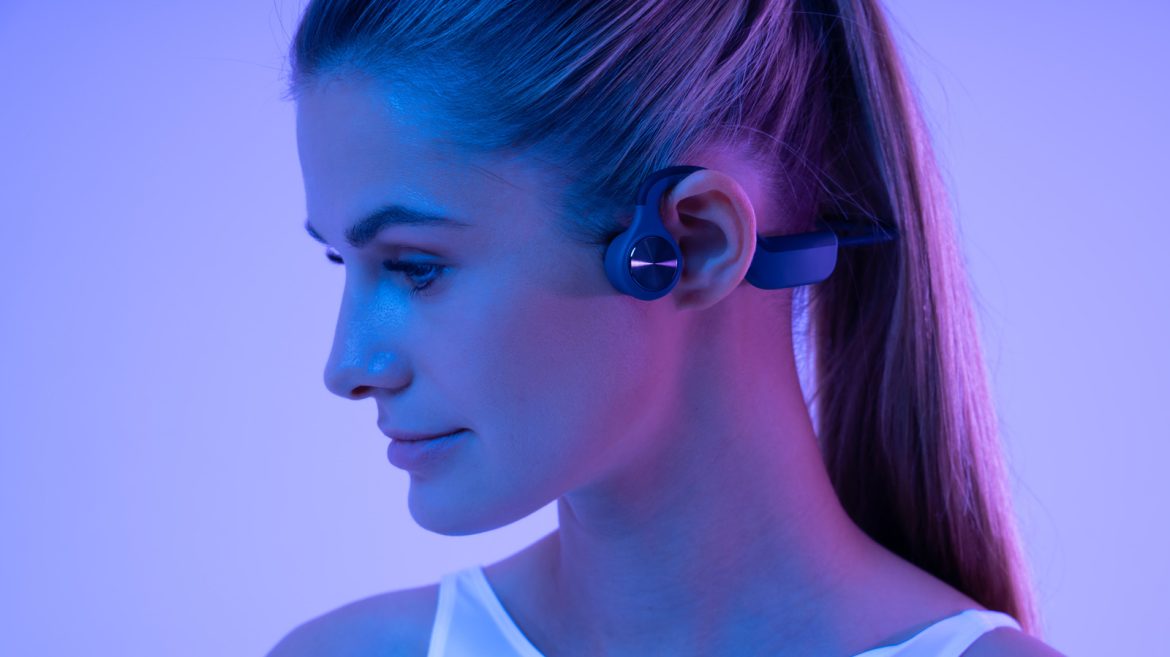
Bone conduction headphones help you stay aware of your surroundings while listening to audio, which is important when crossing the street or jogging, among many other instances. They won’t cover your ears, but they’ll still let you hear and enjoy music.
Unlike traditional headphones that blast sound through the air in your ear canals to your eardrums, bone conduction headphones transmit vibrations through your skull and directly to your inner ear. Your brain processes these vibrations the same way, interpreting them as sounds, and only you will be able to hear them. You’ll have situational awareness with bone conduction headphones, with other advantages such as better hygiene and improved comfort, as you’re not covering your ears or inserting anything into them. Soon, you may even get to try bone conduction lollipops, which we’ve flagged as one of the strangest CES 2026 gadgets.
Eliminating cables with wireless charging
We’re all used to charging devices with cables. Wireless chargers, however, reduce the need for cords, and it’s always satisfying when they work. Like sparks flying out of a wizard’s fingers, transmitting electricity to smartphones wirelessly never ceases to amaze. Wireless chargers still need to be plugged in themselves, but with no cables connecting to your devices, there’s less clutter and less risk of tangled cords.
Instead of cords that transfer energy from wall outlets to gadgets, wireless chargers contain coils that create electromagnetic fields. If your gadget is compatible with wireless charging technology, it has a coil that converts energy from the fields into electrical currents to charge its battery. Your device’s battery will keep charging as long as it’s properly placed on the wireless charger, and Apple’s MagSafe uses magnets to ensure perfect alignment.
Navigating houses with mapping in robot vacuums
Robot vacuums keep getting smarter, and seeing them create digital maps of your home is a sight to behold. With these maps, the devices are able to clean more efficiently as they won’t miss any corner of the house, and you can tell them to focus on specific rooms or areas. Not properly preparing your home is one of the common mistakes of robot vacuum owners, but these gadgets are becoming so much better at recognizing rooms and obstacles.
The mapping technology found in robot vacuums includes Light Detection and Ranging (LIDAR), which creates maps by using lasers to scan the surroundings, and Visual Simultaneous Localization And Mapping (SLAM), which makes maps from real-time images captured by cameras and sensors. Robot vacuums also emit infrared light waves to measure distances and detect objects. All of this makes them experts in navigation, so you’ll just have to say the magic word to get robot vacuums to clean your floor the way that you want.
Exploring new worlds with virtual reality
Wearing a virtual reality headset feels like stepping into an entirely new world. Immersive gaming dominates virtual reality, but the technology has a wide range of applications, such as practicing skills for dangerous situations and providing virtual tours of remote locations for real estate or tourism purposes.
Virtual reality works by stimulating your senses to make a virtual world feel real. The technology accomplishes this with displays and speakers, and software that converts a person’s movements in the physical world into virtual reality using input from the headset’s sensors. Virtual reality headsets used to require a connection to a computer to process information, but recent models like the Meta Quest 3 are standalone devices that don’t need any cables at all.
