
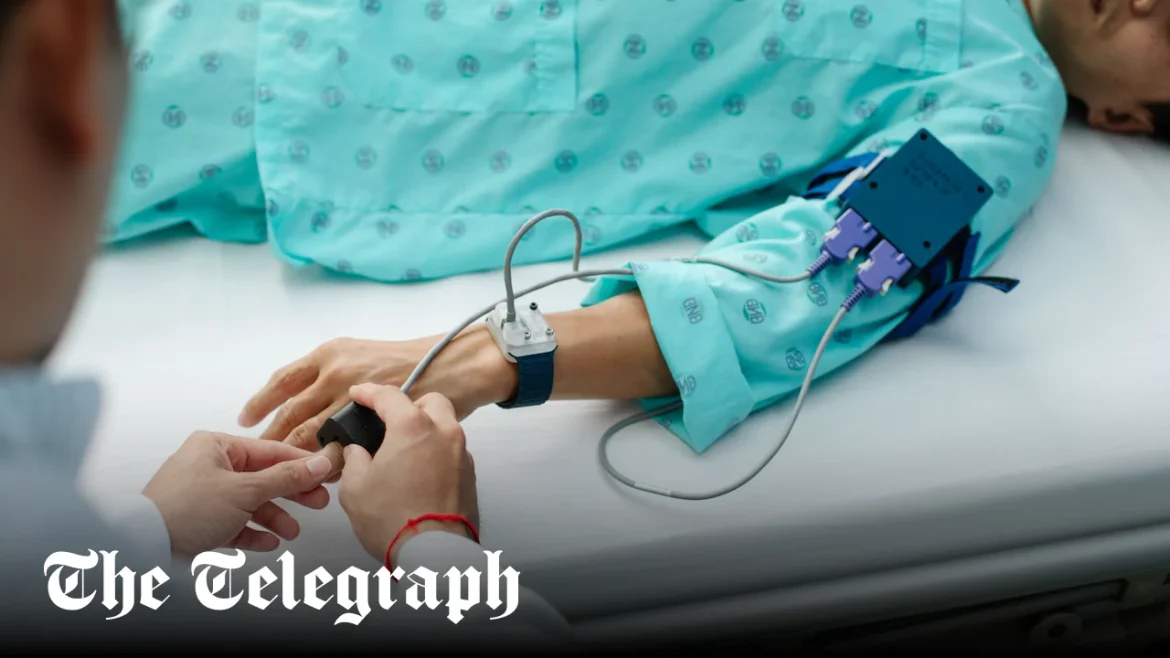
A new wearable device developed by engineers in Britain that promises to revolutionise the way dengue fever is treated is being trialled in Vietnam.
The device, called D-Scape (Dengue Shock and Classification Prediction Wearable), consists of a small wrist-mounted band that looks like a high-tech smartwatch, and a second sensor clipped to the little finger.
Together with on-board AI algorithms, they monitor the vital signs of dengue patients non-invasively, providing doctors with a continuous stream of data about their condition to help them spot which ones are progressing to severe disease.
While in Europe and the West we are, so far, largely unaffected by dengue, it has far reaching effects on swathes of the developing world. Nearly half the world’s population lives alongside the Aedes mosquitoes that carry it, leading to between 100 and 400 million infections a year.
While many who catch it will suffer only flu-like symptoms and recover on their own, dengue – also known as break-bone fever – can be an exceptionally nasty disease.
In severe cases it takes on characteristics more akin to a haemorrhagic fever like Ebola or Marburg, causing plasma to leak from your blood vessels, leading to severe organ damage and uncontrollable bleeding. In 2024 some 9,500 people died in this way.
But dengue is also fickle, and spotting the point at which an infection has progressed to a severe state is a challenge – patients will often deteriorate suddenly after the fever subsides – and early identification gives the best chance of a successful outcome.
“The thing with dengue is that we have a lot of patients with infections – but we don’t know who will progress to severe disease,” said Dr Ho Quang Chanh, Head of the Dengue Research Group at the Oxford University Clinical Research Unit (OUCRU) in Ho Chi Minh City, who helped oversee the D-Scape trial.
“So that leads to really major problems with the resources that we need to spend, all of the capacity we need to build for the disease. And it happens every year,” he said.
“We need to check on the patients every three to four hours. In severe cases, every hour. So these nurses and doctors here – during the [dengue] season, during the night shifts – they can’t sleep because we need to be constantly checking on the patients’ vital signs, measuring them manually with blood tests.”
