
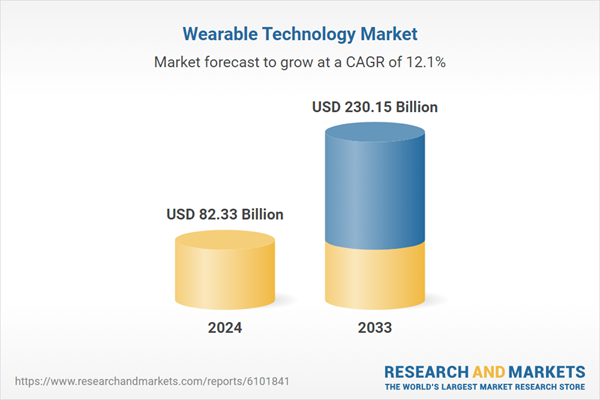

$100+ billion market growth is driven by rising consumer demand for health monitoring, advances in sensor technology, and the integration of wearables with the Internet of Things (IoT). The market will expand as IoT and 5G technology enhance connectivity and real-time data processing in healthcare.
Wearable Technology Market

Dublin, Nov. 03, 2025 (GLOBE NEWSWIRE) — The “Wearable Technology Market Size, Growth & Forecast 2025-2033” has been added to ResearchAndMarkets.com’s offering.
The Wearable Technology Market is expected to reach US$ 230.15 billion by 2033 from US$ 82.33 billion in 2024, with a CAGR of 12.1% from 2025 to 2033. Growing consumer demand for health tracking, sensor technology breakthroughs, growing healthcare applications, and integration with Internet of Things (IoT) ecosystems are the main factors propelling the market.
Key Factors Driving Wearable Technology Market Growth
Internet of Things (IoT) integration
The capabilities of wearable technology have increased as a result of its integration into IoT networks. These days, wearables may seamlessly interact with smartphones, smart home appliances, and other IoT-enabled systems. According to IoT Analytics, by the end of 2023, there were 16.6 billion linked IoT devices, a 15% growth from 2022. More wearable technology is now connected to IoT networks as a result of this. For example, fitness trackers may give detailed workout data by syncing with smart home gym equipment. The market for wearable technology is expected to grow as 5G technology spreads, expanding wearables’ capabilities and facilitating quicker data transfer and more dependable connections.
Growing Uses in Medical Fields
Continuous, non-invasive vital sign monitoring is made possible by wearable technology, which is revolutionizing the healthcare industry. Devices like the Apple Watch, for instance, include functions like blood oxygen level assessment and electrocardiogram (ECG) monitoring, which make it easier to identify health problems early. As of September 2024, Apple is estimated to control 21% of the global smartwatch market. In-person visits are no longer necessary due to the widespread use of wearable technology for remote patient monitoring. 92% of smartwatch users have been found to use them to monitor and enhance their fitness and health. The advantages are also being recognized by insurance companies, as some provide discounts to clients who share health information from their wearable technology, encouraging tailored medication and preventative healthcare.
