
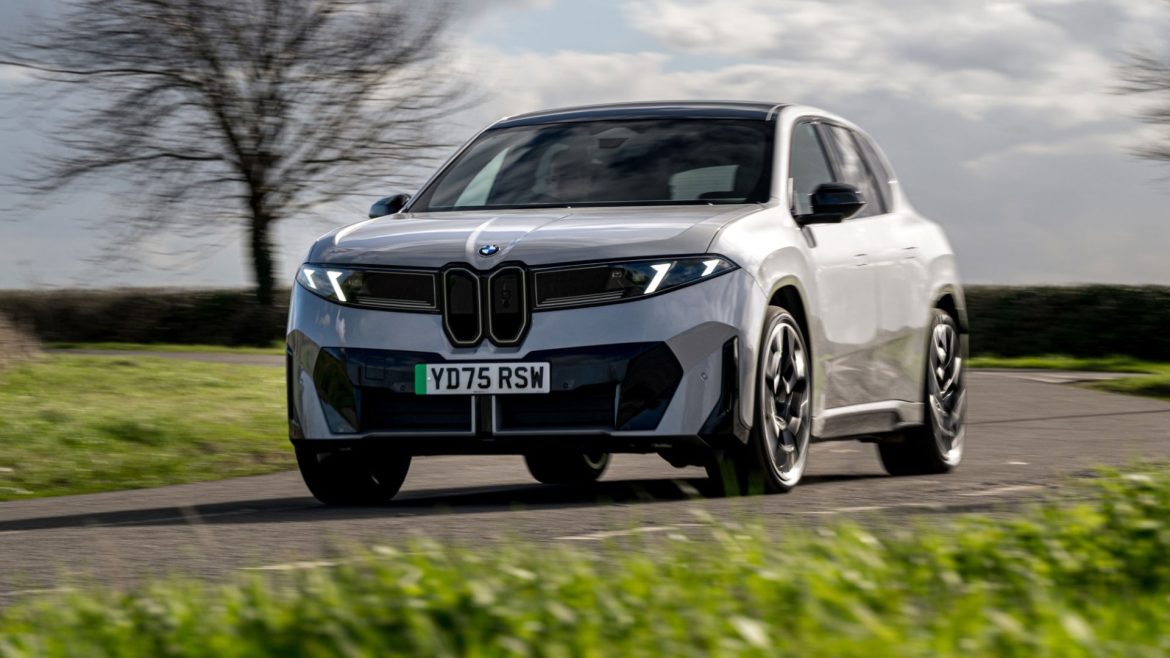
► Our guide to the best EVs in the UK
► BMW’s next-gen tech leads the way
► But the most recommended brand may surprise you
This is our carefully curated list of the best electric cars you can buy in the UK right now, whatever your budget. Rather than listing a whole bunch of direct competitors, we’ve built a top 10 here that covers each major category of the electric car market. So instead of simply saying ‘buy a Porsche Taycan’ – which is still reasonable advice, even if their reliability continues to be patchy – we’re aiming to help every kind of EV buyer with a top-flight recommendation.
This way, regardless of whether you want the best electric SUV, the best electric performance car, the best small electric car or anything in between, there’s an EV on this page to suit you. Plus two highly competitive alternatives we suggest you also take a close look at. Here are some of the key highlights.
Like this? Get more CAR delivered to your browser! Click here to add CAR Magazine as a preferred source on Google.
Best electric cars at a glance:
- Best electric SUV: BMW iX3 – find out more
- Best small electric car: Renault 5 E-Tech – find out more
- Best electric performance car: Hyundai Ioniq 6 N – find out more
- Best electric family car: Mercedes-Benz CLA EV – find out more
Now is a good time to buy as there’s a price war going on at the lower end of the EV market, prompted by the introduction of the UK government’s electric car grant. This and the pressure of new brands arriving from China means quality and affordability are being driven in a positive direction all the time. What’s more, given ongoing difficulties around the Strait of Hormuz, the right electricity tariff can ensure EV running costs once again represent a proper opportunity to save money versus conventional petrol cars.
Add all that to the smooth, refined and often very powerful driving experience available from the best EVs, and there’s no longer much reason to hold back. So stop clinging to that petrol pump and get on board with the electric revolution.
Best electric cars 2026
This is CAR’s list of the top 10 best EVs currently on sale in the UK. We’ve not only driven hundreds of miles in each model recommended below but also all their electric rivals, too. You can read more about how we test cars to find out why you should trust us.
Best small EV: Renault 5 E-Tech
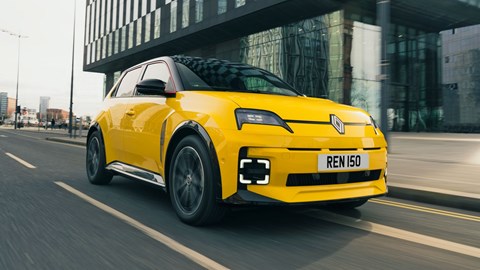
It’s aspirational, affordable, and lives up to the hype
Pros: Real head turner, nice inside, fun to drive, great value
Cons: Shame the driving range isn’t longer, cramped rear seats
Price new: from £21,495 (with UK electric car grant)
The arrival of the Renault 5 E-Tech in 2025 was one of those remarkable moments where the car industry truly delivered on the hype. In resurrecting a much-loved classic badge for the electric age and pricing it from just £21,495 (for the shorter-range model), Renault has managed to create and build a car that looks great, doesn’t cost the earth, and is actually fun to drive.
Okay, so the maximum 255-mile WLTP driving range isn’t sensational, especially as it falls back to around 170 miles in the real world. But as a functional runabout with a smart and clever interior, the R5 is superb. So good, in fact, that the Alpine A290 hot hatch version feels a bit pointless. There are a lot of extremely good small EVs on the market now, however, with more arriving throughout 2026. So if you need a little more rear passenger space (for example), take a look at the Cupra Raval.
To find out more, read our full Renault R5 review.
Or try: Mini Cooper Electric (stylish and fun, but not as practical inside); Renault Twingo E-Tech (smaller sub-£20k EV, still superb, arriving early 2027).
View Renault 5 E-Tech lease deals VIEW DEALS
Best hatchback EV: Cupra Born
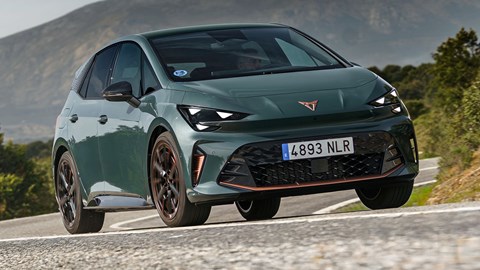
Recent facelift has done the business
Pros: Sharp looks and sharp steering, spacious, well equipped, great value
Cons: Brakes feel could be better, still too touchscreen-tastic inside
Price from: £34,495 (with UK electric car grant)
The Cupra Born is essentially a Volkswagen ID. 3 in funky trousers, but Cupra has managed to layer on a little spice when it comes to the driving experience as well. This particularly applies to the Born VZ – the fastest and most exciting version, originally part of the vanguard for a new era of electric hot hatches – but with a recent facelift solving some of our issues with the original car, there is greater reason to consider the standard models as well now.
As a result, the Born has knocked the MG 4 EV off its long-held perch as our preferred family-sized electric hatchback. The also recently updated MG remains great value, and shouldn’t be overlooked, but the Cupra has more polish and a more convincing sense of depth to its quality. There are plenty of good cars in this segment now, though, as the Kia EV4 and Renault 4 E-Tech clearly attest.
To find out more, read our full Cupra Born VZ review.
Or try: Kia EV4 (comfortable ride and impressive driving range – at a cost); Renault 4 E-Tech (retro-cool like the Renault 5, only bigger).
View Cupra Born lease deals VIEW DEALS
Best family EV: Mercedes-Benz CLA EV
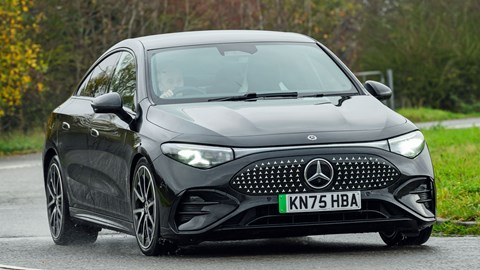
Efficient, tech-led baby Benz exudes class and modernity
Pros: Goes a long way, very refined, technology largely works well, aggressively priced
Cons: A bit cramped for adults in the back, panoramic roof can be a pain
Price from: £41,300
The legacy German brands are finally fighting at the top of their game when it comes to the latest electric car technology – and the Mercedes CLA 250+ epitomises that in the Tesla Model 3 area of the market. Based on a brand new MMA platform (that’s Modular Mercedes Architecture), it’s been properly designed for the electric age, rather than adapted to it. As a result you get sleek looks, great performance and a real-world driving range that approaches 400 miles.
If you’re not keen on screens you may need to brace yourself – Mercedes has crammed a lot of tech into the cabin. Largely it all works very well, but the sheer number of pixels and illuminated elements can feel overwhelming if you maximise everything. It’s also a touch cramped in the back, thanks in part to that sloping roofline – the CLA Shooting Brake estate offers some resolution to this. But overall, this is a truly excellent family-sized EV saloon that deserves every plaudit. Very well priced, too.
To find out more, read our full Mercedes-Benz CLA EV review.
Or try: Fiat Grande Panda (incredibly good value, outstandingly individual design, surprisingly spacious); Vauxhall Frontera (even more room for your money, up to seven seats, well resolved to drive).
View Mercedes-Benz CLA EV lease deals VIEW DEALS
Best large EV: Volkswagen ID. 7
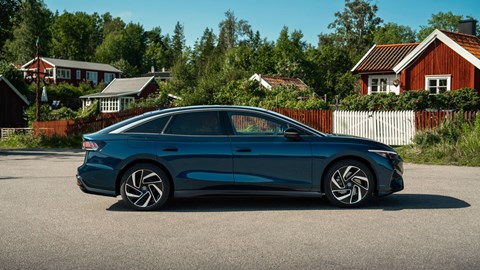
Don’t be a badge snob, this is a proper silent banger
Pros: Supremely comfortable and refined, goes a long way between charges
Cons: Amorphous streamliner looks, badge snobbery
Price from: £51,445
Volkswagen hadn’t exactly covered itself in electric glory until the arrival of this model, but the ID. 7 is an exceptionally good electric car. It beat the BMW i5 and the Mercedes-Benz EQE in our large electric car group test and seems to be setting a positive tone for the next round of Volkswagen EVs, which includes the forthcoming VW ID. Polo. The ID. 7 impresses particularly with its focus on comfort and refinement, making it a relaxing and capable cruiser that underlines these major benefits of switching to electric power. We prefer it to the supposedly more sophisticated Audi A6 e-Tron on this basis, too.
We’d stick to the 282bhp rear-wheel-drive versions. There is a faster 335bhp all-wheel-drive ID. 7 GTX that cuts 0-62mph down from 6.5sec to 5.4, but this costs at least £6k more and doesn’t feel significantly different except in a straight line. Better to keep the cash and embrace the standard versions’ spacious tranquillity – which you can enjoy for up to 436 miles WLTP between charging stations if you opt for the Pro S variant.
To find out more, read our full VW ID. 7 review.
Or try: Smart #5 (big, stylish cruiser is ‘the best Smart ever’ according to our review); BMW i5 (good to drive but comparatively inefficient, expensive and cramped).
View Volkswagen ID. 7 lease deals VIEW DEALS
Best estate EV: Volkswagen ID. 7 Tourer
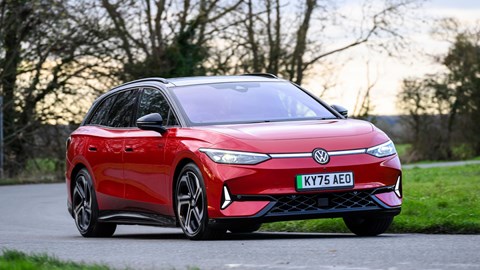
No electric load-lugger is better than this
Pros: Biggest EV estate boot, wonderfully comfortable, lengthy driving range
Cons: VW still can’t get the software right
Price from: £52,225
Electric estate cars are a minor niche – we suppose most people will buy an SUV instead these days – but we still love them, so it’s worth celebrating the best here. And right now that means a second entry in this list for the VW ID. 7. The ID. 7 Tourer currently has the largest boot of any load-lugging EV to add to the accolades it already has in hatchback form. Namely: outstanding amounts of comfort, space and driving range.
The boot, though. This gives buyers 605 litres to play with before lowering the rear seats; and that’s measured up to the parcel shelf, so is actually a conservative measurement. Kick out those back-seat passengers and you get 1714 litres of space. That’s not just roomy enough for a fairly spendy trip to Ikea but a chunk more than the 570-litre BMW i5 Touring in maximum passenger configuration. The VW goes further than the BMW between charges, too, with up to 424 miles WLTP; the Audi A6 Avant e-Tron promises up to 437 miles, but its 502-litre boot doesn’t cut it.
To find out more, read our full VW ID. 7 Tourer review.
Or try: Mercedes-Benz CLA Shooting Brake (high-tech, long range, bigger boot); Vauxhall Astra Sports Tourer (recent facelift brought huge price cut, fantastically pragmatic).
View Volkswagen ID. 7 Tourer lease deals VIEW DEALS
Best electric family SUV: Renault Scenic E-Tech
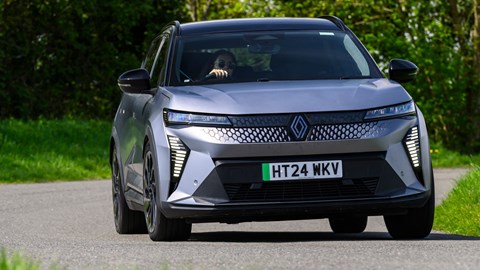
Does all the important things very well
Pros: Spacious and practical but still chic, efficient and agile performance
Cons: Firm ride, compromised rear visibility
Price from: £33,245 (with electric car grant)
Renault was an electric car pioneer, so it should be no surprise its current generation of models is showing a lot of other manufacturers the way. The family-sized electric SUV category is now one of the most closely contested, with lots of really high-quality choice. But we’d put the Scenic E-Tech at the top of our shopping list. It has a lovely interior, is relatively lightweight in electric car terms, and manages to be practical and fun, too.
Renault has focused on front-wheel-drive efficiency rather than all-wheel-drive ferociousness – although you do get a choice of power output and battery size. Maximum driving range is a useful 379 miles WLTP, with nickel manganese cobalt battery tech and a heat pump helping to eke out the distance. The sharp steering makes it feel remarkably agile, with a slightly lumpy ride its only significant negative.
To find out more, read our full Renault Scenic E-Tech review.
Or try: Toyota bZ4x Touring (bigger-bottomed bZ4x finally means it makes sense); Skoda Enyaq (time-served family friendly e-SUV, brilliantly thought out).
View Renault Scenic E-Tech lease deals VIEW DEALS
Best premium electric SUV: BMW iX3
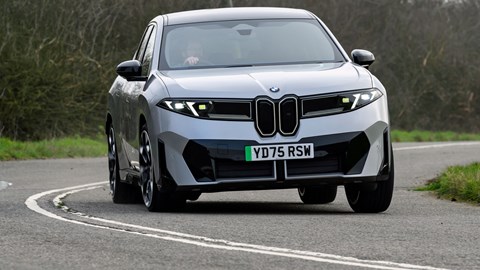
Brand Neue and all Klasse, it’s sensational
Pros: Next-gen tech lives up to the hype, fresh design, great to drive, fantastic quality throughout
Cons: The death of the iDrive controller
Price from: £53,250
BMW has been brilliant at electric cars since it started making them – the original i3 remains a masterpiece of clever design fused with cutting-edge technology, and would probably be successful if it was launched new today. However, the firm has still managed to deliver a seismic shift for 2026 with the first of its Neue Klasse range of next-generation EVs: the brand new BMW iX3.
From the crazy design – if you think that chinny exterior is wild, wait until you clock the steering wheel and dashboard – to the clever, user-friendly technology and the sensational driving experience, the iX3 sets new standards for every kind of electric car. CAR’s Jake Groves described it as ‘the best, most complete car’ he drove in 2025. It has a 500-mile driving range, Gen6 motor technology and 463bhp. The new Mercedes GLC EV and Volvo EX60 are also pretty impressive, though…
To find out more, read our full BMW iX3 review.
Or try: Mercedes-Benz GLC EV (even more tech heavy, comfier ride but not as good to drive); Volvo EX60 (the best electric Volvo yet is another 500-miler).
View BMW iX3 lease deals VIEW DEALS
Best seven-seat EV: Hyundai Ioniq 9
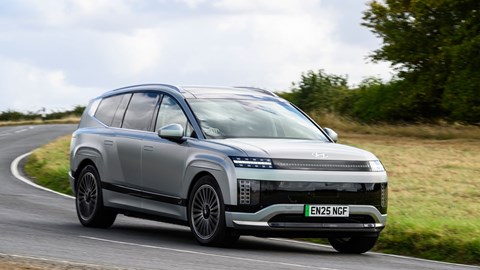
Hugely spacious and well put together
Pros: Massive battery, massive interior, comfortable ride
Cons: Rolls a bit in the bends, infotainment can befuddle
Price from: £64,995
The Hyundai Ioniq 9 dethrones its cousin, the Kia EV9. They both make maximum use of the impressive E-GMP underpinnings that are already so well proven by so many of Hyundai-Kia’s electric cars. But the marginally newer Ioniq 9 packs in an even bigger 110.3kWh battery while offering a more cossetting ride. Advantages that we believe are more relevant to you if you’re in the market for a large electric people mover.
While the looks perhaps aren’t quite as dramatic as the EV9’s, and it’s still not a very efficient electric car, it delivers a vast amount of interior space. Power runs from 215bhp for the entry-level RWD model to 429bhp for the top spec dual-motor Performance AWD, while WLTP driving range tops out at 385 miles. Interior quality is good enough to challenge the £73k-and-up Volvo EX90, yet the asking price begins at £64,995. Like the Kia, you can have an even more luxurious six-seat layout, too.
To find out more, read our full Hyundai Ioniq 9 review.
Or try: Mercedes-Benz GLB EV (comfortable, spacious and a big upgrade over its predecessor); VW ID. Buzz LWB (great-looking electric bus finally makes sense in seven-seater form).
View Hyundai Ioniq 9 lease deals VIEW DEALS
Best electric limo: BMW i7
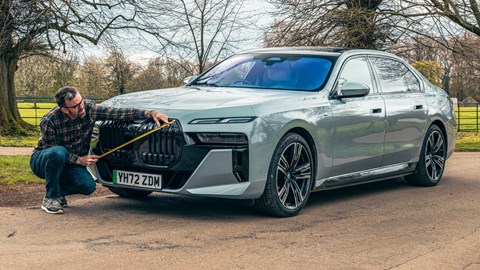
Looks ugly, drives beautifully
Pros: Stunningly modern blend of luxury and tech, fast, comfortable, enjoyable to drive
Cons: Comparatively poor efficiency, no beauty queen
Price from: £104,230
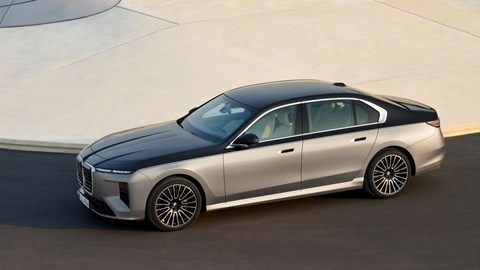
We spent half a year living with a pre-facelift BMW i7, making sure it’s as good as we thought. Of course, when you’re on the inside you can’t see the outside anyway, and now there’s an updated version that’s significantly better visually balanced anyway. The optional rear cinema display plus all the intricate, glowing surfaces and unusual materials underline the meaning of modern BMW luxury, and it all works incredibly well.
This is also one of those limos that can be enjoyed from the front and the back, offering lashings of laid-back lounging yet tight handling and massive performance. Even the slowest model hauls its 2.7 tonnes 0-62mph in 5.5sec while the top spec M70 has 650bhp and does the deed in 3.8. Only slight wrinkle is that despite the huge 101.7kWh battery pack, maximum WLTP driving range is 387 miles – a Mercedes EQS can go almost 100 miles further, but isn’t as successfully luxurious.
To find out more, read our full BMW i7 review.
Or try: Rolls-Royce Spectre (super-luxe, super-expensive); Lucid Air (not technically available in the UK, but if you can get one they’re sublime).
View BMW i7 lease deals VIEW DEALS
Best performance EV: Hyundai Ioniq 6 N
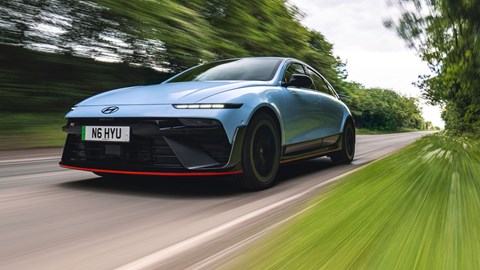
Yes, it’s even better than the game-changing Ioniq 5 N
Pros: Ferociously fast, awesome artificial ‘gearbox’, more mature and multifaceted than the 5 N
Cons: You could get actually lost in some of the sub-menus for the driving modes
Price new: £65,800
There are plenty of really, really fast electric cars around – the egalitarianisation of higher performance being one of the enduring attractions of going zero-emissions. But while a Taycan Turbo GT, an RS e-Tron GT or a top-spec Tesla can rearrange your insides the way mescaline can rearrange your head, it wasn’t until Hyundai came along with the Ioniq 5 N that anyone began to seriously tackle the tricky business of making an EV actually involving.
Well, now Hyundai has upped the ante even further with the introduction of its second electric N model. While the Ioniq 6 N may look a little try-hard, it offers the same huge power and a version of the same gobsmackingly detailed pretend dual-clutch gearbox, in combination with the added appeal of deeper sophistication and increased maturity. It rides better and feels less hair-trigger, as CAR’s Piers Ward put it, resulting in an even more roundly appealing electric shock machine. Other brands are now pondering their own artificial gearboxes now, too, so competition in this niche should only get better in the coming months and years.
To find out more, read our full Hyundai Ioniq 6 N review.
Or try: Porsche Taycan (doesn’t matter which one, they’re all brilliant – E-Shift variants incoming); Abarth 600E (proper LSD and sharp handling vs. garish details and too much bonging).
View Hyundai Ioniq 6 N lease deals VIEW DEALS
Are electric cars the future?
There’s increasingly a global acceptance that the sale of fossil-fuel cars needs to come to an end to bring down pollution caused by the transport sector. Many manufacturers think electric cars are the solution and have invested heavily in product plans and some have even announced a date when they’ll phase out anything that’s not an EV.
Not all car buyers are proving so easy to convince, however. And despite ZEV mandate sales ratios, many car brands are now rowing back on their electric commitments. There are interesting times ahead as this all works itself out, with rumblings of increased prices for internal-combustion vehicles and delayed deliveries as car makers try to swing public opinion in the direction of electric. Something the current difficulties in the Strait of Hormuz is helping with by driving up the price of petrol.
Battery electric vehicles aren’t the only zero-emissions solution being considered. Some car makers continue to explore hydrogen as an alternative fuel. This isn’t without its own problems, but refuelling is faster and it has some additional versatility since it can be used both as a source of electricity generation in a hydrogen fuel cell or burn like petrol in a hydrogen combustion engine.
Other brands – including Porsche, Toyota and Mazda – are looking at so-called synthetic e-fuels as an alternative to carbon-based petrol and diesel.
