
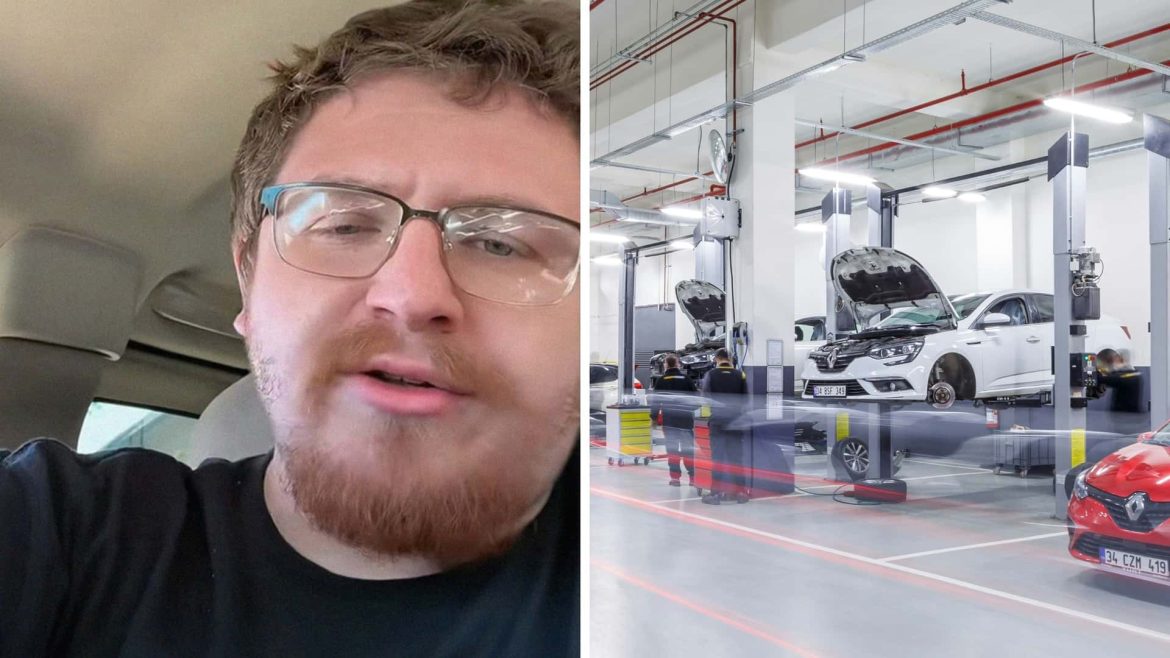
Haggling and negotiating feel like the last thing most drivers would want to do before handing their keys over for demanding or delicate maintenance work. But a mechanic says there’s an alternative to paying labor rates at major repair centers that can approach $300 per hour.
In a viral clip from mechanic Bobby (@dxmanitbobby) we learn that appealing to the monied interests of underpaid hourly garage technicians can help cut repair costs dramatically. All it takes is a little ingenuity and confidence.
“If a mechanic charges you $100 an hour for side work, they’re making double what they make at work, and your labor rate just got cut down by 60%,” he said in the clip that’s been viewed more than 269,000 times. “There, I just cut your prices in half. You’re welcome.”
Ask The ‘Side Work’ Question
After promising big savings, Bobby explains that the real target isn’t the mechanics themselves, but the businesses that employ them.
“Mechanics aren’t charging that,” he says, referring to dealership labor rates. “Shops and dealerships are charging that.”
His proposed workaround is straightforward, if unconventional. Rather than scheduling an appointment through the service department, he tells viewers to drive to the service bays behind the dealership and simply ask whether any technicians are looking for side work.
“If one of the managers steps in and says no, no side work, just go to another dealership,” he says.
And the savings don’t stop with labor. Bobby points out that dealership technicians can often purchase original equipment manufacturer (OEM) parts through employee pricing programs at little more than the dealer’s own cost, avoiding the substantial markups customers typically see at the service counter.
That combination may dramatically reduce the final repair bill—while allowing the technician to earn far more per hour than they would during a normal shift.
Speaking The Language Of “Cold, Hard, Cash”
Bobby’s advice resonated with viewers, many of whom treated the suggestion like an open secret within the repair industry.
One commenter cut straight to the point by asking, “Do you take side work?”
When another user asked how technicians should expect to be paid, the response came quickly: “Beer pizza (I ain’t ordering pineapple) and cold, hard, cash.”
Plenty of viewers see after-hours repair work as an accepted and common arrangement between technicians and customers looking to save money. Whether that savings materializes, however, depends on more than simply finding a willing mechanic.
While dealership labor rates can exceed $200 or even $300 per hour in some markets, particularly for luxury brands, that figure covers far more than the technician turning the wrench. Shops also have to pay for specialized diagnostic equipment, service advisors, insurance, facility costs, warranty administration, training, utilities, and countless other overhead expenses. As Bobby points out, a technician performing a repair typically receives only a fraction of the posted labor rate.
That gap explains the appeal of side work for talented and industrious technicians. For customers, it can mean access to someone already trained to work on a specific make or model without paying dealership pricing.
The Cons of Side Job Repairs
The value equation changes, however, if something goes wrong.
When repairs are performed through a dealership or licensed repair shop, customers generally have somewhere to turn if a replacement part fails, a diagnosis proves incorrect, or a repair creates additional problems. Many dealerships back their work with labor warranties, maintain commercial liability insurance, and have service managers who can resolve disputes.
A side job may not come with any of those safeguards.
That doesn’t necessarily make it a bad option since plenty of experienced technicians build loyal customer bases through after-hours work. The safest move seems to be getting the bargain “side hustle” rate for routine maintenance and repairs performed easily outside the dealership.
More complicated jobs involving advanced diagnostics, software programming, warranty repairs, or safety-critical systems may be better left inside a fully equipped shop. Modern vehicles increasingly rely on manufacturer-specific scan tools, software subscriptions, and documented repair procedures that aren’t always practical to conduct in a home garage.
From a broader perspective, Bobby’s advice may save drivers hundreds or thousands of dollars under the right circumstances. The key question is whether the savings are worth giving up the accountability and protections that come with having the repair performed under the dealership’s roof.
Motor1 reached out to Bobby via email and direct message. We’ll update this if he responds.
