
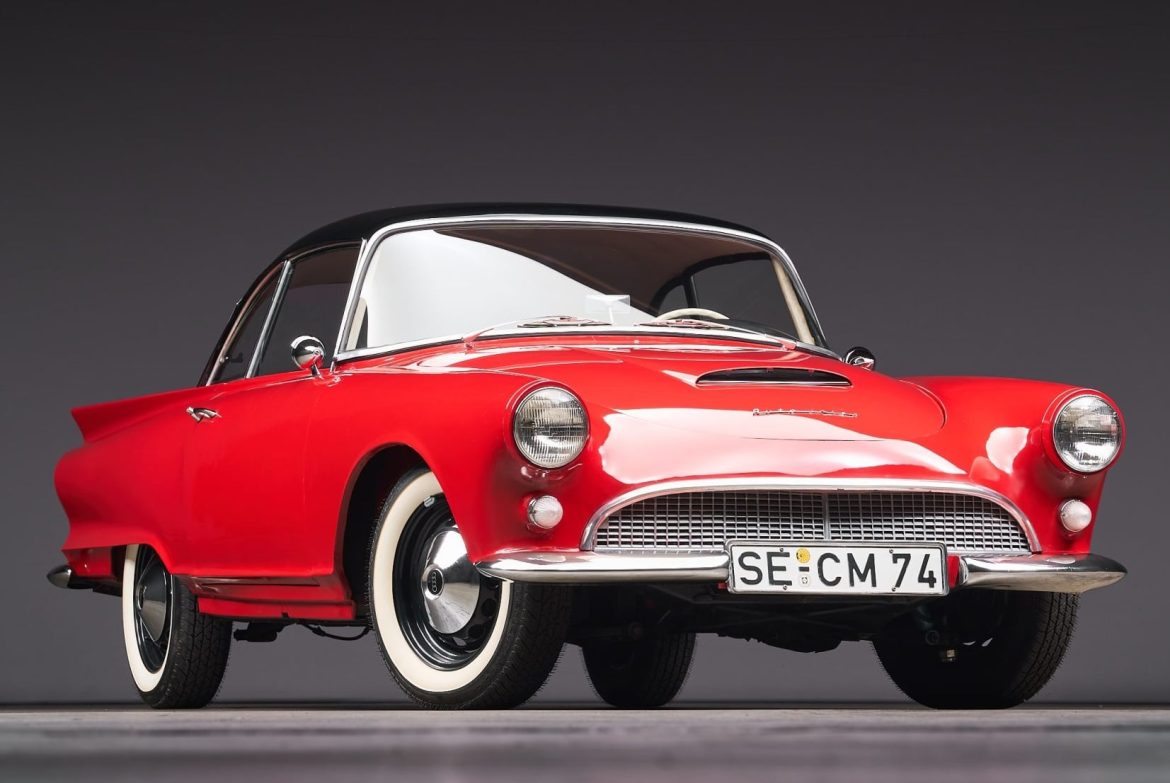
The Auto Union 1000 Sp is a sports car built in West Germany in the late 1950s and early 1960s. Its similarity to the Ford Thunderbird is clear, but it’s only skin deep – the 1000 Sp is both a two-stroke and front-wheel drive.
The jet age styling of the 1000 Sp has been winning it fans for decades, sure it was influenced by the Thunderbird but so were a few cars from the era, like the Sunbeam Alpine (and Tiger). Under the bodywork however, the car was pure 1950s Auto Union.
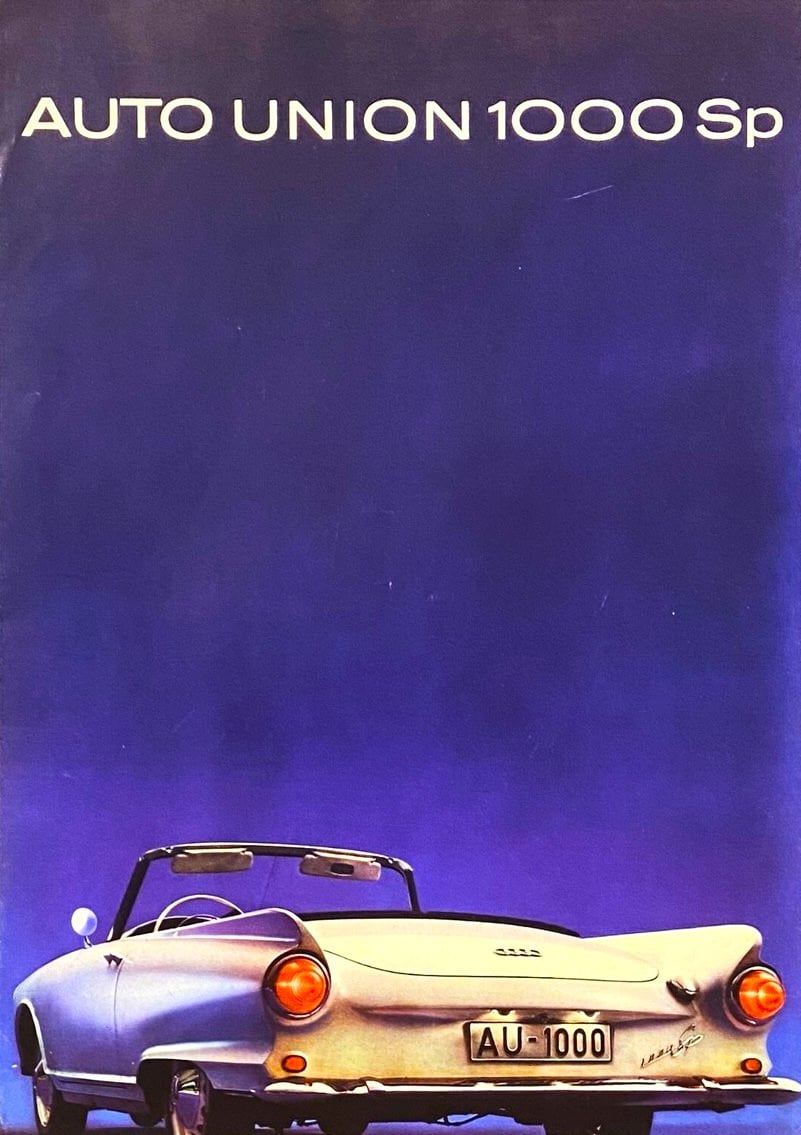
 The jet age styling of the 1000 Sp has been winning it fans for decades, sure it was influenced by the Thunderbird but so was the Sunbeam Alpine (and Tiger). Under the bodywork, the car was pure 1950s Auto Union. Image courtesy of Auto Union.
History Speedrun: The Auto Union 1000 Sp
The Auto Union 1000 Sp was a sports car built in West Germany from 1958 to 1965, it was sold first as a coupe and later as a cabriolet (convertible). The car famously combined an American-inspired styling brief with mechanicals lifted directly from an Auto Union economy sedan, running a 981cc two-stroke inline-three driving the front wheels.
The result was one of the most unusual German sports cars of the time and the halo model of the post-WWII Auto Union 1000 range – the first family of cars to wear the Auto Union name since the marque’s pre-WWII Grand Prix era.
In 1955, Auto Union director William Werner traveled to the United States and returned struck by the first-generation Ford Thunderbird, which had launched the year before. Its futuristic jet age styling, clean lines, and good looks helped define the American automotive zeitgeist of the era – it’s not hard to see why he liked it.
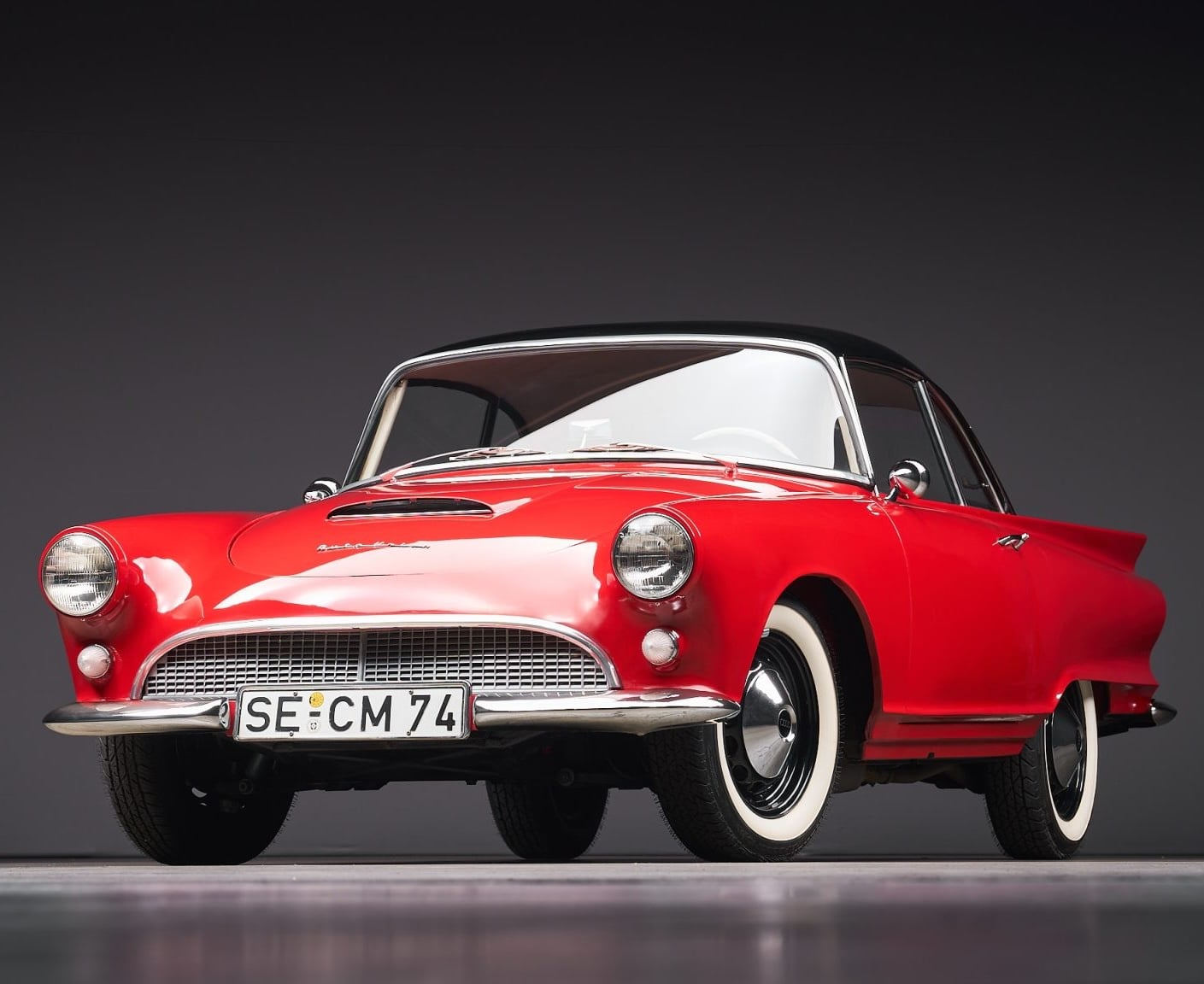
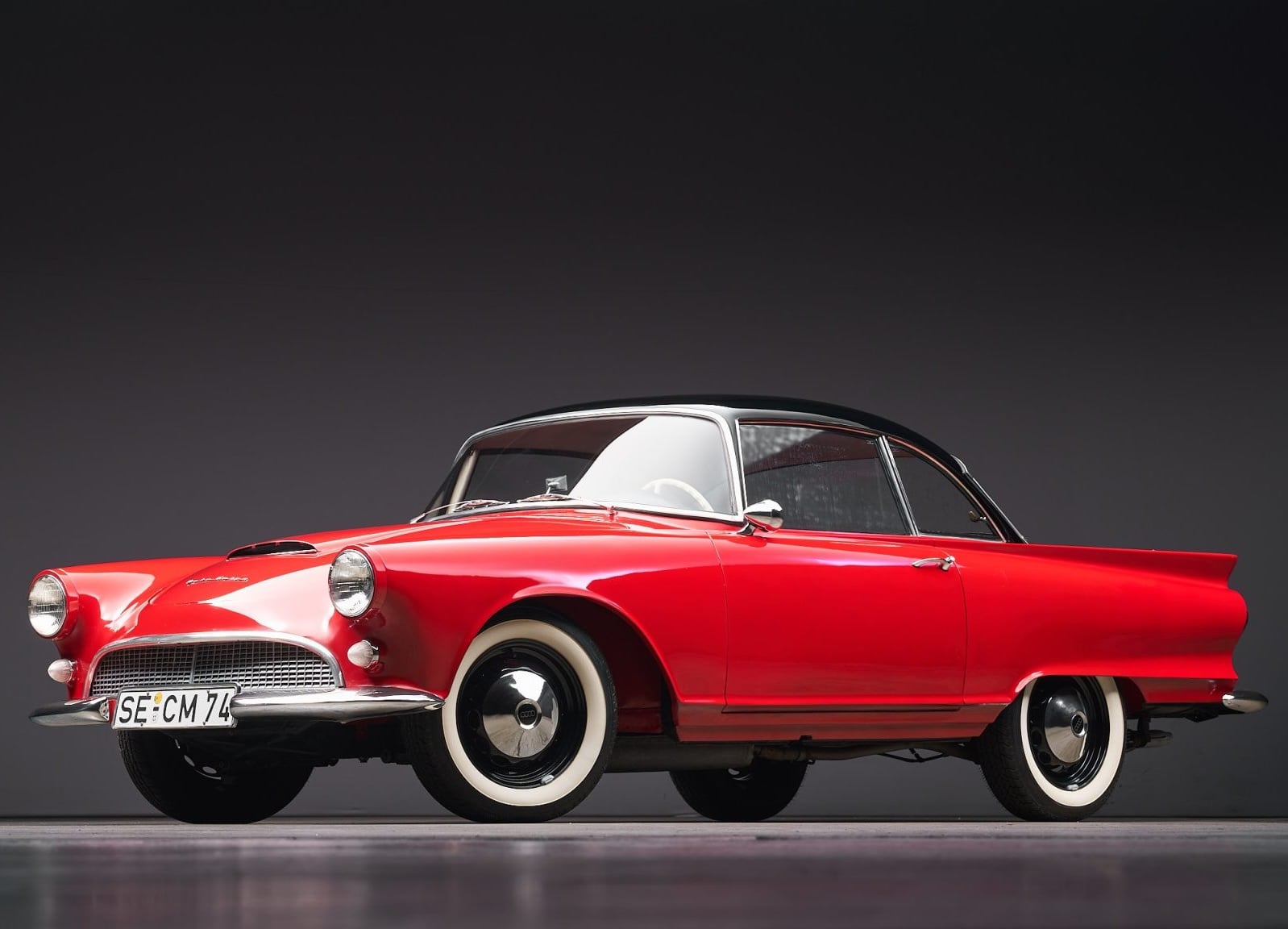
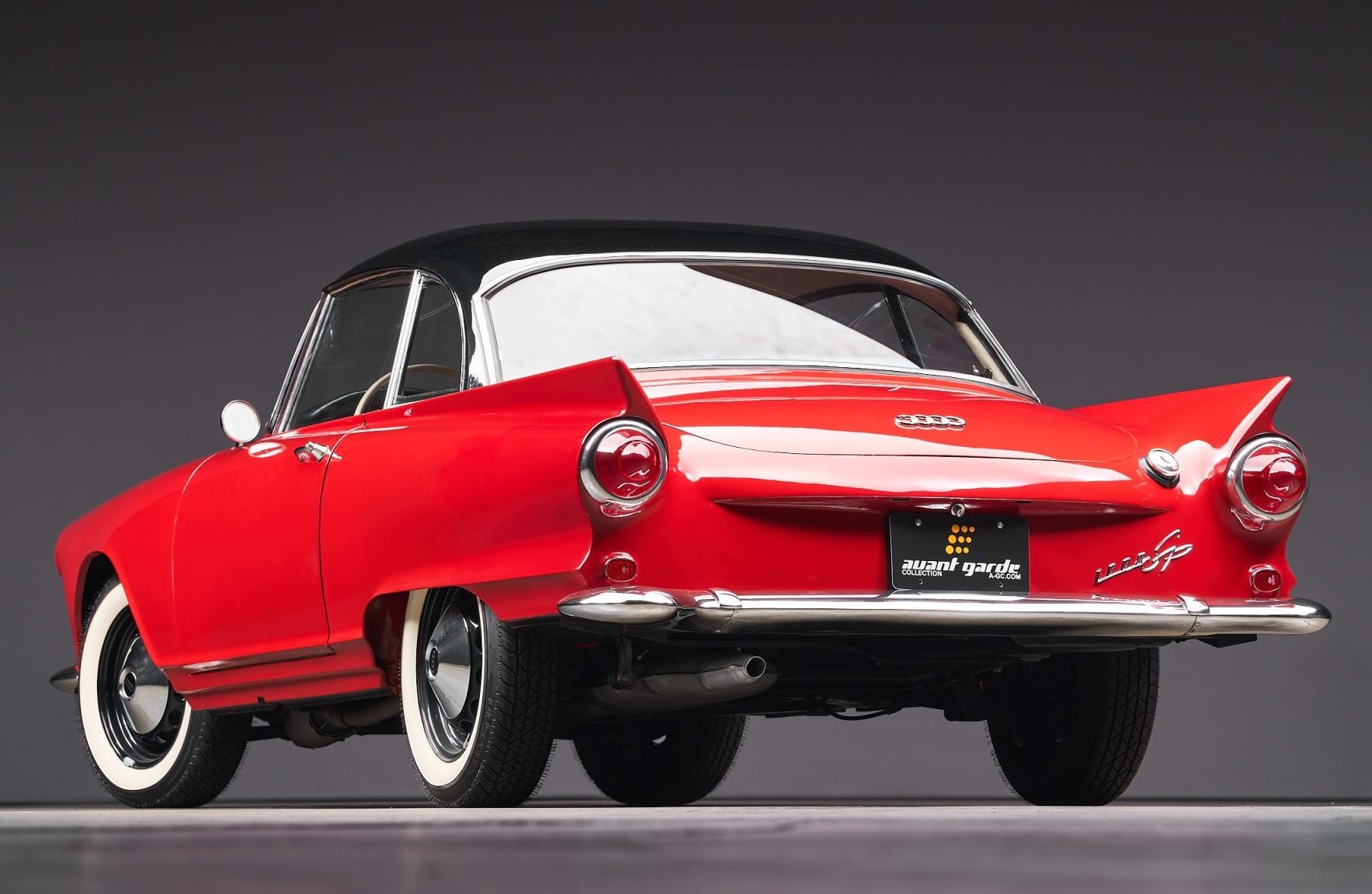
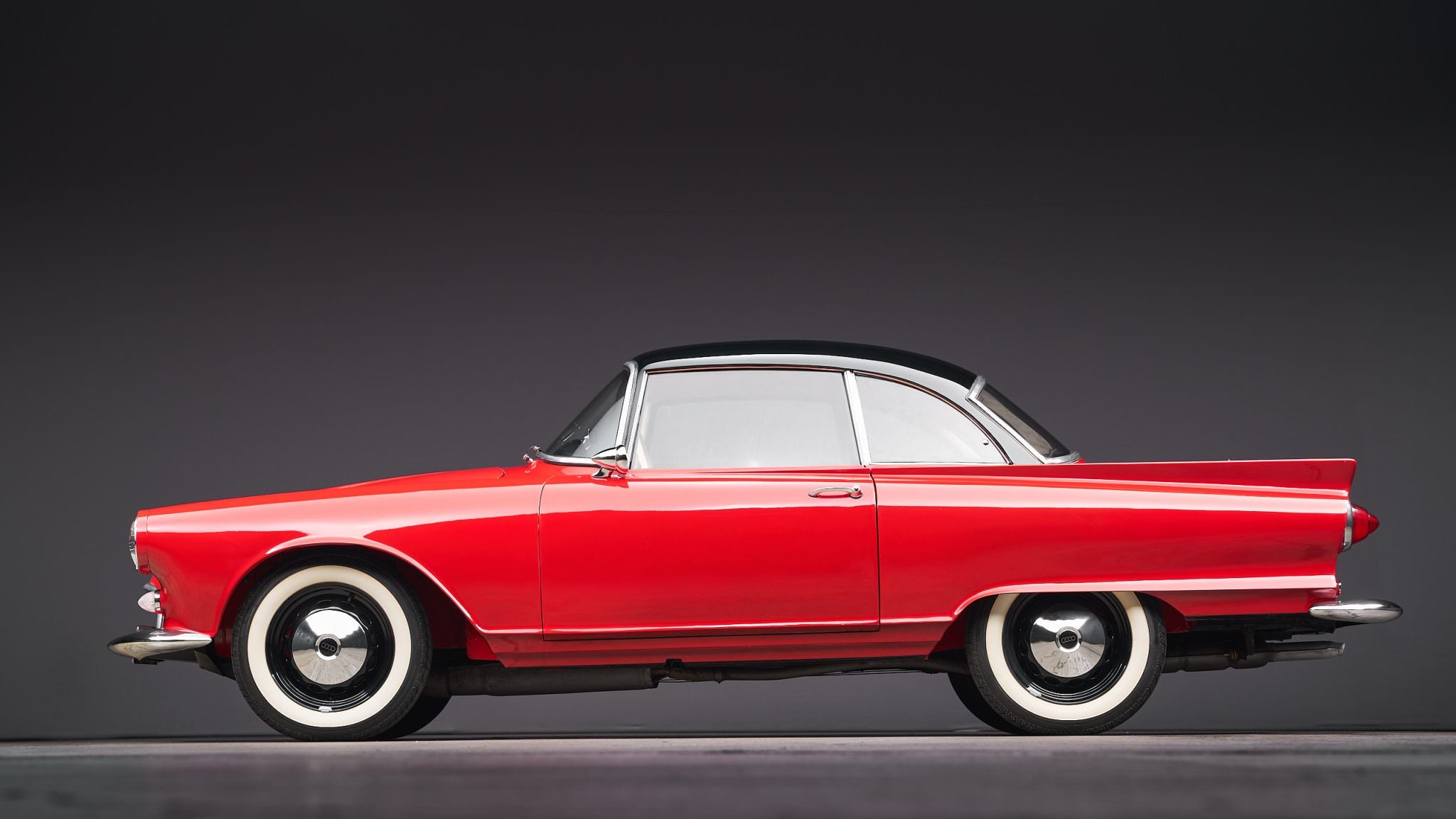
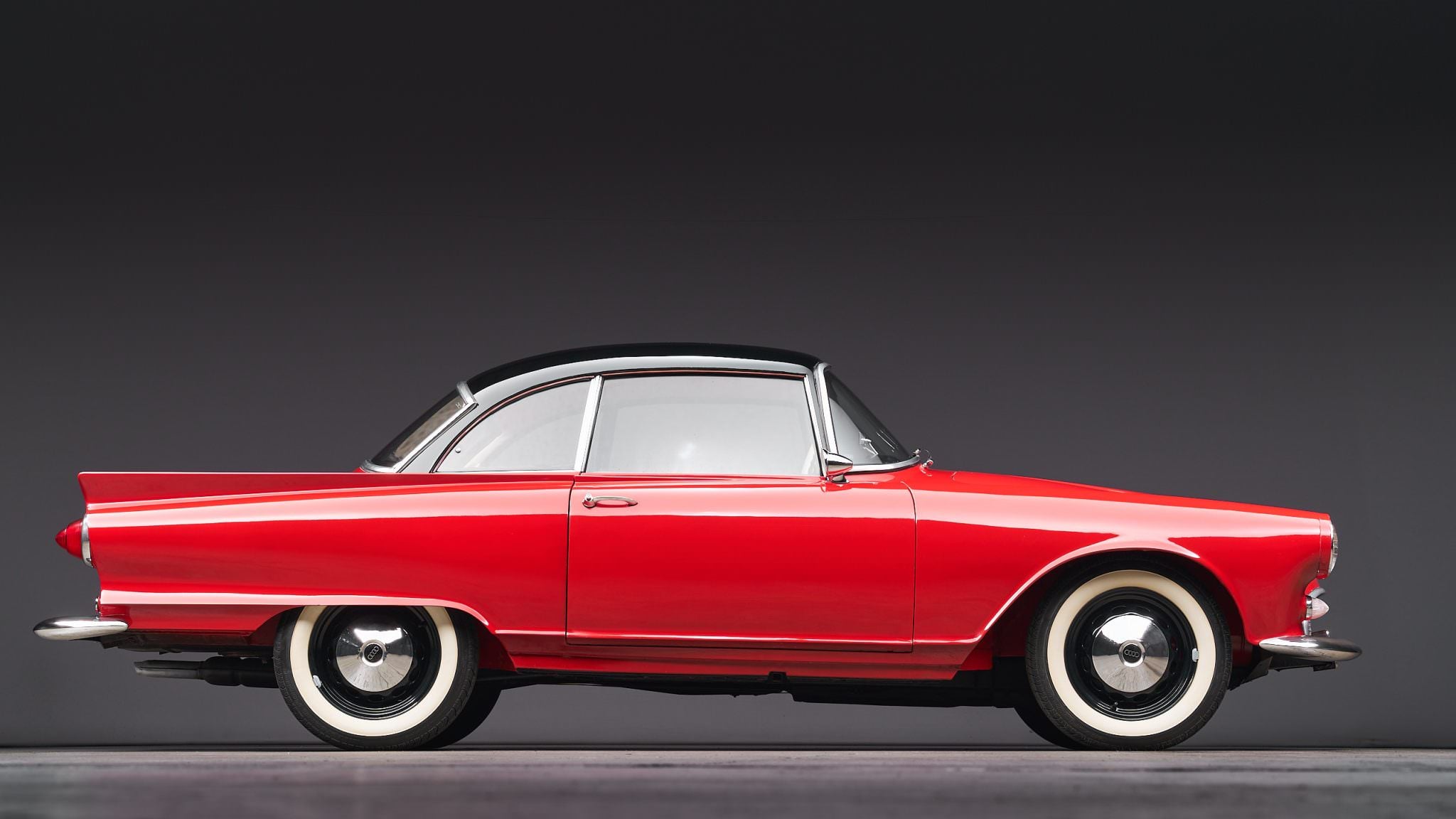
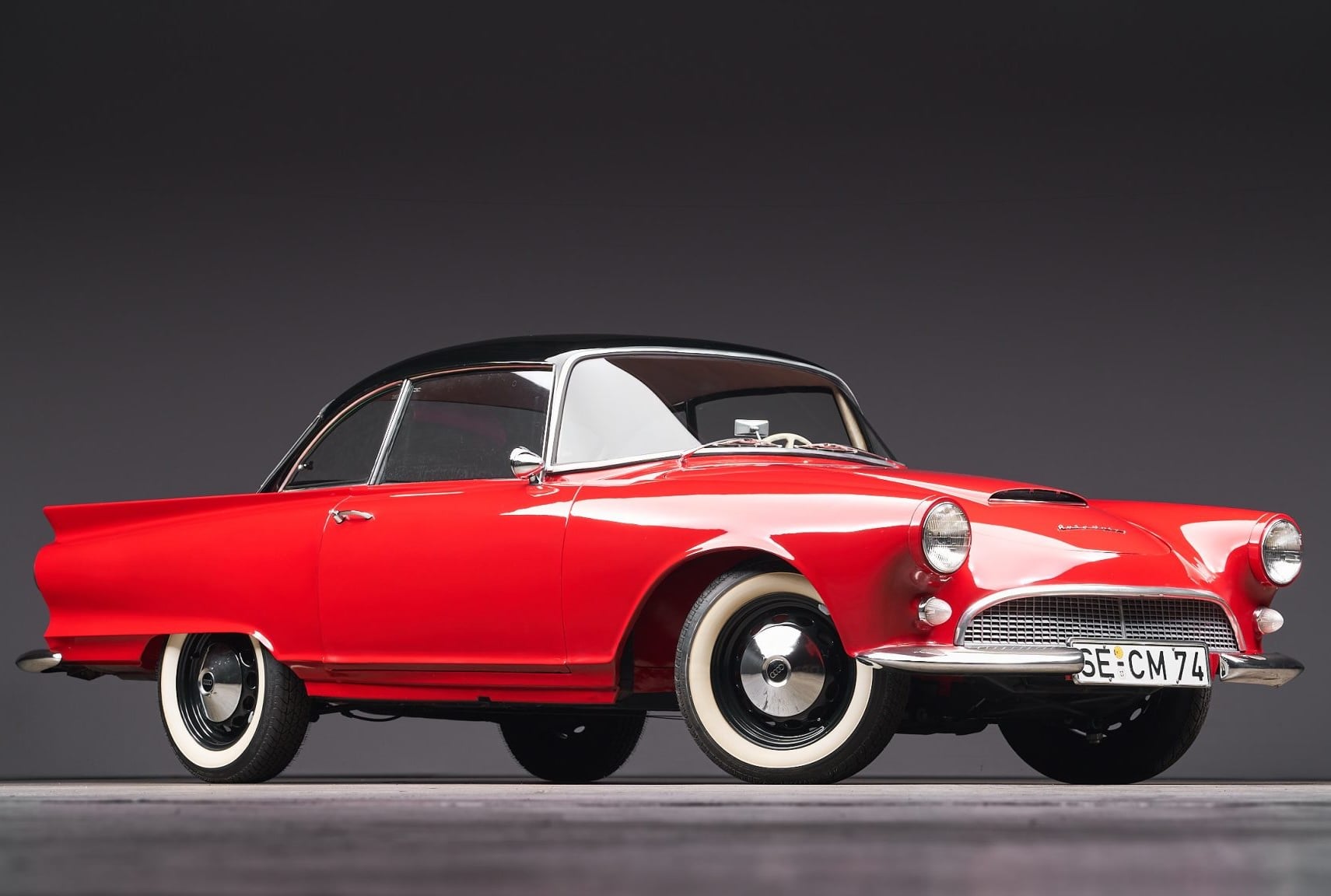
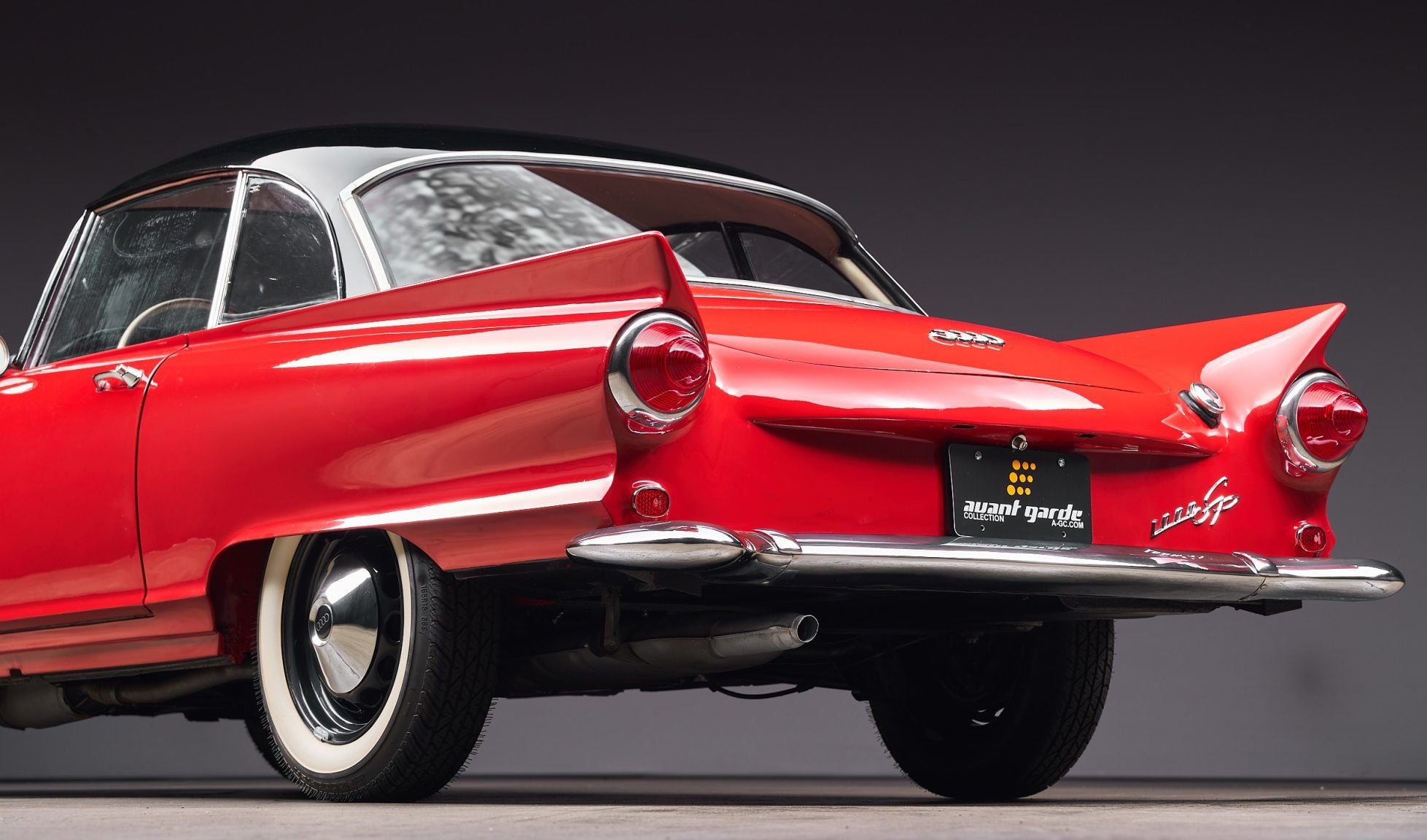
Werner instructed Auto Union stylist Josef Dienst to work in that same visual direction for a new sporting coupe intended to lift the company’s somewhat staid image. Dienst delivered a scaled-down interpretation with tailfins, a low roofline, a full-width grille, and hooded headlights that borrowed heavily from the American car’s looks, but didn’t copy anything to the point it would cause legal trouble.
The 1000 Sp made its public debut at the Frankfurt Motor Show in 1957 and entered production the following year.
The “Sp” designation stood for Special rather than Sport, though most buyers seemed to assume the latter. The German press quickly settled on a nickname the car never fully shook – Schmalspur-Thunderbird, or “narrow-gauge Thunderbird.”
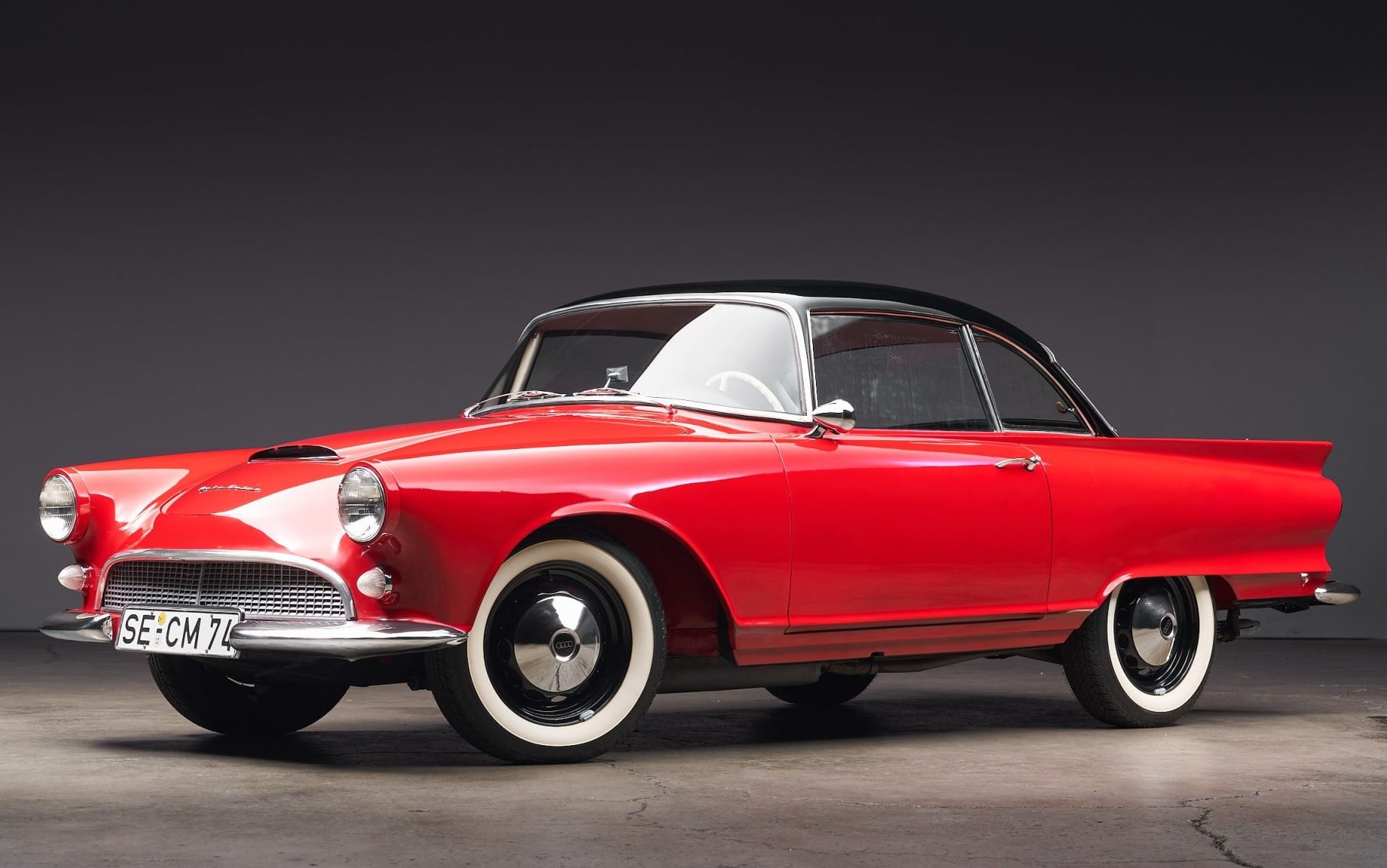
The Auto Union 1000 Sp is a sports car built in West Germany in the late 1950s and into the 1960s. Its similarity to the Ford Thunderbird is clear, but it’s only skin deep – the 1000 Sp is both a two-stroke and front-wheel drive.
1000 Sp Chassis + Coachwork
The 1000 Sp used handbuilt coachwork by Karosserie Baur of Stuttgart, with assembly handled through Auto Union/DKW’s Ingolstadt factory. Baur was already well-known for cabriolet and specialist work for BMW, Porsche, and others.
The steel body sat on the platform of the Auto Union 1000 sedan, which itself was a direct evolution of the unusually-named DKW 3=6 and, further back, the pre-war DKW F9 prototype of 1938.
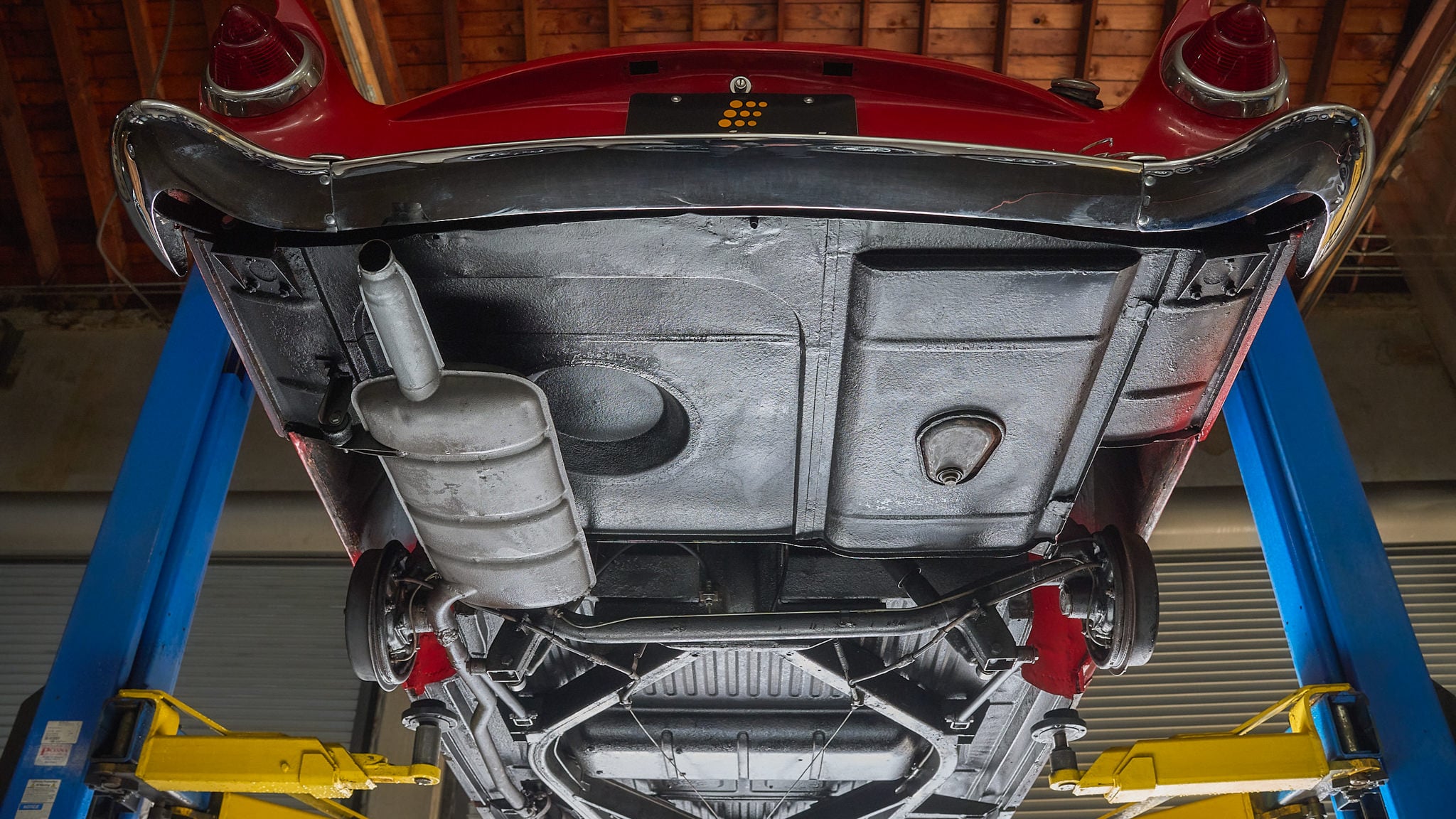
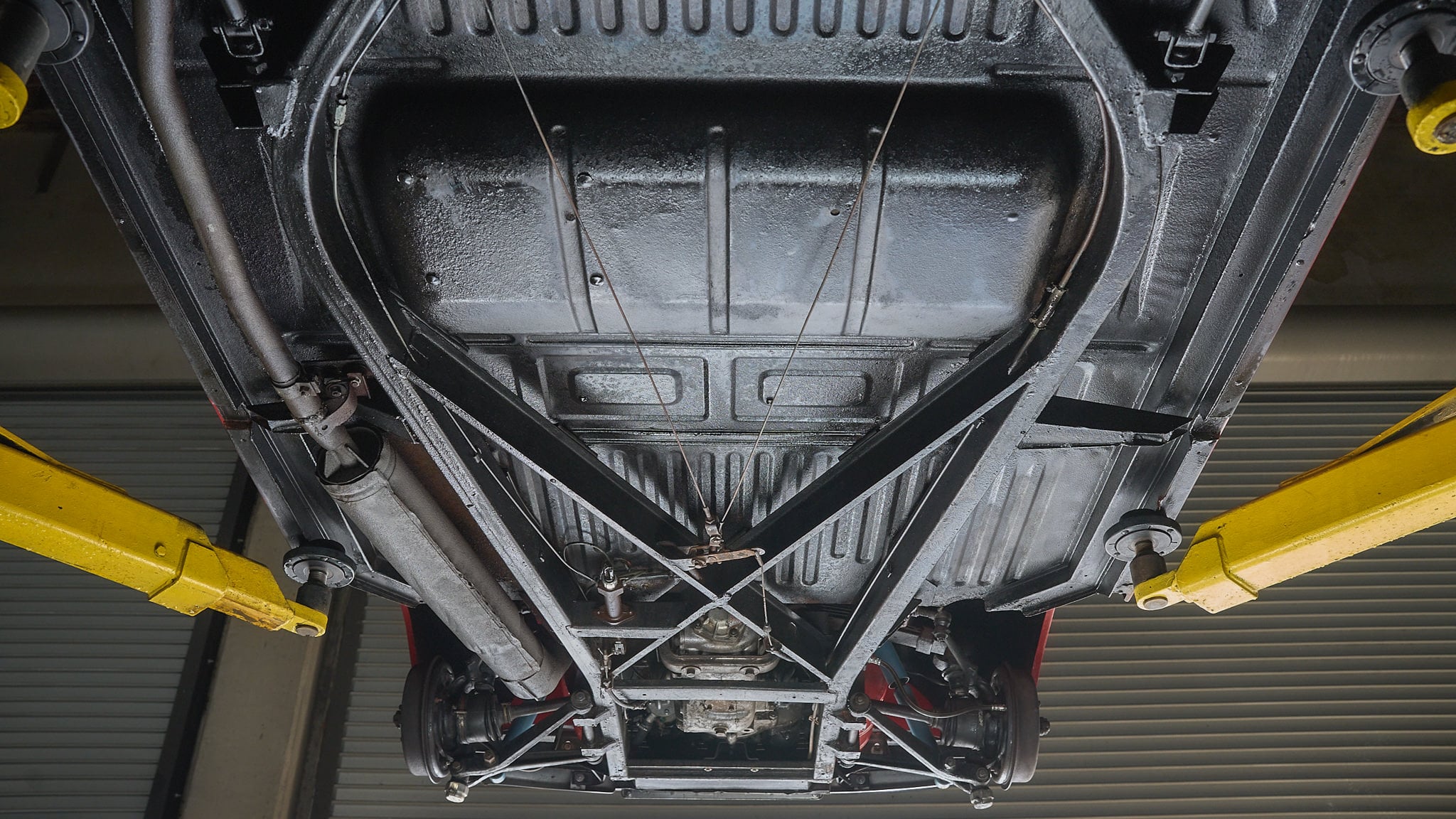
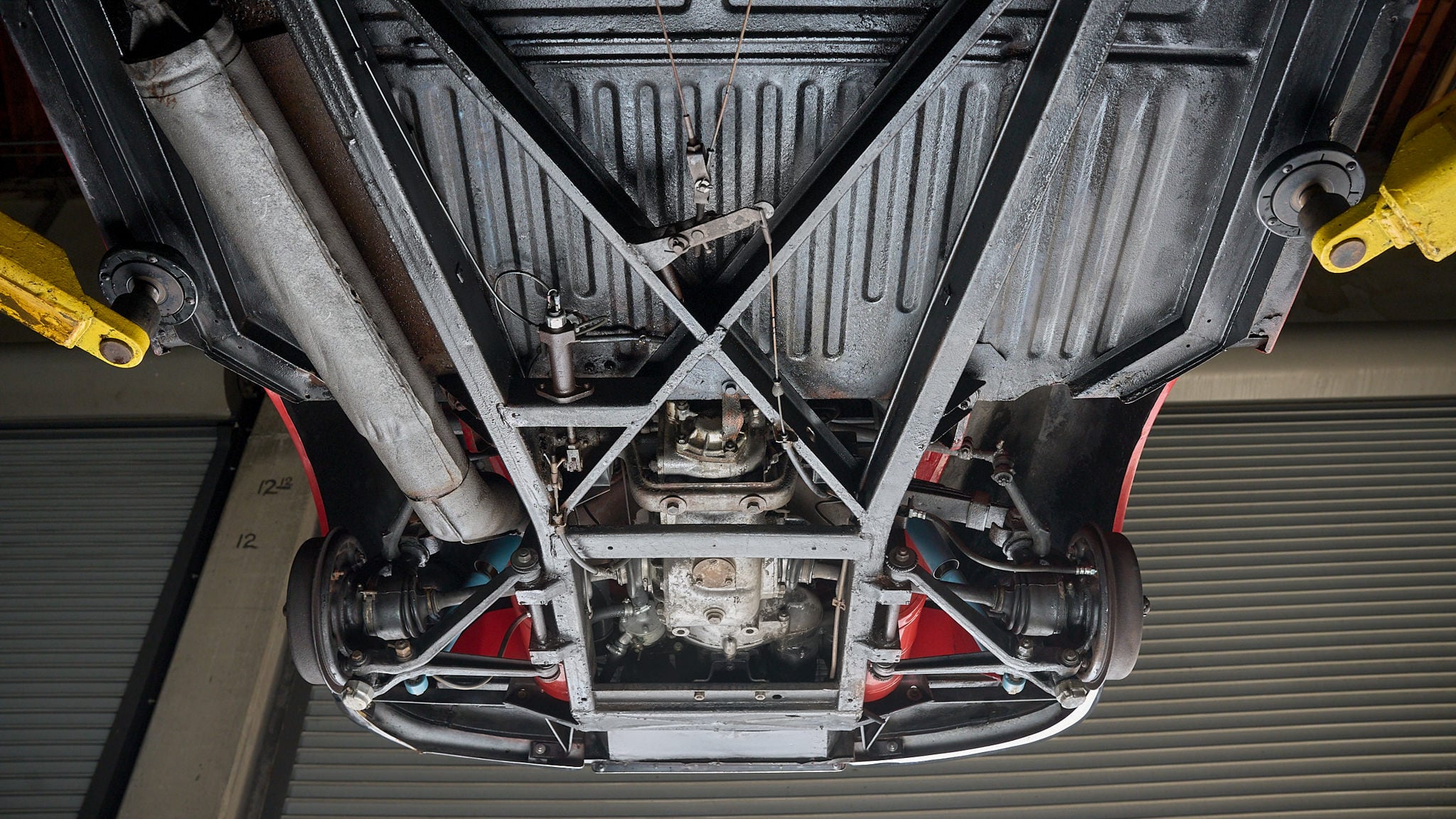
As a result, the 1000 Sp had a box-section frame with independent front suspension by lower wishbones and a transverse leaf spring, and a solid rear axle located by trailing arms and a second transverse leaf.
Braking was handled by drums at all four corners, as you might expect for the era. From chassis number 4,360 onwards, produced in early 1962, the front end was given disc brakes, along with the Bosch-developed automatic oil injection system Auto Union marketed as Frischöl-Automatik.
That change eliminated the need for owners to premix two-stroke oil into the fuel tank, a persistent inconvenience as filling stations increasingly stopped offering pre-mixed pump fuel.
The Auto Union 1000 Sp: Engine + Performance
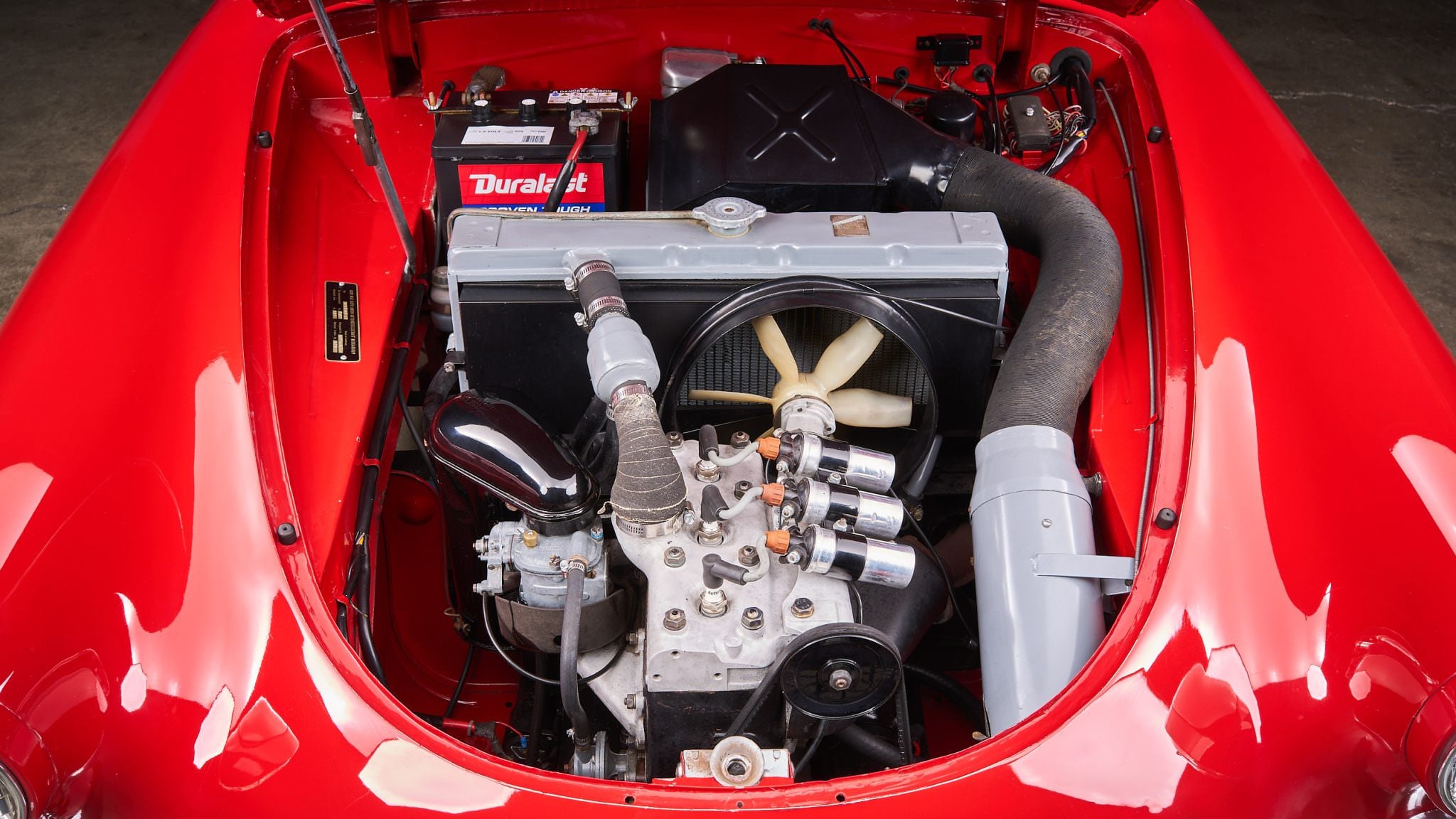
The Auto Union 1000 Sp was powered by Auto Union’s 981cc two-stroke inline-three, this was a water-cooled unit with a cast-iron block, light-alloy head, and 74 mm bore by 76 mm stroke. In 1000 Sp trim it ran a higher compression ratio of 8:1 and, at introduction, a Solex 32/36 NDIX twin-choke carburetor.
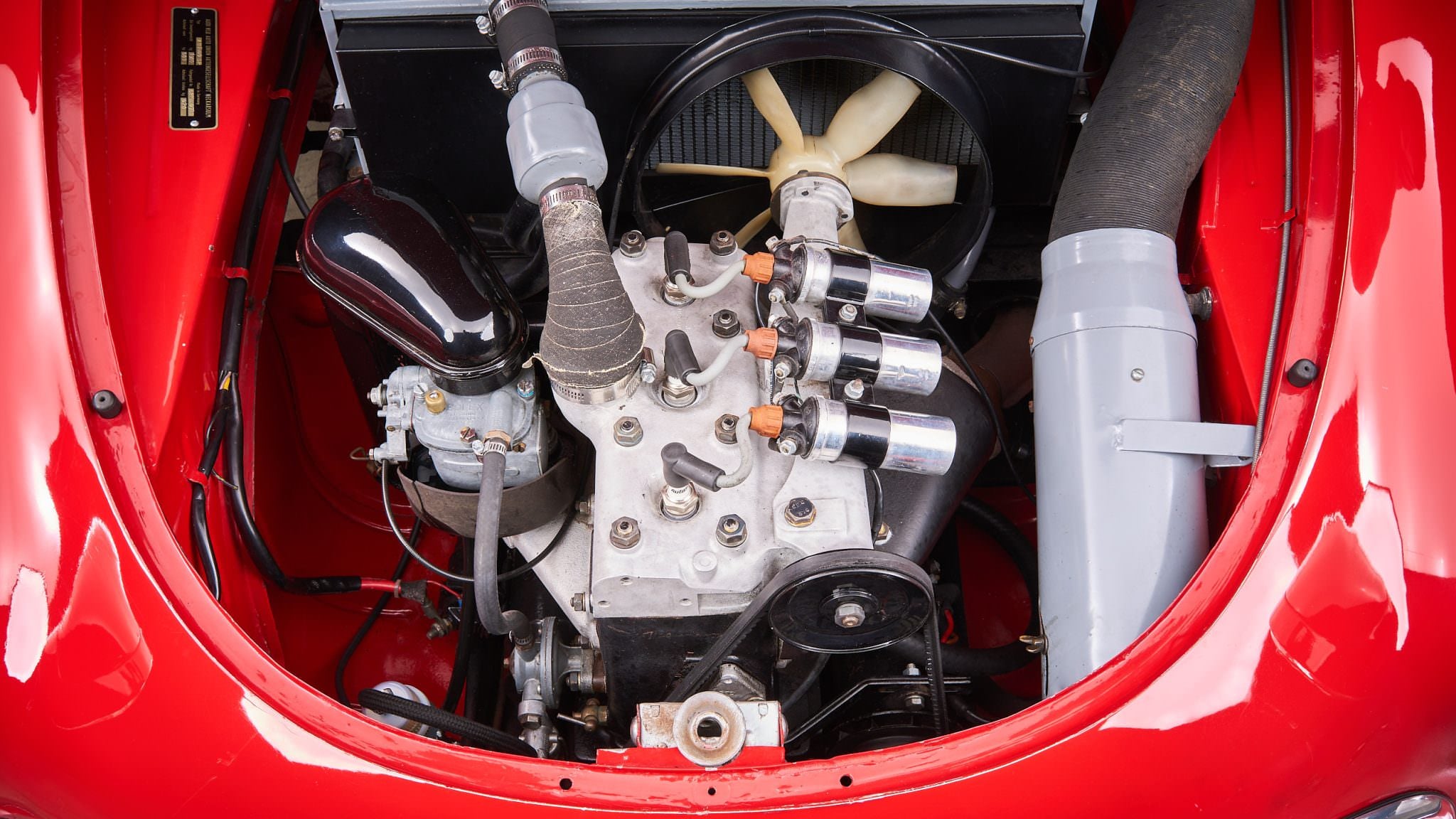
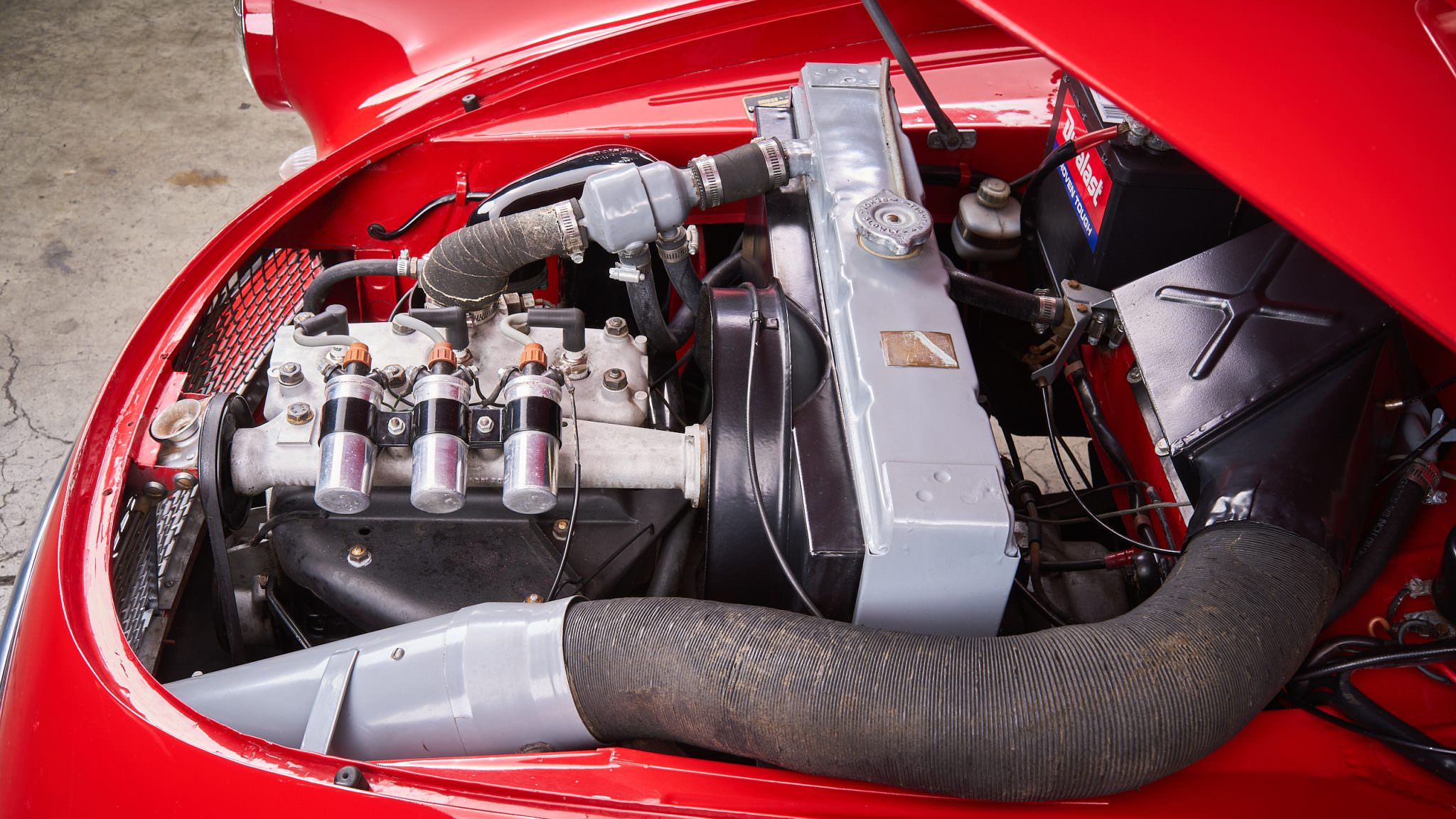
The Auto Union 1000 Sp was powered by Auto Union’s 981cc two-stroke inline-three, this was a water-cooled unit with a cast-iron block, light-alloy head, and 74 mm bore by 76 mm stroke. In 1000 Sp trim it ran a higher compression ratio of 8:1 and, at introduction, a Solex 32/36 NDIX twin-choke carburetor.
Rated output was 55 bhp at 4,500 rpm, up from 44 bhp in the base 1000 sedan and 50 bhp in the 1000S. Later cars with the oil-injection system used a Solex 40 CIB downdraft carburetor in place of the original.
Drive went to the front wheels through a 4-speed manual gearbox with a column-mounted lever, an arrangement inherited directly from the sedan. A Saxomat automatic centrifugal clutch was optional and didn’t seem all that popular with buyers.
Auto Union claimed a top speed of 140 km/h, or 87 mph -by the standards of the time in war-ravaged Germany, this was a decent turn of speed.
Production Numbers + Variants
As noted higher up, the 1000 Sp started life as a fixed head coupe. A cabriolet/convertible (also bodied by Baur) joined the range in September of 1961 and was built through till April of 1965. Total production reached over 5,000 coupes and 1,640 cabriolets across the seven-year run, or around 6,640 cars in total.
Interestingly, there was a small run of 50 cars in 1959 fitted with an experimental 1,280cc two-stroke V6, essentially a pair of the three-cylinder blocks joined at a shared crankcase. The project did not progress beyond that batch, and today, the surviving examples are among the most sought-after cars in the Auto Union back catalog.
The coupe launched at DM 11,950 in Germany, and when the cabriolet joined in 1961 it slotted into the same price band. Both body styles were later cut to DM 10,950, and by early 1965 prices had fallen to DM 9,400.
Auto Union claimed a top speed of 140 km/h, or 87 mph, and period road tests broadly bore that figure out. By the standards of the time in war-ravaged Germany, this was a decent turn of speed.
In the United States, where the 1000 Sp was sold in (very) modest numbers, it retailed at slightly over $4,000 USD, this was roughly in line with an entry-level Chevrolet Corvette which, unsurprisingly, could vastly outperform it.
Production ended in 1965, this was the same year Volkswagen acquired majority control of Auto Union from Daimler-Benz. Volkswagen had little interest in continuing two-stroke passenger cars, and the DKW-based platform was retired in favor of the four-stroke Audi F103 program, which reintroduced the Audi brand name that same year.
Surviving examples of the 1000 Sp are now scarce, and they’re considered highly collectible. They went through a long period of being seen as unusual post-war German sports cars that weren’t particularly fast – desirability was low and many were lost to rust, scrapyards, or neglect.
Good restored examples are now much sought after, particularly in Europe and the United States, and they’re known for drawing crowds at gas stations – with people often thinking that they’re looking at some sort of German-built Thunderbird.
The Auto Union 1000 Sp Shown Here
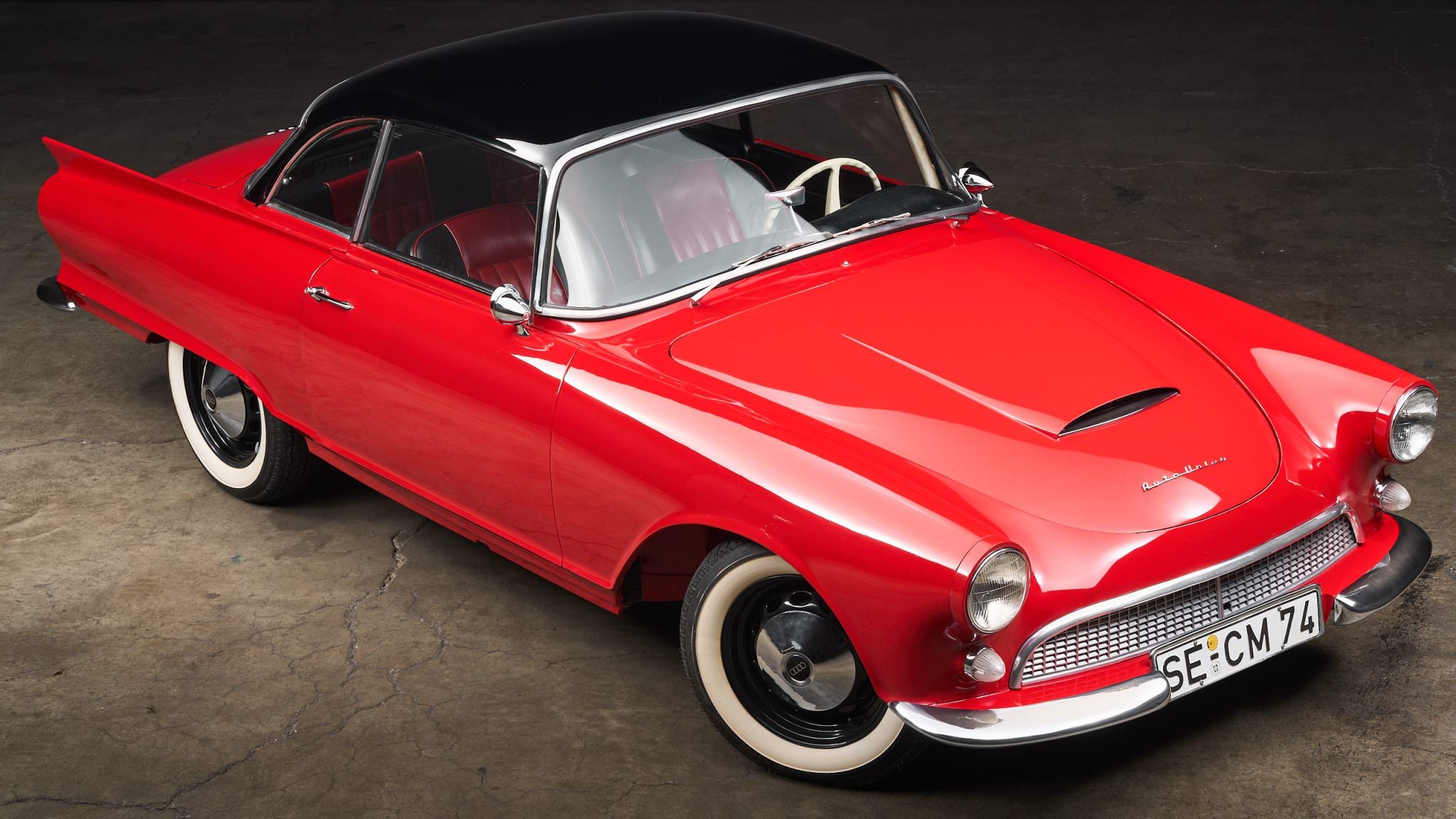
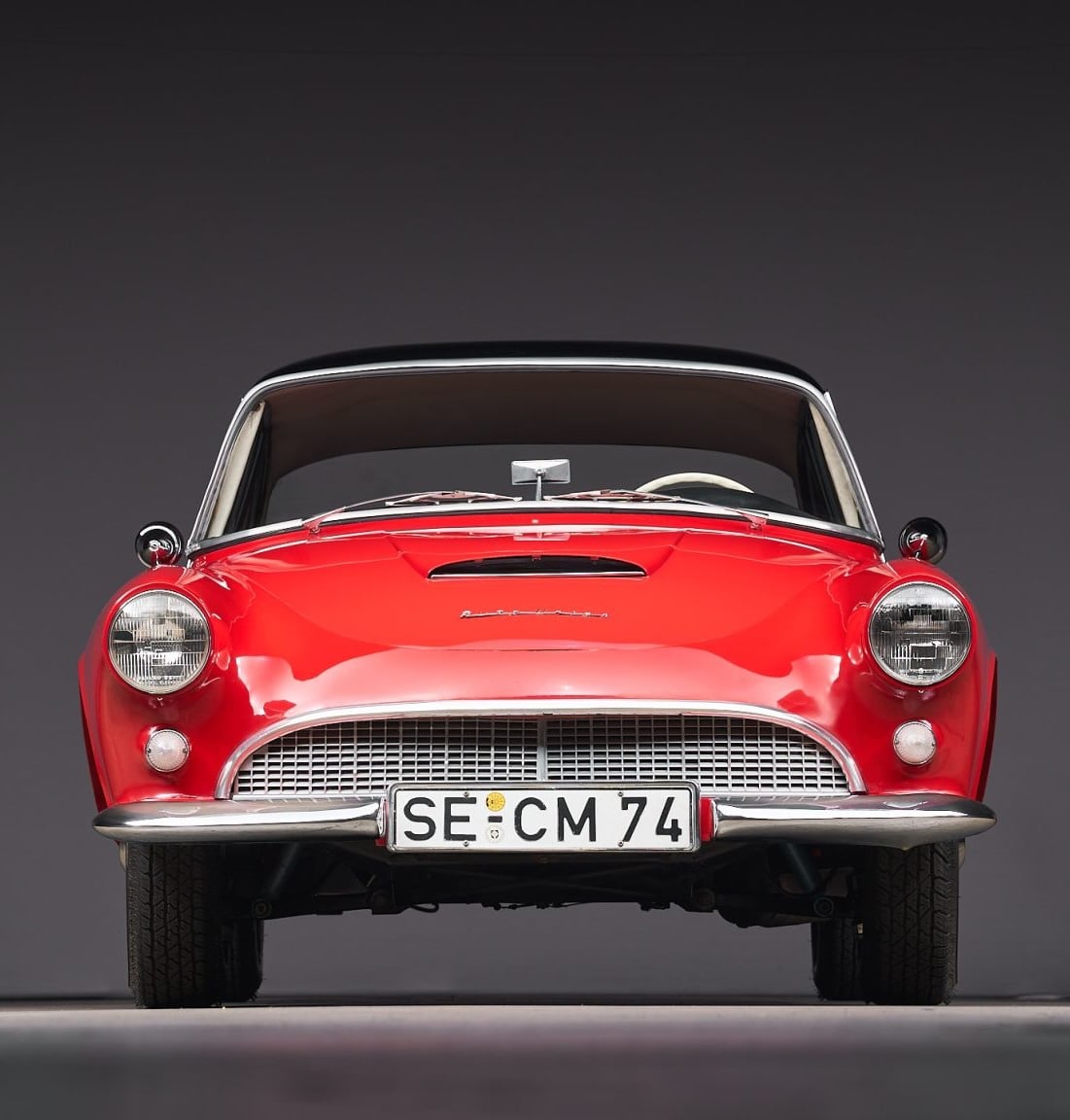
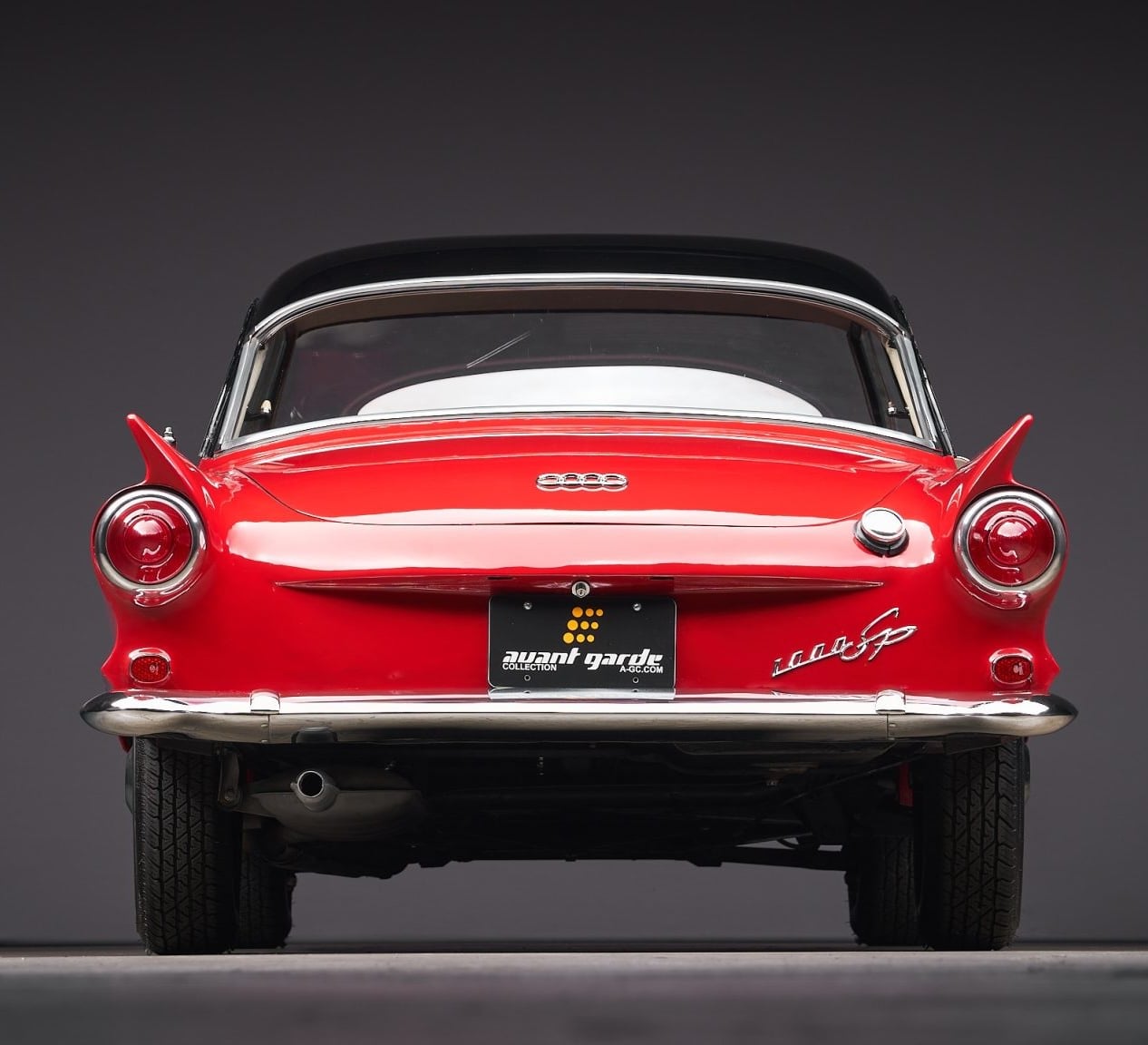
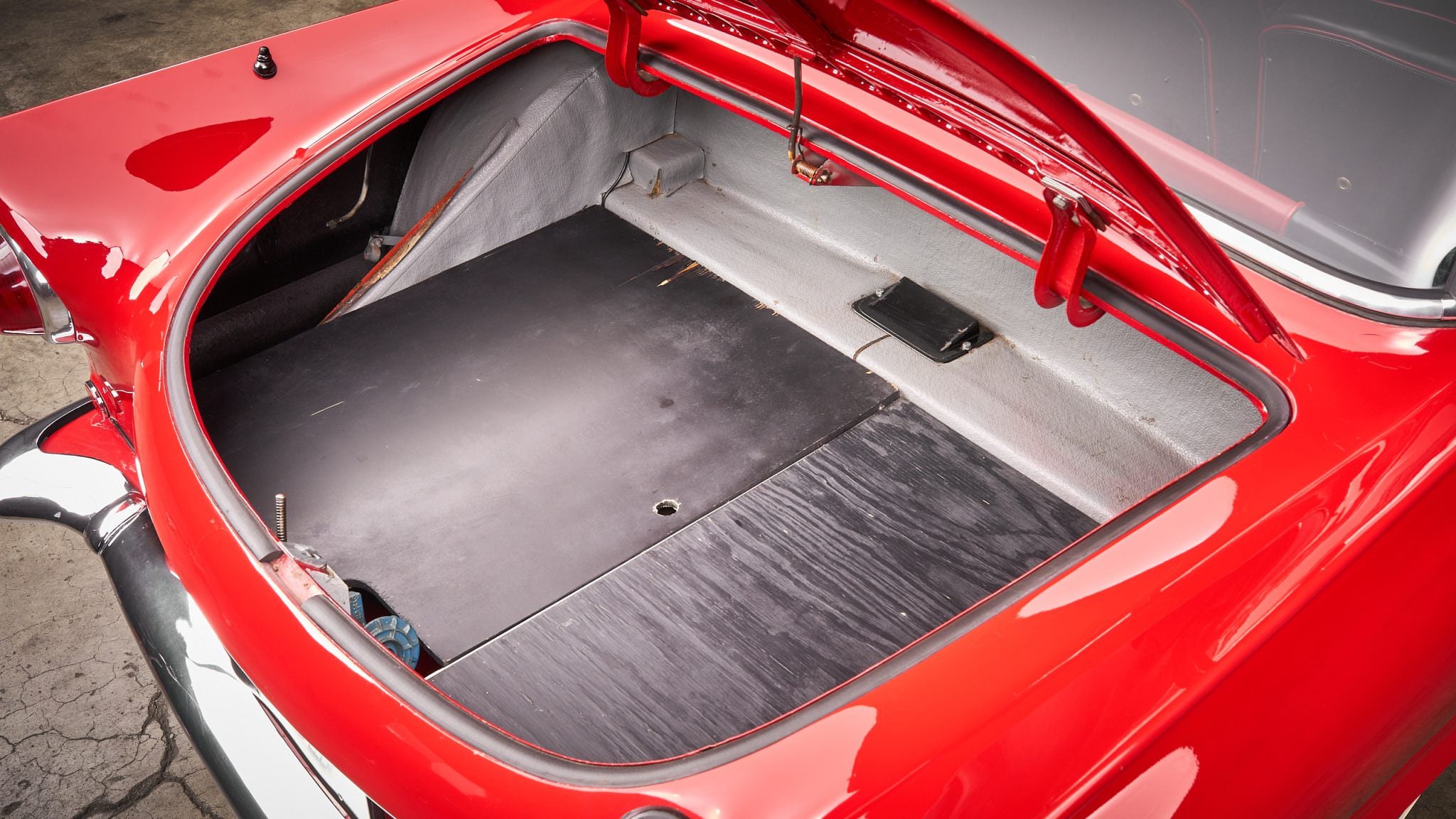
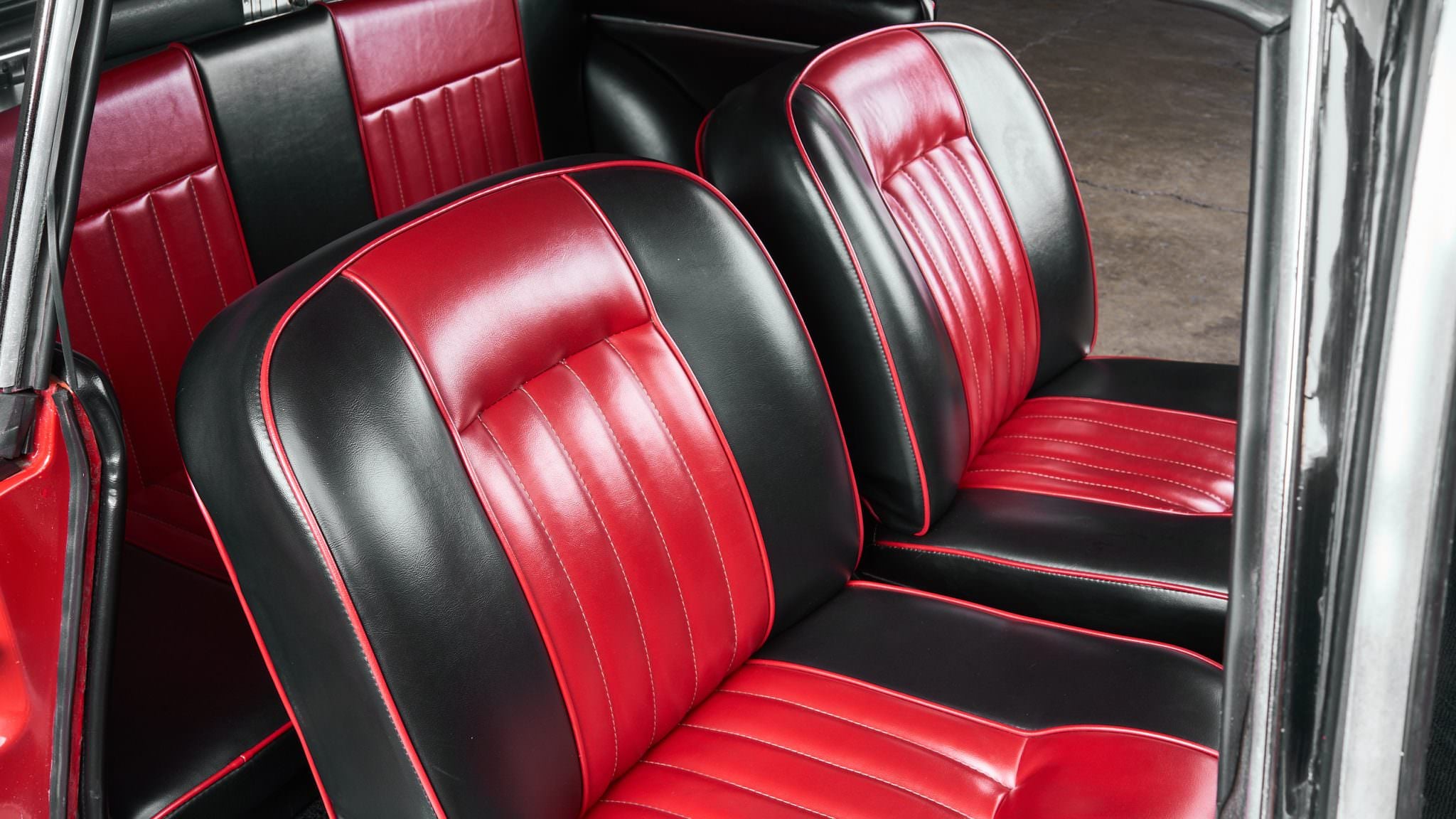
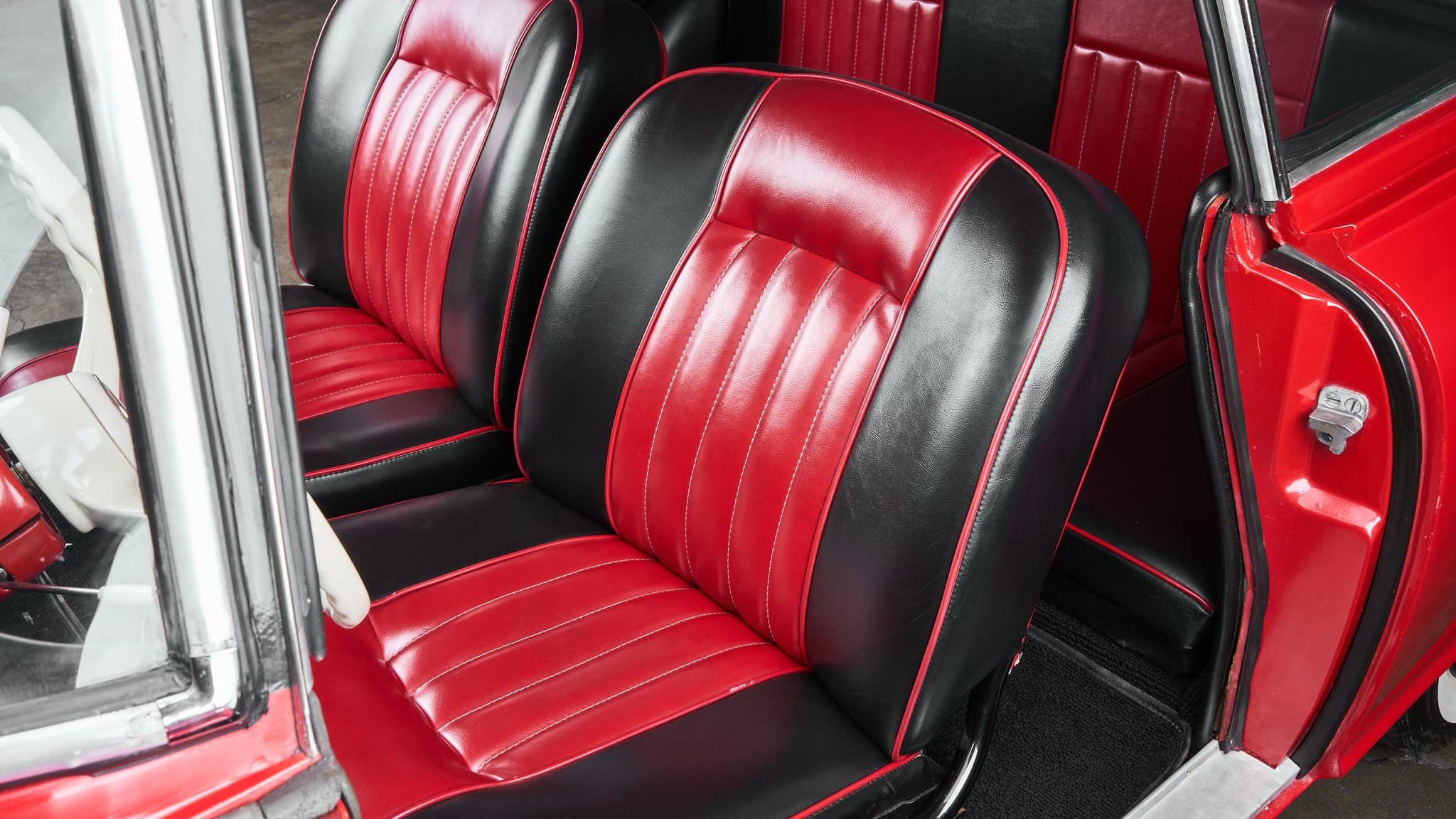
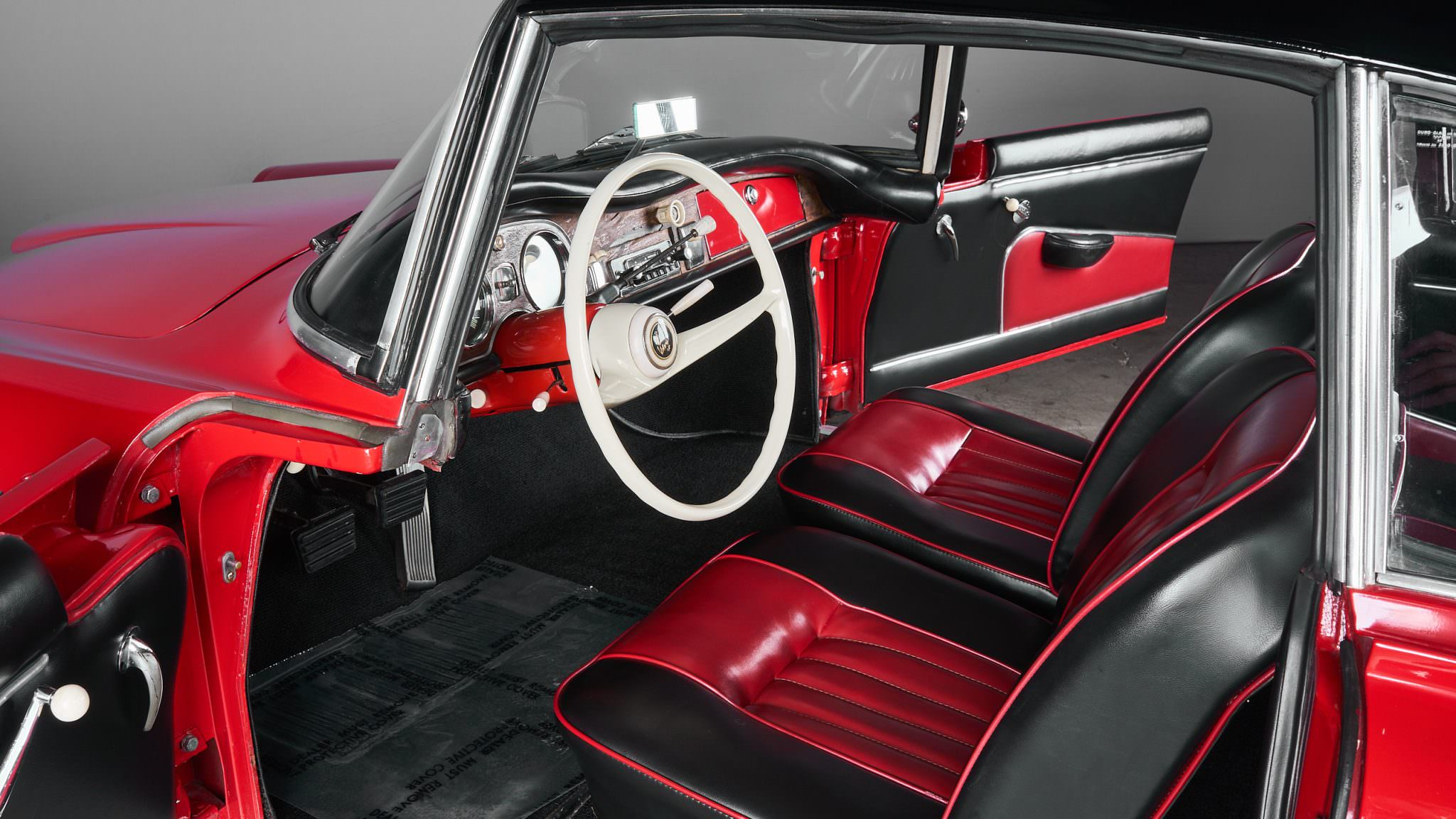
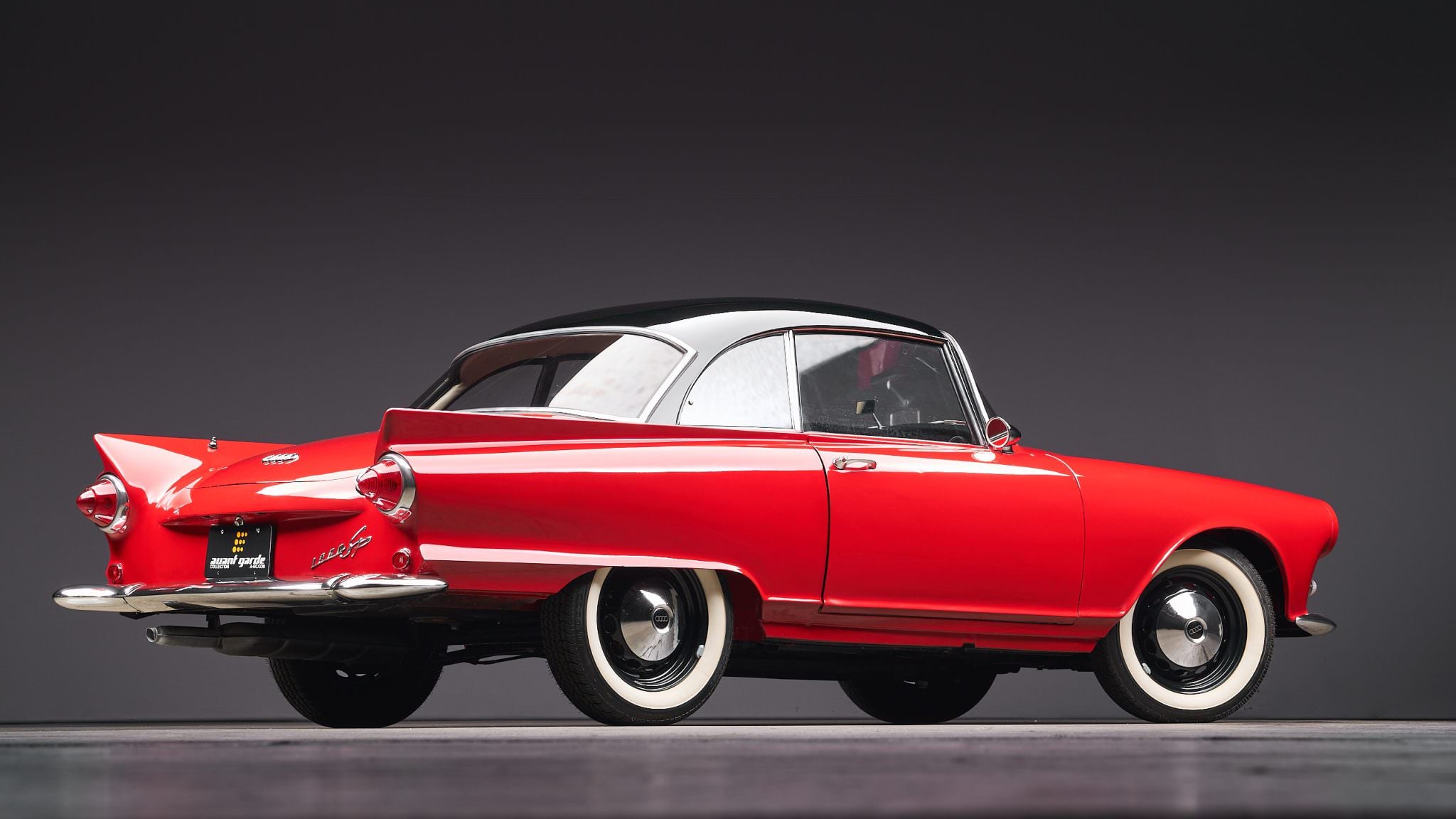
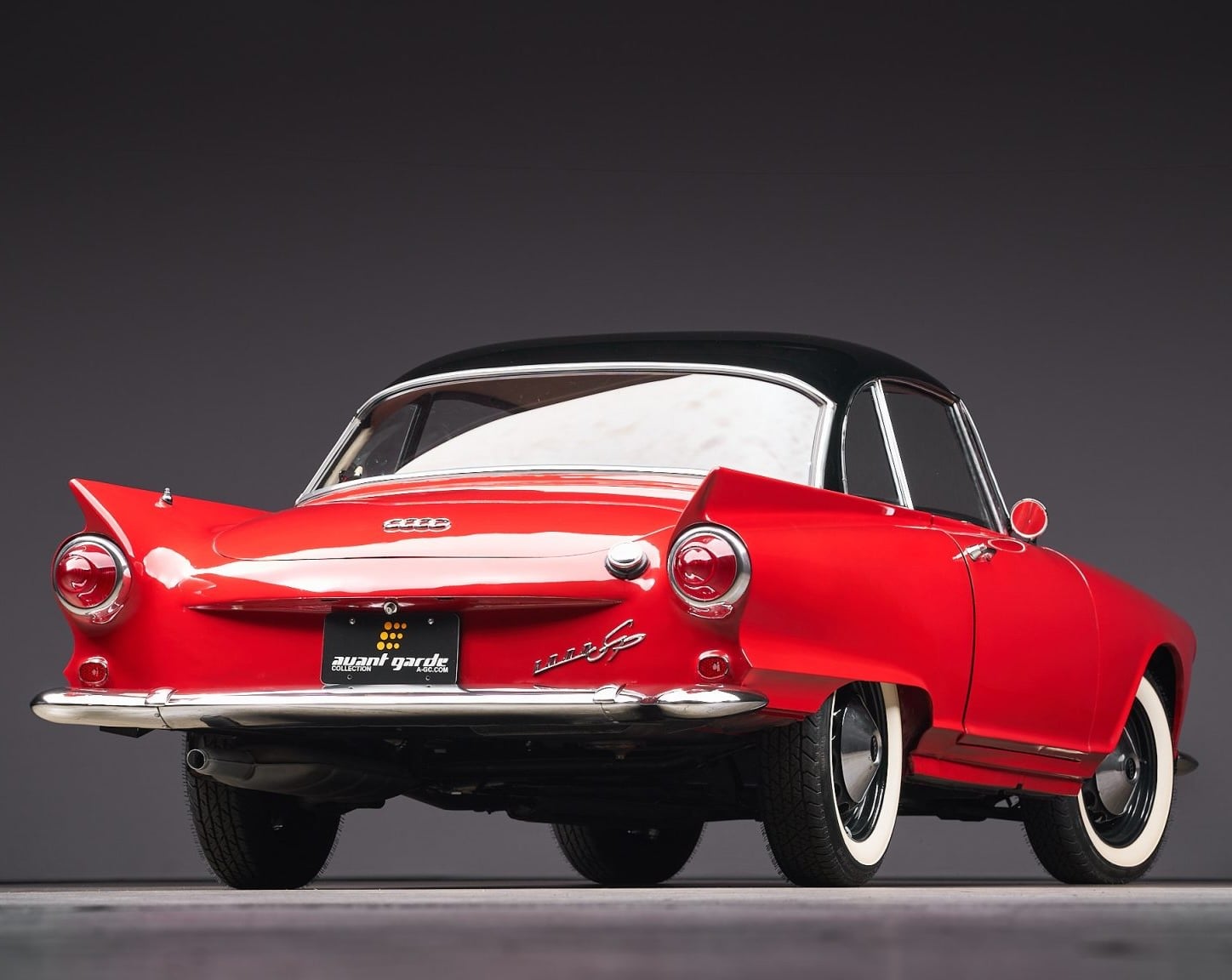
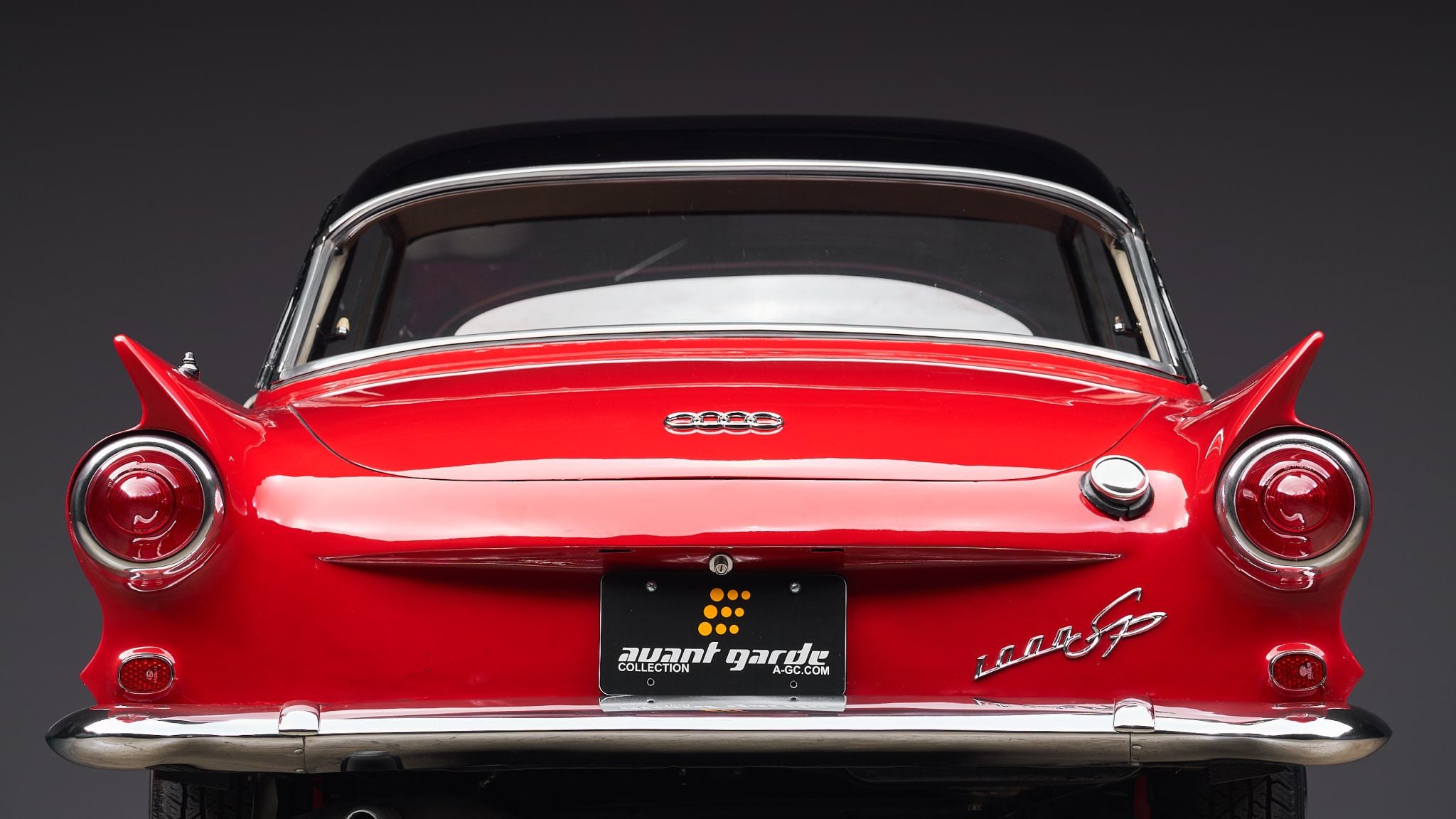
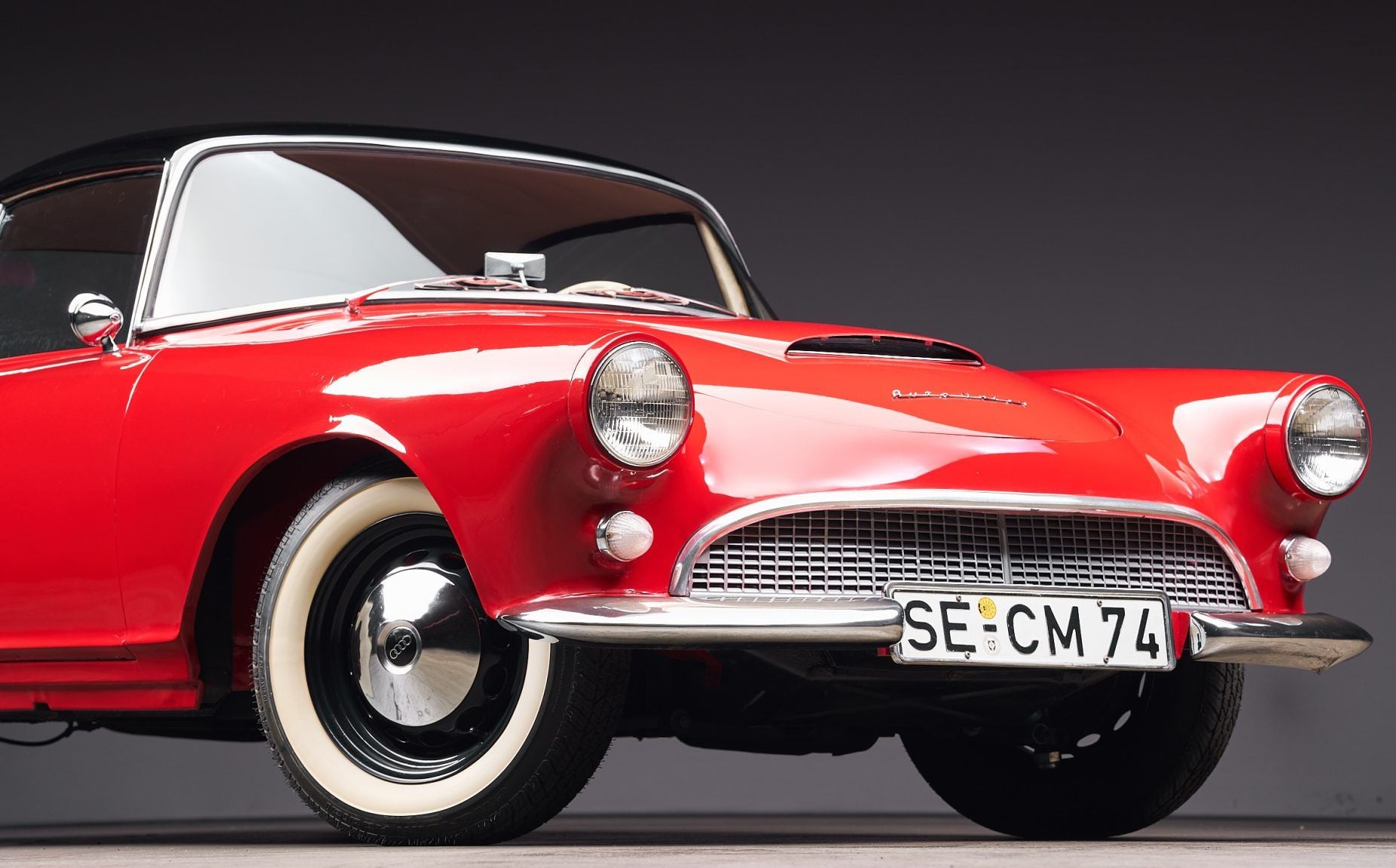
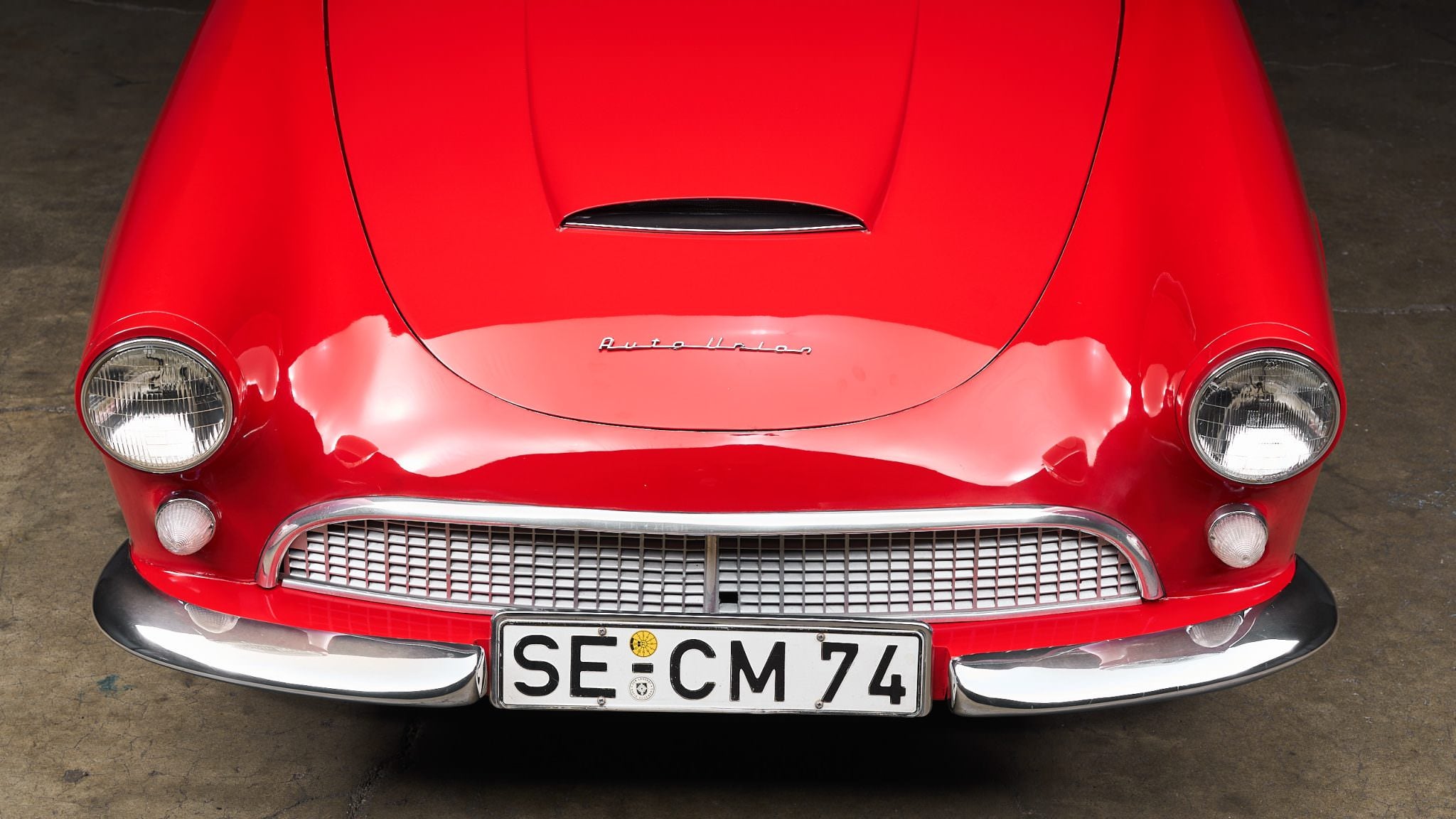
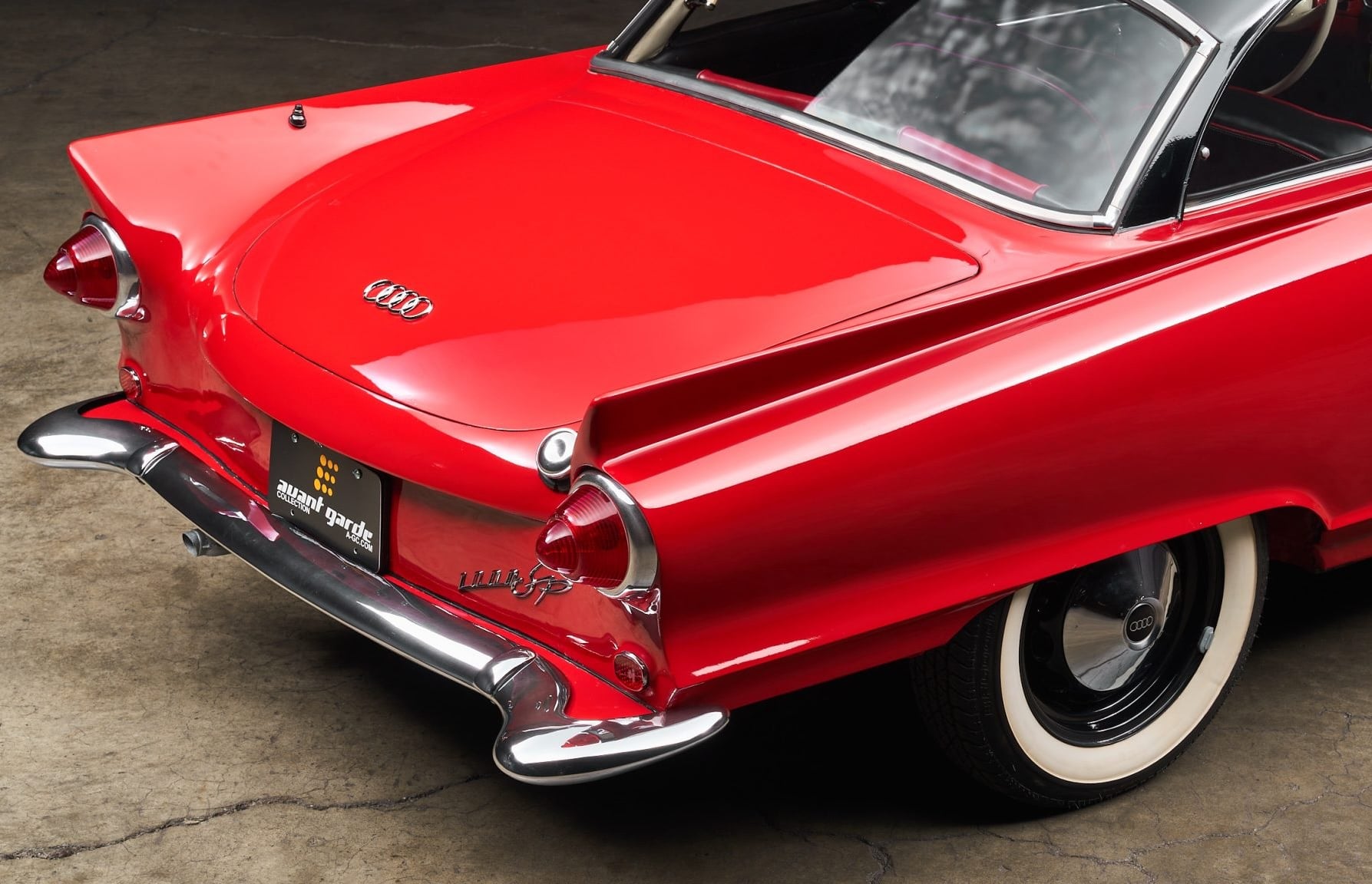
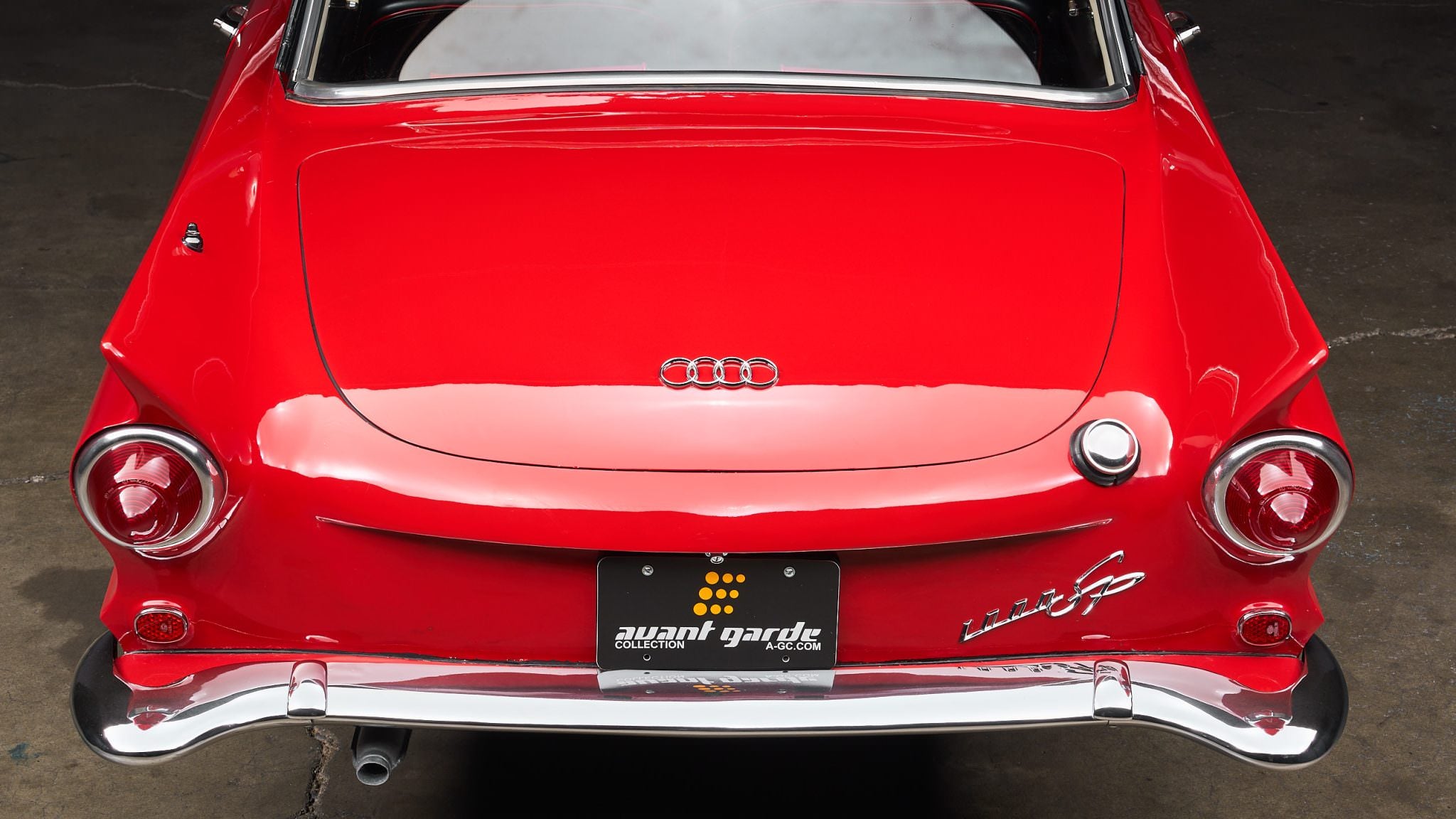
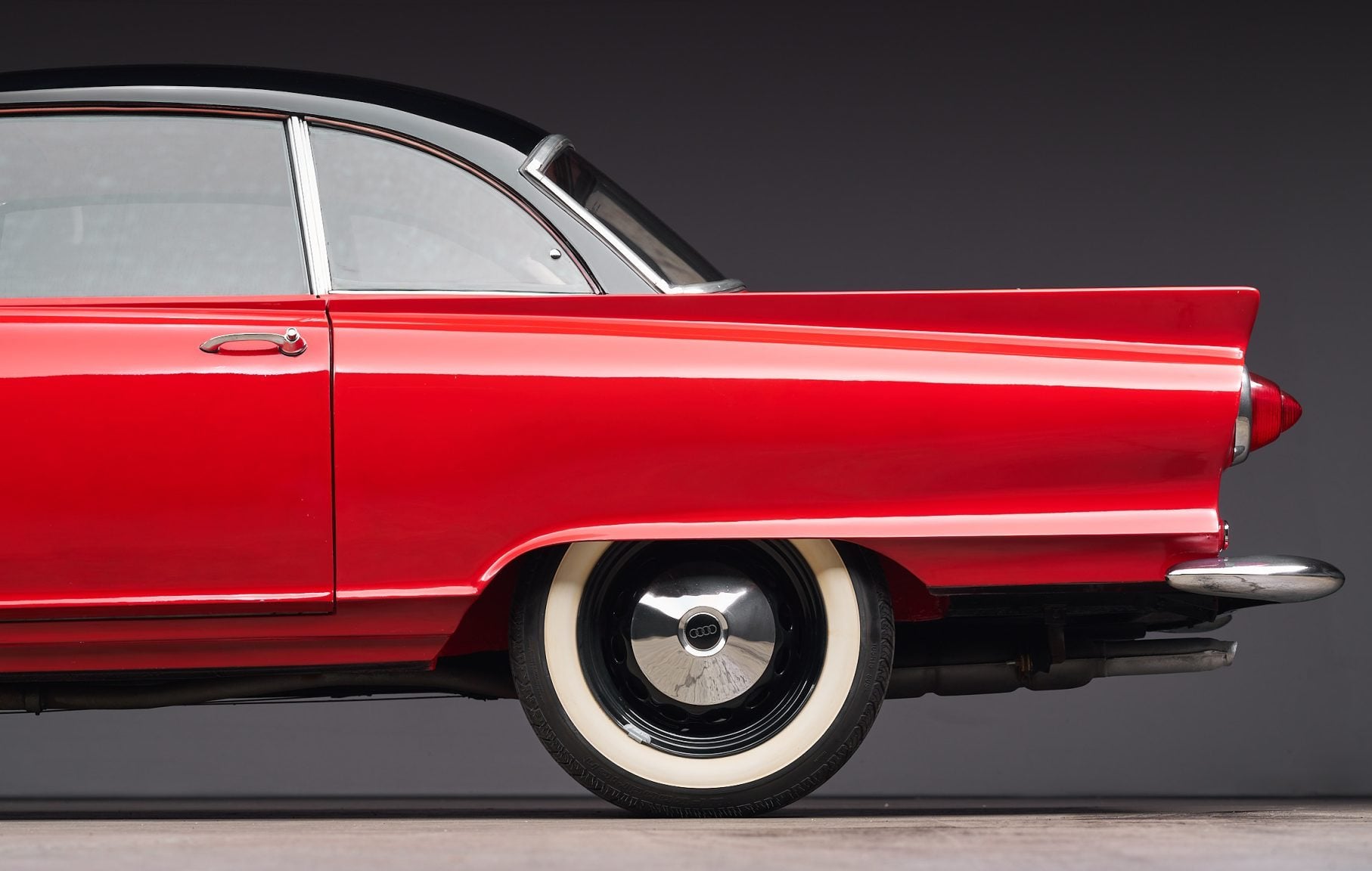
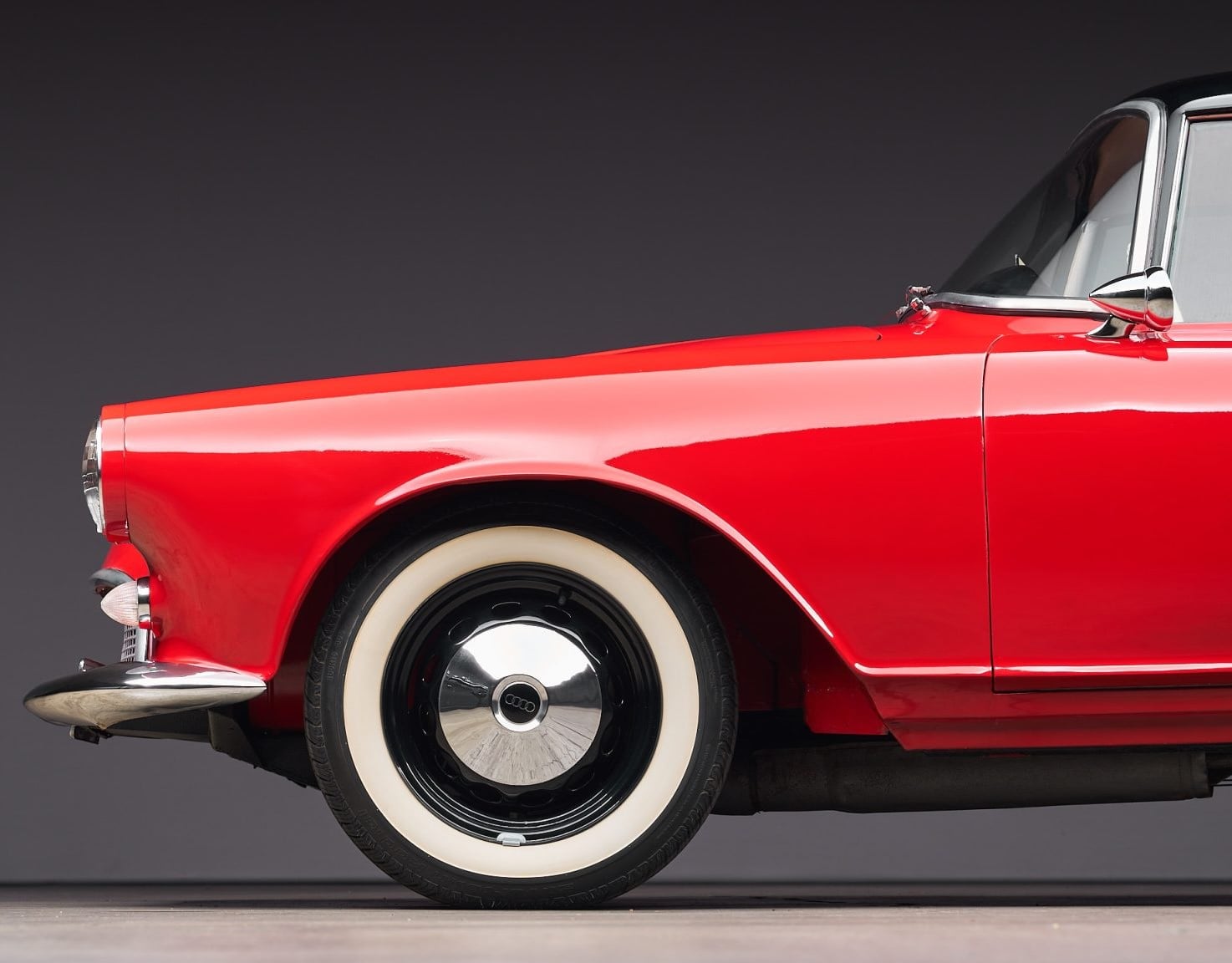
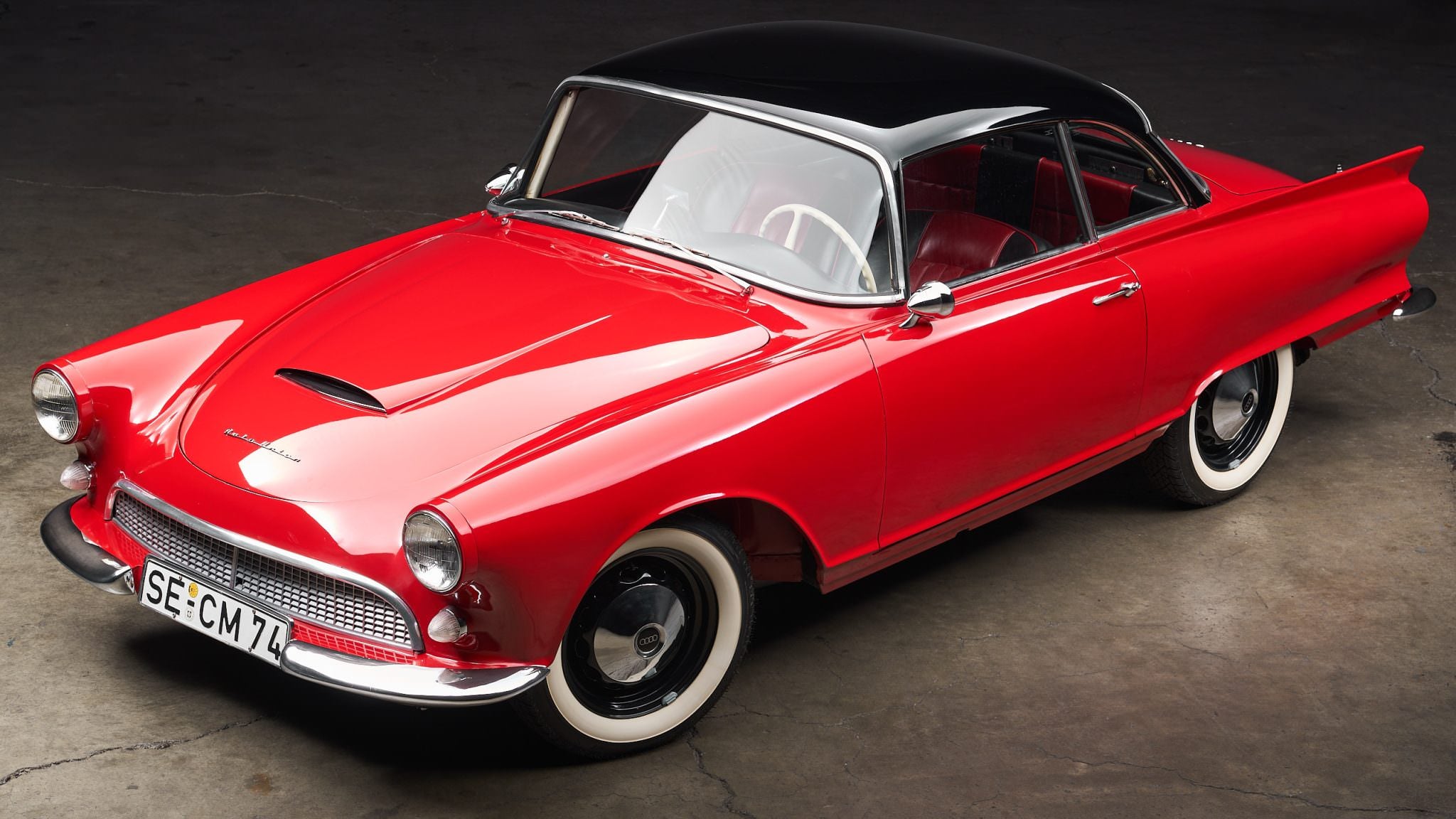
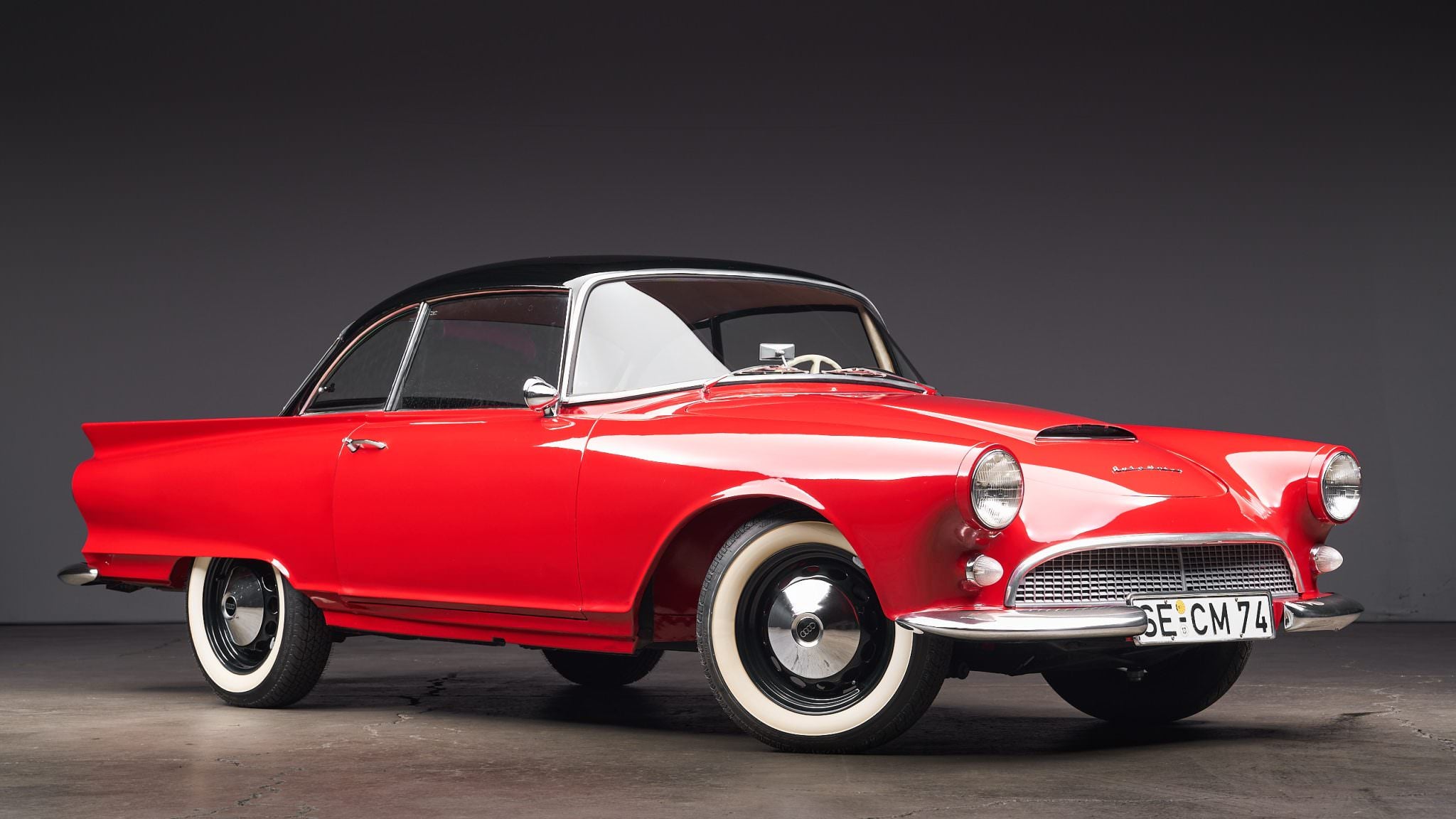
This is an original 1959 Auto Union 1000 Sp coupe finished in red over a black roof with a two-tone black and red interior, and as you would expect, it’s powered by a 981cc two-stroke inline-three paired with a column-shifted 4-speed manual transaxle driving the front wheels.
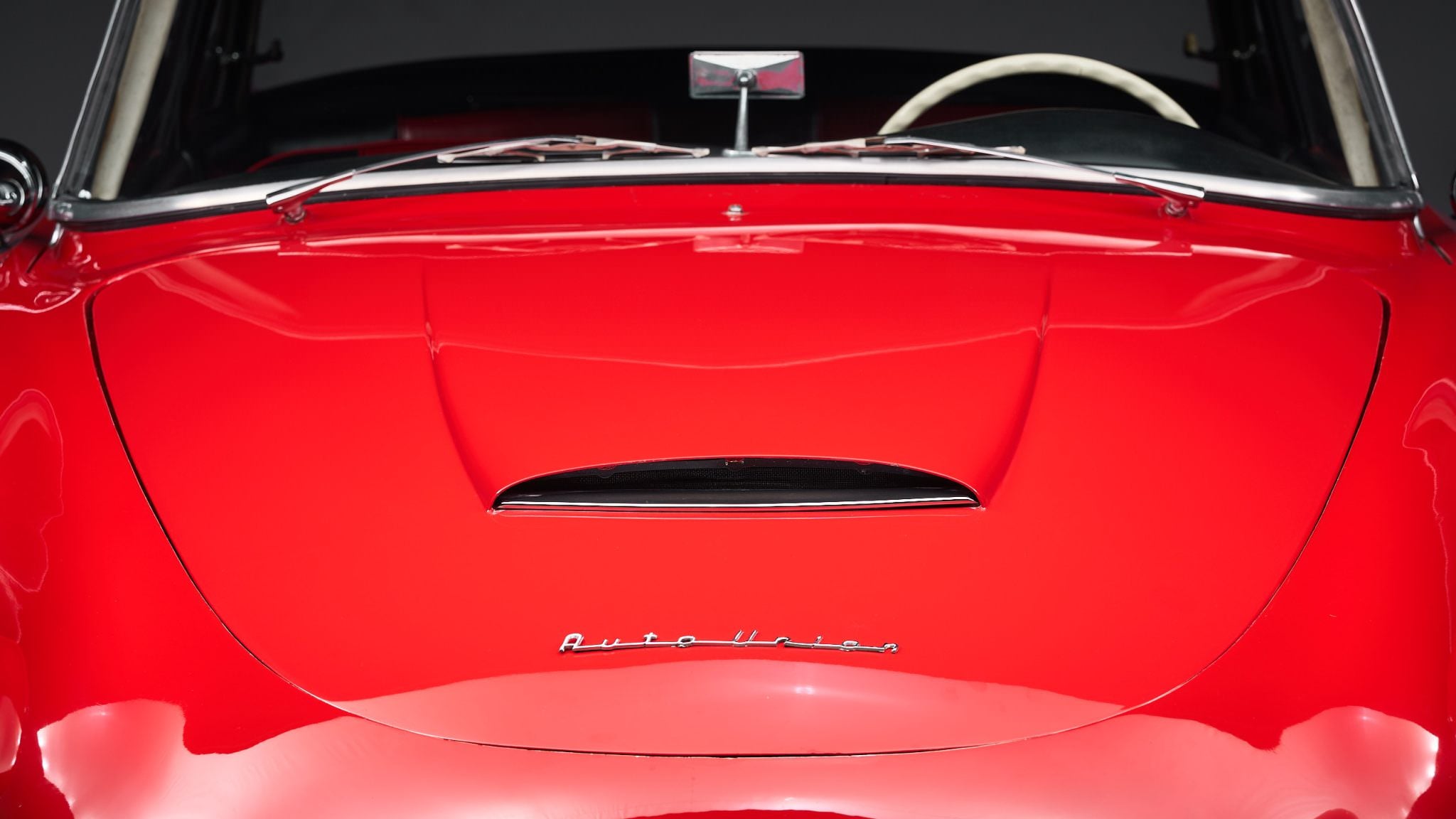
Equipment includes 15 inch black-painted wheels with chrome hubcaps and 165 series BFGoodrich Silvertown Radial whitewall tires, a hood scoop, quarter-panel fins, dual bullet-style mirrors, chrome bumpers, fold-down front seats, a woodgrain dashboard, and an ivory-color two-spoke steering wheel.
Instrumentation includes a 100 mph VDO speedometer, auxiliary fuel and coolant temperature gauges, and a five-digit odometer showing 67,000 miles. The car was awarded Best of Show Audi at the 2019 Legends of the Autobahn in Monterey.
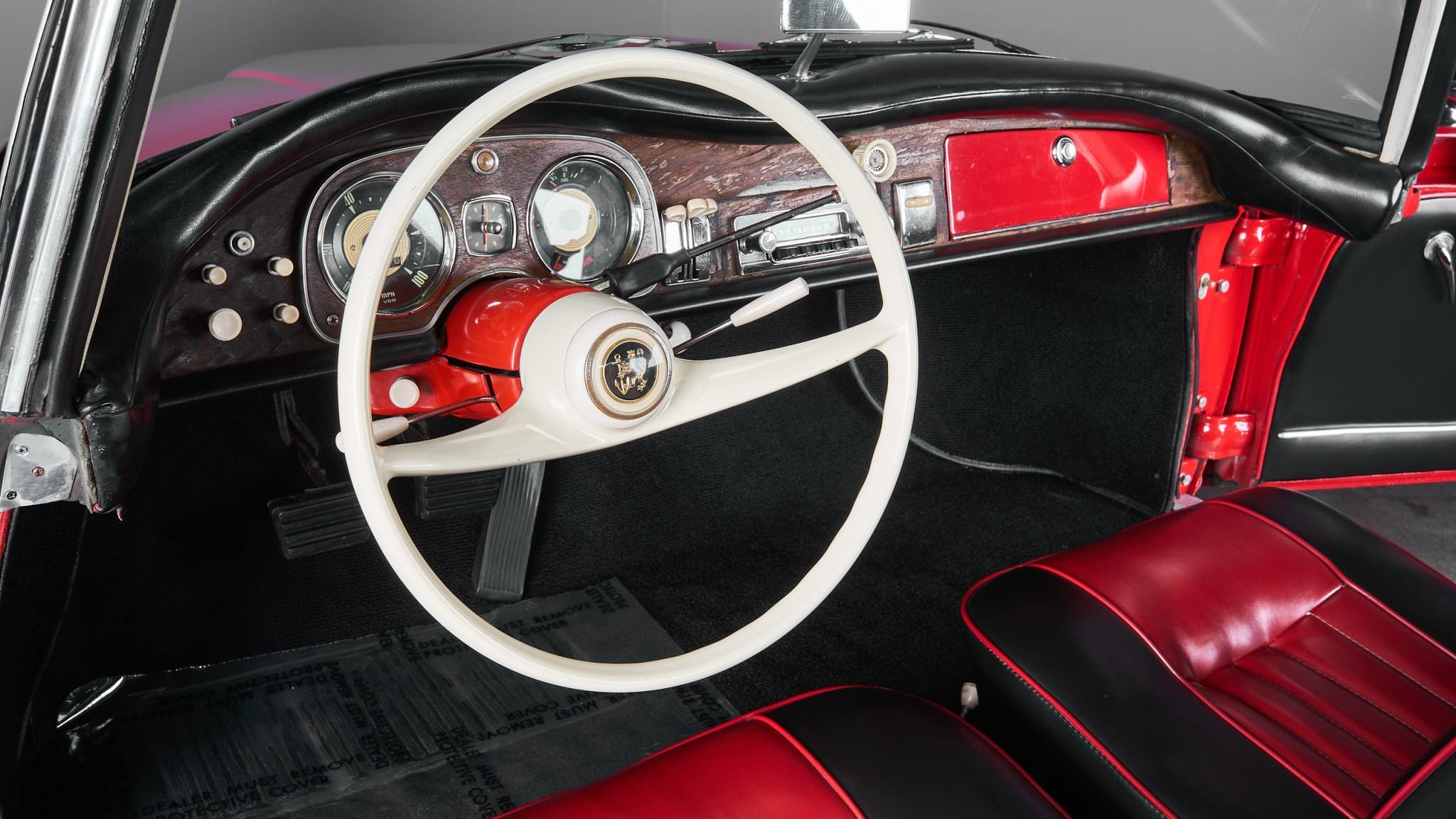
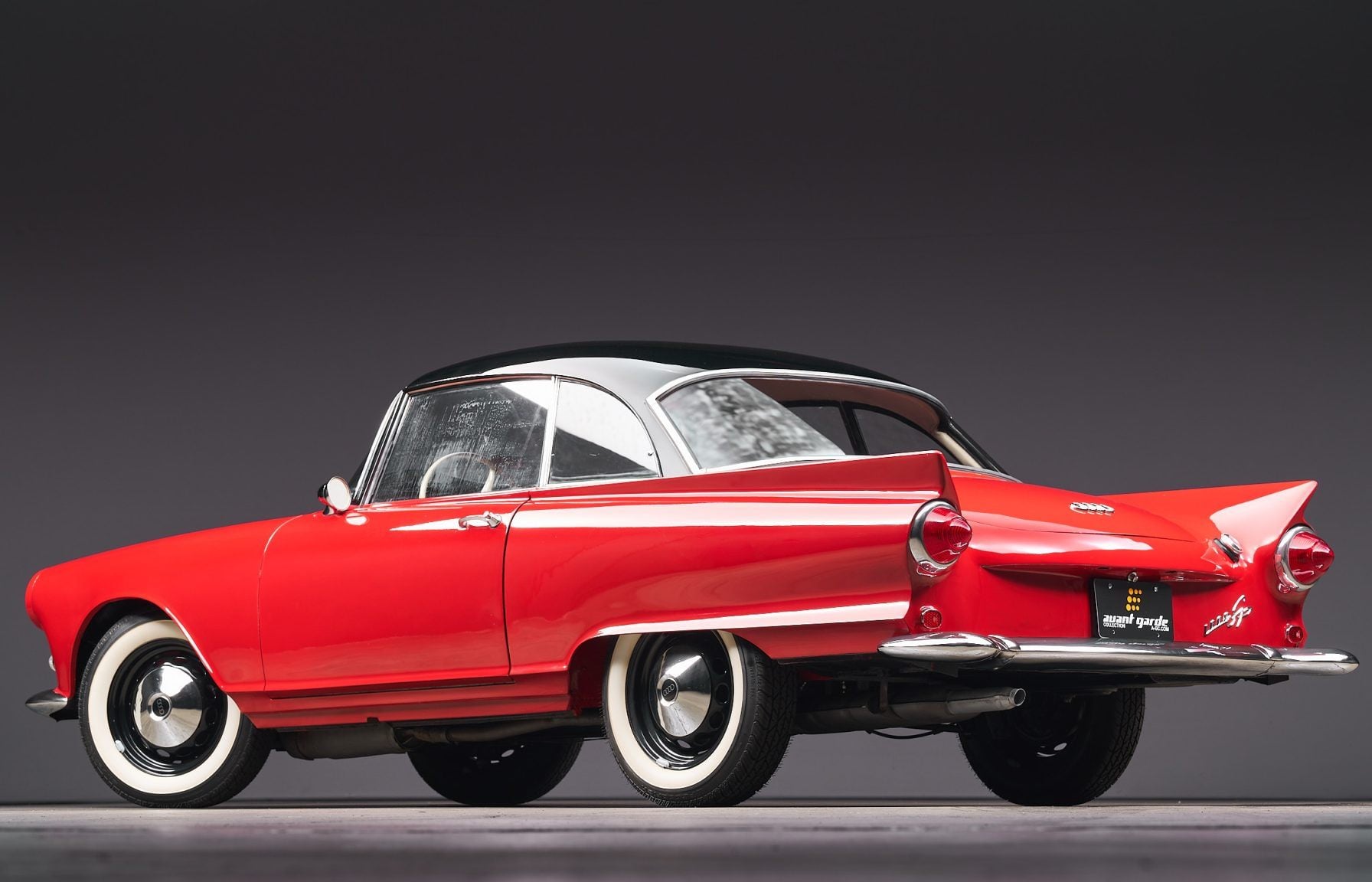
This is an original 1959 Auto Union 1000 Sp coupe finished in red over a black roof with a two-tone black and red interior, and as you would expect, it’s powered by a 981cc two-stroke inline-three paired with a column-shifted 4-speed manual transaxle driving the front wheels.
Recent work carried out in preparation for the sale includes a rebuilt carburetor, replacement fuel filter, fuel lines, spark plugs, plug wires, battery, battery cable, starter, and coil wires, along with new axle boots, replaced rear brake hoses, brake adjustment, secured seat rails, and horn repair completed in February of 2026.
The car is now being offered on dealer consignment out of Oregon with a duplicate Washington State title. If you’d like to read more about it or place a bid you can visit the listing here.
Images courtesy of Bring a Trailer + Auto Union

Articles that Ben Branch has written have been covered on CNN, Popular Mechanics, Smithsonian Magazine, Road & Track Magazine, the official Pinterest blog, the official eBay Motors blog, BuzzFeed, Autoweek Magazine, Wired Magazine, Autoblog, Gear Patrol, Jalopnik, The Verge, and many more.
Silodrome was founded by Ben back in 2010, in the years since the site has grown to become a world leader in the alternative and vintage motoring sector, with well over a million monthly readers from around the world and many hundreds of thousands of followers on social media.
