
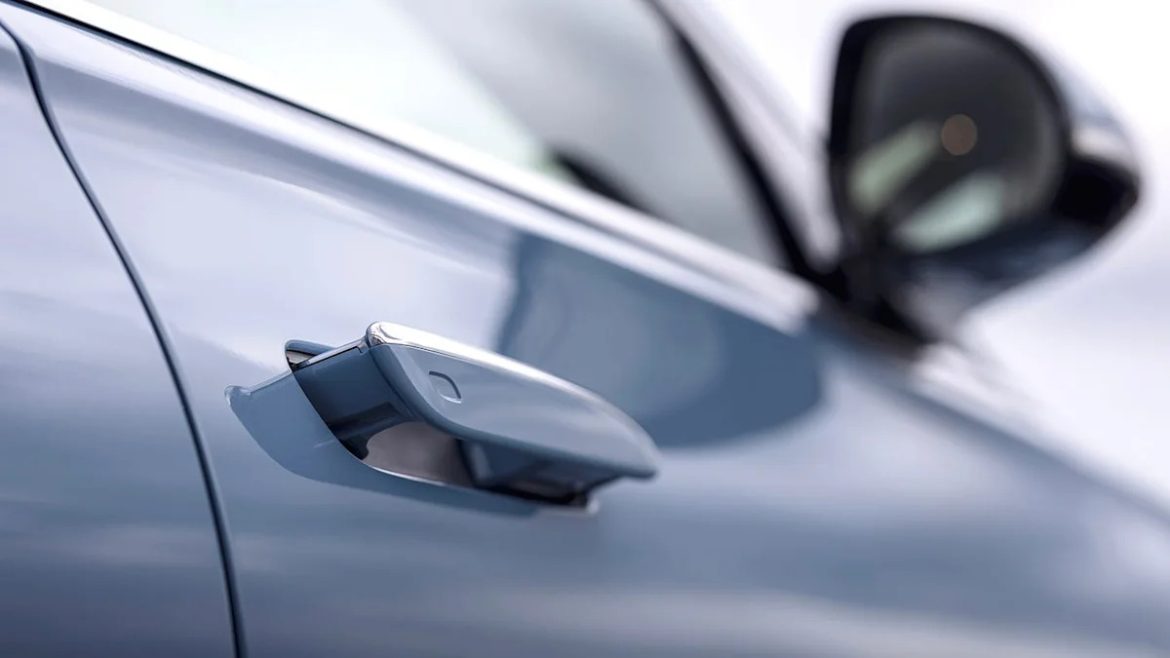
Back in February, China announced it would crack down on hidden exterior door handles like those found on many new electric vehicles, and we noted that federal legislation was being crafted to establish door-handle and emergency-egress requirements in the United States. Now, the National Highway Traffic Safety Administration, or NHTSA, says its Office of Rulemaking has begun the process of adding “robust and obvious door egress” requirements to the Federal Motor Vehicle Safety Standards (FMVSS).
The move followed a petition from Tesla Model 3 owner Kevin Clouse, who argued that his 2022 Model 3 failed to comply with Federal Motor Vehicle Safety Standard 206 after he struggled to escape the car following a head-on collision.
A Petition Denied, but a Point Made
NHTSA ultimately denied Clouse’s request for a defect investigation, finding that the petition did not present evidence of a likely safety-related defect warranting one. However, the agency agreed that the broader issue deserved attention and referred it to the Office of Rulemaking.
Advertisement
Advertisement
Clouse detailed his traumatic experience after his Model 3 was involved in the collision that resulted in power loss. Teslas, like many of the latest vehicles, have electronic door-opening mechanisms that can become inoperable if a vehicle loses power. There are almost always backup mechanical releases, but in many cars these are poorly labeled (or not at all), difficult to find, nonintuitive in operation, or some combination of these.
To that point, although Clouse eventually escaped the all-electric sedan, he also couldn’t locate the mechanical emergency release for the front door. Ultimately, Clouse climbed over the front seats and escaped through the rear passenger door window. The 2022 Model 3, the year and model Clouse was driving, does not have readily accessible mechanical emergency releases for rear-seat passengers.
In his petition, Clouse argued that the hidden and unlabeled front mechanical release, combined with the lack of accessible rear mechanical releases, meant the Model 3 failed to comply with FMVSS 206. However, NHTSA found that the standard does not currently establish the emergency-egress requirements described in the petition.
Not the Only Tesla Under Investigation
This isn’t the only time Tesla’s door handles have drawn NHTSA scrutiny. The agency’s Office of Defects Investigation also opened an investigation into approximately 174,000 2021 Model Ys after receiving nine complaints involving exterior door handles that stopped working when the vehicles lost low-voltage power.
Advertisement
Advertisement
Several complaints involved parents who exited their vehicles and then couldn’t reopen the doors to retrieve children inside, creating an especially dangerous situation in hot weather. In some cases, the parents had to break a window to get their children out.
Why Aren’t Emergency Manual Handles Mentioned in the FMVSS?
The larger problem is that FMVSS 206 was written before electronically operated door releases became widespread, and it has not kept pace with the technology. That’s a common problem with the FMVSS code, which often trails the latest vehicle technologies by years or even decades. For example, outdated FMVSS regulations are also why the United States was so late to permit safety features such as adaptive driving beam headlights.
Rather than brushing the door-release issue aside, NHTSA determined there is enough of a broader safety concern to begin writing new requirements. Because the process is just getting underway, the agency has not indicated exactly how the rules could change or what automakers would need to do to comply.
It Won’t Happen This Year or Next
These changes will also move at the speed of the federal government, which is notoriously slow. Adaptive driving beam headlights had been available overseas for years before the United States finally permitted the technology in 2022. Developing a rule is only part of the process, too. NHTSA must finalize it and give automakers time to bring their vehicles into compliance.
Advertisement
Advertisement
Although this rule change is unlikely to take nearly 20 years, don’t expect it this year or even next. Michael Brooks, executive director of the Center for Auto Safety, told Bloomberg he would not expect a final compliance date for automakers before 2030, even if the rulemaking process moves swiftly. Based on how long federal safety rules can take to develop and implement, compliance could conceivably slip into the first half of the 2030s.
Once the rule takes effect, any automaker wishing to sell vehicles in the United States would need to meet the requirement. Automakers and their lobbyists will have plenty to say about that because any mandate requiring redesigned door systems will affect the bottom line. And that line must always go up and to the right, no matter the cost.
There Is Also the SAFE Exit Act
This isn’t the only federal action targeting electric door releases. Around the same time China announced its hidden-handle restrictions, Rep. Robin Kelly, an Illinois Democrat, introduced the Securing Accessible Functional Emergency Exit Act of 2026, better known as the SAFE Exit Act.
The bill would require vehicles with electronic door latches to have an easy-to-find, power-independent manual release for every door used for occupant egress. It would also establish labeling requirements and require a way for first responders to access the passenger compartment after a vehicle loses electrical power.
Photo credit: MotorTrend – MotorTrend
Photo credit: MotorTrend – MotorTrend
Photo credit: MotorTrend – MotorTrend
Photo credit: MotorTrend – MotorTrend
Advertisement
Advertisement
Photo credit: MotorTrend – MotorTrend
Photo credit: MotorTrend – MotorTrend
Photo credit: MotorTrend – MotorTrend
Photo credit: MotorTrend – MotorTrend
Advertisement
Advertisement
Photo credit: MotorTrend – MotorTrend
Photo credit: MotorTrend – MotorTrend
Photo credit: MotorTrend – MotorTrend
Photo credit: MotorTrend – MotorTrend
Advertisement
Advertisement
If enacted, the bill would require NHTSA to issue a final rule within two years, potentially helping speed up the process. Automakers would then have no more than two additional years to comply. As of this writing, H.R. 6947 is awaiting consideration by the full House Energy and Commerce Committee after the Commerce, Manufacturing, and Trade Subcommittee forwarded it by voice vote on February 10. If the full committee approves, the bill could then advance to the House floor.
