
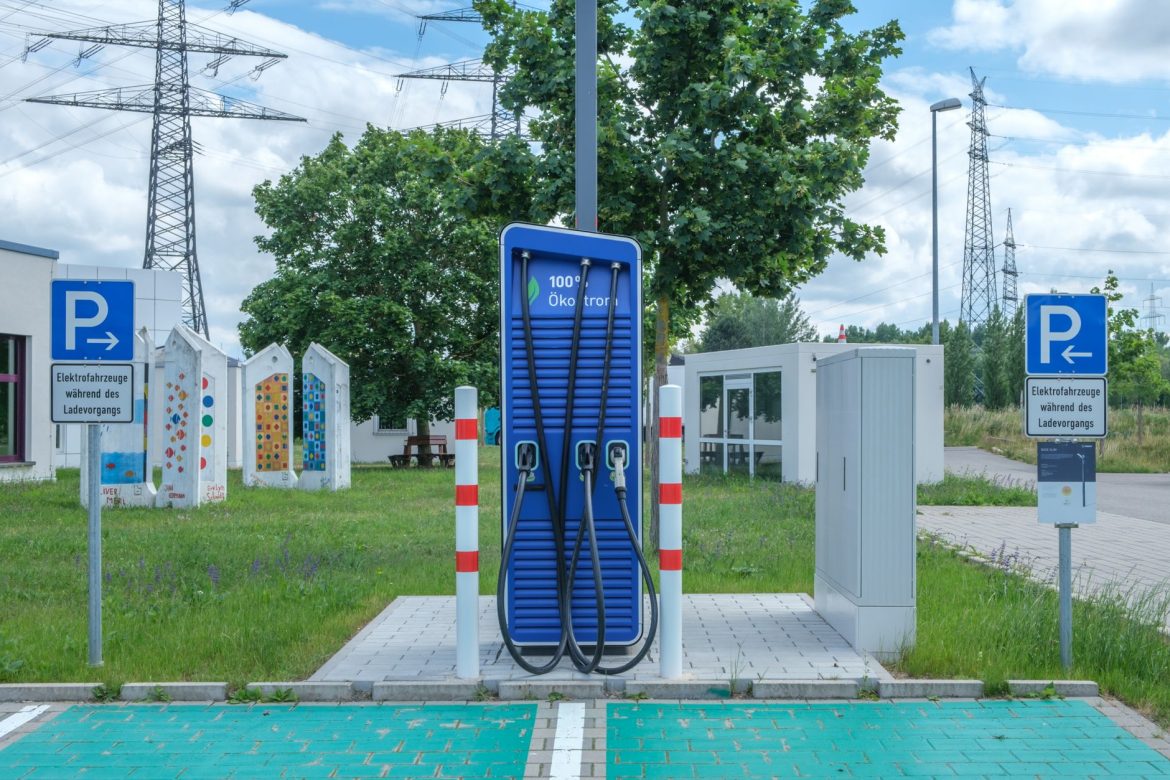
The future car may do useful work while it is parked.
An electric vehicle already carries a battery large enough to run a home for hours or days, depending on the home, the vehicle and the amount of charge reserved for driving. With the right electronics and agreements, that battery can absorb electricity when the grid has too much and return some when demand is high.
This is the central idea behind vehicle-to-grid charging, or V2G. It sounds like a small change in the direction electricity flows. In practice, it turns a car into one part of the power system.
The theoretical scale is large. The commercial reality is not there yet.
Three versions of a car that does more than drive
Most electric cars use unidirectional charging. Electricity moves from the grid through a charger and into the vehicle battery.
Smart charging, sometimes called V1G, keeps that one-way flow but changes its timing or power level. A car can delay charging until overnight demand is lower, slow down when a neighborhood transformer is heavily loaded or absorb surplus solar generation in the afternoon.
Bidirectional systems add the ability to discharge. Vehicle-to-home, or V2H, can send electricity into a house for backup power or to reduce purchases during expensive hours. Vehicle-to-load, or V2L, supplies tools and appliances directly. V2G sends electricity back through the connection for use by the wider grid.
The car needs power electronics and battery controls that allow safe discharge. The charger must be compatible. Software also has to communicate the driver’s departure time, minimum desired charge, battery limits, electricity prices and grid requests without promising energy the owner needs for the next trip.
That last layer is what makes V2G different from plugging an appliance into a car. A grid resource must respond reliably, even though every vehicle remains a privately used machine that can leave.
One model found enough capacity by 2030
A 2023 study in Nature Communications modeled the global storage capacity that could come from batteries still installed in electric vehicles and batteries removed from retired vehicles for a second life as stationary storage.
The model included projected EV deployment, battery degradation and the share of owners participating. It estimated a technical capacity of 32 to 62 terawatt-hours by 2050. The authors found that participation from 12 to 43 percent of the available fleet could meet projected global demand for short-term grid storage. If half of retired EV batteries were reused as stationary units, the required participation rate fell below 10 percent.
Across most regions in the model, EV batteries could meet that short-term storage demand as early as 2030.
“Could” carries much of the scientific weight here. This was a scenario model, not a forecast that compatible cars and chargers will appear on a fixed date. Its result describes available energy capacity under assumptions about EV growth, connection and participation. It does not guarantee that the batteries will be plugged in at the correct location and moment, or that power lines can carry the discharge where needed.
Europe shows how much participation matters
A separate 2024 Nature Communications study examined vehicle-to-grid systems and second-life batteries in Europe. Its timing differed from the global study, but the broad conclusion was similar: the vehicle fleet could eventually supply more storage capacity than the grid is expected to need for short-duration services.
In the baseline scenario, V2G could cover demand for new stationary battery storage from 2035, while second-life batteries could do so from 2040. The model found that equipping 40 percent of EVs with V2G could satisfy expected 2050 grid needs if half of those cars were connected at a given time and owners made half of their battery capacity available.
Those conditions are not minor details. A car in a workplace lot cannot support a home charger. A commuter expecting a long drive may reserve nearly the whole battery. An owner who receives little compensation may not enroll at all.
The European analysis also considered materials. By reducing the need for newly manufactured stationary batteries, V2G lowered cumulative primary battery-material demand by 7.5 percent in its baseline case through 2050. Reusing retired batteries produced a smaller 1.5 percent reduction. Those estimates depend on future battery chemistry, recycling efficiency and fleet growth.
In 2026, compatibility is still rare
The International Energy Agency’s 2026 assessment of V2G counted 22 production models with stated or commercially used vehicle-to-grid capability. That was less than 1.5 percent of all EV models.
More vehicles can power a home or an appliance, but full grid interaction is harder. A vehicle must communicate with the charger, the charger’s management system, an energy company or aggregator and the grid operator. Each participant needs to understand the same constraints and commands.
The CCS charging ecosystem now has a standardized V2G communication route in ISO 15118-20, published in 2022. The IEA found implementation inconsistent and interoperability very low. Current commercial offers generally tie a specific vehicle to a specific charger and utility tariff rather than letting any compatible car use any compatible bidirectional charger.
The distinction explains why a car advertised as “bidirectional” may support V2L or V2H but not V2G. Sending power to a refrigerator is not the same technical and regulatory task as operating as a tiny generator connected to a public electricity network.
The battery must still serve the driver first
Additional cycling can age a battery, but degradation does not depend simply on the number of times power changes direction. Temperature, average state of charge, charging speed and the depth of each cycle all matter.
The IEA review found that well-managed V2G can limit degradation, and in some modeled cases reduce capacity loss compared with uncontrolled charging that holds a battery at a high state of charge. That does not make battery wear disappear. It means software can trade among grid value, owner revenue, mobility and battery health instead of repeatedly using the full battery range.
I find this a more credible picture of future cars than the usual leap straight to complete autonomy. The change does not require a car to navigate an unfamiliar city without a driver. It requires a parked battery, compatible hardware and a set of rules for sharing only the energy its owner can spare.
The engineering exists in early commercial form. The scale in the research depends on standards, chargers, market access and millions of individual choices that have not yet arrived.
Future cars may still look familiar from the road. The larger change could happen after they pull into the driveway and connect to everything beyond it.
