
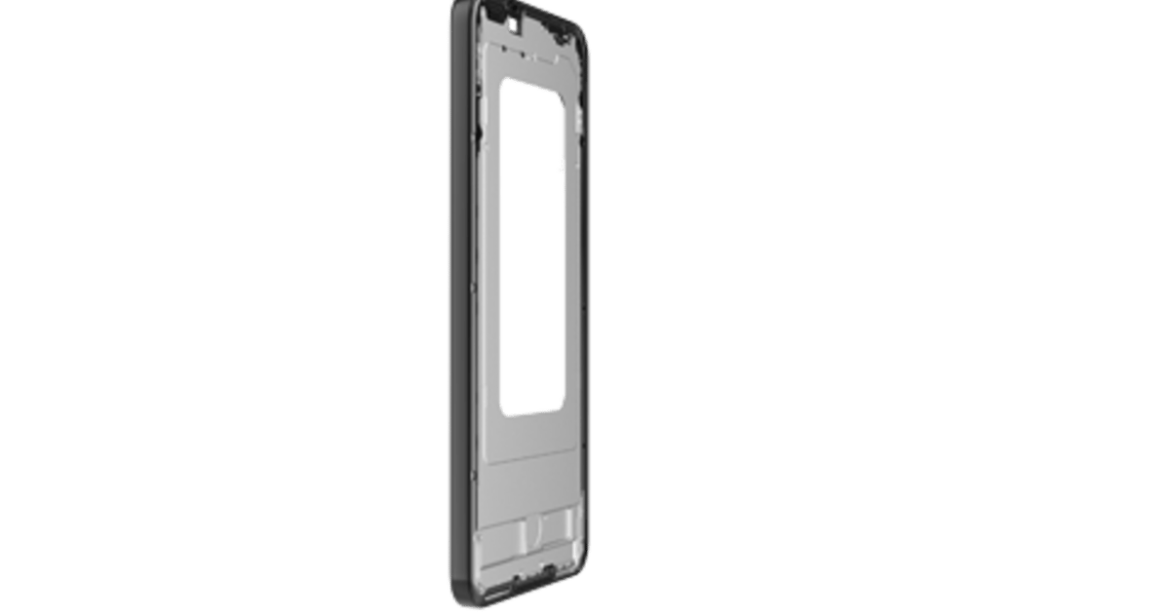
Sabic, a global diversified chemicals company, has introduced Ultem DU762 resin, a specialty thermoplastic designed to replace metal in smartphone middle frame applications with significant design, manufacturing, and cost advantages.
The innovative polyetherimide (PEI) material is compatible with non-conductive physical vapor deposition (PVD) sputtering processes, enabling a high-gloss, metallic surface that enhances smartphone aesthetics. The resin combines excellent chemical resistance for durability, lightweight properties for improved usability, and a balance of ductility and strength for structural components.
“Consumers choosing top-of-the-line smartphones demand premium materials that complement cutting-edge technologies, such as artificial intelligence (AI),” said Sergi Monros, vice president, Specialties business unit, Sabic. “Our new Ultem DU762 resin offers high quality without the drawbacks of traditional materials. It delivers great value through design flexibility and streamlined production while meeting rigorous standards for aesthetics and performance. As smartphone styling and capabilities advance, Sabic remains aligned with the evolving needs of the consumer electronics industry.”
Manufacturing and performance advantages
Compared to titanium, stainless steel, and aluminum — which require time-consuming machining — Ultem DU762 resin can be cost-effectively manufactured using high-speed, high-volume injection molding. The material is significantly lighter than metal alternatives.
As a non-conductive, metallized polymer, the Sabic resin eliminates the need for unsightly antenna splits in middle frames. Metal frames with plastic antenna splits create non-uniform appearances that compromise styling.
Glass fiber-reinforced polycarbonate (PC) resin, another incumbent frame material, typically uses non-conductive vacuum metallization (NCVM). This multi-layer process creates thick coatings that accumulate along edges and corners, preventing clean, sharp lines. PVD metallization is simpler and produces much thinner profiles. Additionally, glass fiber in PC resin can migrate, creating uneven surfaces that affect gloss. Unreinforced Ultem DU762 resin ensures smooth, high-gloss finishes and resists abrasion and cracking better than softer PC resins.
The material features high heat resistance and robust resistance to sunscreen and other chemicals. Ultem DU762 resin is available globally.
Carbon fiber compound rolled out
Sabic has introduced its inaugural carbon fiber-reinforced compound incorporating post-consumer recycled (PCR) materials, featuring 75% PCR content designed for use in consumer electronics housings and similar applications.
The LNP Elcrin DC0051RC1 compound integrates two distinct PCR sources: polycarbonate recovered from water bottles and compact discs, alongside carbon fiber reclaimed from discarded products such as golf club shafts, wind turbine blades, and fishing rods. According to the company, certified suppliers are responsible for collecting and processing these end-of-life materials, transforming them into raw materials for manufacturing new products. These raw materials carry ISCC+ certification, ensuring their sustainability credentials.
Sabic has previously expanded its sustainable materials portfolio with the introduction of the Noryl resin series, which incorporates a minimum of 25% post-consumer recycled content. Manufactured at the company’s Bergen op Zoom facility in the Netherlands, the Noryl NH5120RC3 resin utilizes mechanically recycled styrene derived from post-consumer high-impact polystyrene (HIPS) waste streams.
Sabic is headquartered in Riyadh, Saudi Arabia, and manufactures chemicals, commodity and high-performance plastics, and agri-nutrients across the Americas, Europe, Middle East, and Asia Pacific.
