
This article first appeared in The Edge Malaysia Weekly on August 17, 2026 – August 23, 2026
People use rivers to bathe, collect water, travel and fish, sometimes even wading deep into the currents to set or retrieve nets. But when unwanted fish, animal carcasses and food waste are thrown into waterways, crocodiles are drawn to human settlements and eventually learn that these places can be an easy source of food.
In fact, such behaviour is a major cause behind the deadly human-crocodile encounters in Sarawak, which accounted for more than half of all human-wildlife conflict cases handled by Sarawak Forestry Corporation (SFC) between 2023 and 2025.
Crocodiles are the only species involved in conflicts that have resulted in major injuries and fatalities, says SFC conservation officer Izwan Zulaini Abdul Ghani, who has a PhD in zoology and is regional vice-chair for the IUCN-SSC Crocodile Specialist Group.
Between 2020 and 2025, Sarawak recorded 65 crocodile attacks on humans, resulting in 43 deaths and 22 injuries, making the reptiles the most common and deadliest source of wildlife conflict in the state. This poses a challenge for the government agency, which has to strike a balance between ensuring communities are safe from harm while protecting wildlife.
Crocodiles are a vital part of natural ecosystems and heritage, says Izwan. As apex predators, they help maintain ecological balance by regulating prey populations and removing weak or sick animals. The presence of crocodiles is a key indicator of healthy rivers and wetland ecosystems. “Their presence reflects the overall health of rivers, wetlands and mangrove habitats that support many other species,” he explains.
But as with all things in nature, there is a delicate balance.
“If crocodile populations are not properly protected and managed, it could lead to ecological imbalance and negatively affect the health of these ecosystems. At the same time, high levels of population or unmanaged populations in high-risk areas can increase human-crocodile conflict. That is why the focus in Sarawak is not simply on protection or removal alone, but on balanced and strategic management,” says Izwan.
He runs a Facebook page and YouTube channel called “iBoyak” — crocodiles are known as boyak in Sarawak — to educate the public on the reptiles.

“Nothing surprises me anymore because I have found a crocodile in a golf club, in a university and in the middle of the highway.” – Izwan, SFC
Human behaviour influences crocodile habits
Crocodiles are highly adaptable, opportunistic predators that can learn patterns in human behaviour, says Izwan. Although capable of travelling long distances, the reptiles may remain in or repeatedly return to an area with abundant food and suitable places to rest, even if it is busy with boats or other human activity.
SFC surveys discovered more crocodiles close to human settlements than in uninhabited areas. Food waste, animal carcasses and unsold fish discarded near jetties and waterways can provide these reptiles with an easy and predictable source of food, he says.
Post-mortem examinations of dead crocodiles have found all kinds of domestic rubbish in their stomachs, including clothing and disposable diapers, which show they had been scavenging waste thrown into the water.
Some people deliberately feed crocodiles without realising that they may be putting others at risk. Izwan gives the example of someone throwing food into the same area at 4pm each day. The crocodiles can learn the routine and begin returning at that time in anticipation of being fed.
Crocodiles are increasingly found in plantation areas, sometimes several kilometres inland, where workers and nearby communities may not expect to encounter them.
Izwan says the reptiles can use man-made irrigation canals and drainage systems to move from rivers into agricultural land. During the wet season and floods, rising water levels connect more of these waterways, allowing crocodiles to travel further inland. “Nothing surprises me anymore because I have found a crocodile in a golf club, in a university and in the middle of the highway,” he adds.
In the past three years, at least 20 crocodile nests have been reported, with the eggs removed from them. Most were in plantation areas such as oil palm estates, paddy fields, coconut orchards and other agricultural lands near rivers. Statewide surveys conducted from 2022 to 2024 put Sarawak’s saltwater crocodile population at about 25,000, up from an estimated 13,500 between 2012 and 2014.
What to do about the crocodiles?
The people most exposed to crocodiles are those living in settlements along Sarawak’s rivers, from cities and villages to longhouses stretching from upstream areas to river mouths. Many communities still use the waterways for bathing, collecting water, fishing and travelling between villages, particularly where roads, bridges and piped-water connections remain limited.
There has been a rising number of incidents involving young children. These cases often occur during school holidays or short breaks, when children spend more time playing near rivers or other bodies of water.
“The risk happens when you start going to the waters. If you’re on land, in your house, in your building, the risk is zero because there are no crocodiles around. But once you enter a crocodile habitat or water, the risk increases,” says Izwan.
To address the growing incidence of human-crocodile conflict, SFC analyses each attack to identify patterns and high-risk groups, conducts safety briefings with riverine and plantation communities, and installs warning signs in areas where crocodiles are frequently sighted.
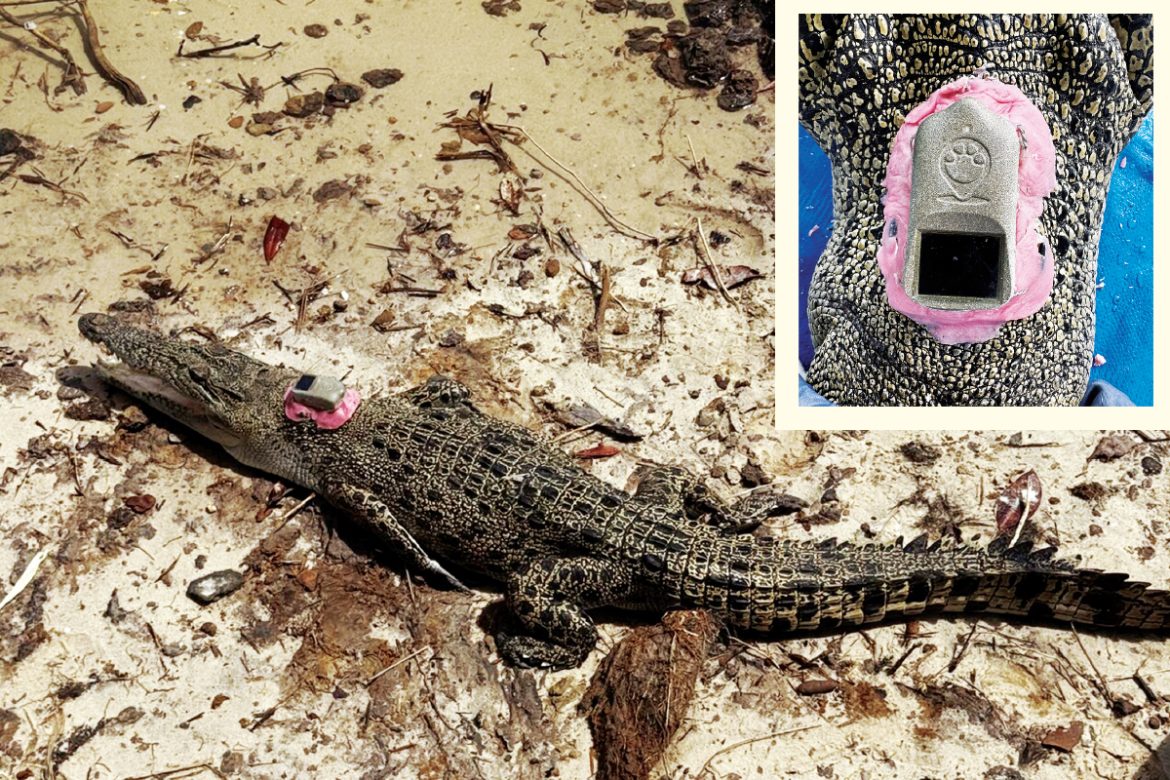
The agency has also fitted crocodiles with satellite trackers to understand how they move between rivers, wetlands, plantations and areas close to human settlements. It is studying changes in nesting behaviour, the reptiles’ response to human activity and the factors behind each attack.
When a crocodile is assessed as dangerous or as posing high risk to a community, SFC’s specialised team may capture and remove it. The team will try to capture it alive where possible, with culling considered as a last resort.
The agency must then decide whether to relocate the reptile, place it in a holding facility or transfer it to a crocodile farm. Moving one to another area could place nearby communities at risk or disrupt the crocodiles already living there, particularly if a large, dominant male is introduced into an established population.
Releasing captured crocodiles into national parks or wildlife sanctuaries is not necessarily a solution either. Communities may live close to or within these protected areas, meaning the relocation could simply transfer the danger from one group of people to another.
Crocodiles also possess a strong homing instinct.
“We have several rivers where they are interconnected. So, going back to the area is not something that’s impossible for them. They can travel kilometres away for a certain period of time. You need to relocate them somewhere that makes it unlikely for them to return,” says Izwan.
This requires considerable logistical resources, so SFC must assess whether the reptile can survive the stress of a long-distance journey.
Crocodile farms provide a possible destination, with the captured reptiles sometimes used as breeding or parent stock. Following the transfer of Sarawak’s saltwater crocodile population from Appendix I to Appendix II of the Convention on International Trade in Endangered Species of Wild Fauna and Flora in 2016, wild crocodiles and their products can be harvested and traded under regulated conditions.
Izwan says the aim is to allow communities affected by crocodiles to derive some economic benefit from their conservation. Farms employ local workers, while crocodile meat, oil and other products support related economic activities. Crocodile farms and river cruises also serve as tourist attractions.
However, removing one crocodile may not permanently remove the danger. If people continue discarding food waste, animal carcasses or fish in the same location, another crocodile may move in and remain there because food is readily available.
“We can do a lot of removing, but if people are exposing themselves to the risk, we cannot help them,” says Izwan.
To reduce the risk of attacks, communities should stop throwing food waste, animal carcasses and unwanted fish into waterways, and never feed crocodiles.
“If they’re using a boat or are bathing in the river, I always recommend that they do not use the same site every day. Because crocodiles can learn there are some people using the water in the same area every day. And one day, when the crocodile has an opportunity, it will attack,” he says.
Better infrastructure, including piped water, proper jetties, roads and bridges, can further reduce the need for people to enter crocodile habitats for bathing, collecting water or travelling, says Izwan.
Save by subscribing to us for
your print and/or
digital copy.
P/S: The Edge is also available on
Apple’s App Store and
Android’s Google Play.
