
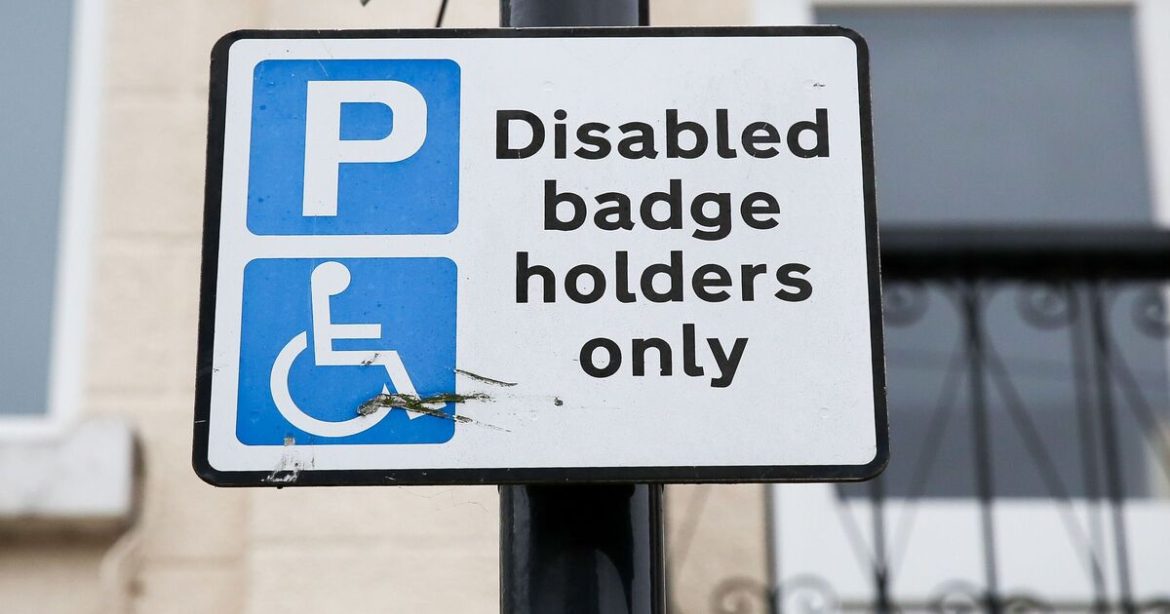

Disabled bays are usually reserved for people with Blue Badge parking permits (Image: Getty)
Getting around can prove difficult when you’re living with a disability that has an impact on your mobility. A Blue Badge, however, can make a world of difference, whether you’re travelling to an appointment, nipping out to the shops or simply fancying a day trip.
Blue Badges are intended to assist those with disabilities or health conditions to park closer to their destination. They permit badge holders, or anyone driving them provided the holder is in the vehicle, to use disabled parking bays and even park on double yellow lines.
Read more: 59 new cars face £5,690 tax bill from April 2026 – full list from Audi to VW
Read more: Blue Badge prosecutions as disability parking permits hit record high
Yet it’s not solely the convenience that makes a Blue Badge so valuable – it can also save holders money, as they frequently get to park at no cost in disabled bays or car parks. What’s more, as long as the badge holder is travelling in the vehicle, it can be used in any car – taxis included.
In England, a Blue Badge costs up to £10, while in Scotland the fee is £20. Those in Wales, however, are fortunate as it’s entirely free of charge. Local councils are responsible for processing applications, establishing eligibility and setting the cost
Blue Badges are generally valid for up to three years before renewal is required. There are two groups of people eligible to apply for a Blue Badge – some qualify automatically, while others are considered on an individual basis.
People who automatically get a Blue Badge
If you’re aged 3 or over, you’ll automatically qualify for a Blue Badge if at least one of the following applies:
- you receive the higher rate of the mobility component of the Disability Living Allowance (DLA)
- you receive a Personal Independence Payment (PIP) because you can’t walk more than 50 metres (a score of 8 points or more under the ‘moving around’ activity of the mobility component)
- you are registered blind (severely sight impaired)
- you receive a War Pensioners’ Mobility Supplement
- you have received a lump sum benefit within tariff levels 1 to 8 of the Armed Forces and Reserve Forces (Compensation) Scheme and have been certified as having a permanent and substantial disability that causes inability to walk or very considerable difficulty in walking
- you receive the mobility component of PIP and have obtained 10 points specifically for descriptor E under the ‘planning and following journeys’ activity, on the grounds that you are unable to undertake any journey because it would cause you overwhelming psychological distress
If your score is anything other than 10 points under descriptor E, in the ‘planning and following journeys’ activity of PIP, you might still be eligible for a Blue Badge, but it’s not guaranteed. This includes if you have a higher score of 12.

Blue Badges can be a lifeline (Image: Getty)
You’ll need to provide evidence to prove your eligibility, which will be evaluated as part of your application.
Who might get a Blue Badge
You could be eligible for a badge if one or more of the following applies:
- you cannot walk at all
- you cannot walk without help from someone else or using mobility aids
- you find walking very difficult due to pain, breathlessness or the time it takes
- walking is dangerous to your health and safety
- you have a life limiting illness, which means you cannot walk or find walking very difficult and have a SR1 form
- you have a severe disability in both arms and drive regularly, but cannot operate pay-and-display parking machines
- you have a child under the age of 3 with a medical condition that means the child always needs to be accompanied by bulky medical equipment
- you have a child under the age of 3 with a medical condition that means the child must always be kept near a vehicle in case they need emergency medical treatment
- you are constantly a significant risk to yourself or others near vehicles, in traffic or car parks
- you struggle severely to plan or follow a journey
- you find it difficult or impossible to control your actions and lack awareness of the impact you could have on others
- you regularly have intense and overwhelming responses to situations causing temporary loss of behavioural control
- you frequently become extremely anxious or fearful of public/open spaces
People living in England, Scotland and Wales, can apply for a Blue Badge on GOV.UK. If you’re in Northern Ireland, there’s a different process.Visit this link for more details.
Your local council will determine if you qualify for a badge. They can’t start the assessment process until they’ve got all the necessary evidence.
It might take 12 weeks or more to assess your application. If they decide that you don’t qualify and you believe they didn’t consider all the facts, you can ask them to review your application.
