
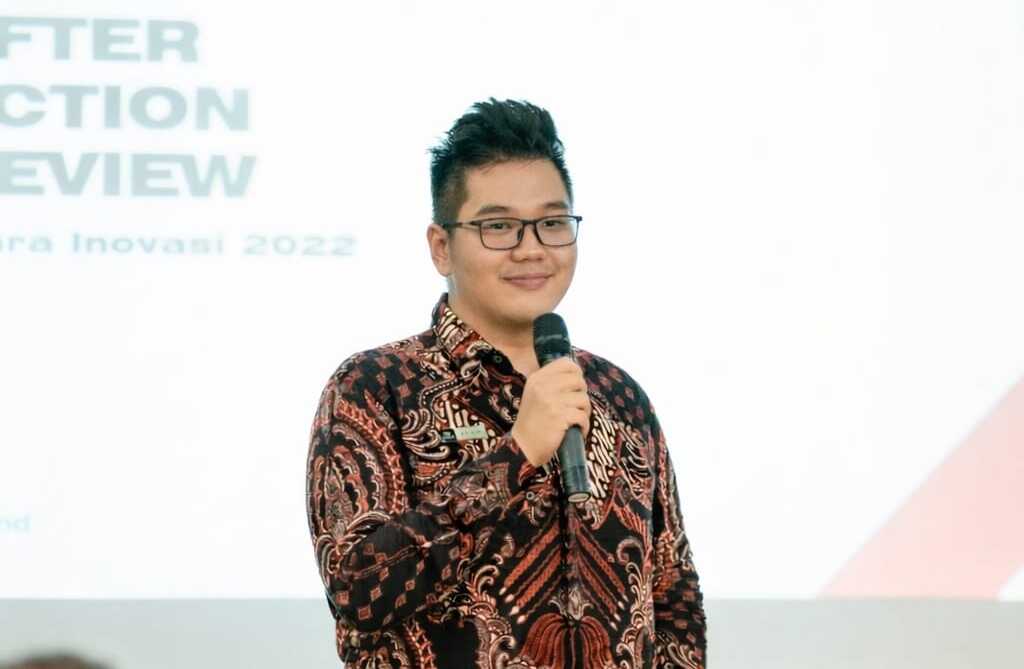
From micro-weddings to branded experiences, Astagina’s General Manager, Reyner Panorama, explains how wedding venues must evolve to meet modern couple expectations.
As weddings in Bali move away from scale and spectacle towards meaning and intimacy, Astagina Villas Resort & Spa has emerged as a venue that understands this shift deeply. Located in the heart of Legian yet hidden within a serene, garden-filled enclave, Astagina has redefined how modern couples celebrate—prioritising experience, personalisation, and emotional resonance over size.
In this interview with Indonesia Expat, Reyner Panorama, General Manager of Astagina, discusses the rise of micro-weddings, the growing influence of editorial aesthetics, and why weddings should be treated as a distinct product rather than an extension of accommodation.
Astagina Villas Resort & Spa is often chosen by couples who want both energy and intimacy in their wedding experience. From your perspective, why does this balance resonate so strongly with today’s couples?
What we consistently see is that couples want to feel connected to Legian’s dynamic environment—being able to walk to shops, beaches, cafés, and dining spots—while still having a place that feels calm and private for their stay and wedding. Astagina offers what many couples describe as the best of both worlds. We are located right in the heart of Legian’s vibrant life, yet once guests step inside, the atmosphere completely shifts.
The property is tucked away like a hidden nest, surrounded by lush gardens, a quiet ambience, and a beautiful courtyard. This contrast is very important for modern couples. They want the excitement and accessibility of Legian, but they also want their wedding moments to feel serene, intimate, and undisturbed.

Micro-weddings have become more than a trend. They seem to represent a structural shift in how couples celebrate. How do you interpret this change from an operational and business perspective?
Micro-weddings are not simply smaller weddings; they represent a shift in priorities. Couples are reallocating their budgets from scale to quality—fewer guests, but more attention to experience, design, and atmosphere. From a business perspective, this means venues must think beyond capacity and start focusing on value per guest and per moment.
At Astagina, micro-weddings allow us to deliver deeper personalisation, tighter curation, and stronger emotional impact, which ultimately creates higher perceived value for both couples and their guests.
How does this shift affect the way venues should design their wedding offerings?
Venues can no longer rely on volume-based thinking. The focus should move towards flexibility, storytelling, and experiential design. Instead of asking, “How many people can we host?”, the more relevant question is, “How meaningful can the experience be?”
This shift affects everything—from how spaces are staged, to how teams are trained, to how packages are structured. Weddings today are judged less by scale and more by cohesion.
Editorial-style weddings are increasingly visible across Bali. Why do you think couples are drawn to this aesthetic and approach?
Editorial-style weddings allow couples to express identity rather than tradition. Many couples today come from creative, entrepreneurial, or globally exposed backgrounds. They want their wedding to feel intentional, visually refined, and reflective of who they are.
Editorial weddings also photograph and communicate well, which matters in a digital-first world where weddings live on long after the day itself.
From a venue’s point of view, what does it take to support an editorial wedding properly?
It requires restraint and clarity. Editorial weddings are not about adding more elements, but about selecting the right ones. Venues must understand composition, flow, and spatial storytelling.
This means allowing couples and vendors the freedom to reinterpret spaces while still maintaining operational discipline. When done correctly, the venue becomes part of the narrative rather than merely a backdrop.

Many couples still ask for packages, yet demand personalisation. How do you reconcile these two seemingly opposite needs?
They are not opposites if approached correctly. Packages provide reassurance, structure, and transparency, which are important for decision-making. Personalisation comes through how those packages are adapted.
The key is to design packages that are modular rather than rigid—clear enough to guide, but flexible enough to evolve with the couple’s vision.
In recent years, Astagina has approached weddings as a distinct product rather than an extension of room sales. Could you explain this philosophy?
Yes, and this is a very important distinction. We realised that weddings should not be marketed or positioned in the same way as accommodation. A wedding is not an add-on; it is its own emotional and commercial product. This is why we developed our newly branded wedding initiative, ‘Say I Do at Astagina’.
This initiative gives weddings a clear identity, separate from our room offerings. It defines the tone, the experience, and the promise behind getting married at Astagina. Instead of selling a space, we are offering a signature wedding experience that reflects intimacy, curation, and atmosphere. From a marketing standpoint, this allows us to communicate weddings with clarity and purpose, rather than blending them into generic hospitality messaging.
How does this branding approach change the way couples and vendors perceive the venue?
It creates confidence and differentiation. Couples immediately understand what kind of wedding they can expect, while vendors know the level of experience they are aligning with.
A branded initiative also helps internal teams work with a shared vision, which improves consistency and execution. For business readers, this is about treating weddings as a standalone revenue stream with its own strategy, rather than just an occasional event.
From your experience, what mistakes do wedding venues often make in their marketing?
In my opinion, many venues focus too heavily on features rather than outcomes. Listing facilities, inclusions, or square metres does not inspire. Couples want to understand how the wedding will feel, how the day will flow, and how the venue supports their vision.
Marketing should answer emotional questions, not just logistical ones.
What role does content and storytelling play in attracting the right wedding clients?
Content is not just promotional; it is educational. When venues showcase real weddings, real layouts, and real moments, they help couples self-select. This leads to better alignment and smoother planning processes.
Strong storytelling also positions the venue as an authority, not just a supplier.
Décor and colour palettes evolve every year. From your observation, how are wedding colour directions shifting, and what should couples and venues understand about these changes?
Colour trends are never static, and they do not repeat themselves in exactly the same way each year. While soft neutrals and earthy tones remain highly relevant—especially for couples who value timeless elegance—we are beginning to see a shift towards bolder colour expressions for the coming year.
Colours such as burgundy, deep wine tones, and even unexpected accents like chartreuse are starting to take centre stage, particularly among couples who closely follow global wedding trends and editorial references.
That said, colour should never be treated purely as a trend exercise. What matters most is how a palette makes the wedding feel personal. Some couples will always gravitate towards classic palettes because they reflect their character and story, and those choices will remain just as valid. While colour directions naturally evolve each year, the role of venues and vendors is to help couples translate these trends into something that feels emotionally aligned with who they are, rather than simply what is current.

How does Astagina ensure consistency and quality across different wedding styles while still allowing each celebration to feel distinct?
Consistency comes from having a clear philosophy rather than a fixed aesthetic. At Astagina, we understand our spatial strengths, service rhythm, and emotional tone very well.
This allows us to support a wide range of wedding styles without losing our identity. Each wedding feels different because each couple is different, but the experience remains cohesive because it is guided by the same principles of intimacy, calm, and thoughtful curation.
Digital tools and AI are now part of modern wedding planning. How do you see technology supporting the experience without overpowering it?
Technology should reduce friction, not replace feeling. Tools such as QR code invitations, digital guest management, and AI-assisted planning help couples and planners manage complexity more efficiently.
AI can also support personalisation and forecasting, allowing venues to respond more accurately to client needs. However, weddings are deeply human experiences. Technology should work quietly in the background, enabling smoother processes while preserving emotional presence.
Looking specifically at Astagina, how do you see your wedding offerings evolving over the next few years?
Our focus will be on refinement rather than expansion. We want to deepen what we already do well: intimate experiences, curated celebrations, and emotionally grounded weddings.
This means strengthening our branded wedding identity, collaborating more closely with aligned vendors, and continuing to design experiences that feel considered rather than excessive. Growth, for us, is about clarity and depth.
Looking ahead, what do you believe will define successful wedding venues in Bali over the next few years?
Successful venues will be those that understand weddings as experiences, not events. They will invest in branding, storytelling, and operational clarity. They will collaborate intelligently with vendors and adapt to changing couple expectations.
Most importantly, they will know who they are and communicate that clearly. In a competitive landscape, clarity is the strongest form of luxury.
