
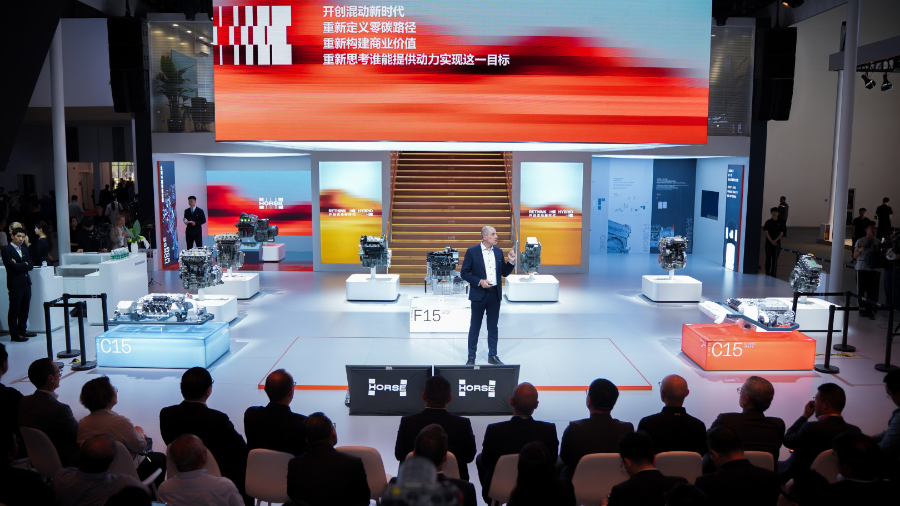
Gasgoo Munich- On April 24, the opening media day of Auto China 2026, HORSE Powertrain Global CEO Matias Giannini opened his presentation with a stark projection: by 2040, more than 1 billion vehicles equipped with internal combustion engines will still be rolling on roads worldwide.
Behind that figure lies a practical dilemma. While the shift to pure electric vehicles is inevitable, bottlenecks in charging infrastructure, battery raw material supplies, and retail prices show no sign of vanishing anytime soon. Caught in the middle, automakers face a squeeze: they must sustain heavy investment in EV platforms while demand for hybrids continues to grow. The financial strain of developing two platforms in parallel is leaving many companies struggling to breathe.
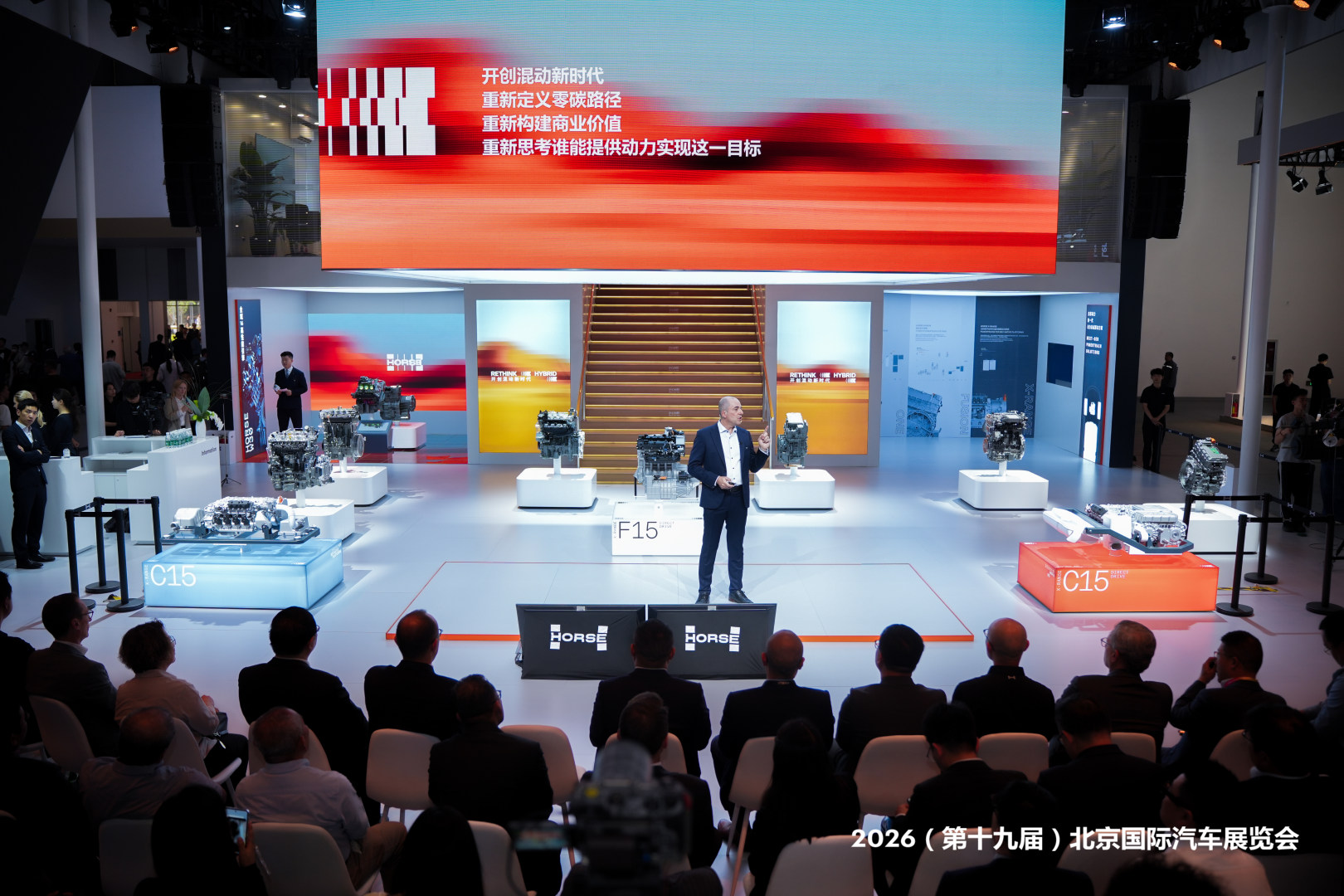
Image Source: HORSE
“Pure electric is not the only low-carbon solution,” Giannini told the audience. “Hybrid technology is a core solution for achieving net-zero emissions, not merely a transitional technology.”
HORSE’s answer is a comprehensive technical package that allows automakers to rapidly add hybrid or range-extending capabilities to native EV platforms without redesigning the underlying architecture. Dubbed the X-Range Range Extender System, it was the centerpiece of the announcement.
Breaking the “Either-Or” Dilemma: The X-Range System and a Full-Stack Hybrid Matrix
A persistent industry pain point is that many automakers did not reserve interfaces for hybrid systems when developing their original EV platforms. If they later decide to launch a hybrid or range-extended model, they are forced to either develop an entirely new platform or make extensive modifications to the existing one. Both options come with steep costs.
HORSE’s X-Range solution aims to resolve this “retrofit” challenge. According to official details, the X-Range series comprises three core products: the HORSE C15 ultra-compact range extender, the HORSE F15 Direct Drive future hybrid system, and the HORSE C15 Direct Drive system, making its global debut.
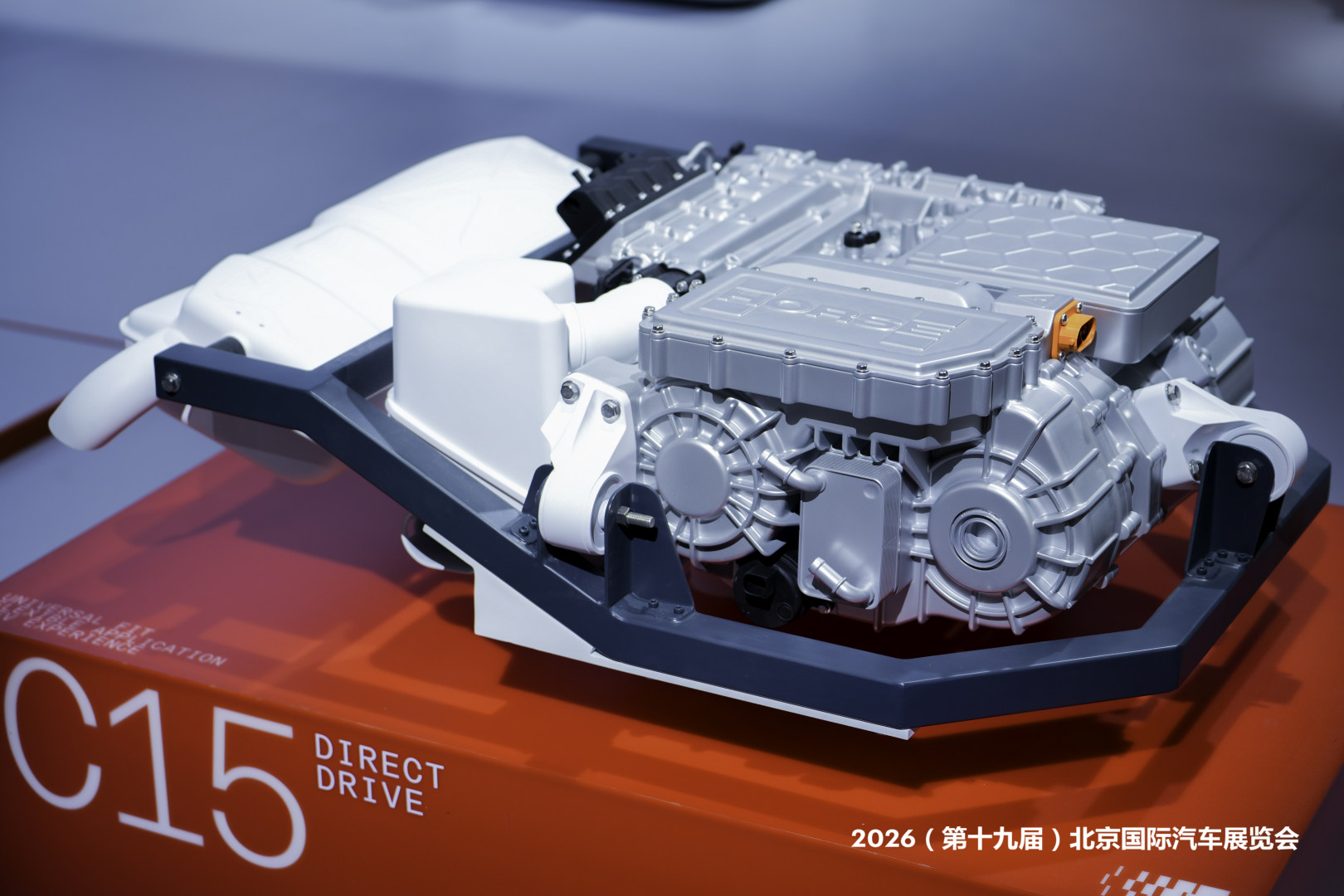
Image Source: HORSE
The C15 Direct Drive deserves particular attention. Its key feature is the ability to cover pure electric, hybrid, plug-in hybrid, and range-extended configurations—all without altering the platform. For automakers that have already poured resources into EV platforms, this means they can quickly fill gaps in their hybrid lineups at a lower cost, avoiding a binary choice between the two technological paths.
In terms of engineering, the C15 series range extender stands out for its compact size—roughly that of a briefcase. It supports various layouts, including front and rear mounting, and covers applications ranging from B-segment family cars to D-segment luxury vehicles and light commercial trucks.
The F15 Direct Drive, meanwhile, is compatible with gasoline, ethanol, methanol, and synthetic fuels. That flexibility holds practical significance for global markets with diverse energy structures.
Giannini summed up this philosophy as “letting automakers focus on core differentiation.” In essence, professional suppliers can handle the heavy-asset, long-cycle powertrain modules, freeing up automakers to dedicate resources to branding, user experience, and intelligent features—areas closer to the end consumer.
Beyond the X-Range system, HORSE showcased a full stack of technologies at the auto show, including V6 high-performance hybrids, high-efficiency products, carbon-neutral energy solutions, and next-generation combustion tech. This product matrix spans everything from mature mass-production solutions to forward-looking technologies, covering roughly 80% of mainstream global powertrain demand.
In the high-performance hybrid sector, HORSE unveiled the HORSE W30+4LDHT all-terrain V6 high-performance hybrid system for the first time. The W30 V6 engine boasts a rated power of 350–400 kW, with specific power exceeding 125 kW. For context, the next generation of industry V6 engines typically sits in the 100–110 kW range. Featuring an extremely compact design comparable in size to a four-cylinder engine, it supports both transverse and longitudinal layouts. With different tuning, it can meet the dual demands of high-revving sports cars and high-torque off-road vehicles. It is scheduled to hit the market in 2028.
The accompanying 4LDHT longitudinal hybrid transmission utilizes dual-gear electric drive technology, enabling all-electric reversing. With wheel torque reaching 9,200 Nm and a 1–8 gear multi-speed design, the dual-gear setup offers superior escape capability in scenarios like getting stuck or climbing compared to single-gear solutions. Shift smoothness, the company claims, rivals that of pure electric vehicles.
In the efficient hybrid segment, HORSE highlighted a set of key figures: the HORSE B20 ultra-efficient waterproof hybrid engine, which achieves a peak production thermal efficiency of 48.41%, alongside the HORSE DHTS super-hybrid platform, its debut product DHTS210, and the HORSE DHT290 flagship intelligent electric drive.
What does a thermal efficiency of 48.41% signify? Simply put, every percentage point gain in a hybrid engine’s thermal efficiency translates to roughly a 2–3% drop in vehicle fuel consumption. In the rarefied territory above 48%, even a 0.5-point improvement yields noticeable energy savings. The technical path to this efficiency includes a deep Miller cycle, a 500-bar high-pressure injection system, and an inclined squish-and-tumble port. While these technologies are not new to the industry, combining them while maintaining mass-production stability is a significant engineering hurdle.
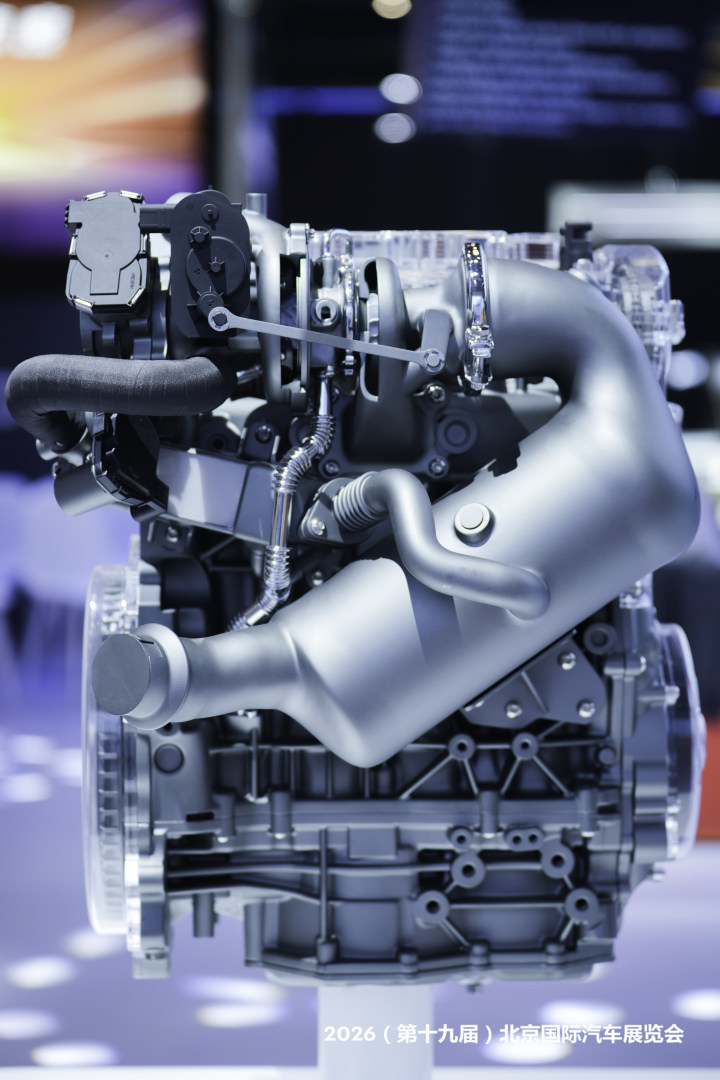
Image Source: HORSE
Another notable spec is the IPX8 waterproof rating. The B20 engine can operate while submerged in 1.1 meters of water—a distinct selling point for SUVs that frequently face extreme wading conditions. The engine’s weight is kept at just 96 kg, positively impacting the overall weight distribution of the hybrid system and the vehicle’s center of gravity. Production is slated for 2026.
The DHTS210, the debut electric drive unit on the HORSE DHTS super-hybrid platform, is also set to launch in mid-2026. With wheel torque of 3,500 Nm, it features an industry-leading 14-in-1 high-integration modular design and meets European five-star crash safety standards. The platform boasts a high degree of commonality, enabling scaled manufacturing of over 1 million units in its first year—a tangible benefit for automakers looking to cut costs and boost efficiency.
Additionally, the HORSE DHT290 flagship intelligent electric drive, built on a quasi-1,000V high-voltage platform, was displayed. With a motor power of 290 kW and maximum wheel output of 4,920 Nm, it enables 0–100 km/h acceleration in under 3 seconds. The system is currently equipped in the ZEEKR 9X and 8X models, as well as Lotus’s global hybrid hypercar, the For Me.
From the B20 engine and DHTS210 for family cars to the high-performance DHT290 and W30 V6 system, and the X-Range series covering various vehicle classes, the technology matrix HORSE presented at the show forms a complete picture. Whether it is a B-segment sedan, a D-segment luxury car, a light commercial vehicle, or a high-performance model and off-roader, automakers can find a corresponding powertrain solution within this product ecosystem.
Diverse Clean Energy Paths: Exploring Methanol and Ultra-Lean Combustion
In the realm of low-carbon fuel technology, HORSE showcased a methanol flexible-fuel range extender, a lean-burn methanol range extender, and the “Yufeng Shunlan” ultra-lean burn gasoline engine technology. The common logic behind these routes is to explore an alternative role for internal combustion engines in the low-carbon era, beyond just serving as a backup for electric drive.
The economic case for methanol rests on fuel cost—methanol is roughly half the price of gasoline. However, using methanol as fuel presents significant engineering challenges, chief among them cold starts. HORSE’s methanol flexible-fuel range extender employs a 350-bar high-pressure direct injection system to achieve one-click cold starts at -40°C using pure methanol, eliminating the need for a secondary gasoline tank. The system supports any blending ratio of methanol (M0–M100) and gasoline in a single tank. Combined with PHEV technology, it enables “gasoline, methanol, or electric” refueling modes. The engine unit weighs 96 kg.
The lean-burn methanol range extender, the HORSE D20 Methanol, achieves a methanol-to-electric conversion rate of 2 kWh/L. It integrates a dual-rotor axial flux motor with a silicon carbide (SiC) module, boosting power density by 63% and shortening axial length by 46%. It also supports one-click cold starts at -40°C with pure methanol. The system’s engineering value lies in quantifying the efficiency of converting methanol’s chemical energy into electricity, providing a solid reference for calculating real-world energy consumption in methanol-extended-range vehicles.
Beyond methanol, HORSE also displayed its “Yufeng Shunlan” ultra-lean burn gasoline engine technology, which utilizes an active pre-chamber structure. The basic logic of ultra-lean combustion is to achieve lower consumption by significantly reducing the air-fuel ratio, but this places high demands on combustion stability and emission control. HORSE’s solution employs an active pre-chamber—a technology applied in gas turbines but still at the forefront for automotive engines. The core principle involves a small pre-chamber outside the main combustion chamber; a small amount of fuel is injected and ignited there, generating high-temperature jets that then ignite the ultra-lean mixture in the main chamber. This structure delivers ignition energy far exceeding that of traditional spark plugs, enabling much lower air-fuel ratios.
From an industry perspective, methanol and ultra-lean combustion technologies remain forward-looking plays. Large-scale commercialization in the near term faces hurdles such as fuel supply infrastructure and adaptation to emission regulations. However, given the diverse energy structures and regulatory paths across global markets, stockpiling a range of clean energy technologies early is a strategic necessity for any powertrain supplier operating worldwide.
The Specialization of Powertrain Development Is Accelerating
Looking at the product matrix HORSE unveiled, a deeper structural shift becomes evident: the powertrain sector of the automotive supply chain is evolving from in-house development and manufacturing by automakers toward centralized supply by specialized vendors.
In recent years, many automakers chose full-stack in-house development during their EV transition, only to discover that powertrains require massive investment, long lead times, and benefit significantly from scale. Take the dedicated hybrid transmission (DHT): developing one typically takes 3–5 years and costs hundreds of millions or even billions of yuan, requiring extensive vehicle validation and durability testing. For top-tier automakers selling millions of units annually, in-house development can amortize those costs. But for mid-sized and smaller players, sustaining development for two platforms (EV and hybrid) is becoming increasingly unsustainable—let alone simultaneously investing in niche areas like V6 high-performance engines or methanol range extenders.
HORSE’s positioning as a “professional industrial service provider” is effectively a response to this pain point. Automakers can outsource powertrain modules to specialized suppliers while focusing their own resources on differentiation through branding, user experience, and intelligence. This division of labor was well-established in the internal combustion era, but the boundaries of the supply chain are being redrawn during the energy transition.
The three constraints Giannini highlighted—charging infrastructure, battery raw materials, and EV pricing—are unlikely to be fundamentally resolved in the short term. This implies that hybrid technology will remain a crucial component of the global automotive market for the next decade or longer. With offerings ranging from the 48.41% efficient B20 engine and the 14-in-1 DHTS platform to the X-Range system, the V6 high-performance hybrid, and methanol flexible-fuel extenders, HORSE has effectively covered the full spectrum from current mass-production needs to medium- and long-term technological reserves.
A pragmatic path to net zero has never required an obsession with a single technology. As the global automotive industry shifts from a singular “all-in on EV” narrative to a pragmatic approach involving diverse technologies, the value of specialized suppliers like HORSE—capable of providing full-stack powertrain solutions across technological routes, fuel types, and vehicle platforms—is being reassessed.
