
✔️ Whitening active ingredients: Seek out the most effective teeth whitening agents, which are hydrogen and carbamide peroxide, advises Sharon Huang, D.D.S., MICOI, a cosmetic dentist and founder of Les Belles NYC in New York City. Note that although hydrogen peroxide produces excellent whitening effects, it can sometimes result in temporary tooth sensitivity, Dr. Gonchar says.
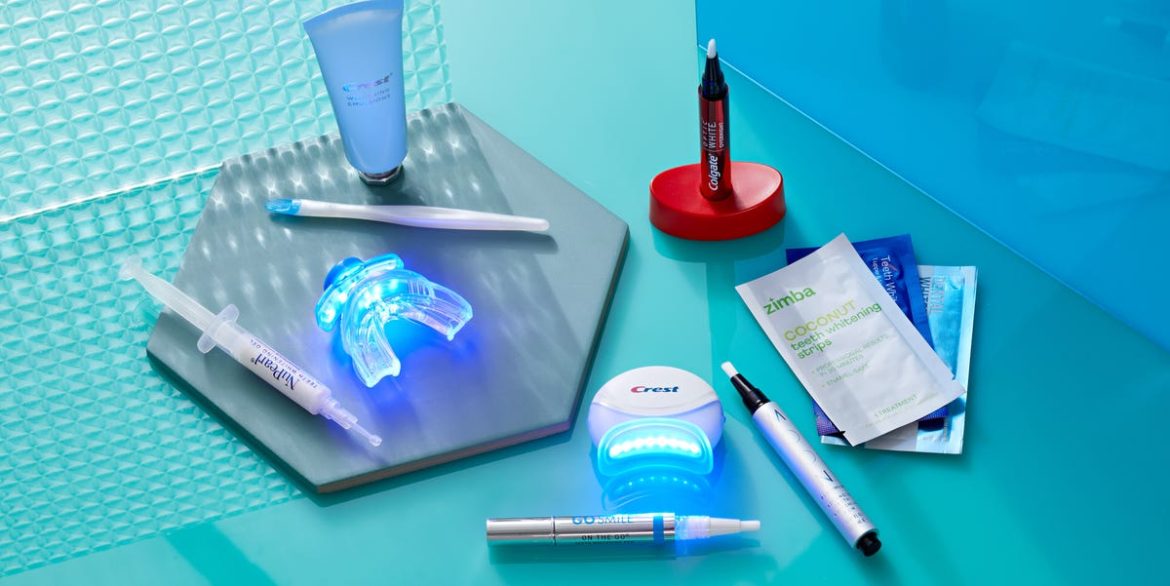
✔️ Form: As for the best teeth whitener form, “I recommend whitening strips and use them personally,” Dr. Huang says. “Since the strip wraps around the teeth, the whitening solution has constant contact with teeth, and they’re the easiest to keep in the mouth for the prescribed amount of time.” (See below for a list and description of teeth whitener forms.)
✔️ Potency level: The maximum percentage of active teeth lightening ingredients is 10% for over-the-counter products, Dr. Huang says (treatments that dentists use can include higher levels). “Higher concentrations will result in faster and better results, yet may cause tooth sensitivity,” Dr. Gonchar explains. “Lower-concentration products will take longer to achieve the desired results, but may be more appropriate for those with sensitive teeth or other dental needs.”
✔️ Sensitivity-friendly ingredients: If you have sensitive teeth, “carbamide peroxide is less sensitizing than hydrogen peroxide because it takes more time for the whitening action to occur,” Dr. Huang explains. For extremely sensitive teeth, there are also products that don’t contain peroxide, and instead are made with ingredients like aloe vera and coconut oil, which have natural whitening effects that pull stains from the teeth, she says. “They’re not as effective as peroxide, but are a good natural option that’s gentler on the teeth,” Dr. Huang notes.
