
QUICK SUMMARY
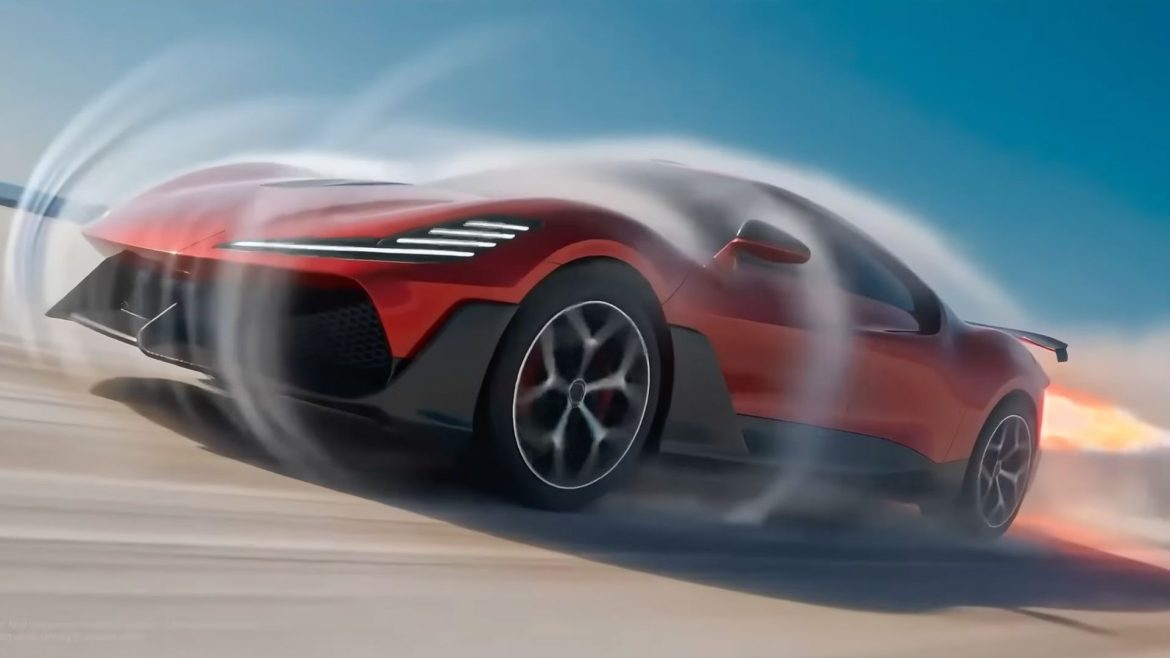
Robotic vacuum maker Dreame says its electric supercar will use rocket boosters to accelerate to 60 mph in under one second.
Called the Dreame Nebula NEXT 01, the car currently has no price or intended release date, and much of its spec – including battery size and range – is unknown for now.
Since you’re a reader of T3 you are probably familiar with Dreame, the Chinese robotic vacuum cleaner company. It just launched a new range of robovacs, including one that can climb over raised thresholds like no other. But Dreame is also working on an electric car – one that it claims will use rockets to boot acceleration.
So far, so impressive, but also quite similar to other electric hypercars like the Rimac Nevera R, Lotus Evija and Pininfarina Batista – three slices of EV exotica that have sold in vanishingly small numbers due to a lack of customer interest.
Article continues below
How does Dreame plan to buck the trend? Rockets. Speaking again about the car in late-April, Dreame now says it’ll hit the 62 mph benchmark in 0.9 seconds.
It elaborated: “The Nebula NEXT 01 JET Edition is a rocket-powered electric vehicle equipped with a custom-built dual solid-fuel rocket booster system that responds in 150 milliseconds, generates a peak thrust of 100 kN, and delivers a 0-100 km/t time of 0.9 seconds.”

(Image credit: Dreame)
Since kN isn’t a figure usually found on a car spec sheet, here’s some context: That’s 100,000 newtons of thrust, or 22,500 lb and roughly the equivalent of 10 tonnes of weight-force pushing the car forwards. To hit 62 mph in 0.9 seconds the Dreame EV will be pulling around 3.2g, which is similar to a Formula One car.
More context, because I fear this sort of claim really does need it. Sprinting to 60 mph in 2.7 seconds – about the same as the latest Porsche 911 Turbo S – is equal to 1g. Multiply that force of you being pinned into your seat by three, and you’re on your way to replicating what Dreame is claiming here.
And let’s not get started on the sheer magnitude of eye-roll it would get from any road regulatory authority the world over.
Away from the outlandish performance claims, the concept also boasts DHX1, a lidar unit developed by Dreame and its partners described as possessing “ultra-high-definition image-level sensing.” The vacuum cleaner maker added: “When conventional lidar captures rough outlines of road obstacles, the DHX1 resolves fine details at distance: potholes, small stones, traffic signs, and subtle pedestrian movements.”
Autonomous driving is also a part of Dreame’s concept car, with a so-called L2++ solution supporting “full-scenario urban navigation from parking spot to parking spot,” and L3+ tech “built on a top-tier computing platform designed for fully unmanned autonomous driving.”
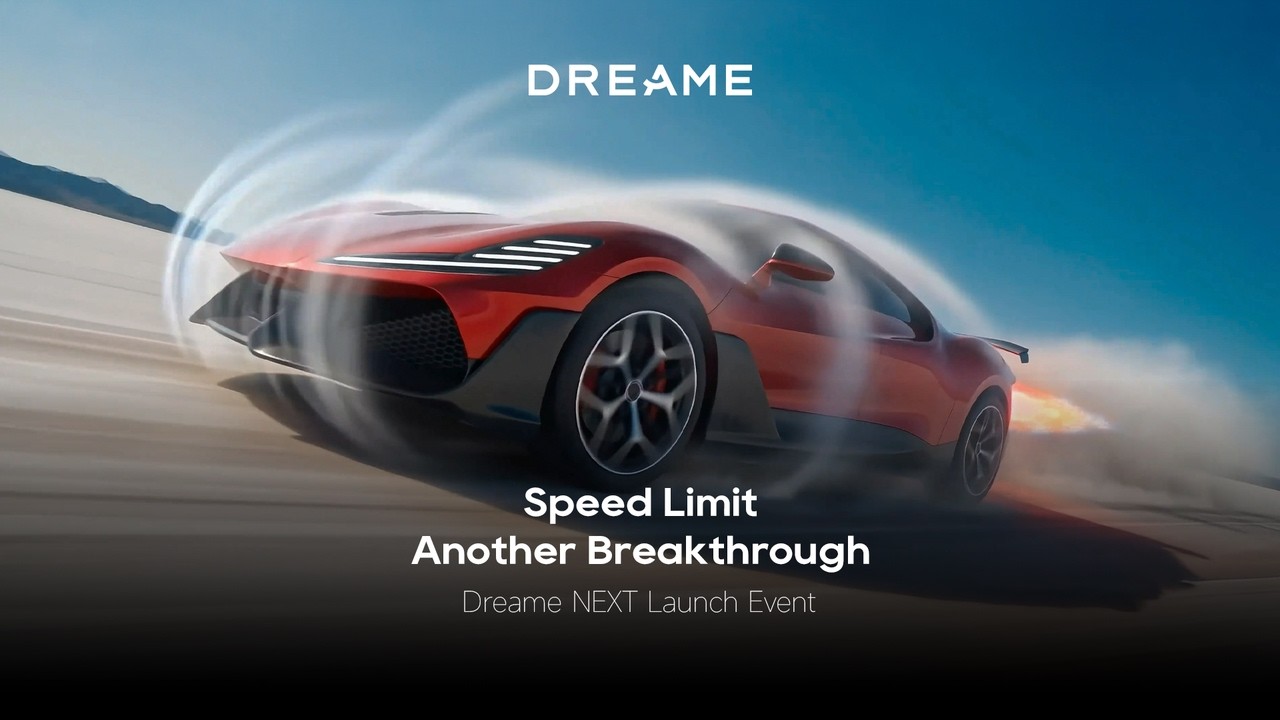
That might well be needed, given how the driver in Dreame’s promotional video, embedded above, inexplicably stamps on the accelerator with their left foot at the 00:31 mark.
Of course, the Nebula – same code-name formerly used by the Aston Martin Valkyrie, incidentally – isn’t the only rocket-powered EV in town. Elon Musk said in 2024 that the second-generation Tesla Roadster (due out in 2020 and still nowhere to be seen) would use rocket thrusters developed by SpaceX to also crack a sub-1.0-second 0-60 mph time.
