
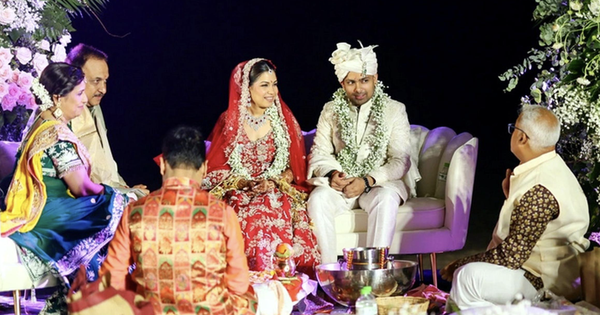
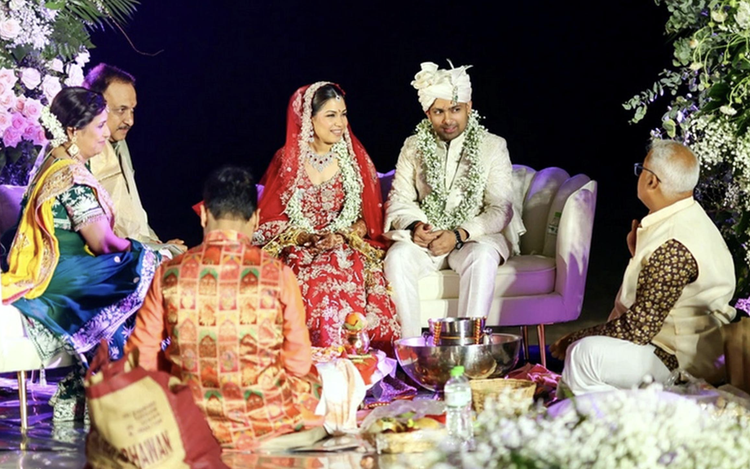
A wedding held for an Indian couple in Da Nang City, central Vietnam, February 2026. Photo: Hien Le / Tuoi Tre
At the start of 2026, an Indian couple, Shreya and Ayush, hosted a lavish wedding in Da Nang City, central Vietnam, often dubbed Vietnam’s ‘most livable city.’
The celebration welcomed around 250 guests at a luxury venue, with the city’s tourism promotion center offering comprehensive support, from entry assistance to personalized gifts and well-wishes for the newlyweds.
With its modern infrastructure, upscale resorts, and scenic coastal settings, Da Nang is emerging as a magnet for luxury wedding planners.
Recently, as many as 30 leading Indian event companies have visited the city to scout venues for high-end ceremonies targeting affluent clients.
This trend has extended across the country as many Indian couples traveled to Vietnam for their wedding celebrations in the first quarter of 2026.
Typically, a billionaire Indian family hosted a multi-day wedding attended by 300 to 500 elite guests in Ha Long Bay in the northern Quang Ninh Province.
The event, meticulously planned over several months, featured customized décor, cuisine, and rituals reflecting Indian cultural traditions, with costs running into tens of billions of Vietnamese dong.
Phu Quoc Special Zone in An Giang Province, southern Vietnam had previously hosted a week-long Indian wedding celebration for over 1,000 guests.
The event occupied an entire five-star resort and required hundreds of staff flown in from India to orchestrate multiple themed ceremonies.
The estimated budget for decoration and organization processes reached several million U.S. dollars.
Vietnam’s appeal lies in its ability to combine natural beauty, high-end hospitality, large-scale event capabilities, and privacy–factors that wealthy families carefully evaluate when selecting a destination.
As a result, the country is increasingly viewed as a new hub for luxury weddings, opening significant opportunities for the premium tourism and MICE (Meetings, Incentives, Conferences, and Exhibitions) sectors.
Also, Vietnam has proven its capacity to host large-scale corporate trips.
One notable trip involving some 4,500 employees of Sun Pharmaceutical Industries was sponsored by billionaire Dilip Shanghvi.
The group toured major destinations including Hanoi, Ninh Binh Province, and Ha Long Bay.
Tour operator Vietravel, which arranged tours for these tourists from India, developed detailed itineraries and tailored services, including flexible dining options to accommodate diverse dietary preferences and religious practices.
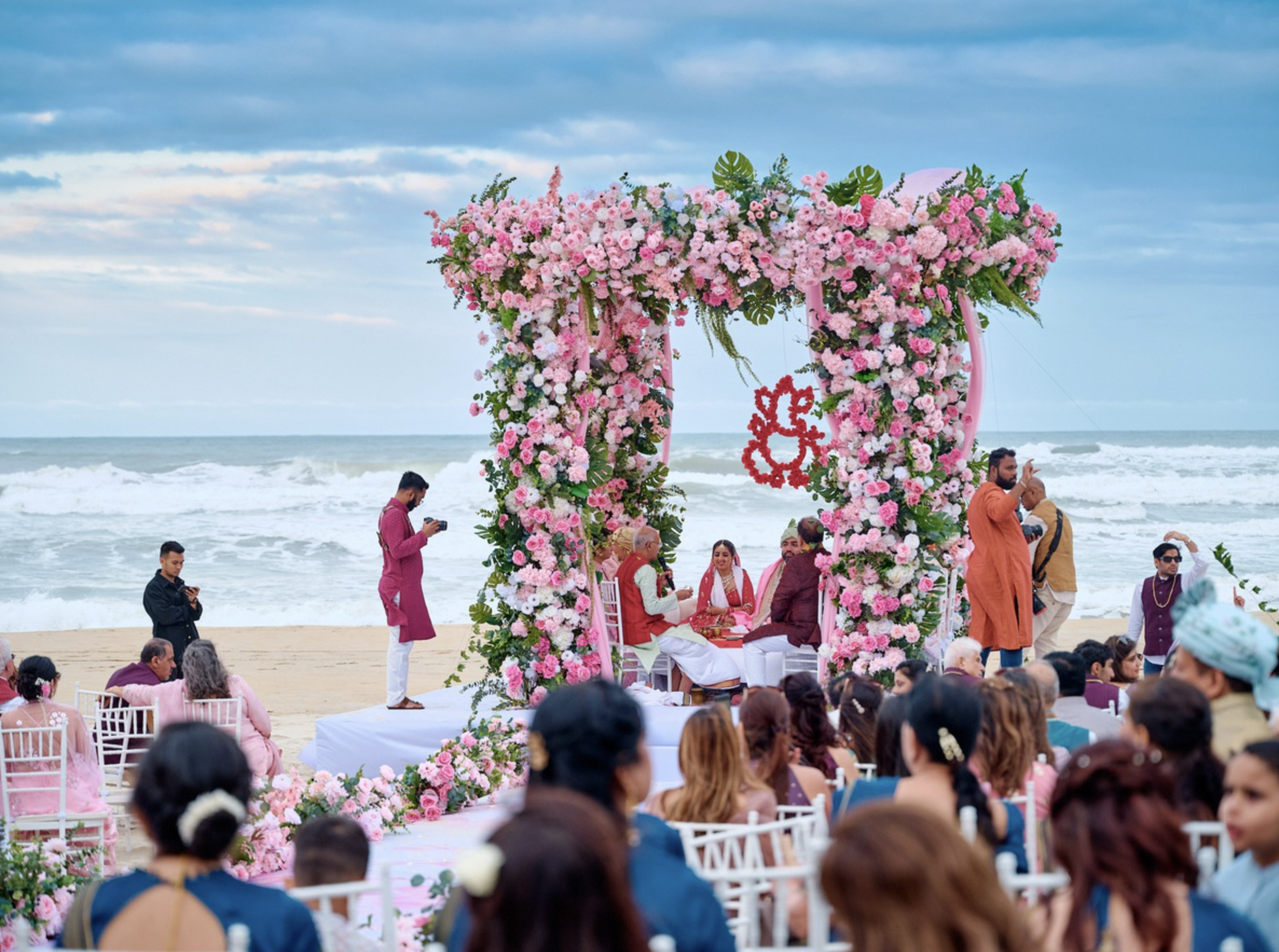
A wedding held for an Indian couple on a beach in Da Nang in 2024. Photo: Tuoi Tre
Strong investment potential
India has quickly become one of Vietnam’s top inbound markets.
Data from the Vietnam National Authority of Tourism indicated that the country welcomed some 750,000 Indian visitors in 2025, a year-on-year increase of nearly 50 percent.
In the first quarter of 2026 alone, Indian tourist arrivals exceeded 242,600, marking a surge of over 169 percent compared to the same period last year.
Popular destinations among Indian travelers include Phu Quoc, Da Nang, and Nha Trang.
Notably, Indian tourists often travel in groups and combine multiple purposes–ranging from weddings and corporate events to leisure, cultural exploration, and culinary experiences.
Indian billionaire Dileep Kumar AV told Tuoi Tre (Youth) newspaper that he has visited Vietnam several times over the past two decades.
Through his Vietnam trips, he is interested in Vietnamese culture and cuisine.
He observed that several major cities in Vietnam, most notably Ho Chi Minh City, are developing significantly, with modern hotel systems, improved infrastructure, and convenient international flight connections.
These key factors make Vietnam more attractive to not only tourists but also global investors, he stressed.
He believes Vietnam has a big opportunity to lure international investors by combining sports such as golf with high-end tourism.
Through this model, international business leaders and billionaires can not only participate in competitions but also expand their networks, engage in exchanges, seek partnership opportunities, and promote trade.
“If effectively promoted, invested in, and properly leveraged, the model of organizing sports events linked with high-quality tourism will not just help promote Vietnam’s image globally but also generate considerable economic value, while delivering tangible benefits to international investors,” he said.
Need for targeted promotion
Despite its advantages such as competitive costs, diverse landscapes, and improving infrastructure, Vietnam’s tourism industry faces the challenge of converting potential into sustained revenue.
Experts argue that simply establishing direct flight routes is not enough.
Some tour operators recommend developing tailored products for Indian travelers.
These could include all-inclusive wedding packages, family resort experiences, pilgrimage tours across Southeast Asia, MICE offerings for tech companies, Indian cuisine options in hotels, culturally knowledgeable guides, and digital marketing in English and Hindi.
An industry expert also called on Da Nang, Phu Quoc and Khanh Hoa Province to work with airlines and travel firms to launch targeted promotional campaigns in major Indian cities such as New Delhi, Mumbai, Bengaluru, and Hyderabad.
Given India’s vast and diverse market, a one-size-fits-all strategy is unlikely to succeed, the expert explained.
Each city presents distinct traveler profiles, spending patterns, and expectations.
US$1 = VND26,252
