
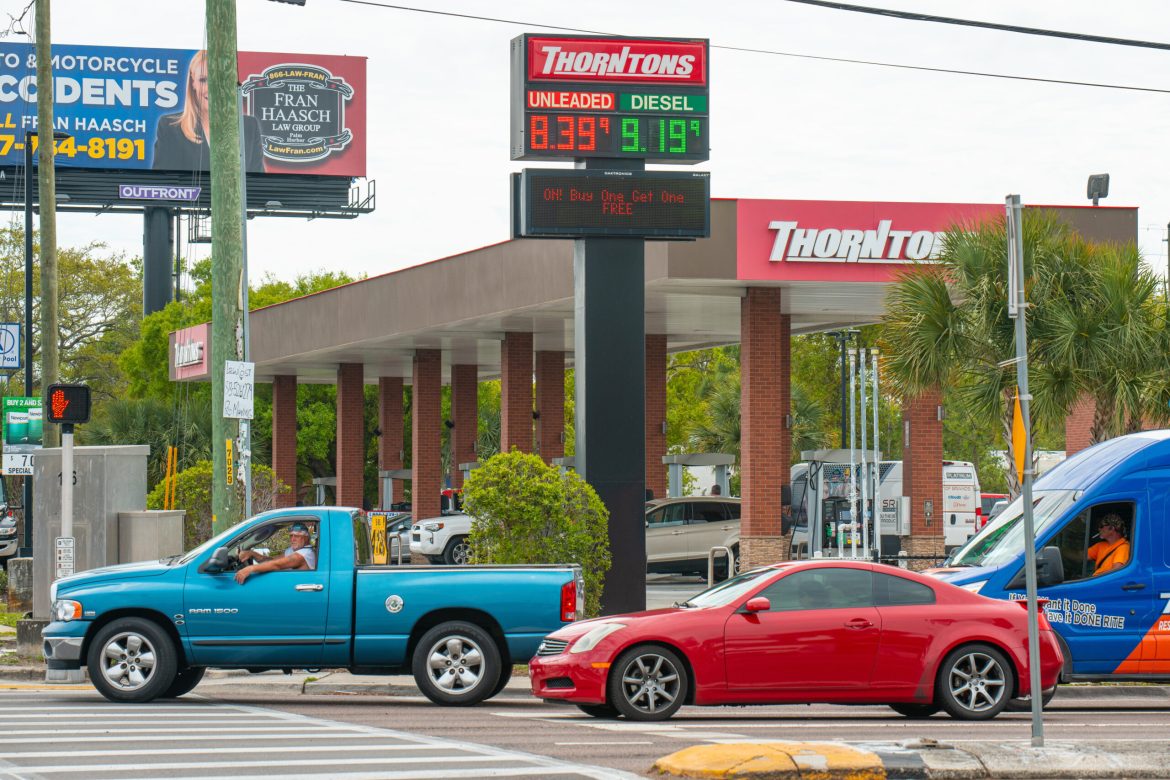
Prices are up. Again.
But consumers aren’t confused — they’re skeptical about how companies are handling them.
The Harris Poll research shows that as costs rise, Americans increasingly scrutinize corporate behavior, not just economic conditions. In autos, that scrutiny is already apparent:
- 84% of Americans worry automakers use rising costs as cover to raise prices more than necessary
- 56% do not trust automakers to be honest about why vehicle prices are rising
That skepticism is growing at a moment of renewed economic pressure.
In April, national gas prices climbed past $4 a gallon — up nearly 30% since the start of the war in Iran — contributing to inflation levels not seen since 2022, according to recent economic reporting. Rising energy costs are once again putting affordability front‑and‑center for American households.
But what’s changing isn’t just the cost — it’s how consumers are assigning responsibility.
Cause doesn’t equal culpability
Most consumers accept that tariffs, supply chains, geopolitics, and inflation drive costs higher. But understanding stops short of absolution: 84% say that even when costs come from external factors, automakers are still responsible for protecting customers.
External forces may explain price increases, but they don’t excuse passive, opaque, or one-sided responses.
Price hikes are no longer viewed as economic inevitabilities — they’re judged as leadership decisions.
Silence is no longer neutral
Consumers are also clear about what they expect next:
- 87% want automakers to clearly explain how tariffs or trade policies affect prices — not simply pass increases along
- 87% expect CEOs to speak up when government policies significantly raise costs for consumers
- 78% say when automakers stay silent about tariffs, it feels like prioritizing political safety over customer interests
Choosing not to engage isn’t read as neutrality, but as avoidance — or worse, quiet endorsement of higher prices.
The loyalty risk hiding in affordability
The consequence isn’t always immediate outrage. It’s something quieter.
As prices rise:
More consumers are opting out of the new‑car market altogether
Others are delaying purchases out of necessity, not preference
Loyalty doesn’t disappear overnight — it erodes slowly, as consumers begin to question whether brands are acting in their interest.
Price increases, in other words, are being judged less on what they are — and more on how they’re handled.
The takeaway
Consumers don’t expect automakers to control geopolitics or trade policy.
They do expect leadership, advocacy, and honesty when those forces hit their wallets.
Explaining rising prices isn’t a PR move anymore.
It’s table stakes.
And for brands navigating an affordability crisis, how they show up may matter as much as what vehicles cost.
