
Your questions about teeth whitening answered
What is the best at-home teeth whitening kit?
Overall, Smilepro’s LED and pen kit emerged as the best teeth whitening product, offering great value and effectiveness. Spotlight Oral Care’s strips and LED kit came in a close second, delivering noticeable results at a slightly higher price. For an affordable and quick solution, Colgate’s max white treatment was a strong contender. Meanwhile, Hismile provided an instant glow, and Icy Bear gave a pearly white finish, although neither kit led to a dramatic difference or long-lasting brightness.
How I tested the best teeth whitening kits
Over three months, I put some of the most popular teeth whitening kits through their paces. For each kit, I completed a full cycle of treatments and, during (and following) testing, paid attention to the following factors:
- Comfort: The mouth guards and whitening strips, in particular, needed to be comfortable for the duration of wear. If they don’t fit, it’s unlikely you’ll commit to the full cycle of treatments.
- Value for money: I assessed whether the difference in shade justified the high price of some whitening kits and whether those with more noticeable staining might be able to glean more value from in-dentist whitening.
- Sensitivity: Some of the kits left my teeth feeling more tender than others, so I considered whether these brands were suitable for those with enamel sensitivity or gingivitis.
- Design: While whitening strips are simple to store and use, LED kits can have issues with charging, and pens can leave you wondering if they work at all. I addressed the pros and cons of each whitening variety and compared the results in practice.
- Results: Ultimately, I wanted to find the kit that left my teeth looking the most brilliant in the least amount of time.
What are the main types of teeth whitening kits?
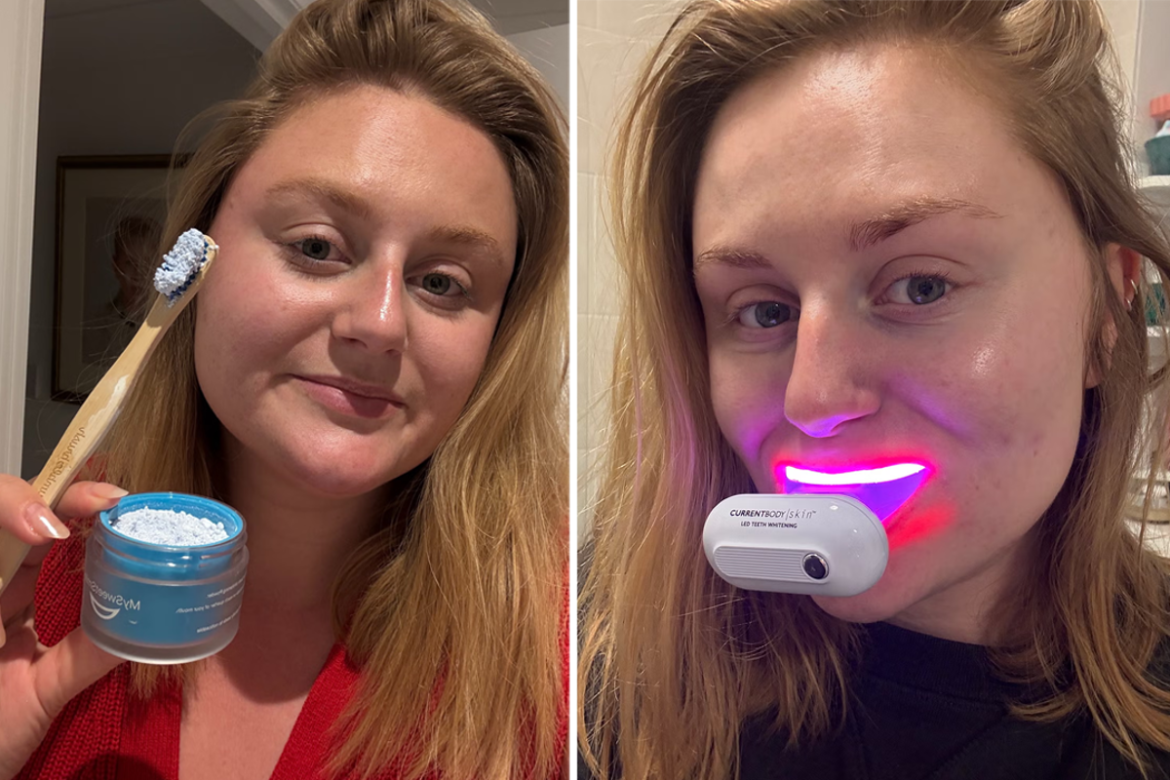
Teeth whitening kits can include whitening pens, powders, gels and strips. Strips are applied straight onto your teeth after you’ve brushed them, while powders can be applied with a toothbrush. Alternatively, whitening pens are portable and easy to use when you’re on the go. Some whitening treatments will come with a mouth tray and an LED light, which helps to speed up the whitening effect.
What ingredients should you look for in a teeth whitening kit?
Hydrogen peroxide and carbamide peroxide are common active ingredients because of their bleaching effect on teeth. While at-home kits contain lower concentrations of peroxide than teeth whitening treatments from dentists, some people may be wary of the risks of using peroxide at home.
These can include issues around sensitivity, which are caused by damage to the tooth enamel. If you want to go peroxide-free, consider formulas with other active ingredients, such as phthalimidoperoxycaproic acid, pentasodium triphosphate, sodium chlorite or coconut oil, among others.
Does whitening damage teeth?
To keep safely whiten your teeth at home, always follow the kit’s instructions closely. Don’t leave the product on longer than recommended, as it can irritate your gums. If that happens, stop using it. Pregnant or breastfeeding women are also advised not to use whitening kits.
Are there any natural alternatives to teeth whitening?
Activated charcoal is a less synthetic solution than hydrogen peroxide. However, some sources say charcoal’s abrasive texture could wear down tooth enamel, so while it can whiten teeth, it can also damage them.
How long will it take to whiten my teeth?
The amount of time it will take to whiten teeth will depend on the product and the amount of staining on your teeth. With most solutions, you’ll notice a difference after two weeks.
How often can you whiten your teeth?
You can top up your whitening when you feel the initial effect has started to fade. How long this will take depends on your diet and dental care. Always check the instructions on the package, as each kit is different, and overuse of whitening kits can cause tooth sensitivity, inflamed gums and enamel erosion.
Do LED teeth whitening kits work?
These kits use light-emitting diodes (LEDs) to emit ultraviolet and infrared light. These lights, particularly UV light, activate teeth whitening agents – gels, for example – and are said to make them work faster. So, while the LED itself doesn’t whiten teeth, Dr Patel says “it helps speed up the whitening process”.
Do teeth whitening strips work?
Teeth whitening strips work, but Dr Patel says “The results depend on the brand and how stained your teeth are to begin with.” He explained that while peroxide-based strips can brighten teeth over time, he warns that “They’re usually more effective for surface stains, rather than deep discolouration.”
Is teeth whitening safe?
Across both LED and strip-based teeth whitening, Dr Patel agrees that opting for a reputable brand and following its guidelines is crucial. “Some kits contain stronger whitening agents that could cause irritation or sensitivity, especially if used too often. It’s good to start slow,” he says.
What causes teeth staining?
Many things cause teeth staining. Dr Patel warns against:
• Tea and coffee – “Tannins in these drinks stick to enamel and cause yellowing.”
• Red wine – “The deep colour and acidity can stain teeth over time.”
• Smoking – “Nicotine and tar turn teeth yellow and brown.”
• Sugary and acidic foods – “These weaken enamel, making teeth more prone to staining.”
• Poor oral hygiene – “If plaque builds up, stains can set in more easily.”
• Ageing – “Enamel naturally wears down over time, making the yellowish dentin underneath more visible.”
What can you eat and drink after teeth whitening?
Annoyingly, you need to be careful after teeth whitening, confirms Patel. “After whitening, your teeth are more porous, so it’s best to avoid stain-causing foods and drinks (like coffee, tea, red wine, and curry) for at least 24-48 hours. Stick to lighter-coloured foods like chicken, rice, and dairy, if you want to be extra careful.”
Why you can trust IndyBest reviews
As a beauty writer, my years in product reviewing have left me well-informed about oral hygiene and dental aesthetics. When it came to assessing the best teeth whitening kits, I sought advice from an experienced dentist, combining his advice with real-world testing to find the formulas that are worth your time and money.
The wider IndyBest team also offers further advice on oral care with tailored buying guides to advise on how to achieve the perfect smile. From best electric toothbrushes, best water flossers to even kids toothbrushes, our team strives to provide the best recommendations for oral health.
Want to add extra oomph to your smile? These are the best teeth whitening toothpastes
