
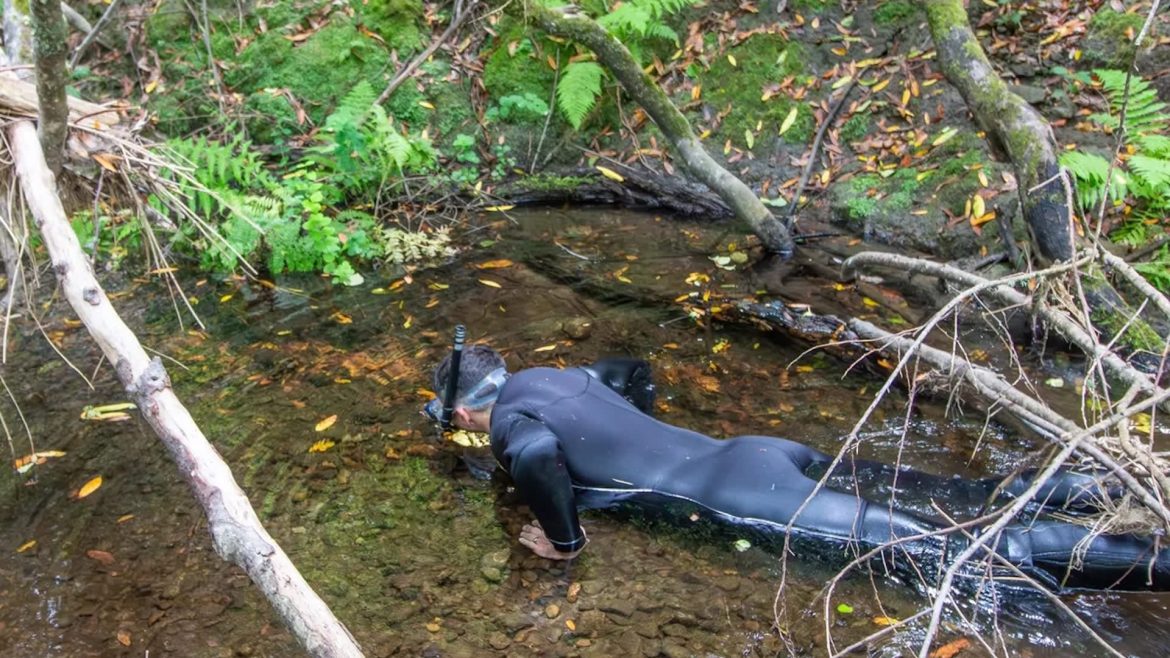
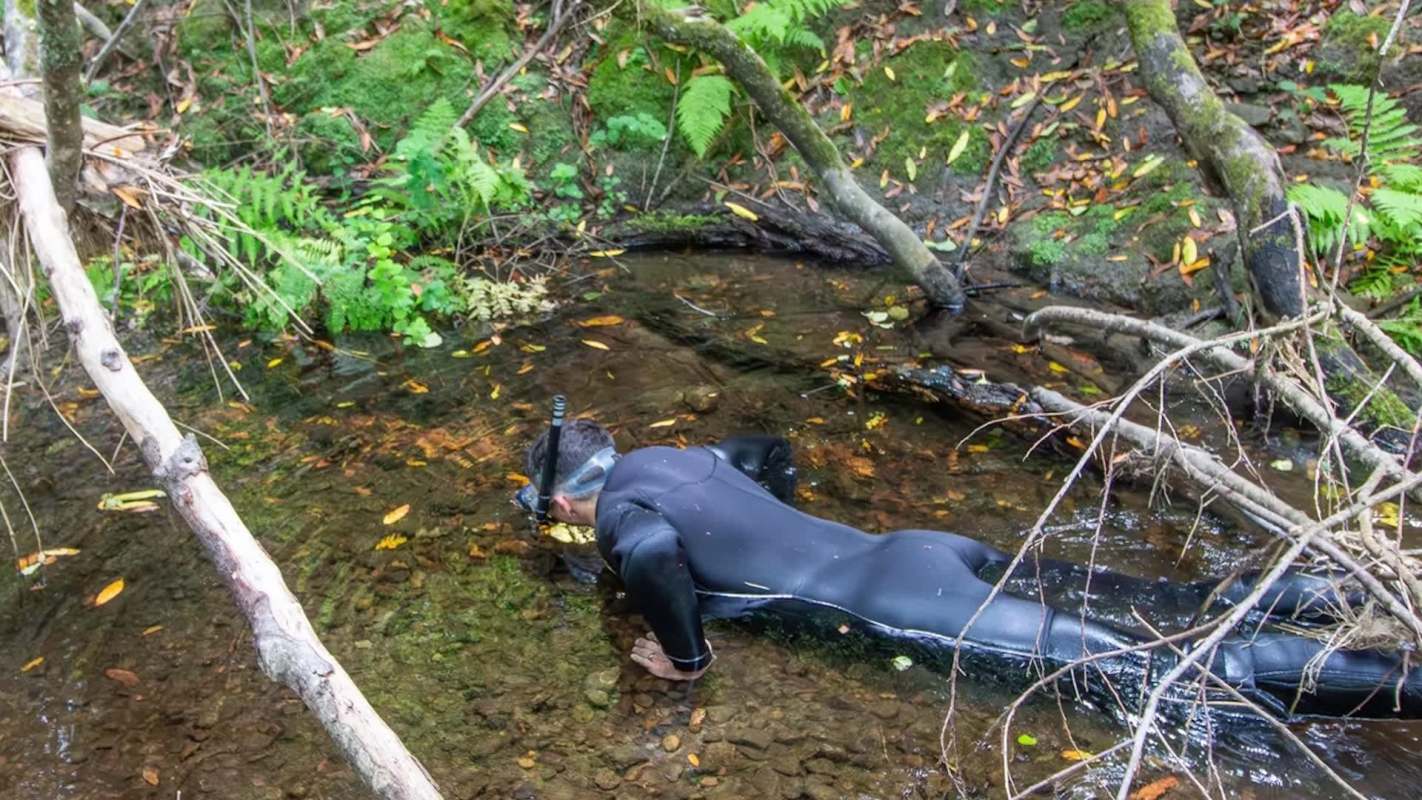
Photo Credit: National Park Service
It goes without saying that when you’re snorkeling, you’d better be prepared to see just about anything.
For National Park Service biologist Michael Reichmuth, that means going out in search of endangered juvenile coho salmon and ending up with an unprecedented sighting of California giant salamander larvae.
The NPS reported on what appears to be the first documented sighting of the salamander hatchlings in their natural habitat at Point Reyes National Seashore’s Olema Creek. Reichmuth was carrying a camera and was able to photograph the cluster of larvae in the stream.
Although adult California giant salamanders can reach lengths of up to one foot, knowledge about their juvenile stage is scarce. That’s primarily due to the challenges in observing this species in the wild.
U.S. Geological Survey biologist Patrick Kleeman confirmed Reichmuth’s sighting by pointing to the stream as a known habitat for the amphibians and to their distinctive back patterning. Indicators that the seashore salamanders had recently hatched included their white yolk sacs and their close clustering.
Given the uncertainty surrounding the salamanders’ biology, California designates the giant salamander as a species of “special concern.”
There is concern that their numbers are falling. Amphibians’ susceptibility to the changing climate is a risk factor, and the California giant salamander also has a limited habitat along the central coast.
While scientists have various methods for procuring amphibians to study, California giant salamanders have proved elusive. They neither land in the traps nor take cover under the boards that researchers put out, according to the NPS.
Thus, the photograph of a group of newly hatched salamander larvae provides some more enlightening data on their early stages of life. Through this observation, Reichmuth and his team may uncover valuable insights on how to effectively manage their populations.
“The fact that [Reichmuth] found them at all is interesting because there is so little information about this life stage in this species,” Kleeman said, per the NPS.
While visitors aren’t allowed to snorkel in these park waters, they can contribute by adding photos to platforms like iNaturalist if they have chance encounters with the amphibians. California’s Giant Salamander Observation is the best place to start if you are lucky.
Get TCD’s free newsletters for easy tips, smart advice, and a chance to earn $5,000 toward home upgrades. To see more stories like this one, change your Google preferences here.

