
Summary
- The Cirrus SF50 Vision Jet is a popular single-engine airplane designed for private use, also known for its V-tail design.
- It incorporates advanced safety features such as the Safe Return Emergency Autoland System, allowing passengers to land the plane if the pilot is incapacitated.
- The aircraft also features a parachute system, known as the Cirrus Airframe Parachute System (CAPS), for safe emergency landing.
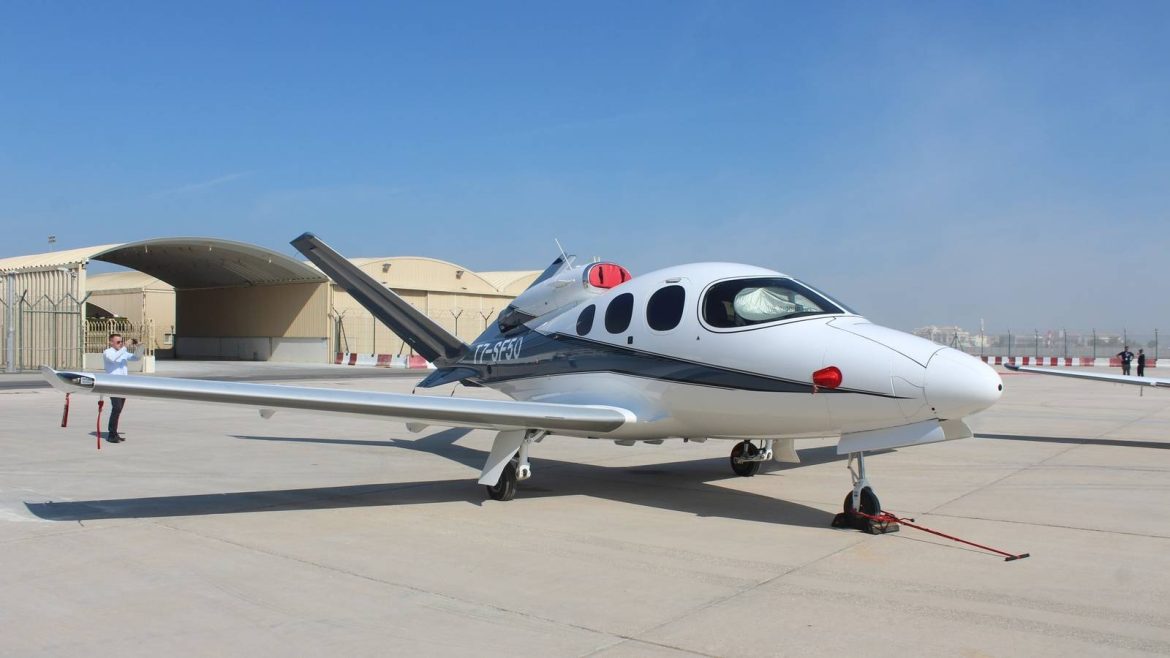
Easily identified by its V-tail design, the Cirrus SF50 Vision Jet is a single-engine airplane designed for the very light private jet market. It has gained popularity since receiving certification in 2016, with more than 500 units delivered worldwide.
Recognized for its cost-effectiveness in comparison to many light private jets, it boasts a user-friendly design that appeals to pilots. However, their user-friendly nature doesn’t diminish the presence of exciting features.
For those who are interested, here is a table of the aircraft’s general specifications:
|
Capacity |
6 pax +1 crew |
Cruise speed |
305 knots (565 km/h) |
|
Length |
30 ft 11 inches |
Maximum range |
1,275 NM (2,360 km) |
|
Wingspan |
38 ft 8 inches |
Service ceiling |
31,000 feet |
|
Height |
10 ft 11 inches |
Fuel capacity |
2,000 lb |
|
Engine |
1 x Williams FJ33-5A turbofan |
Maximum payload |
1,350 lb |
|
Maximum speed |
311 knots (575 km/h) |
Take-off distance |
2,036 ft |
1
Emergency auto landing
It can land itself in the event a pilot is incapacitated
Cirrus notes that one of the most remarkable aspects of this aircraft is its safety features. It incorporates the Safe Return Emergency Autoland System, developed by avionics company Garmin in collaboration with aircraft manufacturers such as Cirrus and Piper.

With the Safe Return Emergency Autoland System, passengers can use a big red button to land the plane safely if the pilot is no longer able to command the aircraft. Once activated, the system determines the nearest suitable airport, calculates a path, and considers terrain and weather conditions using Garmin avionics onboard.
Watch the video below to see this technology in action:
Adding to its capabilities, the system communicates emergency codes to air traffic control. It not only directs the jet to the nearest airport but also lands on the most suitable runway. While not the pioneer in this type of feature, it stands out as the most advanced. Unlike other commercial autoland systems, it doesn’t demand constant supervision by a trained pilot.
2
Parachute system
Deployed in case the single engine experiences failure
The Cirrus Vision Jet is equipped with a parachute known as the Cirrus Airframe Parachute System (CAPS). This system is designed to safely lower the aircraft to the ground in the event of a catastrophic emergency.

CAPS should not be activated below 600 feet (182.8 m) Height Above Ground Level (AGL). Between 600 feet (182.8 m) and 2,000 feet (609.6 m) AGL, the system is advised to be deployed promptly in case of an engine failure. Pilots only need to pull on a red T-handle to activate the system. CAPS is standard equipment on all Cirrus aircraft (TRAC, SR20, SR22, SR22T, Vision Jet). Watch the video below for an overview of the use of this system on the jet:
3
V-tail design
Offering improved maneuverability
The Cirrus Vision Jet stands out with its distinctive V-tail and a single engine positioned nearby. Although not novel, its design incorporates two surfaces angled to form a V shape, serving as both elevator and rudder control surfaces. This V-tail configuration offers advantages such as reduced weight, improved maneuverability, and decreased drag.

The unique V-tail design is a standout feature in the newly produced aircraft, as it is not commonly found on many types. The most popular V-tailed mass-produced aircraft is the Beechcraft Bonanza Model 35, a plane with one of the richest legacies in private and general aviation.
In addition to its V-tail, the aircraft features a low-wing design mounted lower than halfway up the fuselage. With a 12-meter wingspan, the Cirrus Vision Jet enjoys better aerodynamics and performance typically found with low-wing designs.
4
Replay for the radio
Allows pilots to listen their assignment again
While lesser-known among passengers, the Cirrus Vision Jet flight deck incorporates a valuable replay feature for pilots, according to Business Insider. A “Replay” button on one of the touchscreen controllers lets the pilots hear a frequency assignment again. This feature can be helpful when mishearing a radio frequency, especially on approach.

The above-highlighted feature is made possible through Garmin’s Perspective Touch+ avionics, which also includes the auto land and parachute systems. It is worth noting that this cockpit features two high-resolution flight displays and three landscape touchscreen controllers. This intuitive flight deck allows pilots to personalize the layout of the Primary Flight Display (PFD), Multifunction Display (MFD), and touchscreen controllers based on individual preferences for different flight phases.
Although a minor function in the cockpit, it underscores the manufacturer’s commitment to detail, particularly in ensuring the convenience of this aircraft for both passengers and pilots alike.
5
Oversized windows
A groundbreaking view for such a small aircraft
This feature is sure to delight passengers aboard this remarkable light jet, designed to accommodate up to seven passengers. The Cirrus Vision Jet has six oversized windows, adding a touch of luxury to the overall experience. Despite being one of the smallest jets globally, the large windows play a crucial role in creating a sense of spaciousness within the aircraft.

In addition to large windows, the aircraft’s cabin features comfortable folding tables, a large entertainment display, in-flight WiFi, rear climate control, and accent lighting. Indeed, only a few aircraft in this category can rival the cabin design of the Cirrus Vision Jet.
What are your thoughts on this tiny aircraft? Have you ever flown in a Cirrus Vision Jet? Let us know in the comments section below.
