
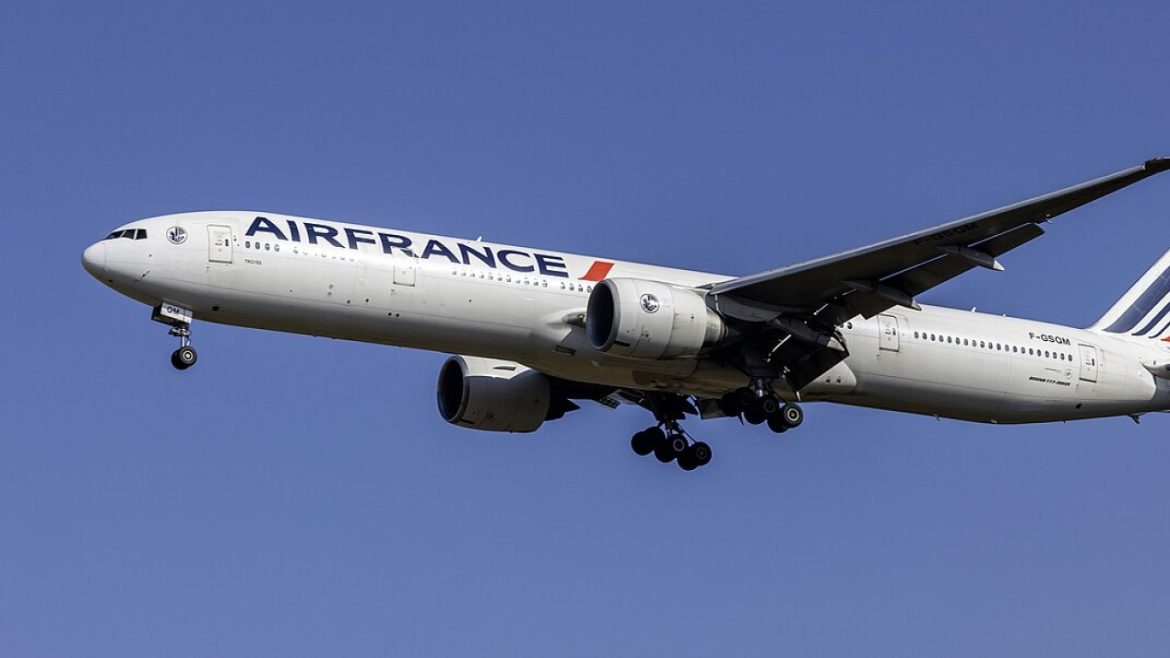
A Paris appeals court on Thursday found Airbus and Air France guilty of corporate manslaughter in connection with the 2009 crash of Flight AF447, which killed all 228 people on board. The ruling overturns a 2023 lower court decision that had acquitted both companies, with the appeals court now finding the manufacturer and the airline “solely and entirely responsible” for the deadliest aviation disaster in French history.
The court ordered Airbus and Air France to pay a fine of €225,000 (US$261,720), the maximum penalty allowed under French law for the charge. While families of the victims welcomed the conviction as long-awaited recognition of responsibility, some criticized the fine as a “token” penalty, equivalent to only a few minutes of revenue for the multinational firms.
Case History and Verdict
The ruling concludes an eight-week trial that revisited evidence from the June 1, 2009 disaster. The Airbus A330, en route from Rio de Janeiro to Paris, disappeared from radar during a storm over the Atlantic Ocean. Airbus confirmed it will appeal the decision to the Court of Cassation, France’s highest court, stating that the appeal seeks a “judicial review of the legal questions raised by the case.”
During closing arguments in November, deputy prosecutors described the companies’ conduct as “unacceptable,” accusing them of “spouting nonsense and pulling arguments out of thin air.”
Daniele Lamy, president of the AF447 victims’ association, said the ruling meant that justice was “at last taking into account the pain of the families faced with a collective tragedy of unbearable brutality.”
Technical Failures and Negligence
The prosecution’s case focused on the failure of Pitot tubes—external sensors used to measure airspeed. Investigative reports from 2012 confirmed that ice crystals blocked these sensors, causing the autopilot to disconnect and generating inconsistent speed readings in the cockpit.
The court found the companies negligent for:
- Deficient training: Failure to adequately prepare flight crews to handle high-altitude stalls and unreliable sensor data.
- Inadequate follow-up: Failure to properly address and investigate prior incidents involving similar sensor malfunctions.
- Communication breakdowns: Deficiencies in cockpit coordination during the emergency.
The final investigation attributed the crash to a combination of mechanical failure and pilot error. When the sensors iced over, the co-pilots became disoriented and mistakenly pitched the aircraft upward during a stall instead of lowering the nose to regain lift. The captain was on a scheduled rest break at the time.
Recovery and Victims
The search for Flight AF447 involved a large-scale international operation. The Brazilian Navy recovered initial debris and 51 bodies shortly after the crash, but the flight recorders were not located until 2011, after a deep-sea search covering 10,000 square kilometers of the ocean floor.
The 228 victims represented 33 nationalities, including 61 French, 58 Brazilian, and 26 German citizens. Among the dead were 12 crew members and 216 passengers, including seven children and one infant. Notable passengers included three Irish doctors, an 11-year-old British student, and Brazilian Prince Pedro Luiz de Orleans e Bragança.
Air France previously noted that the pilot in command had more than 11,000 hours of flight experience. The aircraft had undergone its last maintenance check on April 16, 2009, less than two months before the accident.
