
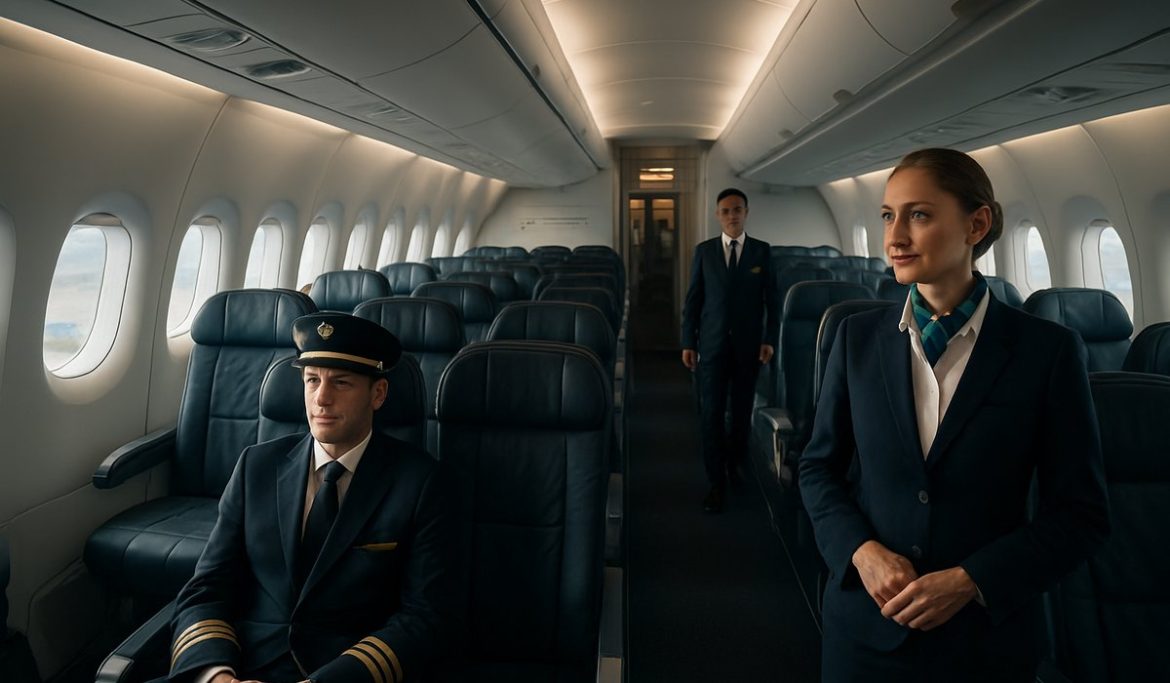
While passengers marvel at bars and shower spas, the aircraft’s true innovation lies in its revolutionary spatial compartmentalization
A Cabin Designed for Precision, Not Just Capacity
The Airbus A380 has captured global imagination as a symbol of aviation excess—a double-decked giant that promises passengers bars, premium suites, and unprecedented legroom. Yet aviation experts argue the aircraft’s most sophisticated achievement remains largely invisible to travelers: a methodically engineered interior architecture that transcends traditional airliner design philosophy.
Unlike conventional wide-body aircraft where cabin space serves as the primary design constraint, the A380’s revolutionary layout prioritizes functional separation with remarkable precision. The superjumbo doesn’t simply maximize passenger seating; it strategically compartmentalizes the aircraft to balance customer experience, crew efficiency, operational logistics, and crew fatigue management within a single fuselage.
Engineering Sophistication Beyond Marketing Appeal
The distinction matters considerably in modern aviation. While the A380’s luxury features—including onboard lounges, spa facilities, and first-class suites—dominate marketing campaigns and passenger expectations, the aircraft’s fundamental engineering separates these premium zones from operational infrastructure in ways that fundamentally reshape how airlines manage ultra-high-capacity routes.
Beneath the polished interiors and carefully curated ambient lighting exists a layered spatial organization that airport managers, crew schedulers, and maintenance engineers understand far differently than ticket-purchasing passengers. The aircraft’s architecture quietly delegates distinct functions—passenger service, crew protocols, aircraft systems monitoring, and personnel rest areas—into deliberately isolated zones.
Operational Efficiency Meets Passenger Comfort
This compartmentalization delivers tangible operational advantages. By strategically positioning crew rest areas, maintenance access points, and systems controls separately from passenger-facing cabins, Airbus enabled airlines to extend flight operations on ultra-long-haul routes while managing crew fatigue within regulatory frameworks. The design simultaneously permits premium cabin positioning that maximizes revenue per available seat while maintaining functional workflow efficiency that standard aircraft configurations cannot match.
The A380’s spatial strategy represents a fundamental shift in how aircraft designers approach the relationship between commercial capacity and operational reality. Rather than treating the cabin as monolithic space, Airbus engineered layered functionality that serves multiple operational constituencies within a single aircraft frame.
The Broader Aviation Implications
As airlines worldwide evaluate fleet strategies and route profitability, the A380’s engineering philosophy—prioritizing functional separation alongside passenger luxury—demonstrates how architectural innovation influences economic performance. The aircraft continues flying for elite carriers operating premium long-haul networks, where its ability to simultaneously maximize passenger density while maintaining crew operational standards creates competitive advantages on routes where traditional aircraft generate fatigue and scheduling constraints.
FAQ: Understanding the A380’s Hidden Design Features
What makes the A380’s cabin layout different from other large aircraft?
The A380 compartmentalizes space for distinct functions—passenger service, crew operations, systems control, and fatigue management—rather than treating the cabin as unified space, unlike conventional wide-body designs.
How does the A380’s design help manage crew fatigue?
Strategic positioning of crew rest areas separate from passenger cabins enables airlines to schedule longer operations while maintaining regulatory compliance for crew rest requirements on ultra-long-haul routes.
Which airlines currently operate A380s with these premium features?
Emirates, Singapore Airlines, Lufthansa, British Airways, and Qatar Airways operate significant A380 fleets featuring the aircraft’s luxury cabin configurations and advanced spatial design.
Why haven’t other aircraft manufacturers replicated the A380’s layout approach?
The A380’s dual-deck configuration and size create unique engineering opportunities that smaller wide-body aircraft cannot practically implement without proportionally higher operational costs.
Is the A380 still being produced?
Airbus ended A380 production in 2021, though existing aircraft continue operating for premium long-haul carriers through the 2030s and beyond.
Related Travel Guides
Flight Delay Compensation Guide 2026
Understanding Airline Route Changes
Airport Security Process Updated (2026)
External Resources
Disclaimer: Airline announcements, route changes, and fleet information reflect official corporate communications as of April 2026. Schedules, aircraft specifications, and service details remain subject to airline modifications.
