
Getting your audio player ready…
A newly revealed Luxor coffin cache has brought painted coffins, forgotten temple officials, and more than 30 mummified cats back into the light on Egypt’s West Bank. The discovery was made at Dra Abu El-Naga, part of the Theban necropolis, where Egyptian archaeologists have been working in an area buried under old excavation debris for more than 150 years. According to Ahram Online, the finds include ten decorated wooden coffins, the tomb of an unknown priest of Amun, and a Ptolemaic-period deposit of cat mummies. The mix of elite burial, sacred animals, and previously unknown names gives the discovery instant appeal.
The excavation is being carried out by a mission of Egypt’s Supreme Council of Antiquities, now in its eighth season at the site. Work began in November 2025 in the southeastern sector of the tomb of Roy, known as TT255, a location already rich in New Kingdom history and closely tied to the wider story of ancient Thebes. For archaeologists, the excitement lies not only in the objects themselves, but in the names and titles preserved in their inscriptions. Those details may help rebuild religious life in ancient Luxor.
A Hidden Cache in the Courtyard of Baki
The ten wooden coffins were found inside a burial shaft in the courtyard of the tomb of Baki. Egypt Independent reports that the coffins are well preserved and carry painted scenes and texts from several periods of Egyptian history. Preliminary study suggests that four date to the 18th Dynasty, including one made for Merit, a chantress of the god Amun. Another coffin belongs to Padi-Amun, identified as a priest of the Temple of Amun.
The remaining coffins are thought to date to the Late Period, suggesting that the shaft was reused over a long span of time. Officials believe it became a protective cache after coffins were moved from their original tombs, probably when the mummies inside were already in poor condition. The practice echoes other famous Egyptian mummy caches, including those associated with hidden royal burials and later discoveries of painted coffins in Luxor. Here, it also preserves temple personnel absent from known records.
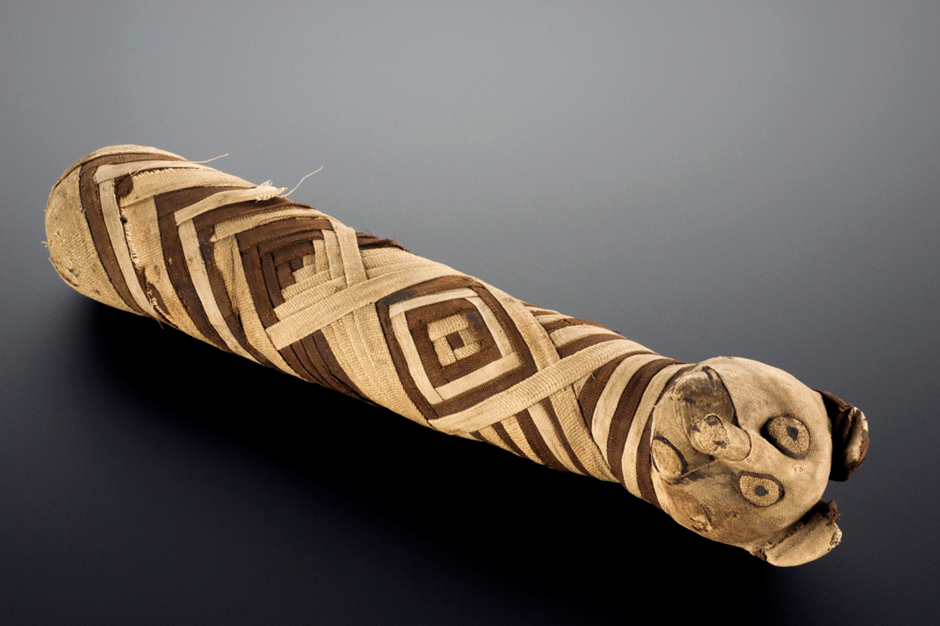
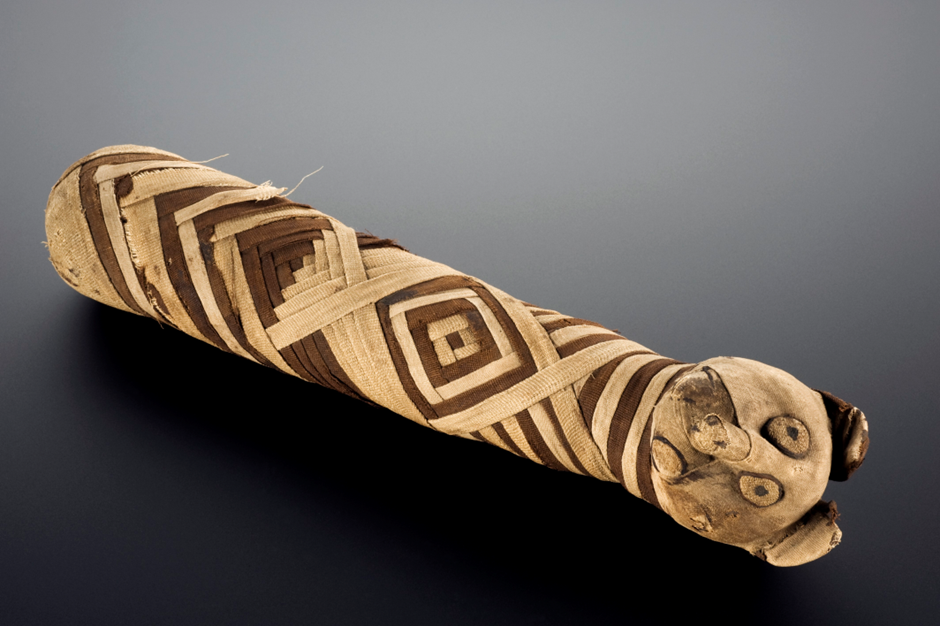
Ancient Egyptian mummified cat, a fitting comparison for the Ptolemaic-period cat mummies found at Dra Abu El-Naga. (Wellcome Collection/CC BY 4.0) Source.
The Unknown Priest of Amun
The same season also revealed the tomb of Aa-Shefi-Nakhtou, rendered in some reports as A-Shafi-Nakhtu, a purification priest in the Temple of Amun. HeritageDaily describes the tomb as having a small courtyard, a rectangular shaft, an entrance decorated with offering scenes and funerary texts, and a hall leading to the burial chamber. The inscriptions also name members of his family, including two wives, Isis and Ta-Kafet, both associated with the cult of Amun. His father, Padi-Amun, is also named in connection with temple service.
Such titles matter because temple offices were part of Egypt’s religious and administrative machinery. The god Amun rose to exceptional prominence at Thebes, and his priesthood became one of the most influential institutions in the country. Readers familiar with the complexity of Egyptian gods will recognize that temple titles can reveal status, profession, and family networks.
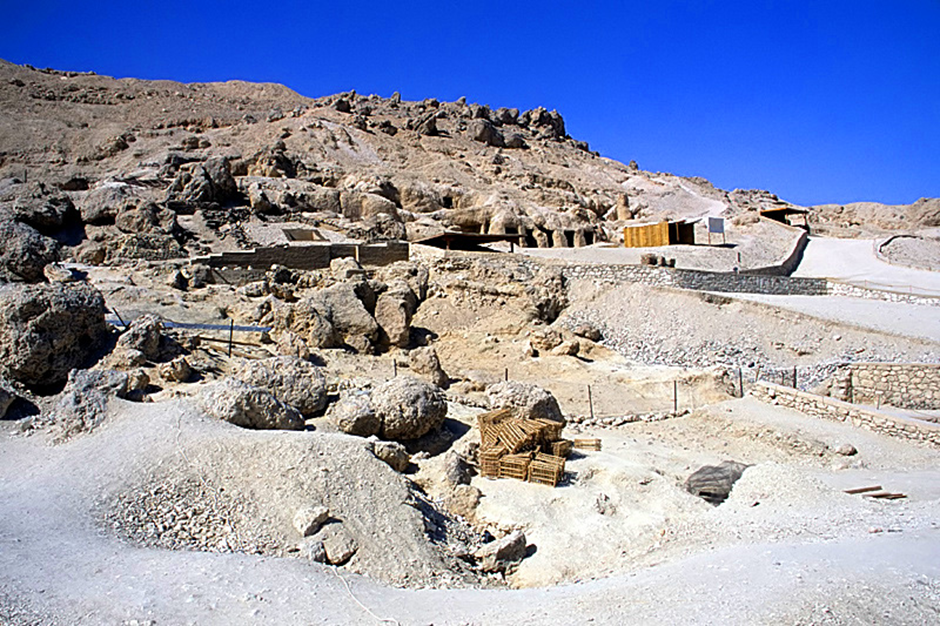
Dra Abu El-Naga forms part of the Theban necropolis on Luxor’s West Bank. (Roland Unger/Wikimedia Commons/Creative Commons) Source.
More Than 30 Cats and a Scribe Named Benji
Perhaps the most eye-catching part of the discovery is the burial of more than 30 mummified cats, found south of the tomb of Baki. Ahram Online states that the animals included both wild and domestic cats, wrapped in linen and tied with strips. They are believed to date to the Ptolemaic period, when animal mummies were widely used as votive offerings in religious practice. That places the cats centuries later than some of the coffins.
The mission also found a sandstone pyramidion in a small tomb designated DP91. It bears the name Benji, described as a “scribe and noble,” shown in repeated devotional poses. The original tomb of Benji has not yet been identified, but the find adds another name to the growing list of people emerging from this buried section of Dra Abu El-Naga. From mummified rams at Abydos to coffins at Saqqara, burial deposits reveal changing ideas about memory, devotion, and the dead.
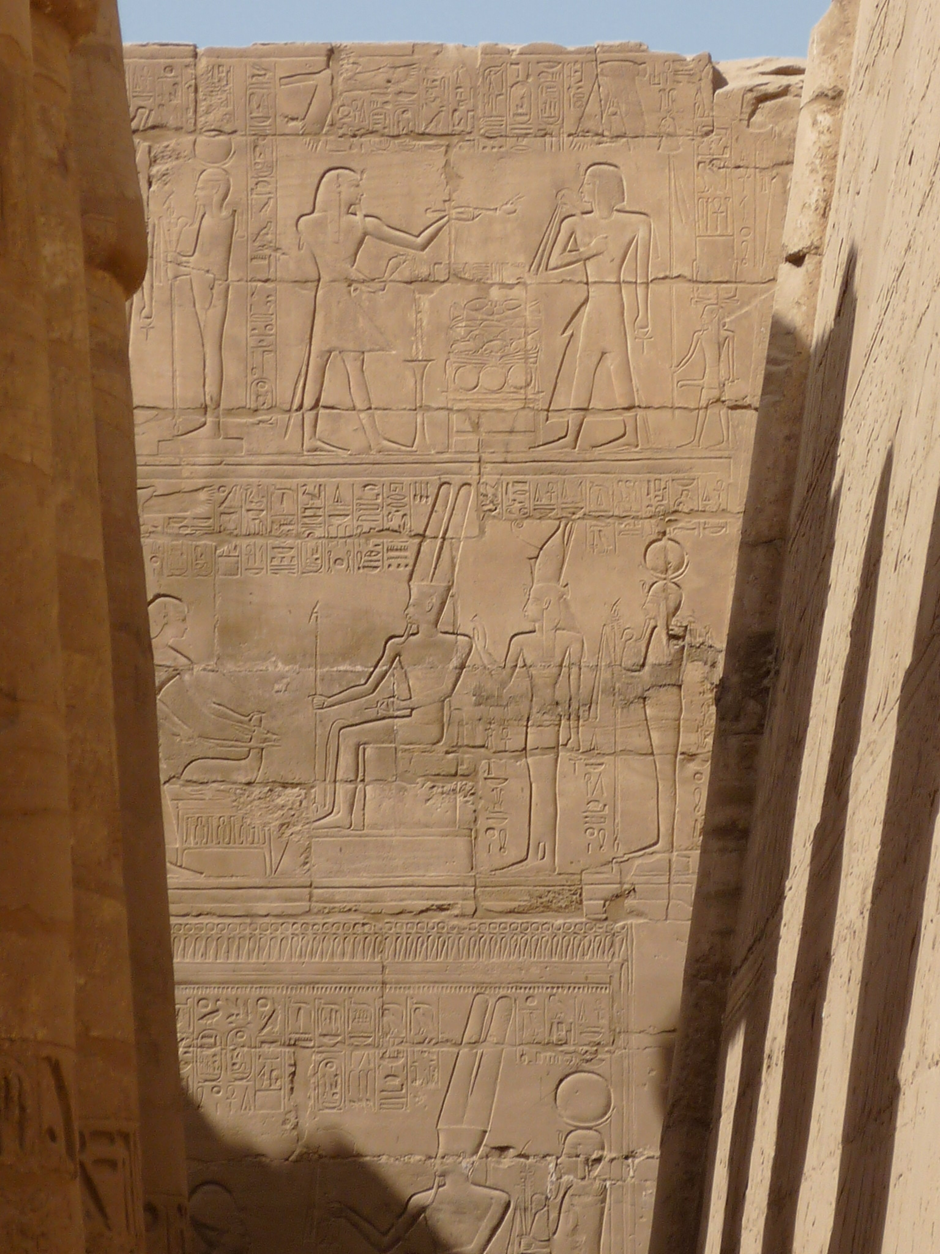
Relief in the Great Hypostyle Hall at Karnak, the vast Theban temple complex associated with Amun. (Wikimedia Commons/CC BY-SA 3.0) Source.
New Names from Ancient Thebes
Hisham el-Leithy, Secretary-General of the Supreme Council of Antiquities, said the finds are especially important because several of the people named were previously unknown from historical sources. The inscriptions, he noted, preserve new titles and roles that help illuminate Egypt’s social and administrative structure. That makes the Luxor coffin cache more than another attractive group of coffins; it is a new archive in wood, stone, linen, and bone. Even at Dra Abu El-Naga, the ground can still return unread names.
Top image: Egyptian officials and archaeologists inspect one of the newly uncovered coffins at Dra Abu El-Naga, Luxor. Source: Ministry of Tourism and Antiquities via Ahram Online.
References
Al-Masry Al-Youm. 2026. Ancient tomb and 3,500-year-old coffins discovered in Luxor. Available at: https://www.egyptindependent.com/ancient-tomb-and-3500-year-old-coffins-discovered-in-luxor/
Aref, N. 2026. New discoveries at Dra Abu El-Naga in Luxor revealing new titles that have never shown before. Available at: https://english.ahram.org.eg/NewsContent/9/40/567988/Antiquities/Ancient-Egypt/New-discoveries-at-Dra-Abu-ElNaga-in-Luxor-reveali.aspx
Milligan, M. 2026. Archaeologists unearth hidden coffin cache at Luxor’s Abu el-Naga necropolis. Available at: https://www.heritagedaily.com/2026/05/archaeologists-unearth-hidden-coffin-cache-at-luxors-abu-el-naga-necropolis/158083
State Information Service. 2026. وزير السياحةوالآثار يتفقد أعمال الحفائر الأثرية بمنطقة ذراع أبو النجا بالبر الغربي. Available at: https://sis.gov.eg/ar/المركز–الإعلامي/الأخبار/وزير–السياحة–والآثار–يتفقد–أعمال–الحفائر–الأثرية–بمنطقة–ذراع–أبو–النجا–بالبر–الغربي/
