
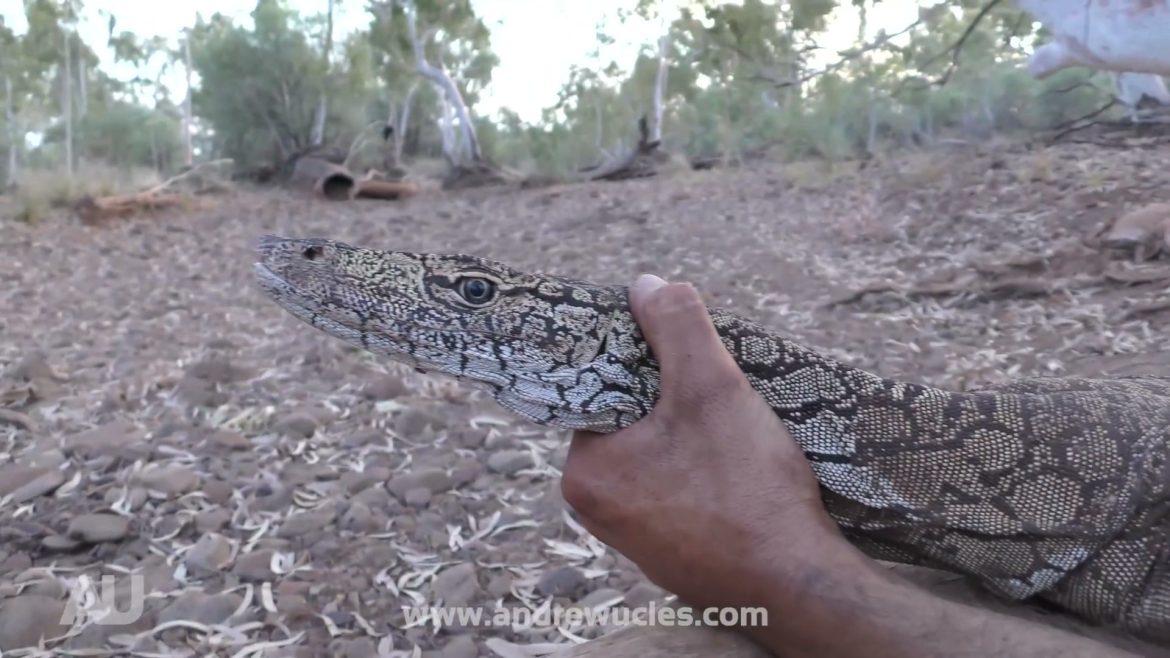
- Australia’s largest lizard hunts some of the world’s deadliest snakes, and it almost always wins for an anatomical reason. See the snake-hunting diet →
- Scientists recently discovered that the perentie is hiding a secret weapon, one that makes a bite far nastier than it looks. Discover the venom secret →
- Its survival trick involves doing something your wardrobe already does, though most people would never connect it to a lizard. See how skin color helps →
As the fourth-largest lizard on the planet, the perentie is the undisputed king of the desert. It is Australia’s answer to the Komodo dragon, a sleek, powerful predator that most Australians will only ever see in photos or documentaries.
A Giant Among Reptiles
To understand the scale of a perentie, imagine a lizard that can grow longer than a king-sized bed (over 6.5 feet) and weigh as much as a medium-sized dog. Despite their bulk, they are surprisingly elegant, covered in beautiful yellow spots that help them blend perfectly into the shimmering heat of the desert.
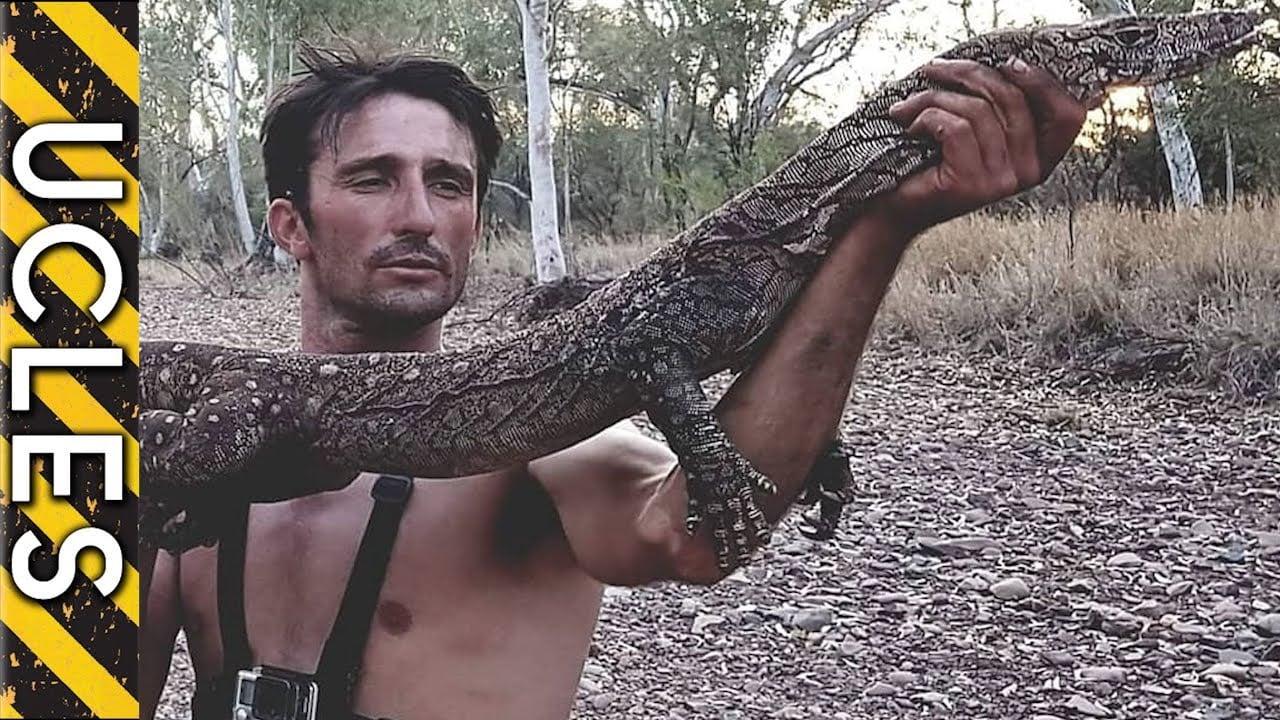
©Andrew Ucles via YouTube — used under fair use – Original / License
They live in the “dead heart” of Australia, making their homes in rocky gorges and crumbling cliff faces. These areas aren’t just scenic; for a perentie, they are a survival necessity.
Solar-Powered Survival
Unlike us, perenties are ectotherms (what we often call “cold-blooded”). They don’t produce their own body heat. Instead, they have to harvest it from the sun.
The rocky landscape acts like a giant natural battery. In the morning, the perentie sprawls out on a sunny rock to soak up the rays. If it gets too hot, it slips into a cool, shaded crevice. This constant “shuttling” between sun and shade is how they keep their bodies at the perfect operating temperature.
Have you ever worn a black shirt on a sunny day and felt much hotter than if you wore white? Perenties do something similar. When they are cold, their skin can actually turn darker to absorb more heat. Once they’ve warmed up and are ready to hunt, their skin lightens again.
The Apex Predator of the Outback
In the dry interior, the perentie reigns supreme. Their diet includes a variety of desert animals:
- Small Mammals: Like rabbits and rodents.
- Birds: Especially those nesting on the ground.
- Venomous Snakes: this is where the perentie truly excels. They are specialists at hunting some of the world’s deadliest snakes. Thanks to their thick skin and powerful skulls, they can grapple with a venomous snake and win.
However, life isn’t always easy. When they are young and small, perenties have to keep a sharp eye on the sky. Wedge-tailed eagles and dingoes view a baby perentie as a tasty snack, which is why these lizards stay so close to deep rock cracks where they can vanish in an instant.
Speed, Stealth, and a Secret Weapon
There is a long-standing rumor that the perentie is the fastest lizard in Australia. While it’s hard to clock them with a radar gun, they have a remarkable ability: when they need to move fast, they can lift their front legs off the ground and sprint on their hind legs like a miniature dinosaur.
But don’t expect to get close. Unlike some bolder lizards you might see in suburban parks, perenties are incredibly shy. They can spot a human from from a great distance and will usually retreat into a deep cave before you even know they were there.
A word of warning: If you ever do encounter one, keep your distance. Aside from being culturally sacred to many Aboriginal groups, perenties are dangerous. They have:
- Razor-sharp teeth that can cause deep cuts.
- A secret weapon: Scientists recently discovered that these lizards actually have mild venom. It’s not usually fatal to humans, but it causes heavy bleeding and intense swelling, making a bite much nastier than it looks.
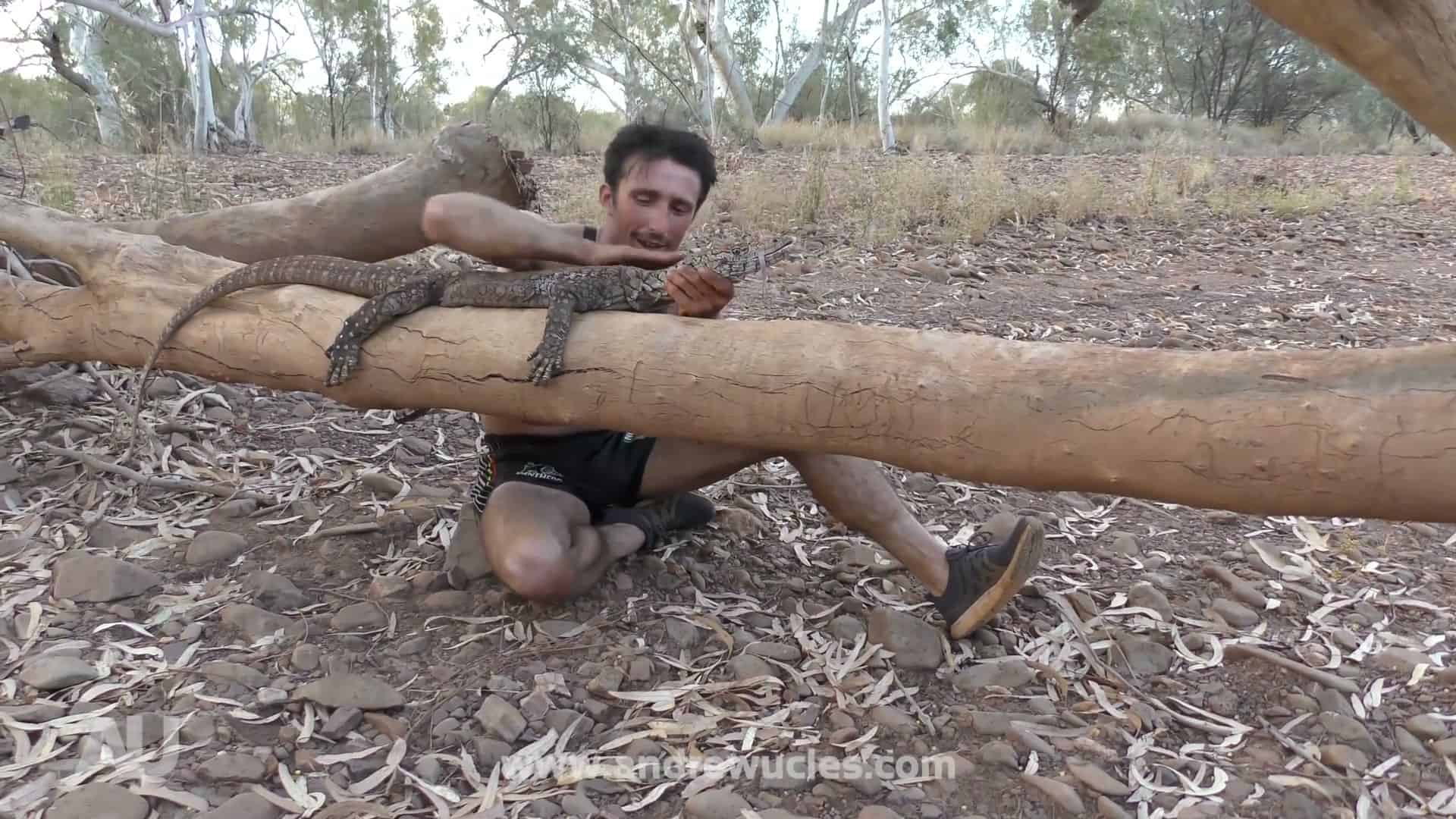
If you spot a perentie, keep your distance. Ucles is a trained professional.
©Andrew Ucles via YouTube — used under fair use – Original / License
How to Think Like a Lizard
If you wanted to find a perentie, you’d have to stop looking for the animal and start looking at the land. You’d look for rocky cliffs near dry riverbeds and watch for birds like cockatoos that gather near water.
Finding one is a matter of biology: you have to be in the right place at the right temperature. The perentie is always performing a balancing act of staying in the sun long enough to have the energy to hunt, but not so long that it becomes an easy target for a hungry eagle.

About the Author
Ashley Haugen
Ashley Haugen is the editor of A-Z Animals. She’s a lifelong animal lover with an affinity for dogs, cows and chickens. When she’s not immersed in A-Z-Animals.com (her favorite editorial job of her 25-year career), she can be found on the hiking trails of Middle Tennessee or hanging out with her family, both human and furry.
Thank you for reading! Have some feedback for us?
Thank you for your feedback!
We appreciate your help in improving our content.
Our editorial team will review your suggestions and make any necessary updates.
There was an error submitting your feedback. Please try again.
