
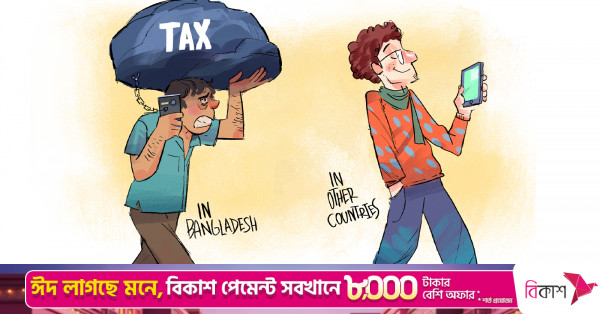
High taxes on smartphones and telecom services are becoming a major obstacle to digital inclusion in Bangladesh, industry experts and policymakers said at a discussion marking World Telecommunication and Information Society Day 2026.
Despite Bangladesh being one of the world’s largest mobile and telecom markets, the high cost of smartphones and internet services continues to limit access to digital opportunities, especially for lower-income users, they said.
The day-long programme was organised by the Ministry of Posts, Telecommunications and Information Technology at the Bangladesh Telecommunication Regulatory Commission (BTRC) headquarters in Agargaon today (17 May). A seminar titled “Digital Lifeline: Strengthening Resilience in a Connected World” was also held as part of the event.

Addressing the seminar, AKM Fahim Mashroor, coordinator of Voice for Reform and chief executive officer of Bdjobs, said affordability remains the biggest challenge to expanding digital participation.
“In many cases, buying a basic smartphone takes up nearly 25% of a person’s monthly income,” he said, adding that smartphones and affordable internet have become essential for education, healthcare and skills development.
Shahed Alam, head of corporate and regulatory affairs at Robi Axiata Limited, said building a digital economy requires both affordable digital services and strong cybersecurity.
Aminul Islam, director general of BTRC, said the telecom regulator has repeatedly recommended tax reductions to the government. However, he said immediate cuts remain difficult because of the state’s dependence on revenue from the telecom sector.
He added that identifying alternative revenue sources could eventually create room for reducing taxes on telecom services.
Speaking at another event there, Post, Telecommunications and ICT Minister Fakir Mahbub Anam said digital connectivity is no longer limited to communication infrastructure and has become a key driver of economic growth, production and employment.
He said the government wants to position ICT as a major growth engine through investments in AI, software, hardware, business process outsourcing, data centres and cybersecurity.
Prime minister’s ICT and Telecom Affairs Adviser Rehan Asif Asad said Bangladesh aims to become one of the world’s top 20 digital economies within five years and enter the top 10 within the next decade.
He said the government is working on several reform initiatives, including the introduction of a “One Digital ID” and “One Digital Wallet” system.
According to him, an “Innovation Hunt” programme will be launched within the next 15 days, while a startup grant initiative aimed at building a national innovation ecosystem is expected within 30 to 60 days.
Citing international research, Asad said a 10% increase in broadband and data penetration can raise GDP growth by 1% to 1.34%.
Although Bangladesh ranks among the top 20 countries globally in terms of mobile subscribers, the country still lags behind many regional peers in service quality, reliability and affordability, he said.
BTRC Chairman Md Emdad ul Bari said every major technological shift – from telegraph and radio to the internet – has transformed economies and societies.
He urged young innovators to focus on solving real-world problems, saying successful solutions often become the foundation of major future enterprises.
