
I recently took a six-week trip to Korea to experience some of the newest skincare treatments and achieve that “glass skin” glow. During my trip I visited multiple skincare clinics, had my makeup done by a Korean makeup artist, and explored over 20 Olive Young locations, including five of the brand’s flagship locations that are all over social media. I also visited countless other skincare shops, makeup stores, and pharmacies (Yes, Korean pharmacies sell skincare!) to see what’s trending in Korea right now.
Now that I’m back in the U.S., I’m already seeing some of the newest Korean skincare trends starting to make their way into the market. With so many skincare products in Korea, it’s impossible to name them all, but below are some of the biggest trends and most interesting innovations I saw in Korea, along with the some we have here and may see much more of in the future, especially with the launch of the first Olive Young store in the U.S. on May 29th.
1. PDRN is here to stay

PDRN (short for Polydeoxyribonucleotide) is derived from salmon and this ingredient first gained popularity from professional skin treatments in Korea which are supposed to help with skin regeneration, boost collagen, and basically give you that K-beauty glow. PDRN has exploded in Korean skincare; I’m not exaggerating when I say I saw PDRN in everything from serums and creams to sunscreens, and even hair care and edible supplements. Every brand had at least one PDRN product if not multiple, and new PDRN products are still launching.

One interesting trend I noticed were products with PDRN derived from alternative vegan sources like roses, seaweed, and ginseng, though opinions seem mixed on whether they’re as effective as salmon-derived PDRN.

2. Professional skin treatments that now have their own skincare line

Rejuran is one of the most popular injectable skin treatments and you can find it at almost every Korean skin clinic right now. It started the PDRN craze, so it’s no surprise that professional treatments like Rejuran are launching their own skincare lines designed to complement their procedures. The Rejuran Dual Effect Ampoule was sold out almost everywhere I went in Korea, but luckily it recently launched at Sephora so you can grab it online if you want to try it. Another well-known injectable skin booster, Juvelook, also had a few skincare products starting to make its way into stores near the end of my trip, so it wouldn’t surprise me if there were more professional treatments coming out with their own skincare lines in the future.

3. Spicules that mimic microneedling

Continuing the trend of professional treatments in skincare form are serums, essences, masks, and more with micro-spicules designed to mimic the effects of microneedling in liquid form. While these products aren’t as strong as professional microneedling treatments and isn’t necessarily new technology, the VT Reedle Shot line was in high demand. It has the brand’s proprietary spicule technology, and I saw bottles of it everywhere. I also saw several other products marketing spicule technology like face masks and serums.

4. Cooling skincare

Cooling skincare products were another big category and as someone with sensitive skin I’m a huge fan. One of my favorite products is the Aestura A-CICA365 Cooling Relief Toner Pads. When my cheeks get red or irritated, I slap a few of these on and let them work their magic to help calm my skin. Beyond the Aestura toner pads, I also spotted face masks, toner pads, creams, and even sunscreens with cooling technology designed to help soothe skin, with some even claiming to actually lower skin temperature.

5. Toner pads that double as face masks

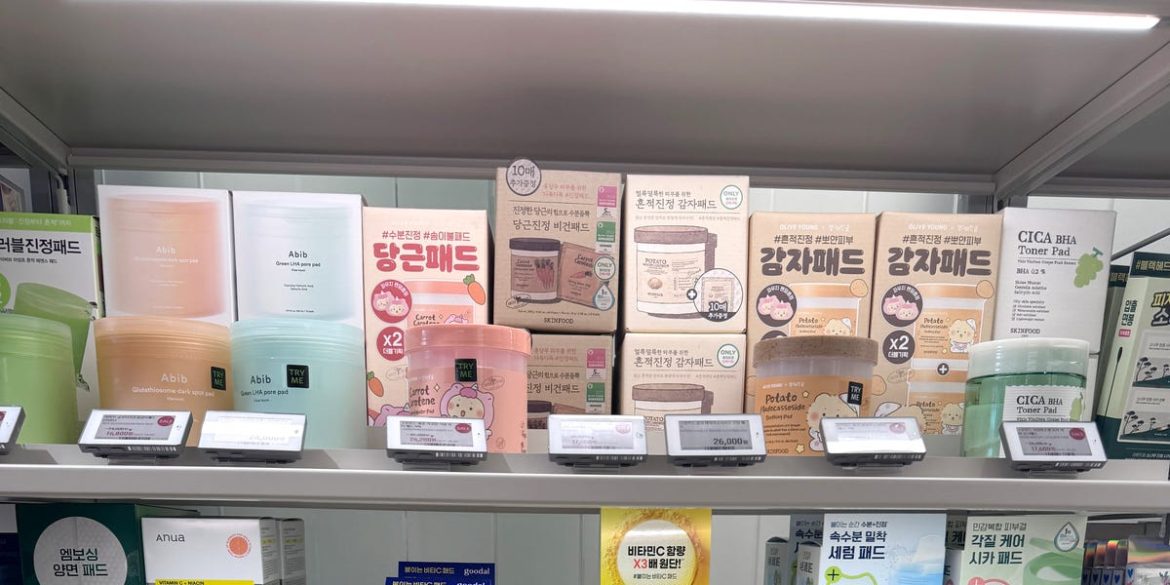
I’ve seen a few toner pad brands at Sephora, but in Korea I saw shelves upon shelves of them. The Korean toner pads are much thinner than the traditional thicker toner pad you might think of, and they stick to the skin without falling off so they can double as mini sheet masks.

They can be used in your regular skincare routine, or I’ve seen Korean makeup artists apply them before makeup to boost hydration and achieve that flawless base. Given how many I saw, I wouldn’t be surprised if more of them enter the U.S. market soon. I personally love them, and find that they are much more comfortable than a full sheet mask so I find myself wearing them more often which has really helped my skin.

6. Pharmacy skincare products

In Korea, pharmacies also sell skincare products, some of which are more heavily regulated than standard skincare products. These often contain higher concentrations of active ingredients and are developed by pharmaceutical companies or dermatology-led skincare brands. Korean pharmacy skincare has become viral, and during my time I saw new pharmacies being built in real time that focused more on skincare rather than typical pharmacy items. Many of these pharmacies were packed with people buying K-beauty, myself included. I can see what the buzz is about—some of my favorite products that I found most effective were from Korean pharmacies.

7. Encapsulated formulations

Capsules suspended in face mists, serums, and creams instantly caught my eye because they look so unique with little round balls floating in a serum or cream. At first, I thought they seemed slightly gimmicky, and that the capsules were meant to just look visually interesting (which they do).

However, the idea behind them is that the capsules help keep active ingredients prone to degrading quickly stable over time until they are used. It’s pretty cool if it works since I’ve had vitamin C serum degrade before I could use it up, so I can see the practical application.

