
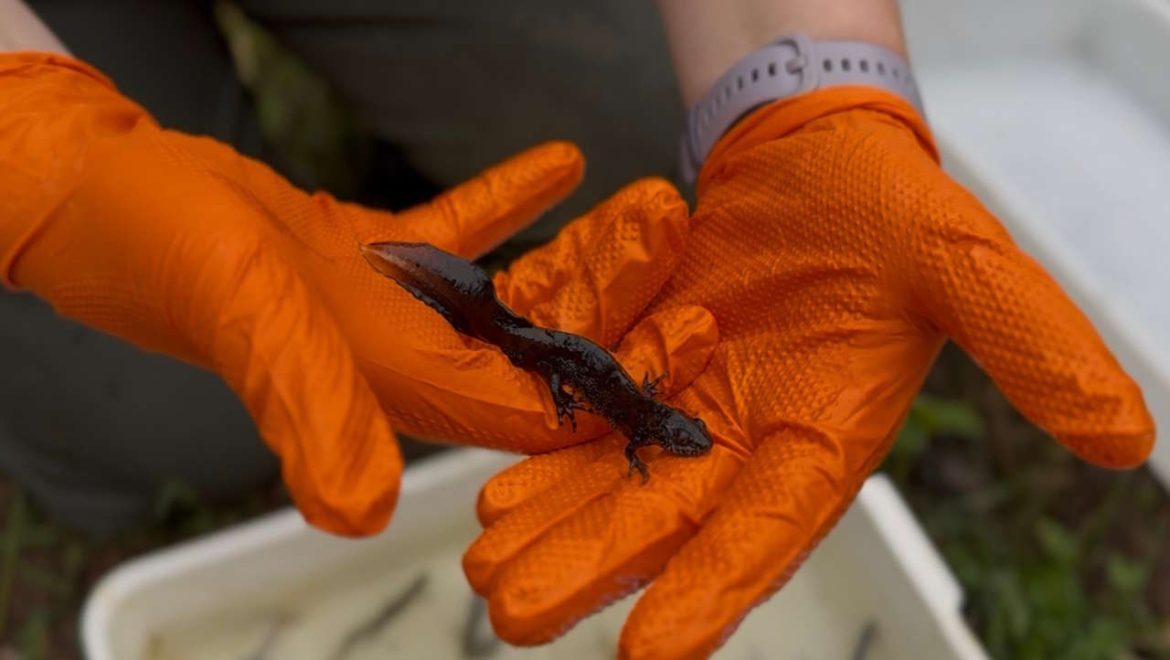
Network Rail has partnered up with the Newt Conservation Partnership to protect endangered Great Crested Newts (Triturus cristatus).
The new scheme will help to quickly relocate newts residing on the railway, so that work can continue and the species can thrive in a more suitable location.
These amphibians breed in ponds during the springtime and will spend time in woodland, marshes and grassland.
This species also hibernates, often underground or among tree roots.
Along the railway, they can often be found in drainage ditches or vegetation and will also hibernate under sleepers.
Due to their endangered and protected status, when they have been found previously, work has come to a standstill while specialist ecologists survey the area, and licenses are approved.
This has previously delayed work by weeks to ensure that the rare newts remained unharmed while they could be relocated.
The new expanded licensing approach will see suitable habitats being extensively mapped ahead of work, and nearby habitats being restored or created with ponds.
Network Rail is working closely with the Newt Conservation Partnership and environmental firm Nature Space to create these habitats.
This ensures that should the species be found, there is a habitat ready for them to be relocated into, allowing work to continue within days rather than weeks.
Currently, there are more than 97 hectares of great crested newt habitat and 35 ponds created.
Additionally, staff are being trained to identify newts to ensure they are handled correctly
“We take our responsibility to balance the needs of wildlife on the railway with our commitment to run trains safely and reliably seriously, and this new approach for newts is a perfect win win for both us and them.
“Previously we’ve had to wait for special licenses, carry out months of surveys and put up special newt fencing – causing delays and costing money. Now this streamlined process developed with the Newt Conservation Partnership means we can keep work progressing while creating alternative habitats nearby to relocate the newts as soon as they’re found, providing much better outcomes all round.”
Jude Ward, Network Rail environment manager
