
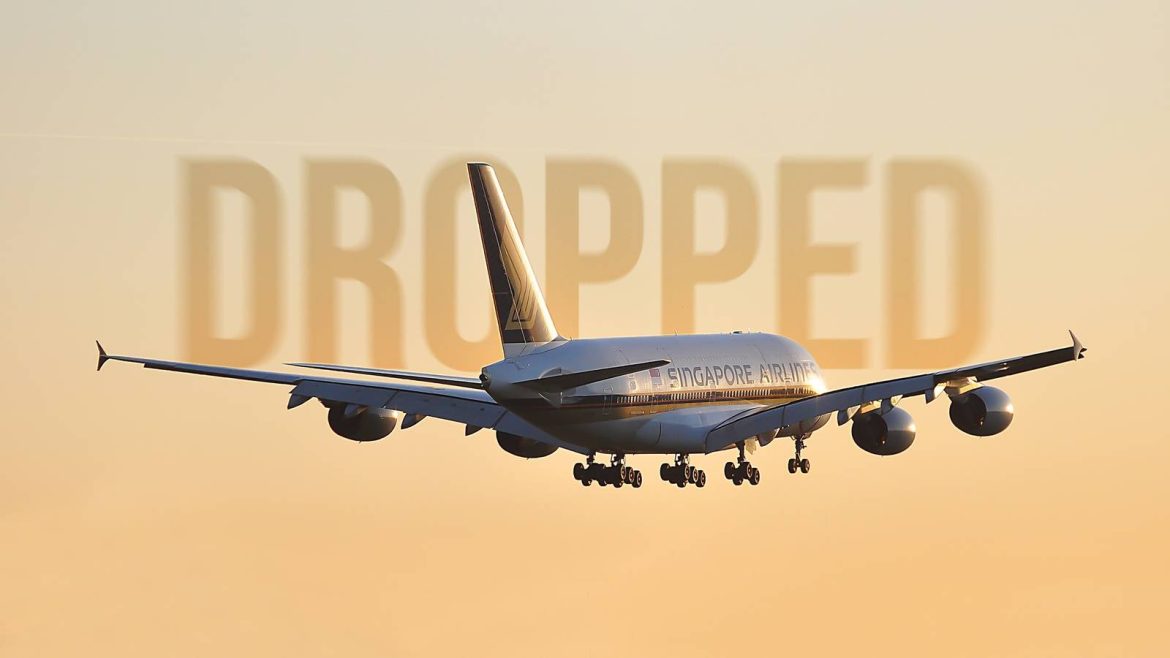
 Singapore Airlines has long been regarded as the airline most closely associated with the Airbus A380. While several global carriers embraced the superjumbo, Singapore Airlines became the launch customer for the type in 2007 and used it to showcase some of the industry’s most luxurious premium products. The aircraft’s spacious double-deck design allowed the carrier to introduce innovative cabin concepts, culminating in the latest-generation suites product that transformed the front section of the aircraft into one of commercial aviation’s most exclusive experiences. For nearly two decades, the A380 was not simply another aircraft in the fleet; it became a symbol of Singapore Airlines’ premium positioning.
Today, however, the carrier’s relationship with the world’s largest passenger aircraft is entering a new phase. Singapore Airlines has quietly withdrawn the Airbus A380 from 11 routes that once featured the flagship aircraft, including major international destinations such as New York JFK, Paris Charles de Gaulle, Zurich, Los Angeles, San Francisco, and Tokyo Narita. While all 12 remaining A380s are back in service following the pandemic, the fleet is now concentrated on a handful of routes where passenger demand remains exceptionally strong. The result is a significant reshaping of the airline’s premium offering, with some markets losing access to the flagship suites product years before its planned replacement seat arrives on the Airbus A350-900ULR fleet.
Singapore Airlines Has Quietly Removed The A380 From 11 Routes

The scale of Singapore Airlines’ Airbus A380 network reduction is more significant than many travelers may realize. According to fleet and schedule data, the airline has permanently ended A380 operations on 11 routes: Narita International Airport (NRT), Zurich Airport (ZRH), Charles de Gaulle Airport (CDG), John F. Kennedy International Airport (JFK), Beijing Capital International Airport (PEK), Los Angeles International Airport (LAX), Kansai International Airport (KIX), San Francisco International Airport (SFO), Kuala Lumpur International Airport (KUL), Chubu Centrair International Airport (NGO), and Suvarnabhumi Airport (BKK). Several of these destinations were once among the aircraft’s most recognizable deployments and regularly featured the superjumbo before the pandemic.
The changes highlight how dramatically the airline’s network priorities have evolved. Before 2020, Singapore Airlines utilized the A380 across a diverse mix of long-haul and regional routes. Some flights, such as those to Bangkok and Kuala Lumpur, were relatively short sectors that allowed the carrier to maximize aircraft utilization while giving more passengers access to its flagship product. Others, including New York, Los Angeles, Paris, and Zurich, represented key long-haul markets where premium demand justified the deployment of the airline’s largest aircraft.
Unlike temporary schedule adjustments, these route withdrawals appear permanent. Singapore Airlines has rebuilt its network significantly since the pandemic, yet none of these destinations have seen the A380 return. Instead, they are now primarily served by Airbus A350s, Boeing 777s, and 787s operated by regional subsidiary Scoot on selected routes. The absence of the superjumbo from these markets suggests the airline sees greater long-term value in deploying more flexible aircraft rather than restoring its previous A380 footprint.
The Pandemic Forced A Major Fleet Restructuring

Like most global airlines, Singapore Airlines faced an unprecedented crisis during the COVID-19 Pandemic. International travel restrictions effectively shut down much of the carrier’s network, leaving dozens of widebody aircraft grounded for extended periods. The A380, with its high capacity and operating costs, became one of the most vulnerable fleet types during this period.
Before the pandemic, Singapore Airlines operated 19 A380s, making it one of the world’s largest superjumbo operators. However, as the crisis deepened, management was forced to make difficult decisions regarding fleet renewal and long-term capacity planning. Ultimately, seven aircraft were permanently retired, reducing the fleet by more than one-third.
The retirements reflected broader industry trends. Airlines around the world accelerated the retirement of large four-engine aircraft in favor of more efficient twin-engine alternatives. Although Singapore Airlines chose to retain a core fleet of 12 A380s, the carrier emerged from the pandemic with a significantly smaller superjumbo operation. The decision effectively marked the end of the airline’s pre-pandemic strategy of deploying the aircraft across a wide variety of destinations.
Inside The Desert Facility That Revives & Scraps Airbus A380s Simultaneously
At Teruel Airport in Spain, some A380s are being prepared to fly again. Others are being cut apart for good. Both happen in the same facility.
All 12 Remaining A380s Are Flying Again

Despite the fleet reduction, Singapore Airlines has successfully returned all 12 surviving Airbus A380s to active service. The recovery in international travel demand, particularly in premium-heavy markets, has allowed the carrier to once again utilize the aircraft as a high-capacity flagship.
Today’s A380 fleet operates in a configuration featuring 471 seats. This includes six suites in first class, 78 business class seats, 44 premium economy seats, and 343 economy class seats. The layout emphasizes premium revenue generation, with the aircraft carrying one of the largest premium-cabin offerings in the airline’s fleet.
|
Spec |
Value |
|---|---|
|
Entry into service |
2007 |
|
Length |
238 feet 7 inches (72.7 meters) |
|
Wingspan |
261 feet 8 inches (79.8 meters) |
|
Height |
79 feet (24.1 meters) |
|
Max takeoff weight |
1,268,000 lb (575 tons) |
|
Range |
8,000 nm (14,800 km) |
|
Cruise speed |
Mach 0.85 (561 mph / 903 km/h) |
|
Engines |
4 × Rolls-Royce Trent 900 or Engine Alliance GP7200 |
|
Typical capacity |
555 passengers |
|
Maximum capacity |
853 passengers |
|
Fuel capacity |
84,500 gallons (320,000 liters) |
|
Total built |
251 aircraft |
However, the aircraft are now concentrated on a few strategically important routes. London Heathrow remains one of the network’s cornerstone A380 destinations, while Sydney and Melbourne continue to receive regular superjumbo service due to consistently strong demand. Frankfurt also remains an important European market for the aircraft. Rather than maximizing network reach, Singapore Airlines is now maximizing profitability by deploying the A380 only where its size and premium-cabin capacity can generate the strongest returns.
The Bigger Story Is The Loss Of The Suites Experience

The reduction in A380 flying is significant for aviation enthusiasts, but its greatest impact may be on premium passengers. Singapore Airlines built much of its modern premium reputation around the A380, particularly after introducing its latest-generation suites product in 2017.
Unlike traditional first-class seats, the suites feature separate reclining chairs and fully flat beds enclosed within private cabins. The center suites can even be converted into a double room for passengers traveling together. The product became one of the most recognizable symbols of luxury commercial aviation and helped differentiate Singapore Airlines from competitors in the premium travel market.
When an A380 disappears from a route, the Suites disappear as well. That means premium passengers traveling between Singapore and destinations such as New York, Paris, Zurich, Los Angeles, and San Francisco no longer have access to the airline’s most prestigious product. While Singapore Airlines continues to offer excellent business class and first class products on other aircraft, the unique flagship experience associated with the A380 has effectively vanished from much of the network.
Airbus A350 Vs Boeing 787: The Battle To Replace Qantas’ A380s
What will the Australian flag carrier choose?
The Airbus A350-900ULR Has Become The Airline’s New Flagship Long-Haul Aircraft

As the A380 fleet shrank, the Airbus Airbus A350-900ULR assumed a much larger role within Singapore Airlines’ long-haul operation. Designed specifically for ultra-long-range missions, the aircraft enables nonstop flights that would have been difficult or uneconomical for previous generations of aircraft.
Catch what other flight trackers miss
Emergency squawks, holds, NOTAMs — live signals, no signup.
Open tracker
Catch what other flight trackers miss
Emergency squawks, holds, NOTAMs — live signals, no signup.
Open tracker
The A350-900ULR currently operates some of the airline’s longest routes, including nonstop services between Singapore and destinations in North America. These flights can exceed 18 hours in duration and have become central to the carrier’s premium-focused long-haul strategy. The aircraft’s efficiency allows Singapore Airlines to operate ultra-long-haul services with lower fuel consumption and reduced maintenance costs compared with large four-engine jets.
This transition reflects a broader shift occurring throughout the aviation industry. Modern twin-engine aircraft such as the A350 and 787 have transformed airline economics, enabling carriers to serve long-haul markets with fewer seats and lower operating costs. For Singapore Airlines, the A350-900ULR provides the flexibility to maintain extensive global connectivity while reducing dependence on very large aircraft such as the A380.
A Multi-Year Premium Gap Will Remain Until 2027

Recognizing the importance of maintaining a world-class premium product, Singapore Airlines announced a major $835 million cabin retrofit program covering 41 A350 aircraft. The investment represents one of the largest cabin modernization projects in the airline’s history and is intended to introduce a new generation of premium seating across the fleet.
One of the most notable changes will be the introduction of a dedicated four-seat first-class cabin on the A350-900ULR. This will mark the first time the aircraft type offers a true first-class product, giving Singapore Airlines a flagship premium offering on routes currently operated by the ultra-long-range fleet. New business class seats will also be introduced as part of the program.
However, the timeline has slipped. Originally expected to enter service earlier, the retrofit program is now scheduled to begin in 2027. As a result, Singapore Airlines faces an unusual transitional period lasting several years. The airline has already withdrawn the A380 and its six-seat Suites cabin from numerous routes, yet the replacement first-class product has not arrived. For one of the world’s most premium-focused airlines, that gap may ultimately become the most consequential aspect of its evolving Airbus A380 strategy.
