
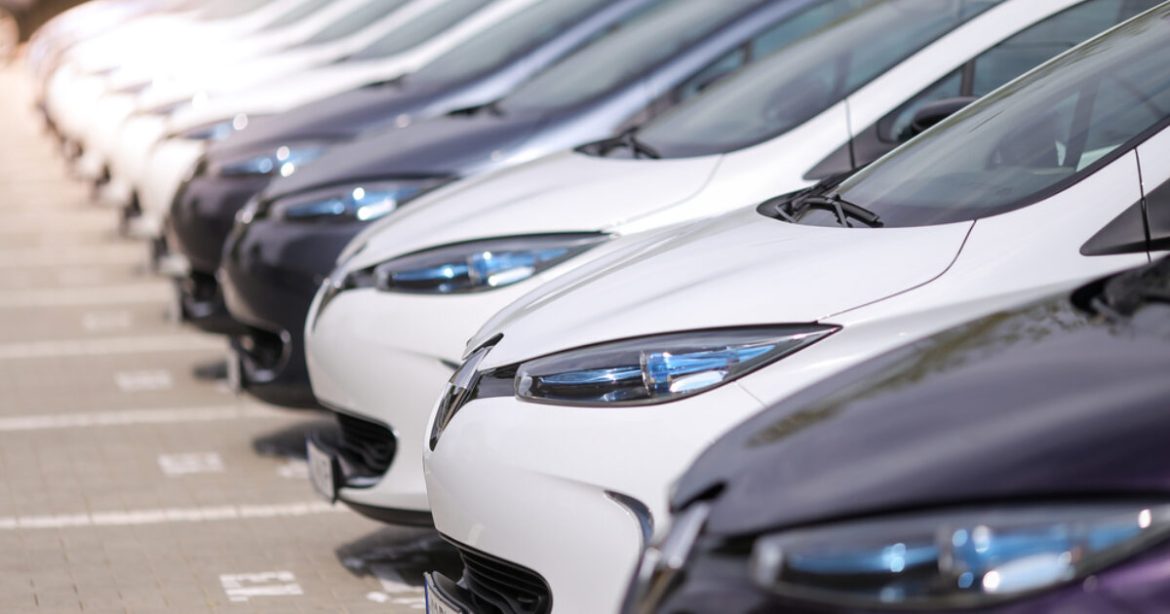
At a time of pump prices surging, new analysis from the Energy and Climate Intelligence Unit (ECIU) has found that the Government’s decision last year to weaken its EV sales targets could end up costing British drivers £13.8bn by encouraging manufacturers to sell more plug-in hybrids (PHEVs), rather than EVs. With the Government rumoured to be considering further weakening [1] following ongoing lobbying from parts of the car industry, these costs could grow substantially higher.
Plug-in hybrids have been found to consume five times more fuel than their manufacturers claim. [2] Despite this, in April 2025 the Government weakened its Zero Emission Vehicle (ZEV) mandate policy in a manner that led to warnings at the time that the changes would incentivise manufacturers to sell more PHEVs, rather than EVs. [3] As was predicted, there has been an acceleration in PHEV sales, rising by 39% since the policy changes were announced.
This has led to an increased number of more expensive to run cars, that primarily rely on petrol to move in real-world driving conditions, hitting the roads at a time when pump prices have risen due to volatility in oil prices caused by the US-Iran conflict. Analysis indicates that, in weakening its EV sales targets last year, over 900,000 additional PHEVs will arrive on the UK’s roads by the end of the decade. [4]
Recent analysis by ECIU has found that PHEVs cost almost twice as much to fuel in real-world driving and are, on average, 10% more expensive to buy than an electric equivalent. [5] This means that the country’s best selling plug-in hybrids cost over £1000 more to own and run than an equivalent electric vehicle.
Colin Walker, Head of Transport at the Energy and Climate Intelligence Unit, said: “Dieselgate saw a number of car manufacturers cheat on their emissions tests, but this time it could be both Government and car companies implicated in a scandal. The Government is incentivising manufacturers to sell more plug-in hybrids, despite knowing that they don’t come close to delivering the fuel and emissions savings that are promised of them in the real-world. This could result in hundreds of thousands of British drivers paying hundreds, if not thousands, of pounds more every year to own and run these vehicles in the midst of a cost-of-living crisis. And since these vehicles also produce fine particulate matter and nitrogen oxides from their exhaust pipes, they will undermine efforts to improve the quality of the air that British people breathe.
“The ZEV Mandate is working. As manufacturers compete to hit their sales targets, prices are coming down – accelerating sales as more drivers seek to shield themselves from high pump prices. This in turn will help supply the second-hand EV market where, according to Autotrader, we’re seeing a surge in sales, helping regular families to shield themselves from higher prices at the pump. Weaken the mandate, prices could bounce back up and new and second-hand EV sales could slow, keeping many more people stuck paying much more to run their cars in the midst of a cost-of-living crisis.
“The industry as a whole has been meeting its obligations under the ZEV mandate. It complied with them in 2024 and 2005, and is on course to do so again in 2026. Furthermore, the link between UK EV policy and UK car manufacturing is fairly weak, given the vast majority of cars made here are then exported to sell in other markets, particularly Europe where EV sales are surging. The manufacturers calling for a watering down in favour of PHEVs, like Toyota, have been slow to transition to EVs, but the UK is only one of many markets they sell to, so this is a much wider problem for them as the world increasingly makes the shift to electric cars.”
British car factories are retooling to produce EVs. Nissan is building the electric Leaf in Sunderland, with construction of more electric models expected to come on line in the coming months. JLR is retooling its factories to produce a range of new electric models in the coming months. Stellantis factory in Ellesmere Port is the company’s first global production facility to have shifted to all-electric production.
Having grown by 21.4% in 2024 [6] and 23.9% in 2025, [7] EV sales are recording strong growth in 2026, with sales up by 24.2% in March, [8] 59.1% in April, [9] and 34.2% in May. [10] With flexibilities in the mandate meaning the actual percentage of EVs that the car industry needs to hit in 2026 is 24.6%, [11] the car industry is on track to comply with its obligations under the mandate, with sales for the year so far sitting at 24%. [12] The car industry met its targets in 2024, [13] and 2025. [14]
In a written statement to parliament in January 2025, the Secretary of State for Transport stated: “The previous government caused significant harm to the industry by moving goalposts on phase out dates, creating doubt in the minds of investors and boardrooms and putting at risk the billions of pounds of committed investment in the automotive sector and in the chargepoint sector.“ [15]
While significant discounts are available on new EVs, evidence appears to suggest that the scale of these discounts is being exaggerated. The car industry is claiming that the average discount offered on a new EV is close to £12,000 a vehicle, while analysis from Transport & Environment indicates that the discounts actually being offered are half this figure. [16] Furthermore, significant discounting is being offered on petrol and diesel cars, at levels that are not significantly lower than the discounts being offered on electric vehicles. [17]
ENDS
Notes to editors:
Methodology:
The analysis considered ten of the most popular PHEVs at present, and their petrol and EV equivalents. Total Cost of Ownership (TCO) for each car was estimated over a 14 year lifetime. The most significant factors in TCO difference between PHEVs and EVs are that all PHEVs have higher energy costs (see below) and many PHEVs have higher sale prices (over £4,000 on average in the sample).
Manufacturers’ claims from test results about PHEVs’ fuel consumption and emissions are based on assumptions of very high use of electric mode (i.e. Unity Factor, UF = 84%) and only a little using fuel (equivalent to 16% of the mileage), whereas a study (T&E, Sep-2025) found that PHEVs are in electric mode far less often (UF = 27%) and hence are more often using fuel (73%). The impact on fuel consumption (mpg) and electricity usage was estimated using the UFs, i.e. ratio of real-world to claimed usage is 0.27 / 0.84 = 0.32 for electricity and 0.73 / 0.16 = 4.6 for petrol (exact values were calculated for each make of car in the analysis). Applying petrol prices and electricity prices (assuming 80% night home charging and 20% rapid charging, with the most recent prices from ZapMap) allowed estimates of the total energy costs of PHEVs in claimed and real-world operation, and the costs for their petrol and EV equivalents. The energy costs over a car’s 14-year lifetime were modelled on the assumption of petrol prices rising gradually, in line with 20 year historical trends, and electricity prices remaining at current (elevated) levels. Overall, the annual TCO for a PHEV is on average almost £1,100 higher than for an equivalent EV (nominal prices).
The number of extra PHEVs (c.900,000) that might be sold (due to changes to the ZEV Mandate announced in April 2025 to allow a larger contribution from plug-in hybrids until 2029) was estimated on the basis of modelling by New Automotive. Before the changes, it was estimated that 1.47million PHEVs would be sold from April 2025 to December 2029. After the changes, a revised total is based on actual sales up to May 2026 and then a high PHEV scenario (which recent sales have exceeded) for the rest of the time period, with a total of 2.38million, i.e. 0.91 million more PHEVs.
[4] https://www.theguardian.com/business/2026/jun/06/uk-weaken-ev-rules-co2-impact-phevs
[6] https://www.smmt.co.uk/record-ev-market-share-but-weak-private-demand-frustrates-ambition/
[10] https://www.smmt.co.uk/new-car-market-grows-as-consumers-respond-to-choice-and-incentives/
[11] https://storage.googleapis.com/public_download_assets/ecc_pdfs/20260604%20ECC%20May%202026.pdf
[12] https://www.smmt.co.uk/new-car-market-grows-as-consumers-respond-to-choice-and-incentives/
[14] https://storage.googleapis.com/public_download_assets/ecc_pdfs/20260106%20ECC%20December%202025.pdf
[17] https://www.theguardian.com/business/2026/jan/31/uk-new-car-buyers-bargain-discount-deals
For more information or for interview requests:
George Smeeton, Head of Communications, ECIU, Tel: +44 (0)7894 571 153, email: george.smeeton@eciu.net
