
Italy has long been recognized as one of the world’s leading centers for fashion, luxury goods, and sophisticated design. From Milan’s renowned fashion houses to Rome’s luxury shopping districts, Italian consumers have a deep appreciation for style, craftsmanship, and premium accessories. Within this environment, watches have evolved far beyond their traditional role as timekeeping devices.
Today, watches are viewed as symbols of elegance, personal taste, social status, and technological sophistication. Luxury mechanical watches continue to attract affluent consumers seeking prestige and exclusivity, while smartwatches are gaining popularity among younger generations who prioritize connectivity, wellness, and convenience.
The convergence of fashion, technology, and luxury consumption is creating strong growth opportunities for the Italian watch industry. As consumer lifestyles continue evolving, watches remain an important accessory that combines function, design, and identity.
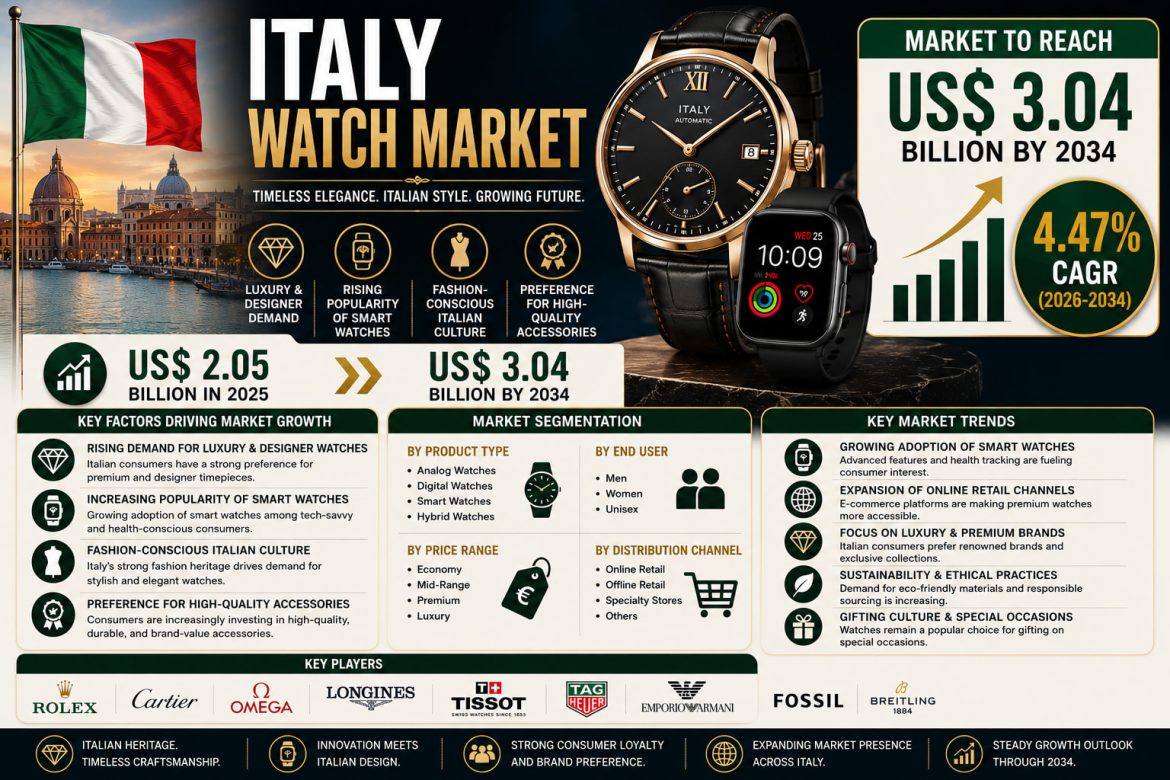
According to Renub Research, the Italy Watch Market is projected to grow from US$ 2.05 billion in 2025 to US$ 3.04 billion by 2034, expanding at a CAGR of 4.47% between 2026 and 2034. Increasing demand for luxury and designer watches, growing popularity of smartwatches, Italy’s fashion-conscious culture, and rising consumer preference for premium accessories are expected to drive market growth throughout the forecast period.
Watches Continue to Reflect Italian Style and Identity
A watch is a portable timekeeping device designed to be worn on the wrist while often providing additional features such as alarms, date displays, notifications, fitness tracking, and smartphone connectivity.
Traditional watches rely on mechanical or quartz movements, while modern smartwatches integrate advanced digital technologies that support communication, health monitoring, and productivity.
In Italy, watches occupy a unique cultural position because they are widely viewed as fashion statements. Consumers often choose watches not only for functionality but also for their ability to complement personal style and reflect social standing.
Italian consumers place strong emphasis on aesthetics, craftsmanship, and brand reputation, making watches one of the most influential accessory categories within the country’s luxury and fashion sectors.
Fashion Culture Drives Demand for Designer Watches
One of the most important growth drivers within the Italian watch market is the country’s strong fashion culture.
Italy is globally recognized for luxury fashion, design excellence, and premium craftsmanship. Consumers frequently purchase watches as accessories that enhance their appearance and express individuality.
Rather than viewing watches purely as practical devices, many Italians consider them important components of personal style. Watches are often selected to complement specific outfits, occasions, and lifestyle preferences.
This emphasis on fashion encourages consumers to purchase multiple watches and regularly update their collections as trends evolve.
Collaborations between watchmakers and fashion houses further strengthen demand by introducing innovative designs and exclusive collections.
As fashion continues to influence consumer purchasing behavior, demand for stylish and designer watches is expected to remain strong throughout the forecast period.
Luxury Watches Remain Highly Desirable
Luxury watches continue to represent one of the most important segments within Italy’s watch market.
Premium timepieces are widely regarded as symbols of success, sophistication, and refined taste. Wealthy consumers often view luxury watches as valuable possessions that combine artistry, engineering, and prestige.
Limited-edition collections, heritage-inspired designs, and products crafted using precious materials remain particularly attractive to buyers seeking exclusivity.
Many consumers also regard luxury watches as long-term investments capable of retaining or increasing value over time.
Italy’s strong luxury culture, combined with widespread appreciation for quality craftsmanship, continues supporting demand for premium timepieces.
The market benefits from both domestic consumers and international visitors seeking authentic luxury shopping experiences.
Smartwatch Adoption Accelerates Across Italy
The increasing popularity of smartwatches represents another major growth catalyst for the industry.
Consumers are becoming more health-conscious and digitally connected, creating strong demand for wearable devices that offer advanced functionality beyond traditional timekeeping.
Modern smartwatches provide fitness tracking, heart-rate monitoring, GPS navigation, sleep analysis, smartphone synchronization, and productivity tools.
Younger consumers are particularly attracted to smartwatches because they integrate seamlessly with digital lifestyles.
Continuous innovation in battery performance, sensor technology, user interfaces, and design aesthetics has significantly improved the appeal of wearable devices.
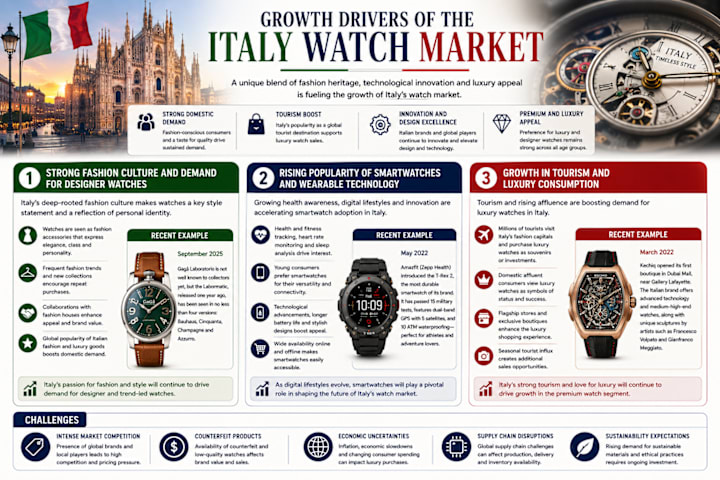
In May 2022, Amazfit introduced the T-Rex 2, a rugged smartwatch capable of passing 15 military-grade durability tests while offering dual-band GPS functionality and 10 ATM water resistance. Products such as these highlight the increasing sophistication of wearable technology and its growing relevance within the Italian market.
Health and Wellness Trends Support Wearable Growth
Growing awareness regarding health and wellness has become a major factor supporting smartwatch adoption.
Italian consumers increasingly seek tools that help them monitor physical activity, track health metrics, and maintain healthier lifestyles. Smartwatches provide convenient access to real-time information that supports these goals.
Features such as heart-rate monitoring, calorie tracking, exercise analytics, sleep measurement, and wellness coaching have become increasingly valuable to consumers.
The popularity of fitness activities, outdoor recreation, and preventive healthcare further contributes to demand for wearable devices.
As health-conscious lifestyles continue expanding, smartwatches are expected to remain among the fastest-growing categories within Italy’s watch industry.
Tourism Plays a Critical Role in Luxury Watch Sales
Italy’s thriving tourism sector significantly contributes to watch market growth, particularly within the luxury segment.
Millions of tourists visit destinations such as Rome, Milan, Venice, Florence, and Naples every year. Many travelers purchase luxury goods as souvenirs, gifts, or investment pieces.
Luxury watch boutiques benefit greatly from this influx of international visitors who often seek premium products unavailable in their home markets.
Flagship stores and luxury retail districts provide consumers with exclusive shopping experiences that further stimulate demand.
Tourism-driven spending creates additional sales opportunities that complement domestic consumption and strengthen overall market performance.
Product Innovation Continues to Attract Consumers
Innovation remains one of the most important competitive factors within the watch industry.
Manufacturers continue introducing products that combine sophisticated design with advanced functionality. Smartwatch producers focus on improving software capabilities, battery life, connectivity, and health-monitoring features.
Traditional watchmakers emphasize premium materials, precision engineering, and contemporary aesthetics while preserving heritage craftsmanship.
Consumers increasingly expect products that deliver both practical utility and emotional value.
In September 2025, Gagà Laboratorio continued expanding its Labormatic collection through multiple variants including Bauhaus, Cinquanta, Champagne, and Azzurro editions. The collection demonstrated how design innovation and product diversification can generate consumer interest within premium watch categories.
Electronic Watches Lead Technological Growth
Electronic watches represent one of the fastest-growing segments within the Italian watch market.
Consumers appreciate the ability to access health information, notifications, navigation tools, and communication features through a single wearable device.
Advancements in display quality, processing power, battery performance, and software integration continue enhancing the user experience.
The category appeals to professionals, students, athletes, and health-conscious consumers alike.
As digital lifestyles become increasingly common, electronic watches are expected to capture a larger share of the overall market.
Mechanical Watches Retain Their Prestige
Despite the rise of wearable technology, mechanical watches continue to enjoy strong demand.
Italy’s deep appreciation for craftsmanship, artistry, and luxury ensures that traditional watchmaking remains highly valued. Mechanical watches are often viewed as expressions of heritage, engineering excellence, and personal sophistication.
Collectors and enthusiasts appreciate the intricate movements, hand-finished components, and timeless designs associated with mechanical timepieces.
Many premium mechanical watches are purchased for special occasions or passed down through generations as treasured possessions.
Their cultural and emotional significance helps maintain strong demand despite increasing competition from digital alternatives.
Men’s Watches Continue to Dominate Demand
The men’s watch segment represents a substantial portion of total market sales.
Italian consumers often regard watches as essential components of a well-dressed appearance. Product offerings range from affordable casual watches to premium luxury models and technologically advanced smartwatches.
Smartwatches have become increasingly popular among men because they offer fitness tracking, connectivity, and productivity features.
Traditional watches continue to perform strongly for professional environments, formal events, and luxury consumption.
Manufacturers focus heavily on performance, design quality, durability, and brand reputation when targeting male consumers.
Convenience Stores Expand Access to Affordable Watches
Although luxury boutiques dominate premium sales, convenience stores serve as an important supplementary distribution channel.
These outlets primarily offer affordable analog and digital watches designed for everyday use. Consumers frequently purchase watches from convenience stores for quick replacements, travel needs, or impulse purchases.
Their widespread geographic presence improves accessibility and supports market penetration within lower and middle price categories.
This segment contributes to overall market diversity by serving cost-conscious consumers seeking practical solutions.
Challenges Facing the Italy Watch Market
Competition from Smartphones and Digital Devices
One of the primary challenges facing traditional watch manufacturers is increasing competition from smartphones and multifunctional devices.
Many consumers rely on smartphones for timekeeping, communication, navigation, and information access. As a result, demand for basic watches has declined in certain segments.
While smartwatches help address this challenge by offering expanded functionality, traditional watchmakers must increasingly compete through design, craftsmanship, and emotional appeal.
The evolution of consumer technology continues reshaping market dynamics.
High Competition and Price Sensitivity
Italy’s watch market remains highly competitive, featuring numerous domestic and international brands across all price categories.
Consumers enjoy extensive choice, ranging from affordable fashion watches to premium luxury collections. This intense competition creates pricing pressure and requires continuous innovation.
Economic uncertainty can also increase consumer sensitivity to pricing, particularly for discretionary purchases.
Manufacturers must balance quality, innovation, branding, and affordability while maintaining profitability.
Rome Drives Luxury and Tourist Demand
Rome’s watch market benefits from a combination of tourism, culture, and luxury consumption.
The city’s international appeal attracts visitors who frequently purchase premium watches as gifts, souvenirs, and investment pieces.
Local consumers also demonstrate strong interest in elegant and fashionable watches that reflect Rome’s appreciation for luxury and sophistication.
Smartwatch adoption continues increasing as consumers embrace modern lifestyles and health-focused technologies.
Milan Leads Fashion-Oriented Watch Sales
Milan stands at the center of Italy’s fashion industry and represents one of the country’s most influential watch markets.
Consumers place exceptional value on design, branding, and innovation. Luxury watches, designer collections, and premium accessories perform particularly well within the city.
The presence of flagship stores, fashion houses, and affluent consumers supports strong demand across multiple watch categories.
Naples Balances Style and Practicality
Naples demonstrates balanced demand across affordable, mid-range, and premium watch categories.
Consumers often seek products that combine durability, functionality, and attractive design. Younger buyers increasingly embrace smartwatches due to their technological capabilities and convenience.
Tourism and local consumer spending continue supporting steady market growth.
Turin Supports Innovation and Professional Demand
Turin’s industrial economy and professional workforce contribute to demand for both traditional and digital watches.
Consumers frequently purchase watches suitable for business environments, casual use, and active lifestyles.
Smartwatches are especially popular among professionals seeking productivity and wellness benefits, while classic watches remain preferred for formal occasions.
Future Outlook
The future of the Italy watch market remains highly promising.
Growing demand for luxury accessories, increasing smartwatch adoption, expanding tourism, evolving fashion trends, and continuous product innovation are expected to support market growth through 2034.
Manufacturers that successfully combine design excellence, technological innovation, premium quality, and brand authenticity will be best positioned to capitalize on emerging opportunities.
As consumers continue seeking products that blend style, functionality, and personal expression, watches are expected to remain a central component of Italy’s fashion and luxury ecosystem.
Final Thoughts
The Italy watch market perfectly reflects the country’s passion for fashion, luxury, craftsmanship, and innovation. Luxury watches continue to symbolize prestige and elegance, while smartwatches are transforming consumer expectations through advanced functionality and health-monitoring capabilities.
With the market projected to grow from US$ 2.05 billion in 2025 to US$ 3.04 billion by 2034, substantial opportunities exist for watchmakers, luxury brands, retailers, and technology companies. Businesses that balance heritage, design, innovation, and consumer experience will be best positioned to succeed in Italy’s evolving watch industry.
