
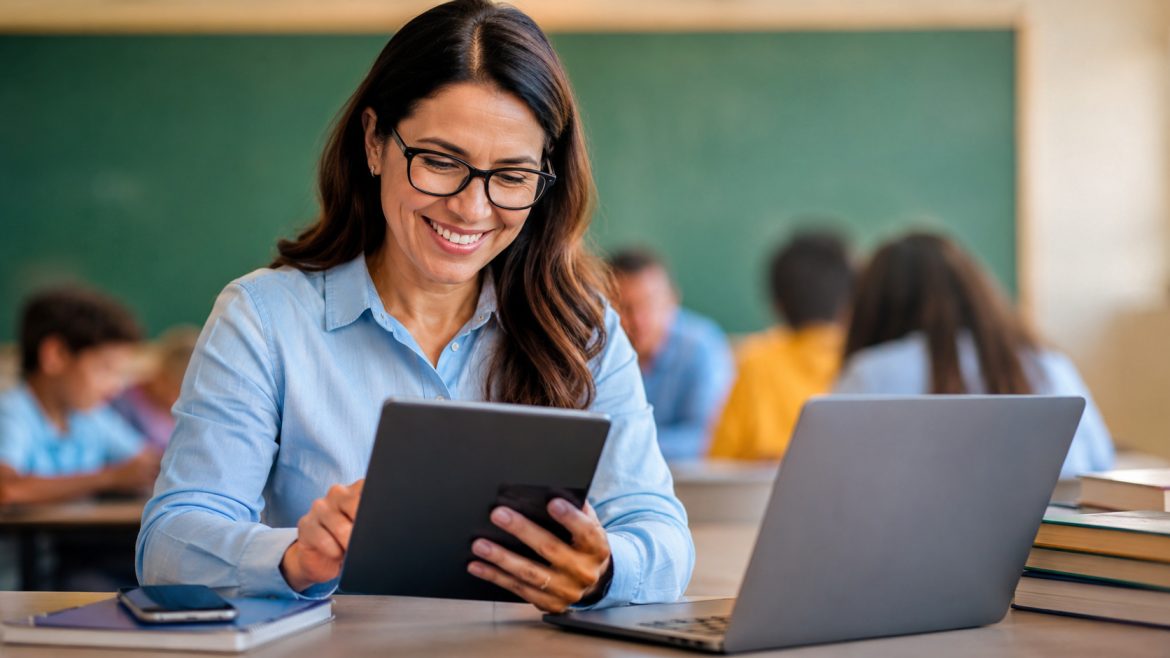
Brazilian teachers now have a new opportunity to save on the purchase of electronic equipment. Through the #TôComProf program, MEC has expanded partnerships with technology companies to offer exclusive discounts on products such as smartphones, notebooks, and tablets.
The initiative is aimed at professionals registered with the National Teaching Card of Brazil (CNDB) and includes companies like Samsung and Positivo Tecnologia. Discounts can reach up to 10% on various products, contributing to digital inclusion, professional qualification, and access to increasingly important tools for teaching.
According to information from Conecta Professores on June 22, the action is part of a set of measures for teacher appreciation and seeks to facilitate educators’ access to technology at a time when digital resources are part of the school routine and learning processes.
MEC creates new opportunities for teachers to save on technology
The new phase of the #TôComProf program reinforces MEC’s strategy to expand benefits for education professionals. The proposal connects private companies with educators, offering special conditions for the purchase of products and services.
More than discounts, the initiative seeks to strengthen the appreciation of the teaching career. In a scenario of accelerated digital transformation, access to modern equipment has become a necessity for a large part of educators.
With this, teachers gain more opportunities to update their devices and keep up with the demands of contemporary teaching.
Smartphones, notebooks, and tablets have become allies of modern education
Smartphones, notebooks, and tablets are no longer just personal use equipment. Currently, they play a fundamental role in pedagogical planning, communication, and access to educational content.
Among the main uses of these devices are:
- Lesson preparation;
- Participation in training courses;
- Use of educational platforms;
- Communication with students and guardians;
- Production of teaching materials;
- Conducting online meetings.
The increasing digitalization of education has made these resources practically indispensable for the daily work of teachers.
How the benefits offered to teachers work
To use the discounts provided by participating companies, educators need to have a valid National Teacher Card of Brazil.
The CNDB functions as an official identification document for education professionals. After registration validation, teachers can access partner platforms and check which products are part of the promotional campaigns.
The benefits vary according to each company and can be updated periodically according to new program adhesions.
Samsung offers up to 10% discount for teachers
One of the main participants in the initiative is Samsung. The company has started offering exclusive discounts on various products from its portfolio for education professionals registered in the program.
The categories covered include:
- Smartphones;
- Smartwatches;
- Tablets;
- Laptops;
- Monitors;
- Televisions;
- Other electronics participating in the campaign.
The manufacturer seeks to expand educators’ access to technologies that can contribute both to professional activities and personal use.
Positivo expands benefits in productivity equipment
Positivo Tecnologia has also joined the program and offers special conditions for education professionals.
According to the information released by the initiative, discounts can reach up to 10% on products aimed at productivity, connectivity, and home use.
Among the items covered are computers, laptops, tablets, IT equipment, and products from the Smart Home line.
The company’s participation expands the options available for educators who wish to invest in technology with less impact on the budget.
The program already gathers around 45 partner companies
The #TôComProf has been expanding its network of participants since its creation. Currently, about 45 companies are part of the initiative and offer exclusive advantages to education professionals.
The areas covered include various segments:
- Technology;
- Education;
- Digital services;
- Pedagogical tools;
- Hosting;
- Clothing;
- Accessories;
- Products for personal and professional use.
This diversity broadens the reach of the benefits and allows educators to find opportunities in different areas of daily life.
Benefits of MEC are part of the More Teachers for Brazil program
The initiative is part of the More Teachers for Brazil program, created to strengthen teacher appreciation and encourage continuous professional development.
The set of actions brings together public policies aimed at the training, retention, and recognition of Brazilian educators.
Among the main initiatives linked to the program are:
- Pé-de-Meia Licenciaturas;
- Bolsa Mais Professores;
- National Teaching Exam;
- Continuous Training Portal;
- Professional development programs.
The goal is to create better conditions for professionals to carry out their activities with more support and growth opportunities.
Accessible technology strengthens professional qualification
Access to technology has a direct impact on the quality of work developed by educators. Updated equipment allows for greater productivity, better organization of activities, and faster access to specialized content.
Additionally, the devices facilitate participation in online courses, continuous training programs, and educational events held in a digital environment.
With the expansion of discounts, more teachers can invest in tools that contribute to their professional development and the improvement of pedagogical practices.
An initiative that brings innovation and teacher appreciation closer
The expansion of discounts on smartphones, notebooks, and tablets represents another step in the strategy of valuing education professionals. With the participation of companies like Samsung and Positivo Tecnologia, educators now have more favorable conditions to acquire important equipment for work and studies.
By bringing together around 45 partner companies and offering discounts of up to 10%, the #TôComProf program strengthens digital inclusion and expands access to technological resources that are already part of the reality of Brazilian education. The initiative also reinforces the Ministry of Education’s commitment to the professional development of teachers and the modernization of the educational environment.
Samsung for Teachers – #TôComProf Program
Positivo for Teachers – #TôComProf Program
