
When BTS returned to the stage in March for its first group performance in nearly four years, millions of fans around the world weren’t just admiring the performance. They were zooming in on every detail, from the members’ hairstyles and outfits to their accessories.
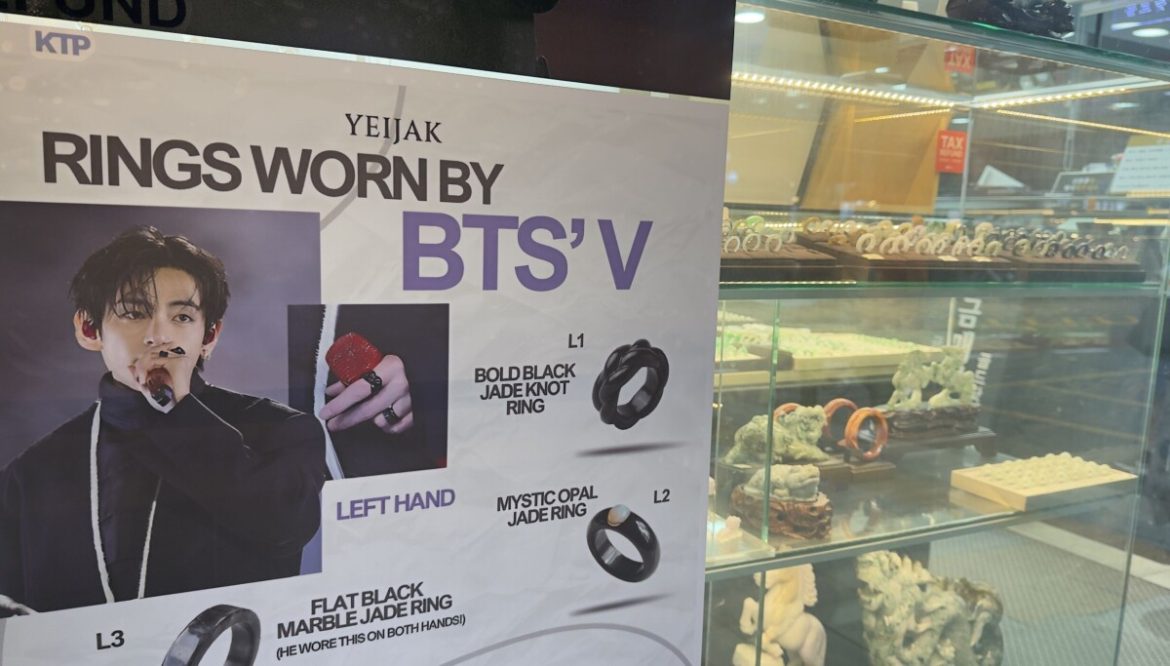
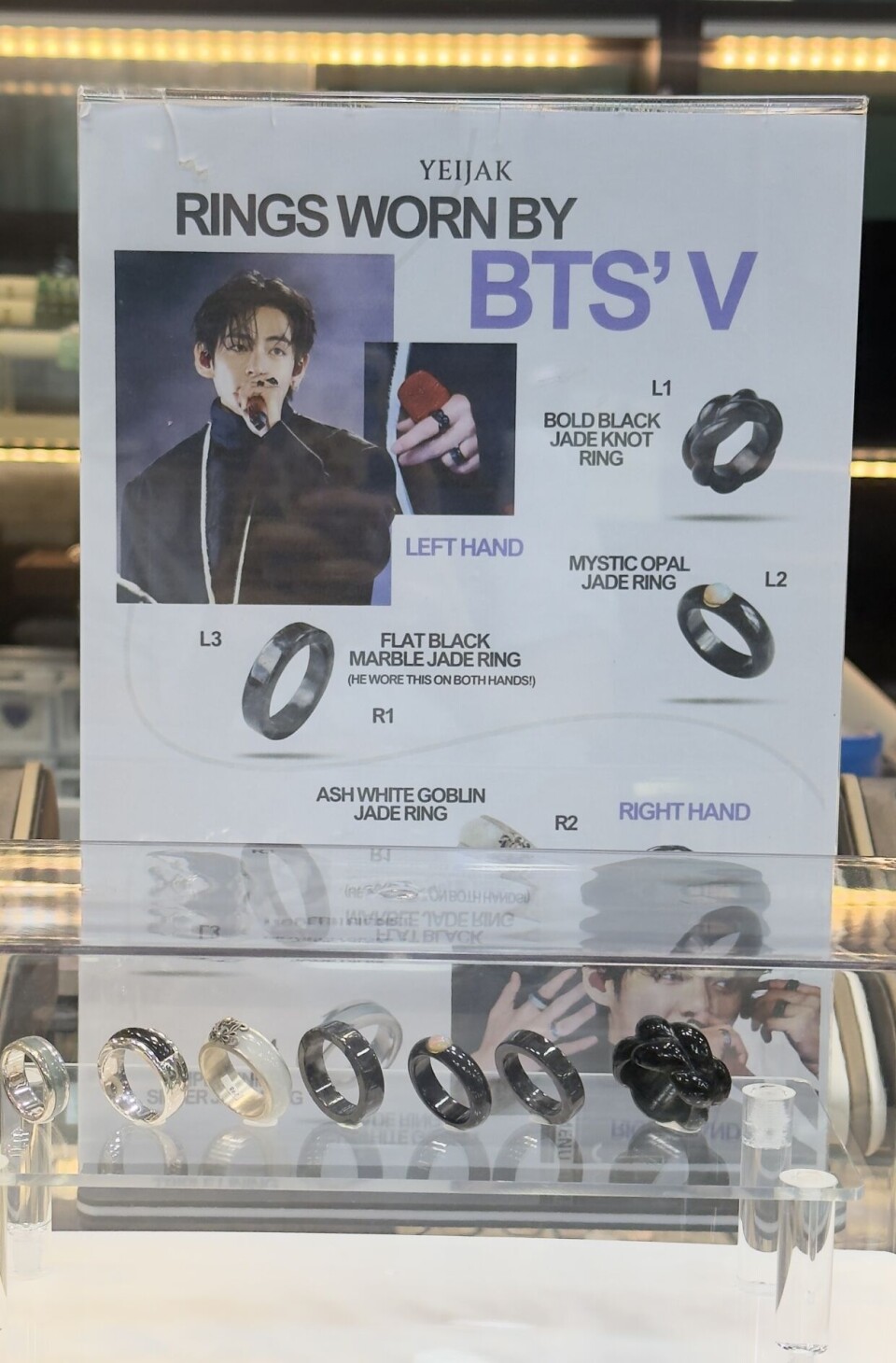
For member V, his effortless charisma and beauty drew instant attention, but so did the seven jade rings on his fingers. Simple yet polished bands flashed each time he gripped the microphone.
“At first, the rings V wore sold so quickly that it was honestly frightening,” said Lee Jin-wook, who runs the jade specialty store Yeijak with his father and supplied the rings to the K-pop megastar.
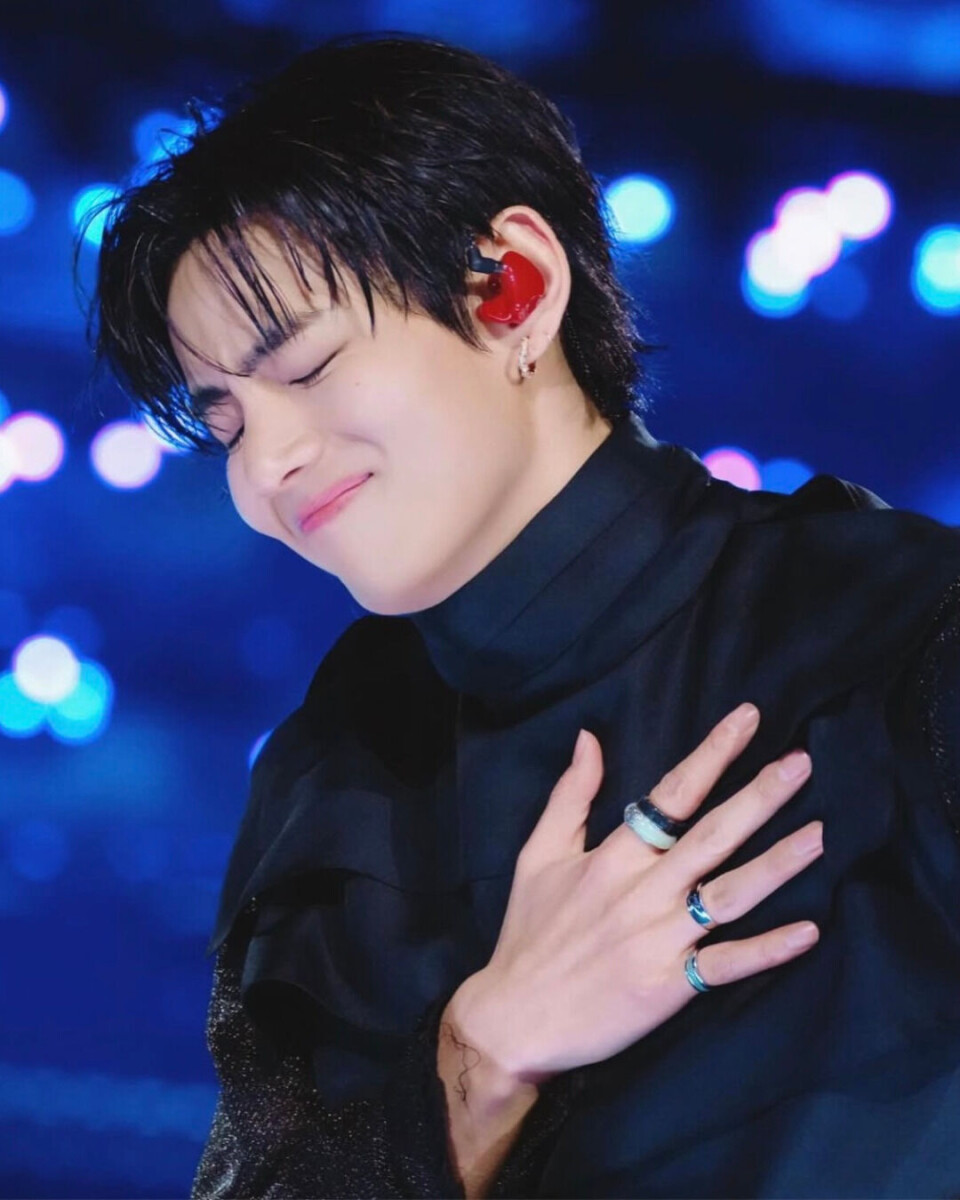
V’s appearance helped catapult jade into the spotlight, challenging its long-held image among many younger Koreans as jewelry best left in their grandmother’s collection. But rather than sparking the trend from scratch, it accelerated a revival that was already underway.
In recent years, foreign tourists and younger Koreans had been rediscovering jade, drawn to pieces that felt more distinctive and personal.
More than a celebrity moment
It all began when Lee received an email from someone identifying themselves only as a stylist.
“There was no business card or anything at first. The email simply said they were a stylist. After a few exchanges, I realized it was not a scam,” Lee said.
With less than 48 hours before the concert, Lee sent around 30 jade rings in different styles and sizes to BTS’s stylist, without knowing seven of them would ultimately make it onto V’s fingers, including a triple-lining silver jade ring and an ash-white “Goblin Jade” ring.
“For about a month after the performance, BTS fans constantly visited the store, and online orders poured in from overseas.” Sales of those designs have more than doubled since V wore them.
But overseas interest in Korean jade predates BTS, Lee said.
“Since October 2024, we’ve been seeing more overseas customers.”
Fueled by growing overseas demand, which peaked two months ago, Yeijak relocated from a small shop inside an arcade to its own street-facing storefront in Jongno District, central Seoul. Today, it sees visitors from around the world — including the United States, Mongolia, Canada and the Philippines.
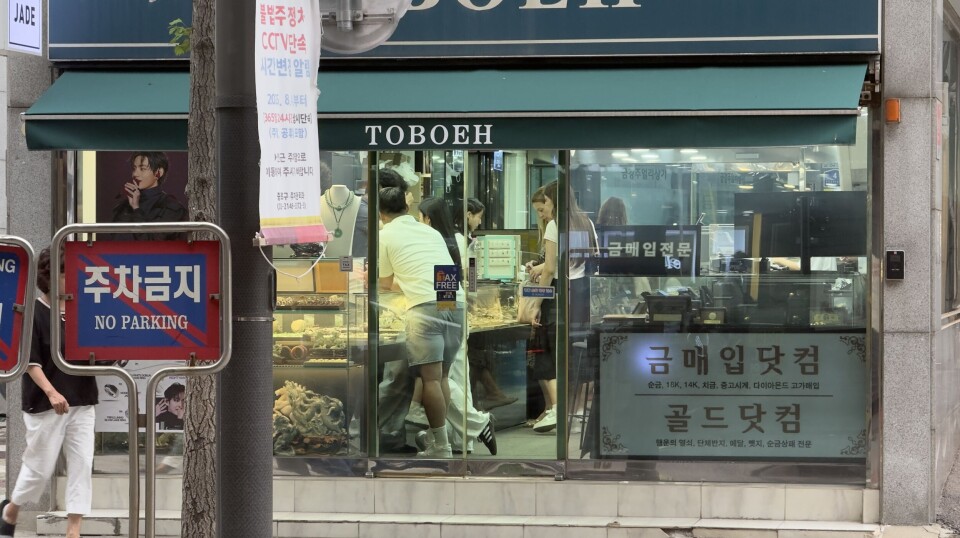
While jade rings, priced from around 40,000 won ($26) to more than 300,000 won, remain the best-sellers, beaded bracelets and bangles are also selling well, Lee said.
Some customers take it a step further, commissioning matching couple’s rings or even custom jade wedding bands.
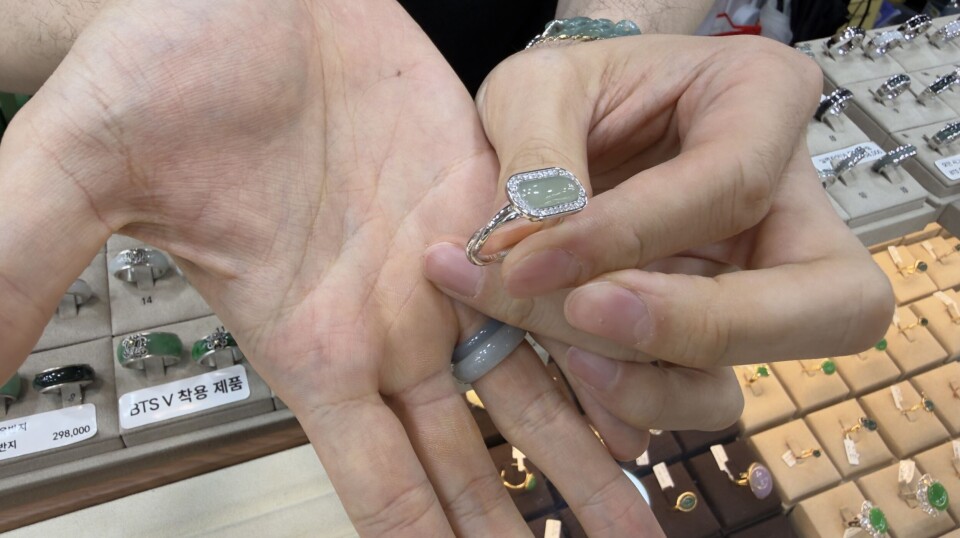
“Set in silver or gold, jade makes a beautiful wedding ring,” Lee said. “Our latest custom order came from a Swiss customer who wanted a wedding ring. It has small diamonds on the sides and jade in the center. Because this jade was mined in Korea, customers find it especially meaningful.”
Although much of the world’s raw jade comes from countries such as Myanmar, China and Canada, Korea also has its own jade deposits, including nephrite in Chuncheon, Gangwon.
Much of Korean jade’s appeal, however, lies in the veins of Korean history. Long prized in Korea, jade was worn by royalty and aristocrats alike, adorning everything from Silla gold crowns to necklaces, belts, earrings and bracelets.
Lee said many overseas customers arrive curious after seeing jade online and often end up buying more once they see it in person.
“Once they realize it doesn’t actually look old-fashioned, they decide to give it a try. When they see it in person, they find it’s prettier than they expected and suits them well, so many end up buying more.”
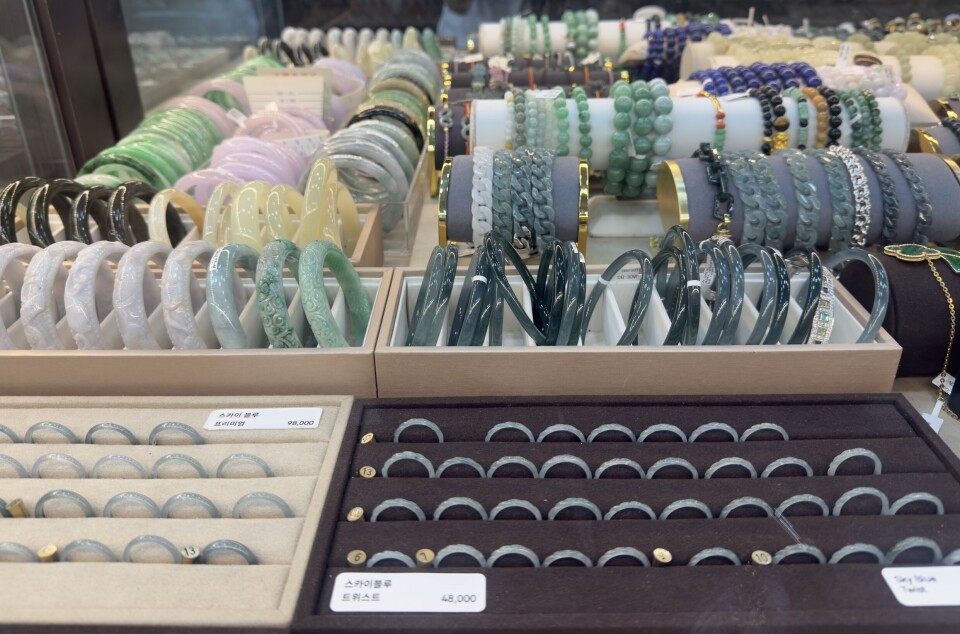
Numbers also reflect jade’s growing popularity among foreign tourists. Purchases of accessories in Korea by foreign tourists rose 87 percent on year in May, according to credit card spending data from the Korea Tourism Data Lab, operated by the Korea Tourism Organization.
Tourists’ growing interest in Korean jewelry is also reflected in booking data from inbound travel platform Creatrip.
Reservations for workshops where visitors make traditional Korean accessories such as norigae (ornamental pendants) rose about 23 percent in the first five months of 2026 compared with the same period a year earlier.
Grandma’s jewelry box to Gen Z’s ring stack
In recent months, however, young locals have begun overtaking foreign tourists, as jade has emerged as one of the hottest accessories among people in their 20s and 30s.
“Weekends used to be dominated by foreign visitors but now we actually see more Korean customers,” Lee said.
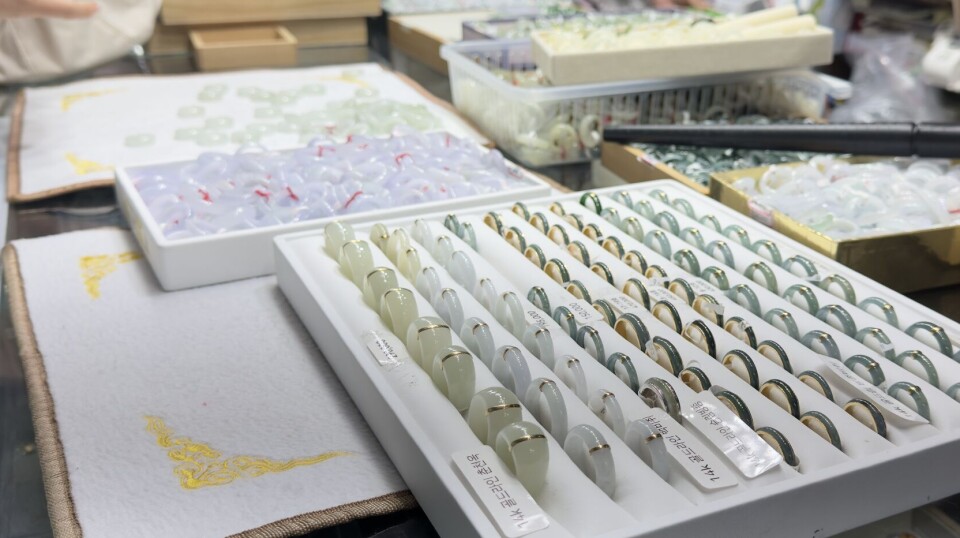
For decades, young Koreans largely dismissed chunky jade rings and heavy jade bracelets as something their grandmothers wore.
“Many young women in their 20s and 30s now come with their mothers. Some buy jade jewelry as gifts, while others buy matching rings to wear together. Up until around April or May, more than 90 percent of our weekend customers were foreigners. Now, domestic customers make up the larger share,” said Lee, adding that male customers also often come solo to purchase jade jewelry.
The trend was also evident on a recent visit to Oksibang, another jade specialty store in Jongno District that has gone viral for its wide selection of jewelry made from the mineral. Crowds had already gathered around the display cases, including university students browsing rings with their mothers.
“There were always some enthusiasts who appreciated jade,” said Yang Hyeong-yae, who has run the store in Jongno District for about 50 years. “But since last month, we’ve seen many more people coming in simply because it has become sort of a trend.”
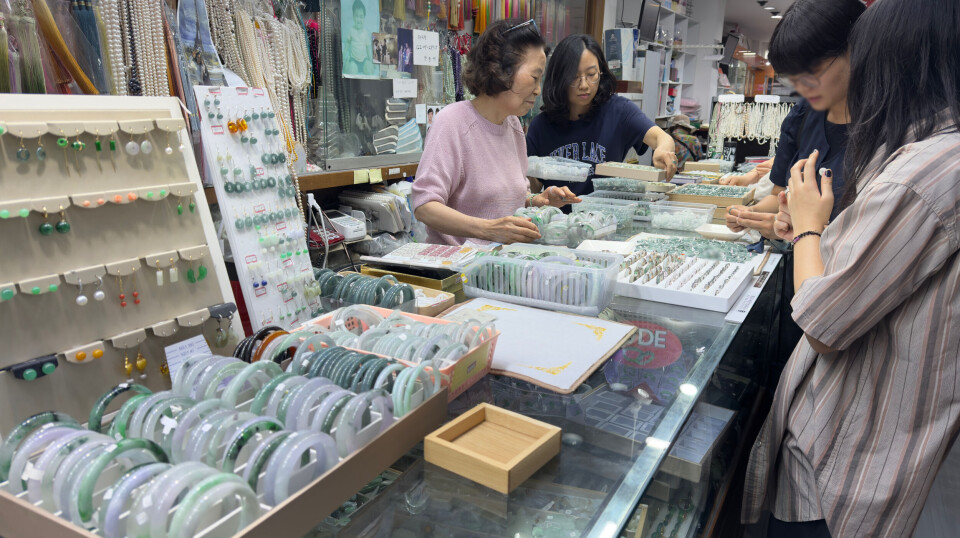
An office worker surnamed Lim who bought a green jade ring at Oksibang said she took half a day off to buy the ring.
“I kept seeing jade rings on social media, and it got me interested,” she said. “You have to try them on in person because the color looks different on each person’s skin and because the rings come in fixed sizes.”
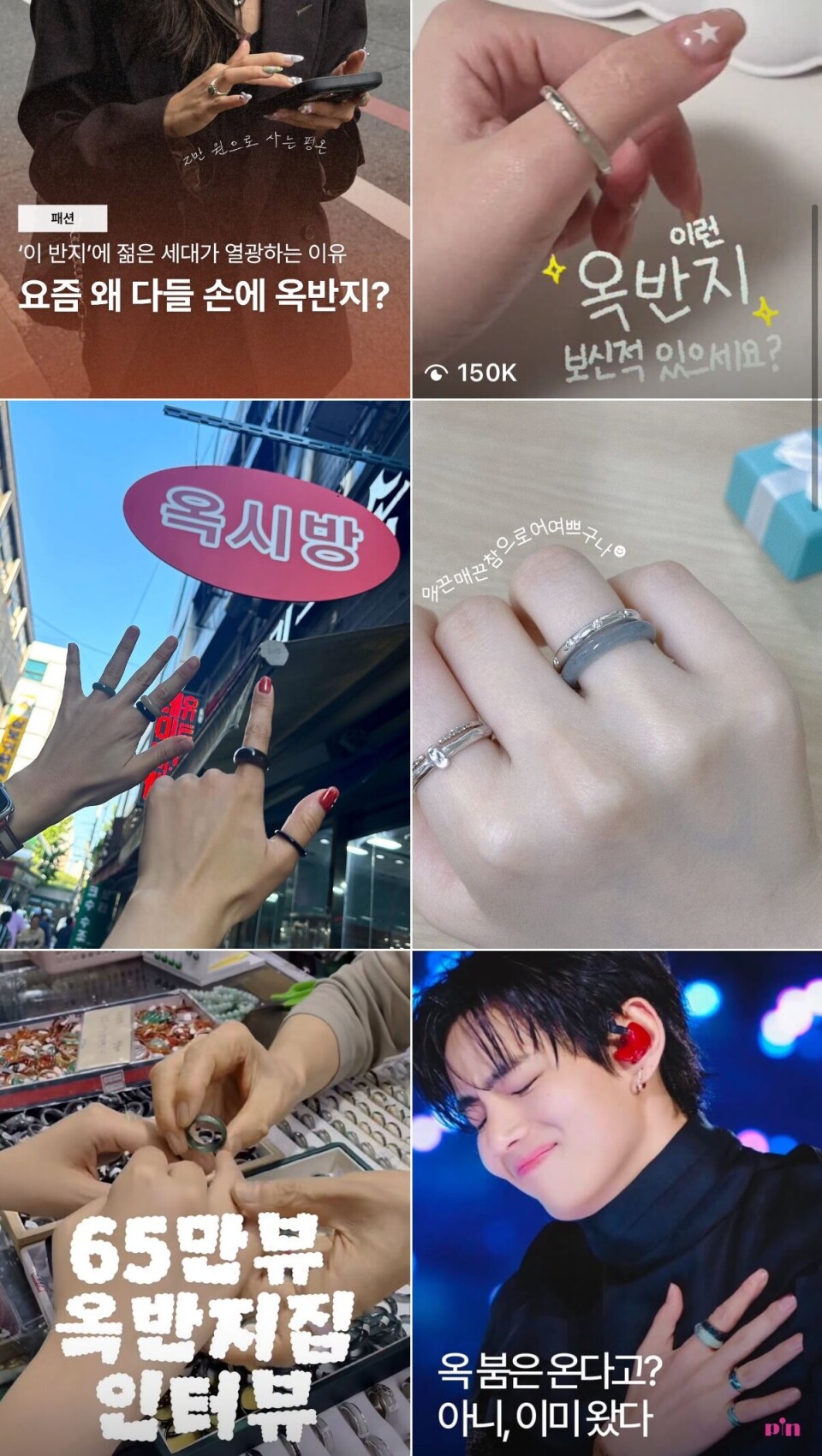
Photos of jade rings are increasingly filling social media feeds as well, with more than 5,000 Instagram posts tagged “jade ring” in Korean. Actor Lim Ji-yeon was also recently seen wearing a jade ring adorned with a floral motif in the SBS drama “My Royal Nemesis.”
The trend is also reflected in online searches. According to Naver DataLab, the search index for the keyword “jade ring” reached 100 — the highest possible score — on June 17. The index, which measures a keyword’s relative search volume over the past month, had hovered around just six in April.
Yang believes much of jade’s newfound appeal comes down to its uniqueness.
“More people are discovering that every single piece of jade is different. No two stones are exactly alike, and I think that’s what appeals to them.”
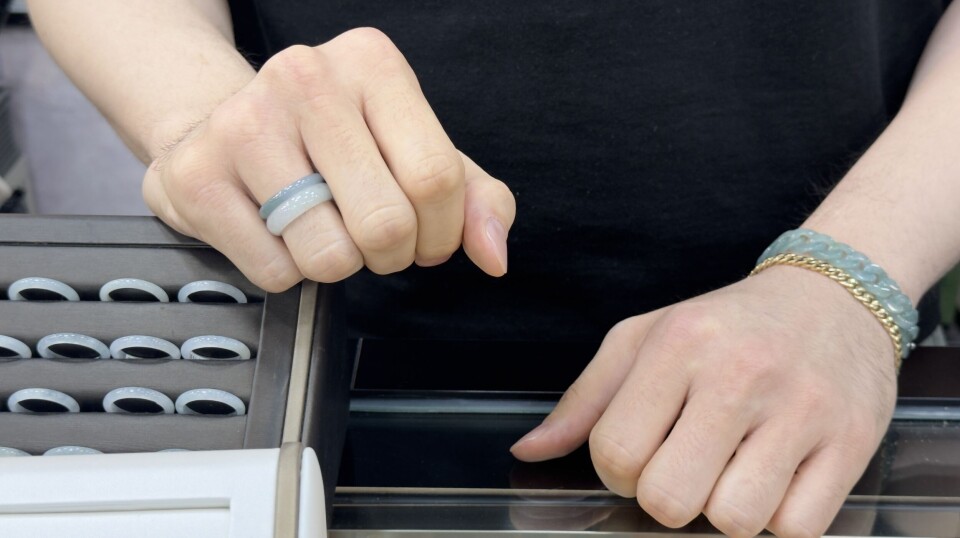
Unlike diamonds, which are cut and graded to standardized criteria, every piece of jade is naturally unique. Jade ranges from deep emerald green to white, gray, lavender, yellow, black and even reddish hues, while some have streaks, clouds, veins or mottled patterns.
Jade jewelry at Oksibang is more affordable — jadeite rings, among its best-selling items, are priced at around 30,000 won.
But some are turning to jade for reasons beyond style.
In ancient Korea, jade was believed to ward off misfortune and symbolize purity. Some of those centuries-old beliefs still resonate with buyers today.
“Some customers come back and tell us stories,” Yang said. “They’ll say, ‘The ring I bought broke, and afterward I passed an important exam.’ Others say they came because they were told through saju [Korean fortune reading] that jade would complement their fortune.”
BY WOO JI-WON [woo.jiwon@joongang.co.kr]
