
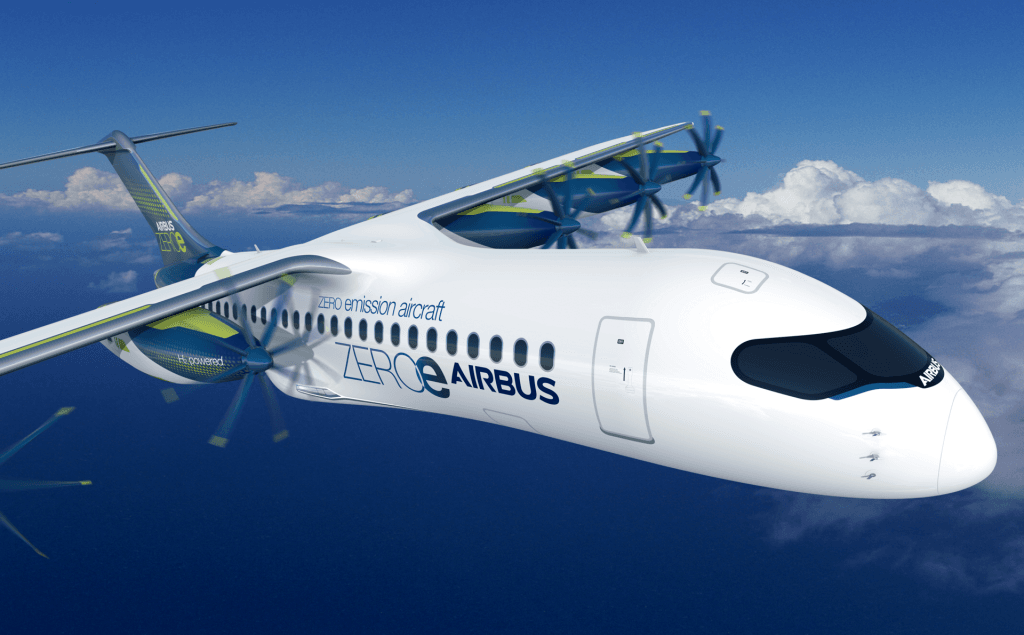
Airbus and MTU Aero Engines have finalized an agreement to launch a specialized joint venture aimed at designing, testing, and commercializing the world’s first fully electric hydrogen fuel cell engine for commercial aircrafts. This comprehensive expansion of the announcement details the operational structure, technological roadmap, and broader strategic significance of the partnership. Here is what you need to know;
Corporate Structure & Launch Timeline
- The Blueprint: This formal venture solidifies a preliminary roadmap first agreed upon during the June 2025 Paris Air Show.
- Target Launch: The currently non-binding agreement requires standard regulatory and European union clearances, with operations officially projected to begin in 2027.
- Divided Expertise: Airbus brings its commercial scale and liquid hydrogen storage technologies to the table, while MTU Aero Engines handles engine mechanics, testing, regulatory certification, and life-cycle maintenance.
How the Propulsion Technology Works
- Zero Emissions: Instead of burning fuel, the engine uses fuel cells to generate electricity via an electrochemical reaction between hydrogen and oxygen.
- Clean Byproducts: The system completely eliminates carbon dioxide (\(CO_{2}\)) and nitrogen oxides (\(NO_{x}\)) during flight, emitting nothing but clean water vapor.
- Recent Milestones: The project builds on successful testing of Airbus’s cryogenic research and MTU’s proprietary “Flying Fuel Cell” design, which recently completed its first electric motor tests in Munich.
RELATED ARTICLE: Airbus Reveals Hydrogen Powered Zero Emission Engine
Strategic Impact on Global Aviation
- The 2035 Goal: The venture is a cornerstone of Airbus’s ZEROe initiative, which targets entering a completely zero-emission commercial aircraft into global service by 2035.
- Industry Shift: Aviation accounts for roughly 2% to 3% of global greenhouse gas emissions. While many airlines rely on Sustainable Aviation Fuels (SAF), Airbus and MTU view hydrogen as the superior long-term play due to its massive energy capacity by weight compared to standard jet fuel.
- Building the Ecosystem: Beyond building physical engines, the joint venture will work directly with European authorities to write the safety frameworks and regulatory rules needed to establish a functional global hydrogen aviation market.
Stefan Weber, SVP Engineering and Technology at MTU Aero Engines, said:
“This project is a crucial milestone on our path to the first hydrogen-powered engine – and this is true European technology leadership. To that end, we want to create a company that covers the entire life cycle of fuel cell powertrains – from development and testing through certification to commercialisation.”
Matt Bird is the Founder, CEO, and Editor-in-Chief of ESG News. He brings 25 years of experience in corporate strategy, media, fintech, and communications, including 15 years specializing in news and journalism. Matt was recognized by the United Nations as #3 of the “Top 10 Most Influential Media Executives for Impact” in 2015 during the launch of the UN SDGs.
He has advised the Sustainable Stock Exchange initiative (SSEI), UNCTAD, and the UN, and hosts event coverage at the World Economic Forum, ADFW, Climate Week NYC, EU Parliament, COP, the Vatican, NASDAQ, NYSE, and more. Matt is a founding board member of the Humanity 2.0 Foundation, a Vatican-based NGO focused on identifying and removing impediments to human flourishing.
He previously rang the NASDAQ Closing Bell in honor of his partnership with NASDAQ OMX to launch the world’s first retail investor targeting and newswire monitoring platform with the NASDAQ Financial Services Group. Matt launched ESG News in 2021, leading coverage of more than 10,000 news stories as of 2026—and truly loves what he does.
