
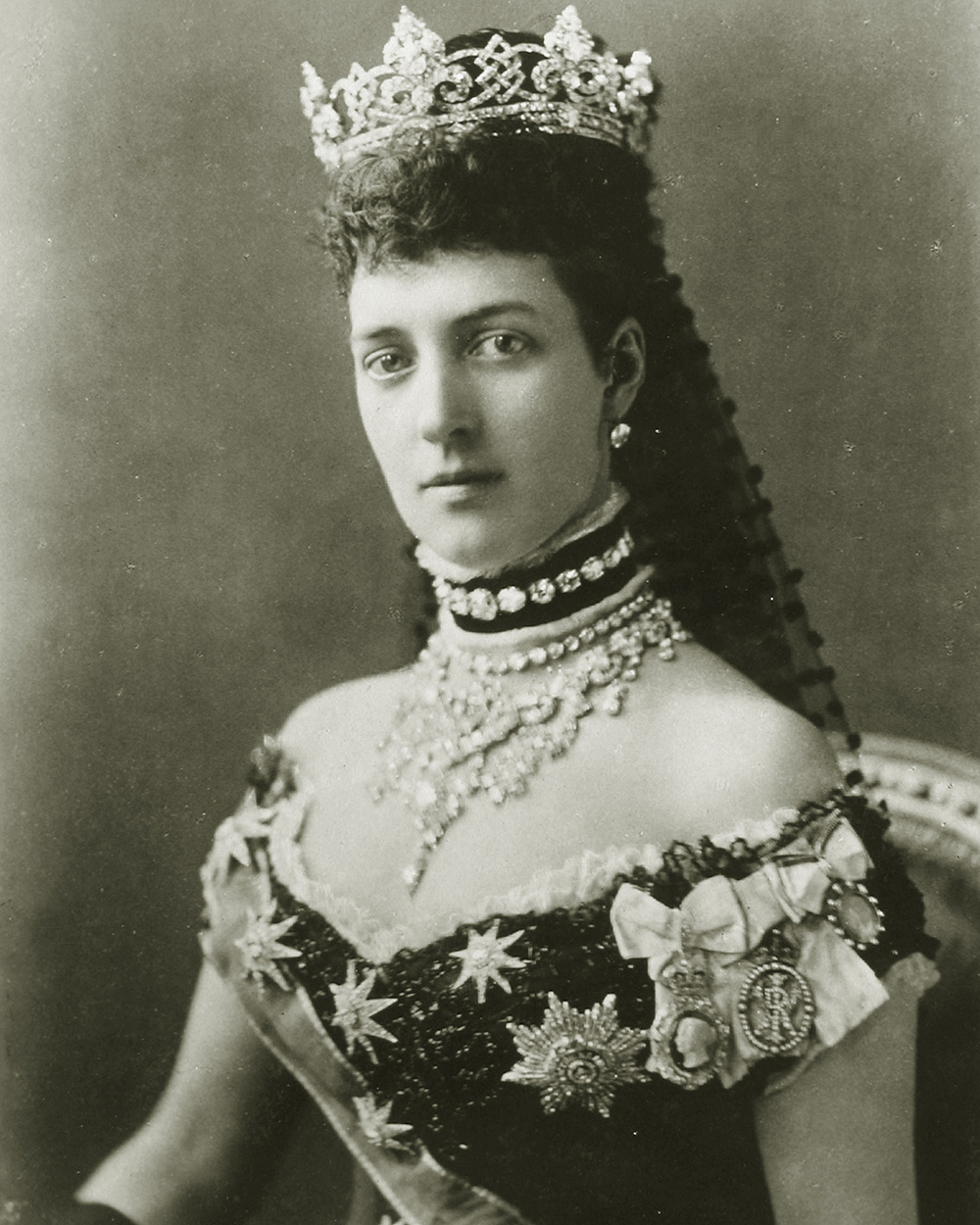
Queen Alexandra Was the OG Royal Jewelry Influencer
After decades of Queen Victoria’s black mourning dress and somber jewels, Queen Alexandra ushered in a dazzling new era of diamonds and unapologetic glamour.
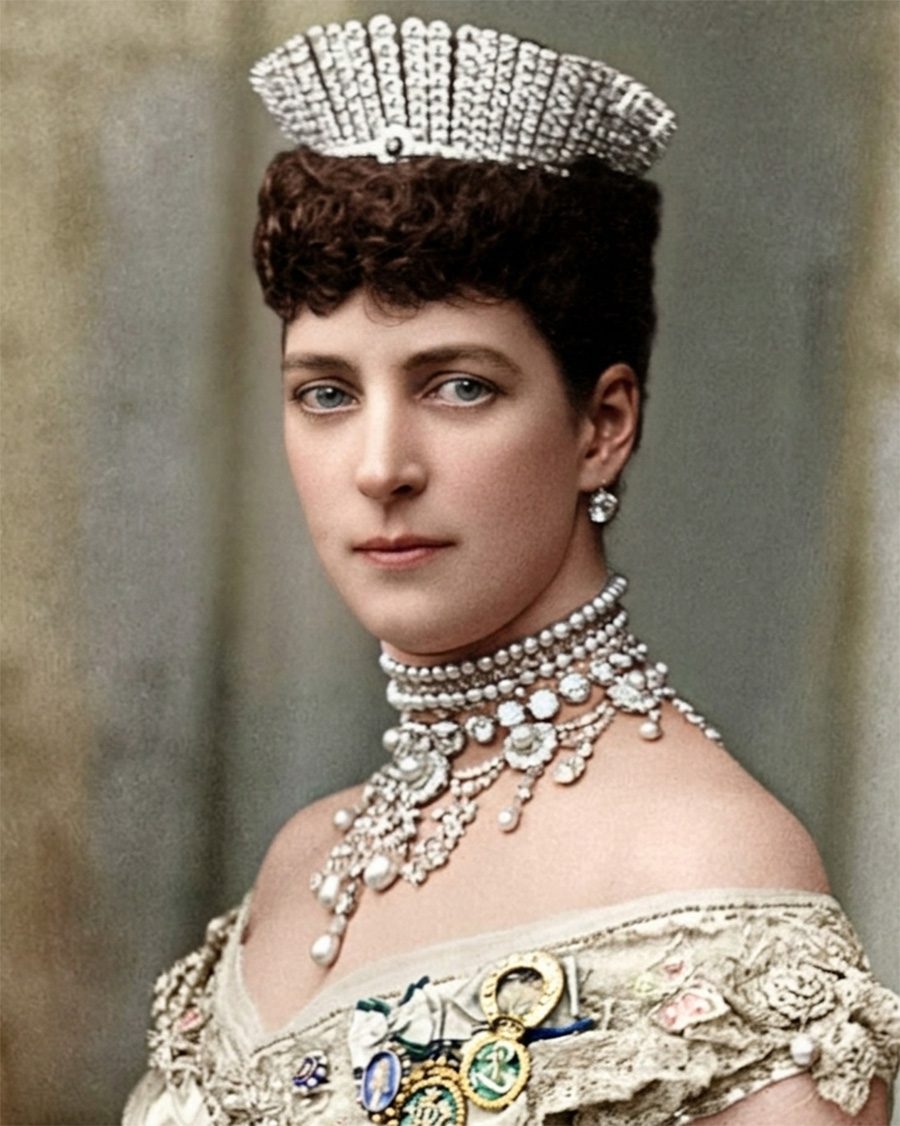
(Wikimedia Commons/Public Domain)
Considered one of the most jewelry-forward queens ever (as well as quite the beauty), Queen Alexandra definitely made her mark on British history. Though the young Danish princess entered into a difficult marriage in 1862 with the future King Edward VII—a well-known philanderer—she still managed to make a profound impact as a royal and a style icon of the late Victorian and Edwardian eras.
“Queen Alexandra matters because she helped turn royal jewelry into image-making. She did not simply wear important pieces because protocol required it. She created a look: high diamond collars, layered pearls, grand tiaras, softness, glamour, and a slightly exotic Edwardian elegance. In many ways, she made royal jewelry feel personal rather than purely dynastic,” says historian and designer Jelena Kulic.
Jelena Kulic is a fashion, jewelry, and accessory designer who made her international debut at Paris Fashion Week in October 2025. Her work is inspired by Baroque and Renaissance art, as well as the romantic opulence of the 18th and 19th centuries.

Justin Daughters is the Director of Berganza, a UK-based antique and vintage jewelry dealer renowned for sourcing and presenting rare, museum-quality pieces. With a deep expertise in historic jewels, Daughters oversees a collection distinguished by exceptional provenance and authenticity.
Ahead, discover how Queen Alexandra became one of the most influential jewelry wearers in British royal history—from her iconic tiaras and popularization of diamond and pearl chokers to the lasting feminine elegance she brought to royal jewelry—and why her style continues to resonate with royals today.
Who Was Queen Alexandra of Denmark?
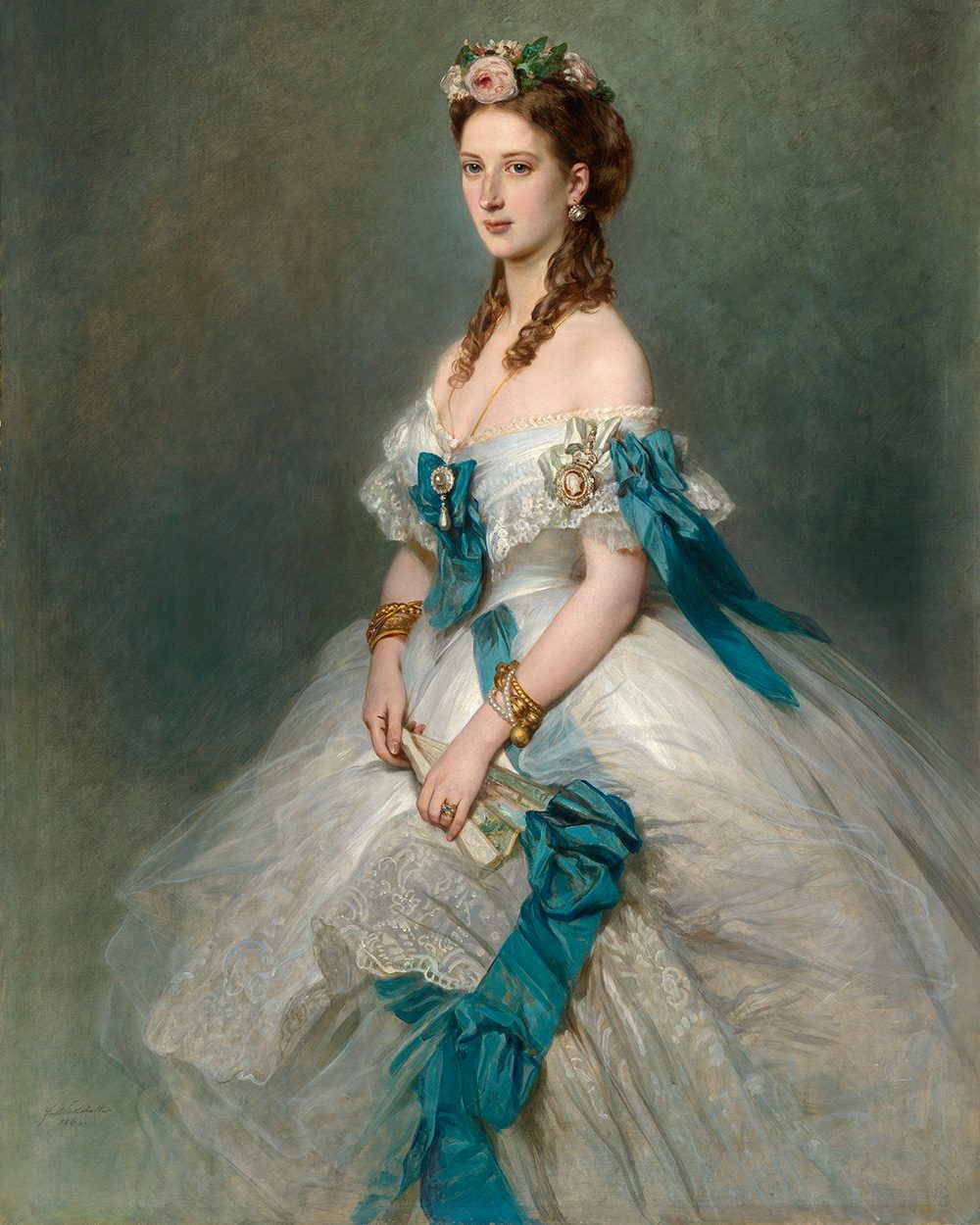
Born in Copenhagen, Denmark, in 1844, Alexandra Caroline Marie Charlotte Louise Julia was the eldest daughter of the future King Christian IX of Denmark and his wife, Louise of Hesse-Kassel. Before her father unexpectedly ascended the Danish throne, the family lived on his army salary at Copenhagen’s Yellow Palace, where Alexandra shared a small bedroom with her sister Dagmar, learned to sew, and enjoyed a surprisingly ordinary childhood.
She would go on to become the longest-reigning Princess of Wales in British history after marrying Prince Edward Albert (later King Edward VII) in 1863 at just 18 years old. Though her formal education was limited, her warmth, beauty, and effortless charm quickly won over both the royal household and the British public.
Though he was known for his affairs, Alexandra and Edward—known affectionately by his family as Bertie—shared a genuine bond. They loved entertaining, traveling, and surrounding themselves with art, fashion, and magnificent jewels. While Edward pursued a notoriously active social life, Alexandra became one of the most photographed and admired women of her era, setting trends that were copied across Europe.
Sadly, Queen Alexandra became seriously ill after a severe bout of rheumatic fever in 1867, leaving her with a permanent limp, and hereditary otosclerosis gradually robbed her of much of her hearing. Yet neither condition diminished her popularity. In fact, her influence was so remarkable that fashionable women reportedly adopted an exaggerated limp—known as the “Alexandra Limp”—to imitate her.
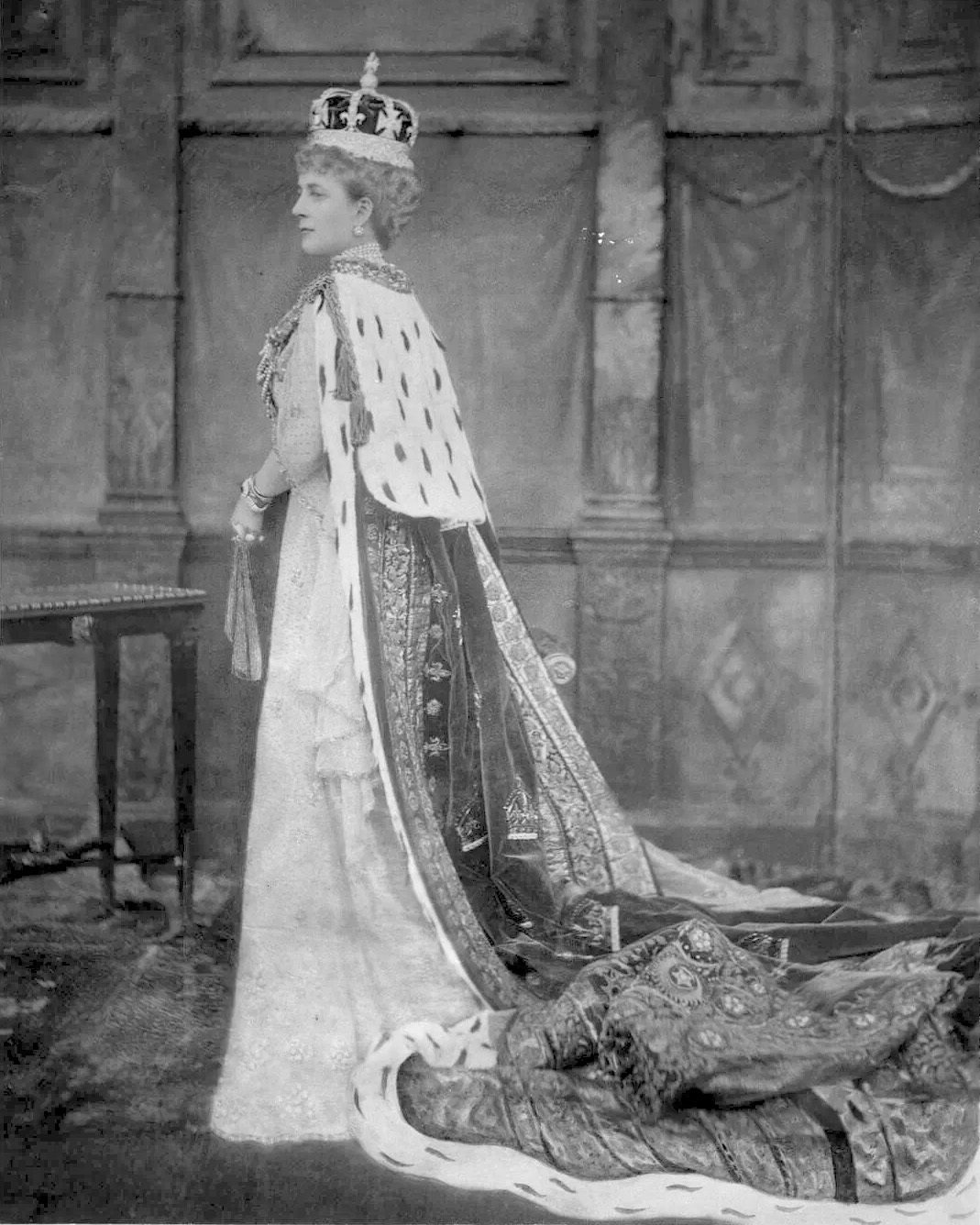
She went on to define the elegance of the late Victorian and Edwardian eras, reshaping royal style through her love of natural diamonds, pearls, and ethereal Belle Époque glamour. Her influence extended well beyond her lifetime, shaping the tastes of future queens, including Queen Mary and Queen Elizabeth II, both of whom continued to build upon and preserve the royal jewelry collection.
“Queen Alexandra is effectively the foundational architect of what we consider modern royal glamour. Emerging from the long, sombre, and heavily Gothic shadow of Queen Victoria’s mourning period, Alexandra introduced an era of unmatched sartorial lightness and dizzying luxury,” says Justin Daughters, Managing Director of Berganza. “She ushered in the Belle Époque, the ‘Beautiful Era’, where advancements in platinum manipulation allowed natural diamonds to appear virtually suspended in delicate, lace-like metalwork. Alexandra didn’t just wear jewelry; she weaponised it as a tool of statecraft and personal branding, establishing a visual standard of royal opulence.”
Queen Alexandra’s Most Iconic Jewels
During her reign, Queen Alexandra fundamentally reshaped the look of the British royal jewelry collection.
“Alexandra shifted the royal collection away from the rigid, yellow-gold weight of the Victorian era towards a luminous, ‘white-on-white’ palette dominated entirely by natural diamonds and pearls,” Daughters says. “By combining pieces inherited from Queen Victoria with spectacular diplomatic gifts from the European courts, she curated a multi-layered, fluid style. This laid the groundwork for how the British Royal Family presents its historical wealth today: as a living, wearable archive rather than static museum displays.”
Ahead, discover some of Queen Alexandra’s most important jewels and why they continue to resonate today.
The Diamond and Pearl Wedding Parure featuring the Wedding Necklace
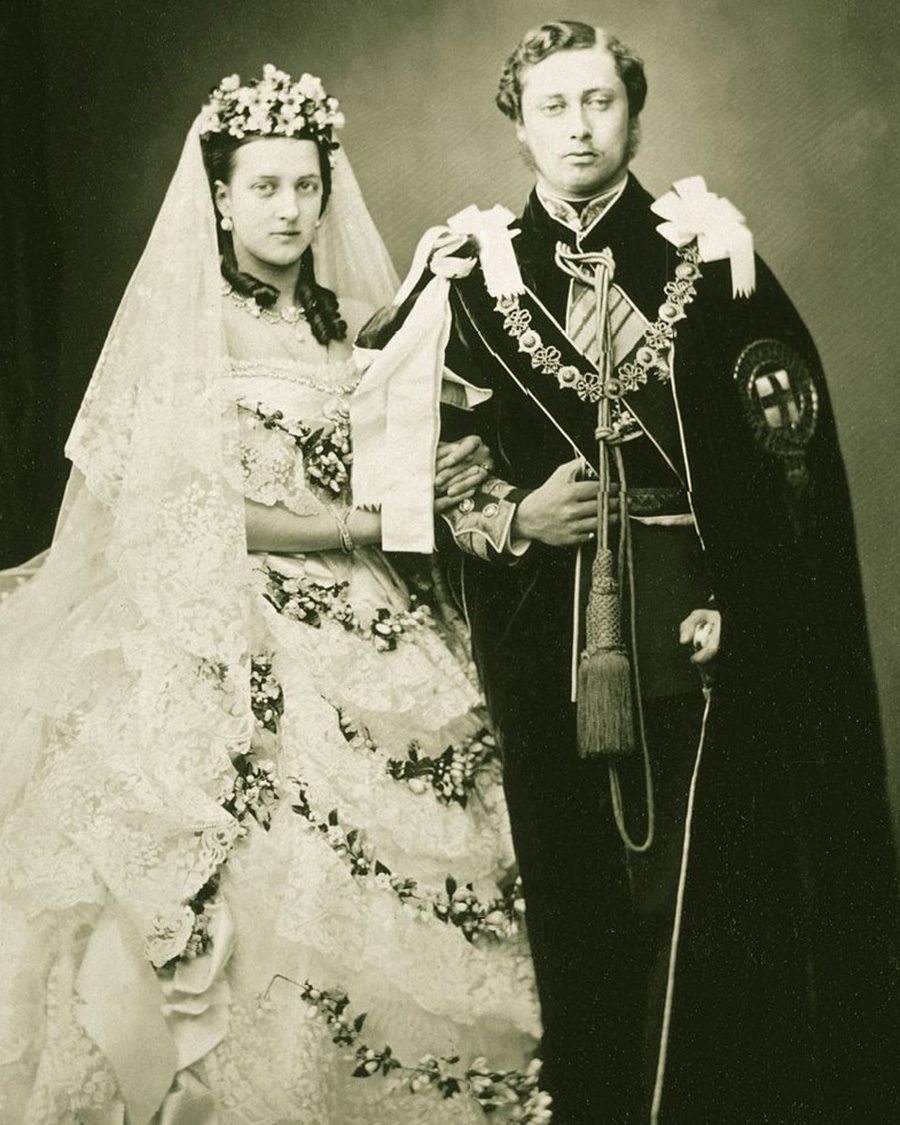
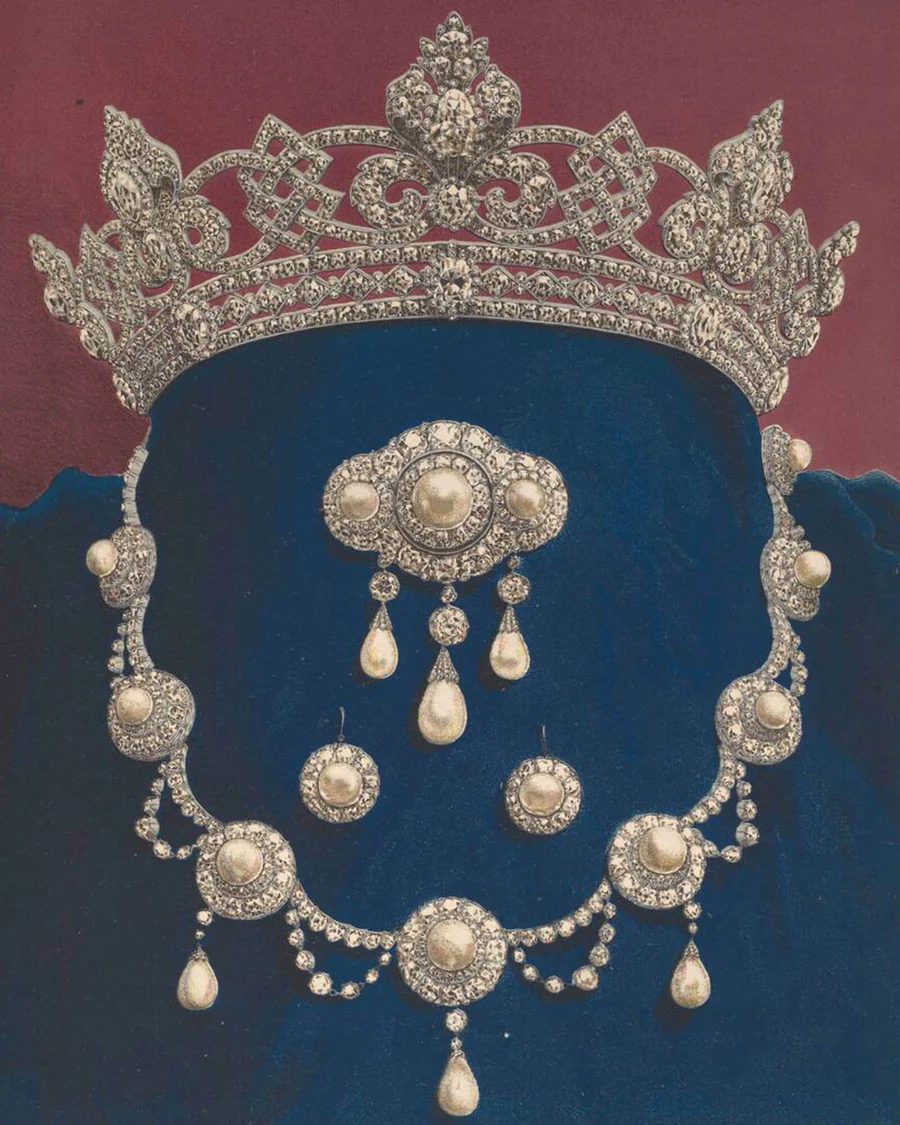
For a wedding gift from her future husband in 1863, she was given a beautiful diamond and pearl necklace along with a matching brooch, tiara, a stomacher, and earrings created by Garrard. The original parure consisted of a large diamond tiara (which was sadly lost), the necklace with eight detachable pearl-and-diamond clusters (both brilliant and pavé), a brooch composed of large pearls set in diamonds, along with three detachable baroque pearl drop pendants and matching earrings.
The Wedding Necklace was worn not only by Alexandra at her wedding and coronation in 1902, but also by Queen Mary and Queen Elizabeth. Queen Mary had the necklace lengthened in 1937 for the coronation of King George VI. It later passed to Queen Elizabeth II, who wore it frequently. Catherine, Princess of Wales, also wore it in 2018 to a state banquet in the Netherlands with a tiara.
According to Daughters, Queen Alexandra’s diamond and pearl wedding parure was both a symbol of her arrival into the British royal family and the foundation of her lifelong jewelry aesthetic. Featuring old mine-cut diamonds paired with perfectly matched natural pearls, the suite established the luminous “white-on-white” combination that would become her signature and remains one of the most enduring looks in royal bridal history.
“It was the ultimate statement of her welcome into the British realm,” Daughters says. “It set the stylistic benchmark for her entire life: the pristine harmony of white pearls and fiery white diamonds, a combination that has represented the pinnacle of bridal elegance ever since.”
The crowning jewel of the suite was Queen Alexandra’s Wedding Tiara (sometimes called the Rundell Tiara), which was created in the form of a delicate diamond coronet. Set with graduated old-cut diamonds, elegant scroll motifs, and detachable elements that could be worn as brooches, it perfectly reflected Alexandra’s preference for versatile, fashion-forward jewels. Unlike the rest of the wedding parure, however, the tiara did not remain in the Royal Collection. Alexandra left it to her daughter, Princess Victoria, and it was later sold or otherwise disappeared, making it one of the great lost jewels of the British monarchy.
The enduring appeal of the parure, particularly its necklace, lies in its remarkably timeless design. Alternating round diamond clusters and diamond plaques suspend eight pear-shaped natural pearl drops in a composition that feels just as elegant today as it did in the 19th century. “Because the design avoids the hyper-specific, dated motifs of the mid-Victorian era, it transitions seamlessly across centuries,” Daughters explains. “It remains relevant because it sits beautifully on a modern neckline, offering the exact blend of historical weight and effortless elegance required for contemporary state banquets.”
The Kokoshnik Tiara
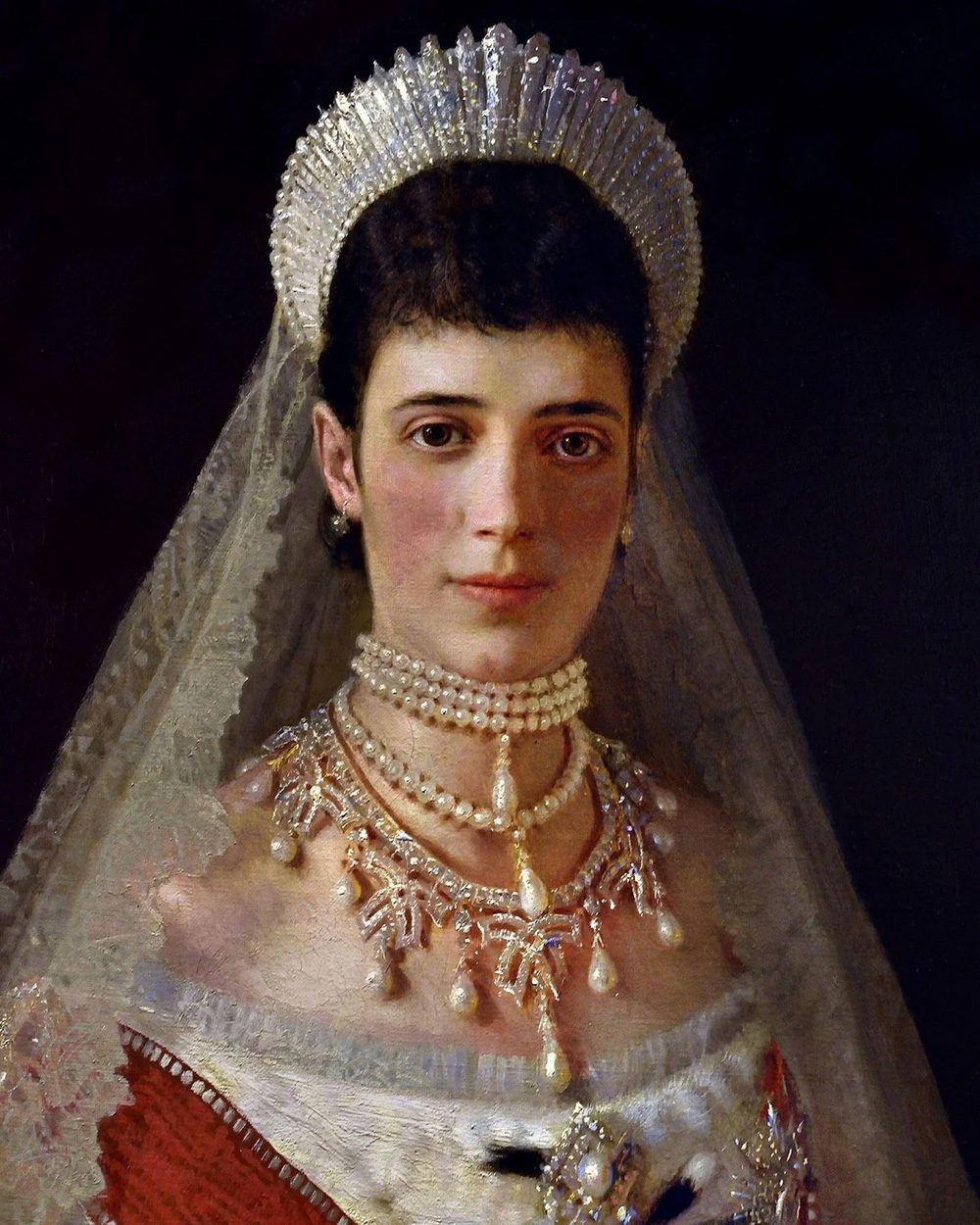
One of the most recognizable jewels in Queen Alexandra’s collection, the Kokoshnik Tiara was commissioned in 1888 as a silver wedding anniversary gift from the Ladies of Society. Alexandra herself helped design the piece, drawing inspiration from the traditional Russian kokoshnik headdress worn by her sister, Tsarina Maria Feodorovna of Russia.
“Its appeal has endured for over a century because it is essentially a wall of fire,” Berganza says. “It consists of 61 platinum bars encrusted with over 400 pavé-set natural diamonds. Because it lacks a traditional central peak or figurative motifs like bows or flowers, its sleek, clean wall-of-light silhouette feels remarkably modern, almost avant-garde. It frames the face like a halo, making it one of the most photogenic tiaras in existence.”
Like many of Alexandra’s jewels, the Kokoshnik Tiara was designed with versatility in mind and could also be converted into a necklace. It quickly became one of her favorite pieces, and she wore it frequently, including at the 1893 wedding of her son, the future King George V, to Princess Victoria Mary of Teck. Upon Alexandra’s death in 1925, the tiara passed to Queen Mary, who later bequeathed it to Queen Elizabeth II in 1953. Today, it remains one of the most iconic tiaras in the British royal collection.


Russian influences can be seen throughout Alexandra’s jewelry collection. Her Danish upbringing and close ties to the Russian Imperial Court shaped her taste, introducing distinctive design elements that would become hallmarks of the British royal collection.
“Her Russian connections brought a love for intense geometric symmetry and magnificent, large-scale gemstones, heavily influenced by the court of St. Petersburg,” Daughters explains. “Continental Europe favoured a lighter, platinum-dependent approach compared to the heavier gold work of mid-19th-century Britain. This melting pot of influences encouraged her to adopt the Russian trend of convertible jewels, tiaras that could be unscrewed from their frames to be worn as fringe necklaces, providing immense versatility.”
Queen Alexandra’s Coronation Crown
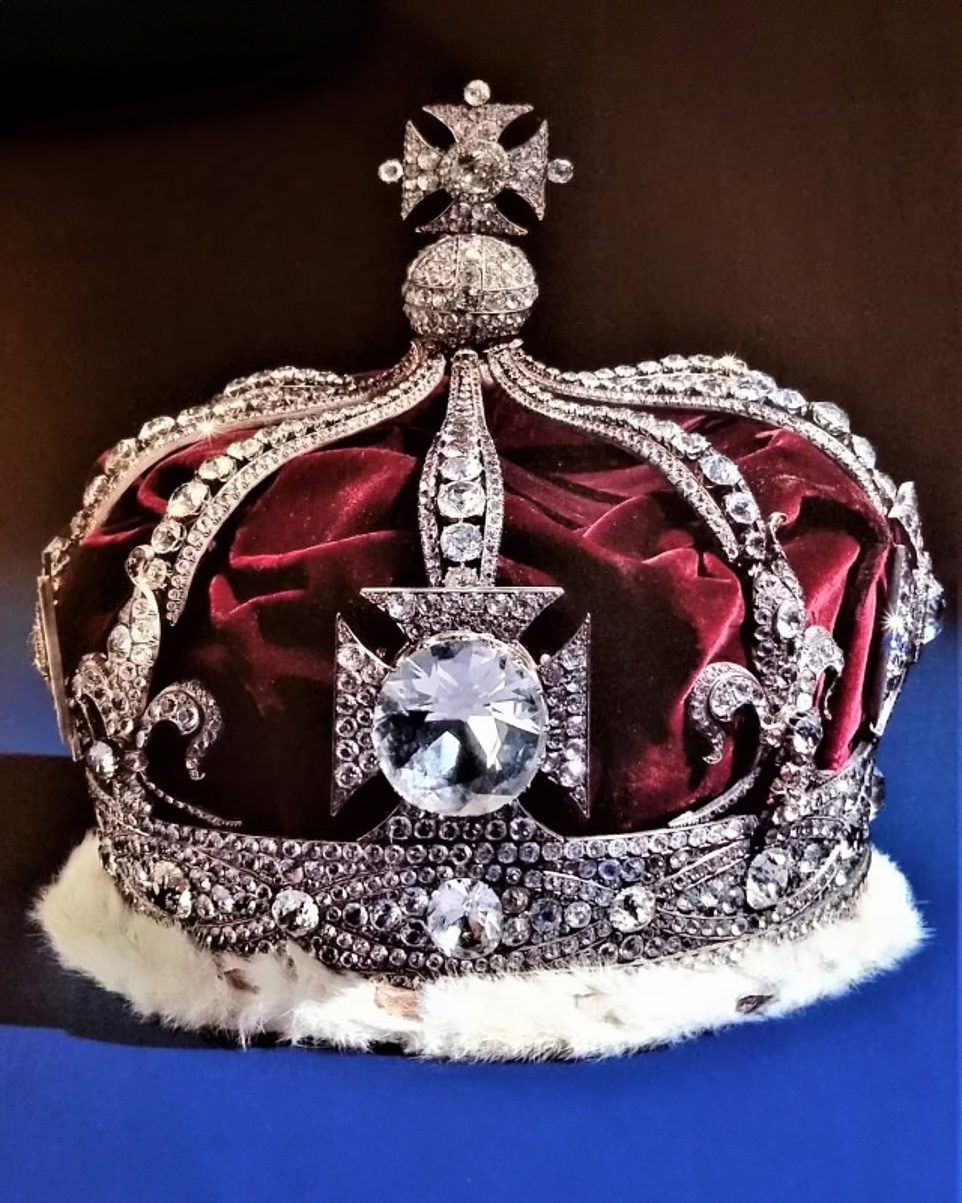
Created for her 1902 coronation, Queen Alexandra’s Crown represented a dramatic departure from traditional British consort crowns. Rather than reusing an older crown—as had long been customary—a completely new platinum crown was designed specifically for Alexandra. Its lighter construction, unusually low profile, and eight half-arches gave it a distinctly Continental look that reflected her modern taste and the emerging Belle Époque aesthetic.
The crown was also the first to feature the famous Koh-i-Noor diamond following Queen Victoria’s death, placing one of the world’s most storied gemstones at the very center of Alexandra’s coronation. The arches could even be removed so the crown could be worn as a circlet, reflecting Alexandra’s preference for versatility in her jewels—a design feature that would later influence the crowns created for Queen Mary and Queen Elizabeth (the Queen Mother).
Cartier Diamond Collier Résille Choker Necklace
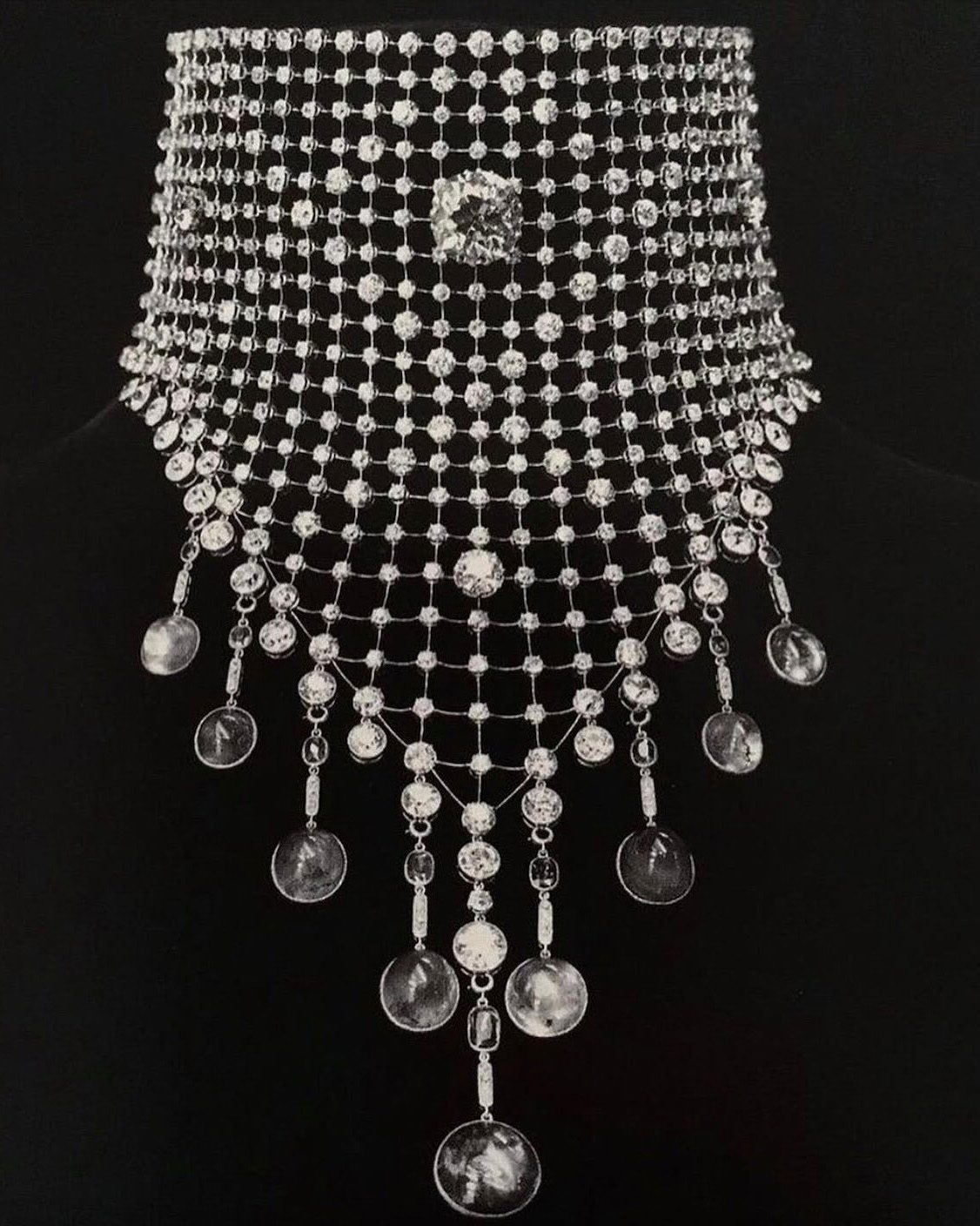
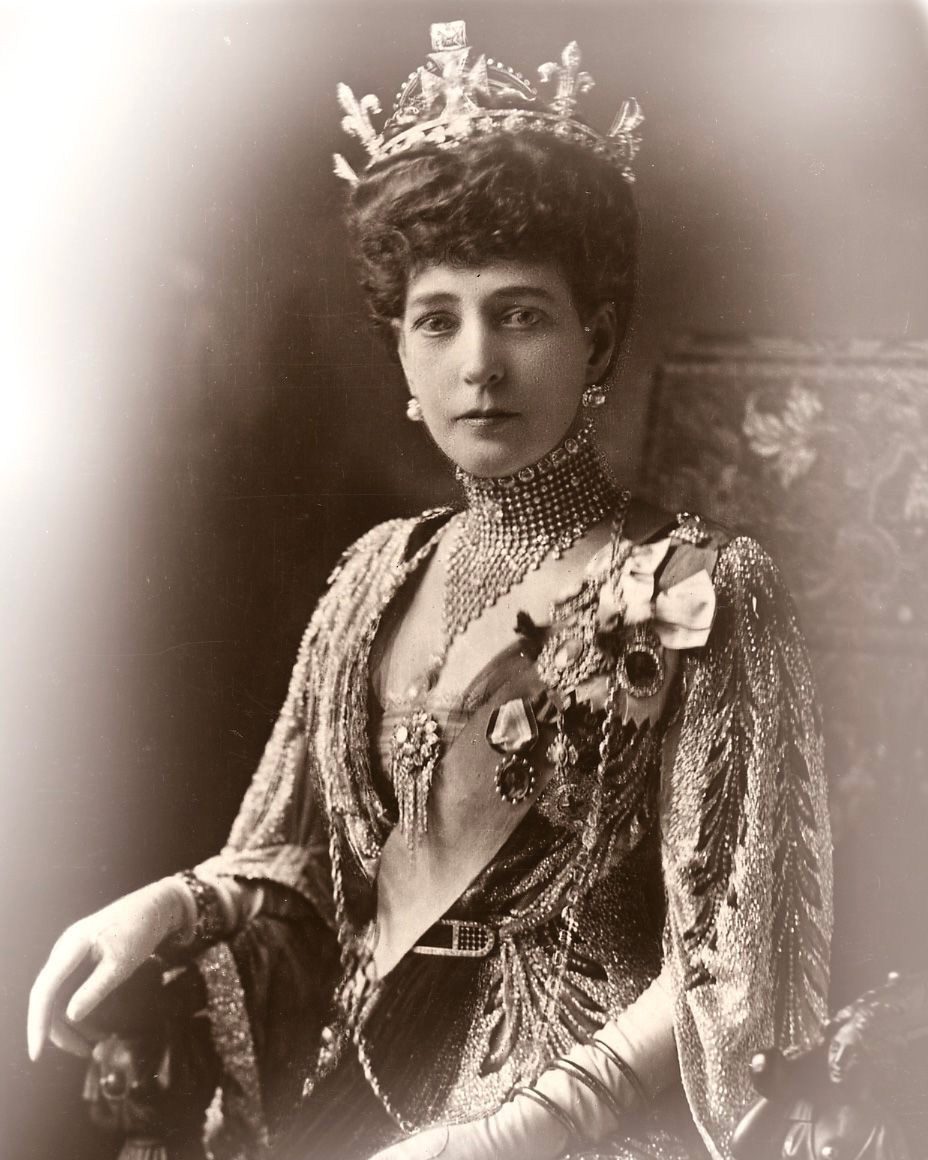
If you love a diamond choker, you have Queen Alexandra to thank. Though she originally adopted close-fitting necklaces to conceal a small childhood scar on her neck, she transformed the practical solution into one of the defining jewelry trends of the Edwardian era. Her love of diamond and pearl chokers inspired women across Europe and forever changed the way neck-focused jewelry was worn.
In 1904, Alexandra commissioned Cartier to create the spectacular Diamond Collier Résille—a fishnet-style diamond choker with detachable cabochon emeralds and rubies. The innovative design showcased Cartier’s mastery of platinum and natural diamonds while cementing Alexandra’s reputation as one of history’s most influential jewelry tastemakers.
“Alexandra’s signature look, the collier résille and multi-strand diamond and pearl chokers, grew out of a brilliant act of aesthetic camouflage,” Daughters says. “To conceal a small childhood scar on her neck, she began wearing wide, tightly fitted bands of gems. What started as a personal necessity fast became an international fashion frenzy.”
According to Daughters, the chokers did more than conceal a scar—they completely reframed royal portraiture. “By filling the entire space between her chin and décolletage with dense openwork platinum and brilliant-cut diamonds, she created a sparkling, light-reflecting frame for her face that photographed exceptionally well in the early days of mass print media.”
The necklace continued its royal journey after Alexandra’s death. Queen Mary had Cartier replace the detachable colored gemstones with diamonds, creating the version best known today., creating the all-diamond version best known today. It later passed to Queen Elizabeth II, though she never wore it publicly.
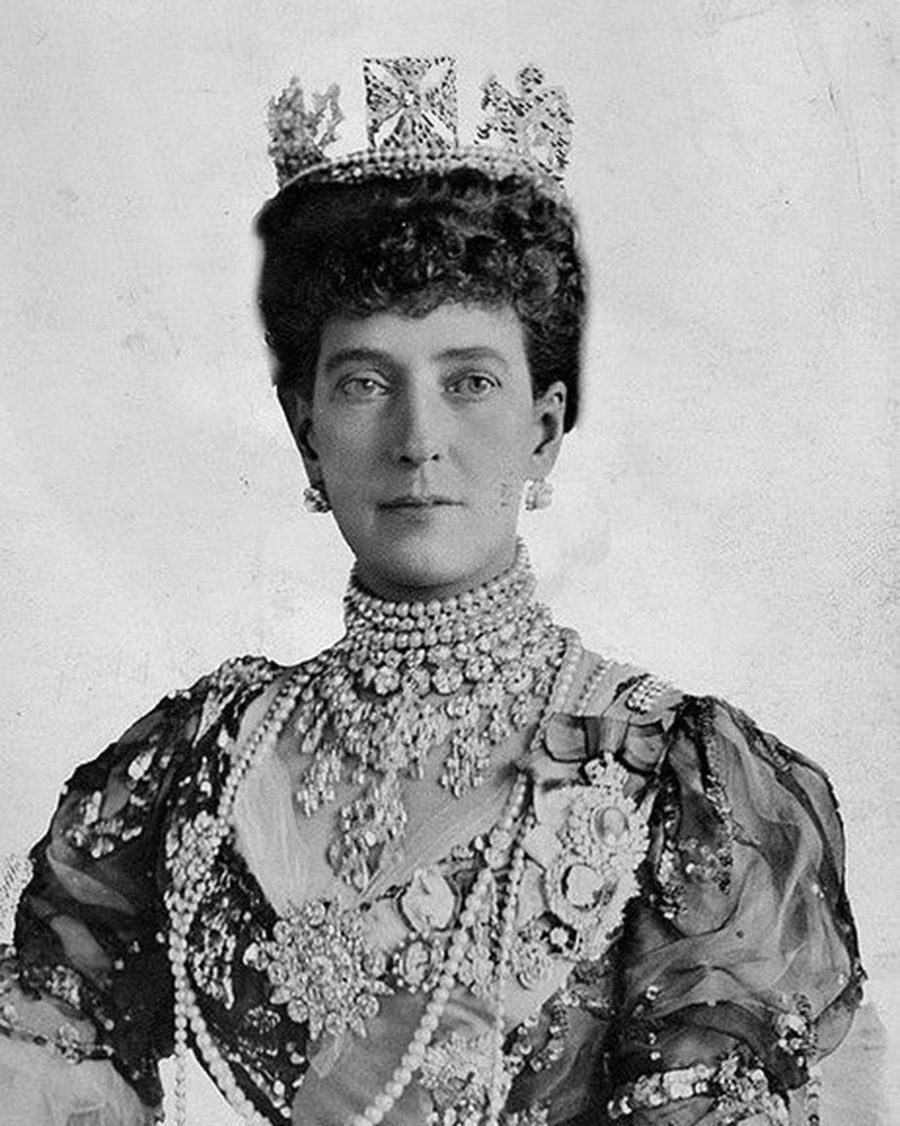
Alexandra’s influence extended beyond diamonds. She was equally devoted to pearls, frequently pairing multi-strand pearl chokers with diamond necklaces to create the previously noted “white-on-white” palette. According to Kulic, these close-fitting jewels framed her face beautifully while complementing the high-necked fashions of the late Victorian and Edwardian eras.
“Pearls softened the brilliance of diamonds, giving her jewelry a romantic quality rather than the heavier, more solemn grandeur associated with Queen Victoria,” Kulic explains.
Her most famous pearl jewel was a multi-strand dog collar necklace that became so fashionable during the Edwardian period it earned its own nickname: the “Alexandra choker.” The style became so ubiquitous that it was later embraced by Gilded Age “Dollar Princesses” like Consuelo Vanderbilt and has recently enjoyed a revival thanks to HBO’s The Gilded Age, where Gladys Russell’s dramatic pearl choker was inspired by Consuelo’s own famous necklace.
Queen Alexandra’s Collet Necklace
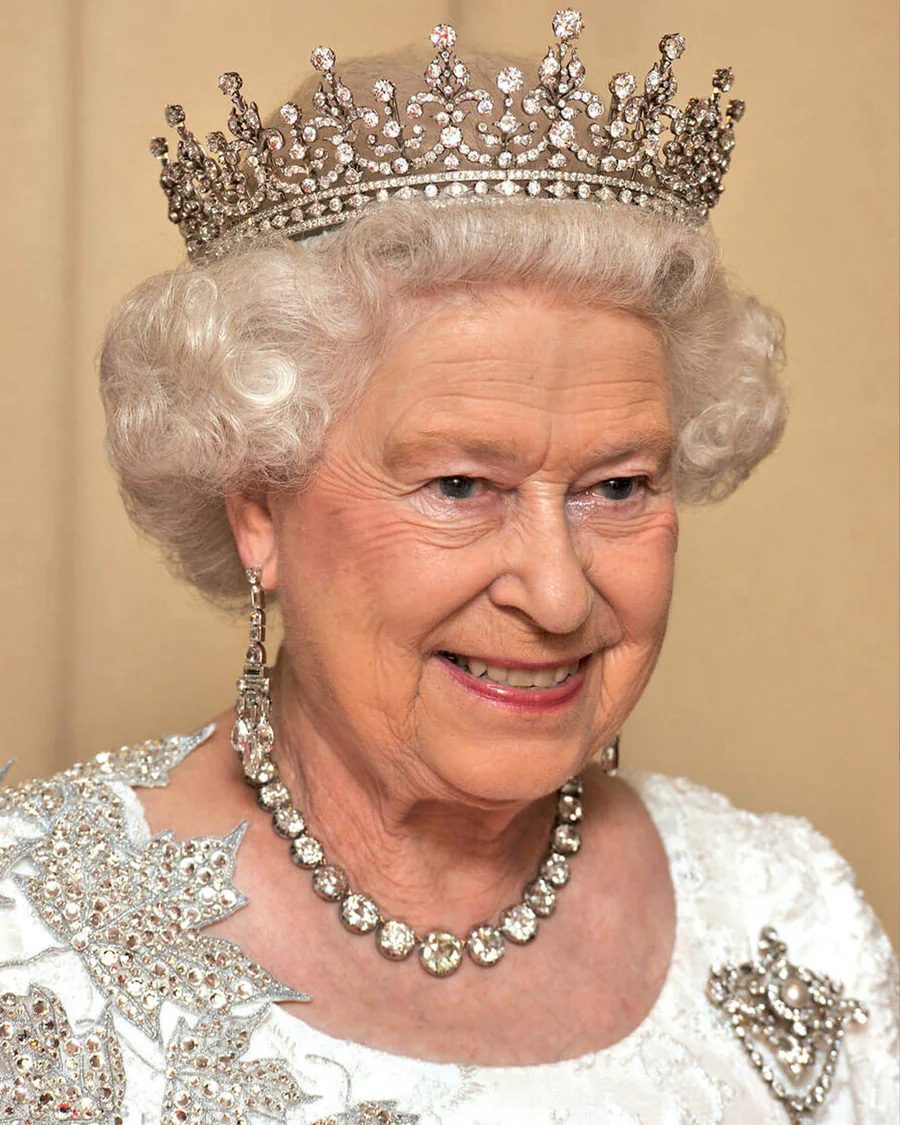
Presented to Princess Alexandra by the City of London to commemorate her 1863 marriage to the future King Edward VII, the Collet Necklace became one of the most enduring diamond jewels in the British royal collection. Composed of a continuous line of exceptional old-cut Golconda diamonds in the classic rivière style, the necklace embodied the refined elegance that would define Alexandra’s jewelry wardrobe.
Like many of Alexandra’s favorite jewels, the necklace proved remarkably timeless. It passed to Queen Mary and later to Queen Elizabeth II, who wore it regularly throughout her reign for state banquets, diplomatic receptions, and official portraits. More than 160 years after it was created, the necklace remains one of the finest examples of a diamond rivière—demonstrating how Alexandra’s preference for classic, versatile jewels continues to shape the royal collection.
The Dagmar Necklace
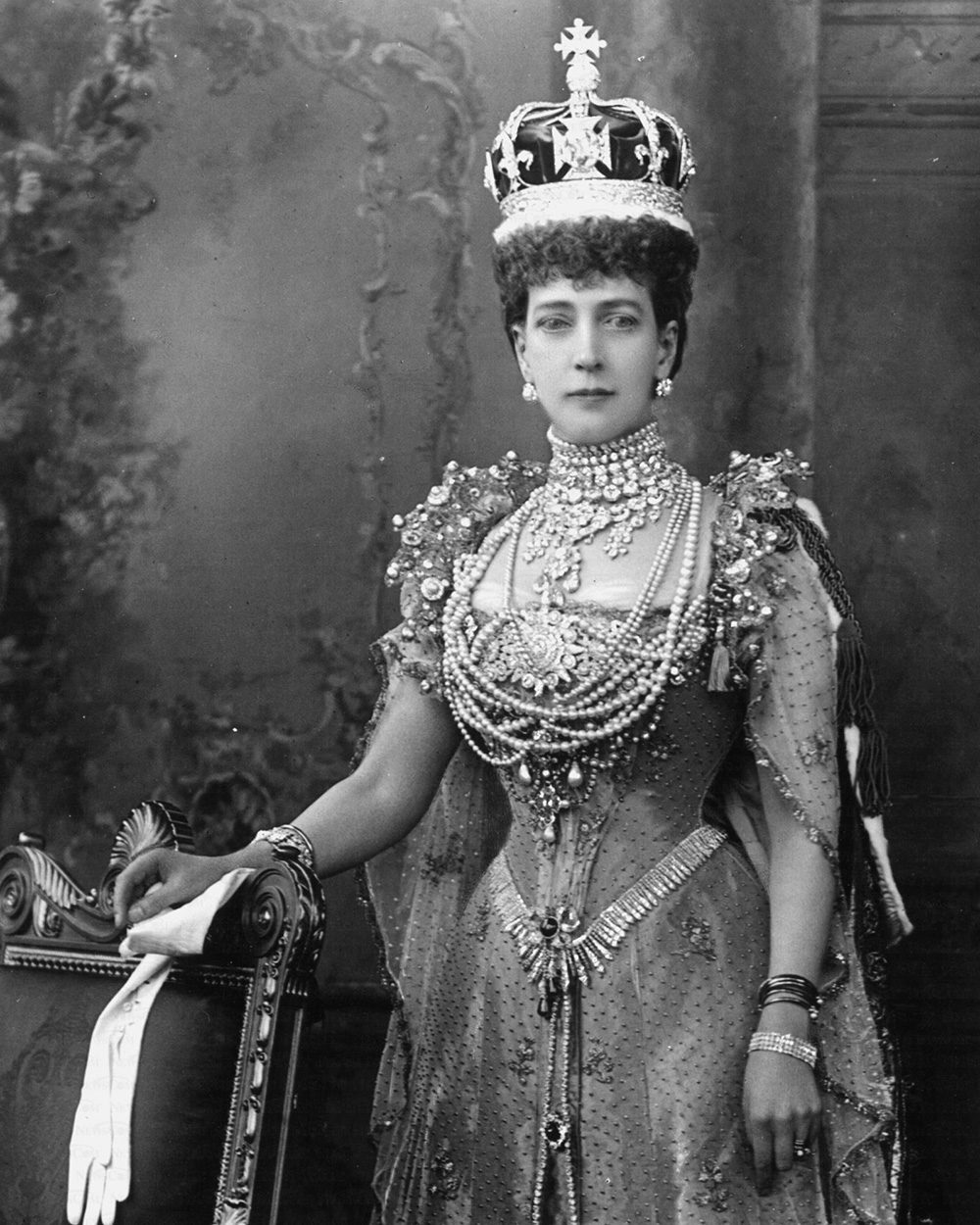
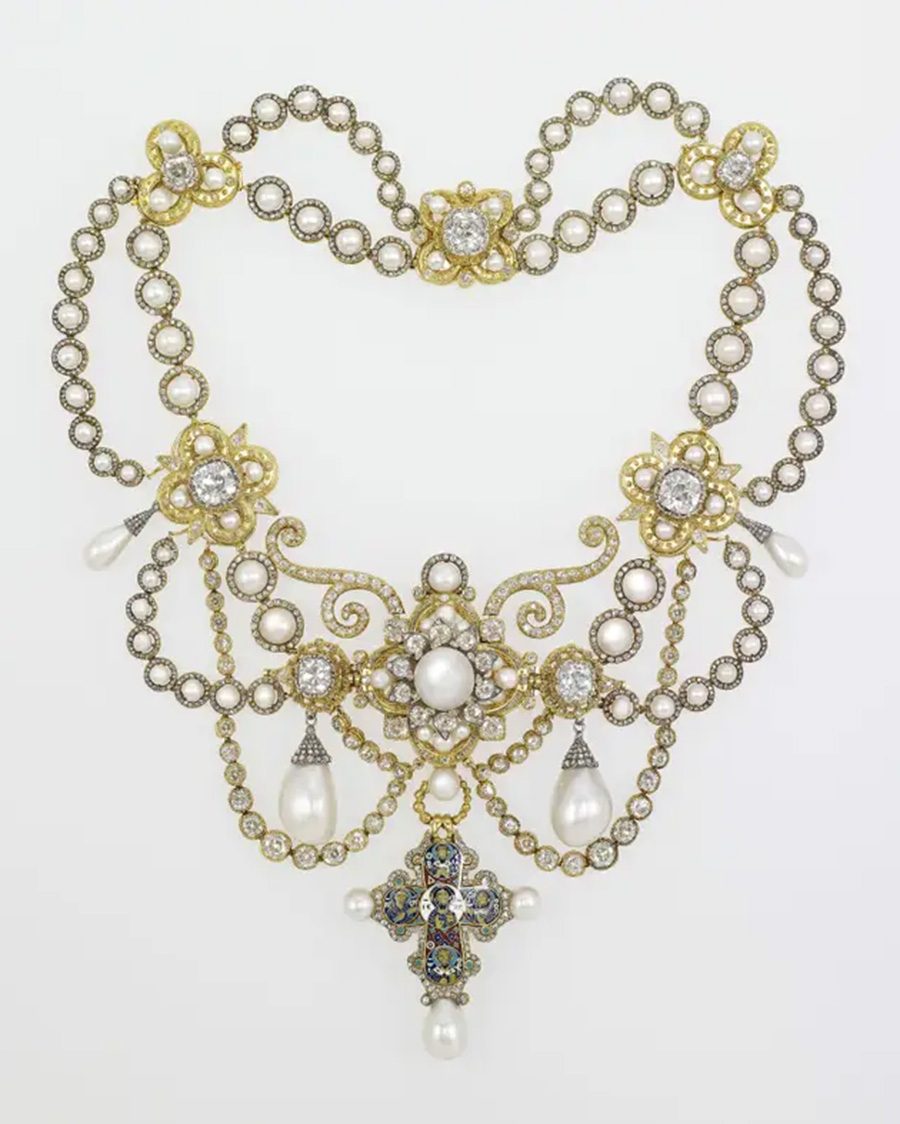
This extraordinary necklace was a wedding gift to Queen Alexandra from King Frederick VII of Denmark. Rich in both history and symbolism, it centered on the Byzantine Dagmar Cross, a revered relic associated with Queen Dagmar of Denmark, who died in 1212. The deeply sentimental gift celebrated Alexandra’s Danish heritage and also featured two large pendant pearls and a central pearl-and-diamond cluster.
When the necklace arrived in London, Garrard modified it so the pearls, diamonds, and cross could be detached and worn separately, giving Alexandra multiple ways to style the historic jewel. She famously wore the dramatic necklace at her 1902 coronation and later while dressed as Mary, Queen of Scots, at a lavish costume ball.
According to Daughters, the necklace perfectly embodied Alexandra’s personal style and identity. “It captures her international heritage, her deep sentimentality, and her absolute love for draping herself in layers of pearls and diamonds. It is opulent, historical, and deeply personal—the very definition of Alexandra’s style.”
How Queen Alexandra Changed Feminine Elegance Through Her Jewels
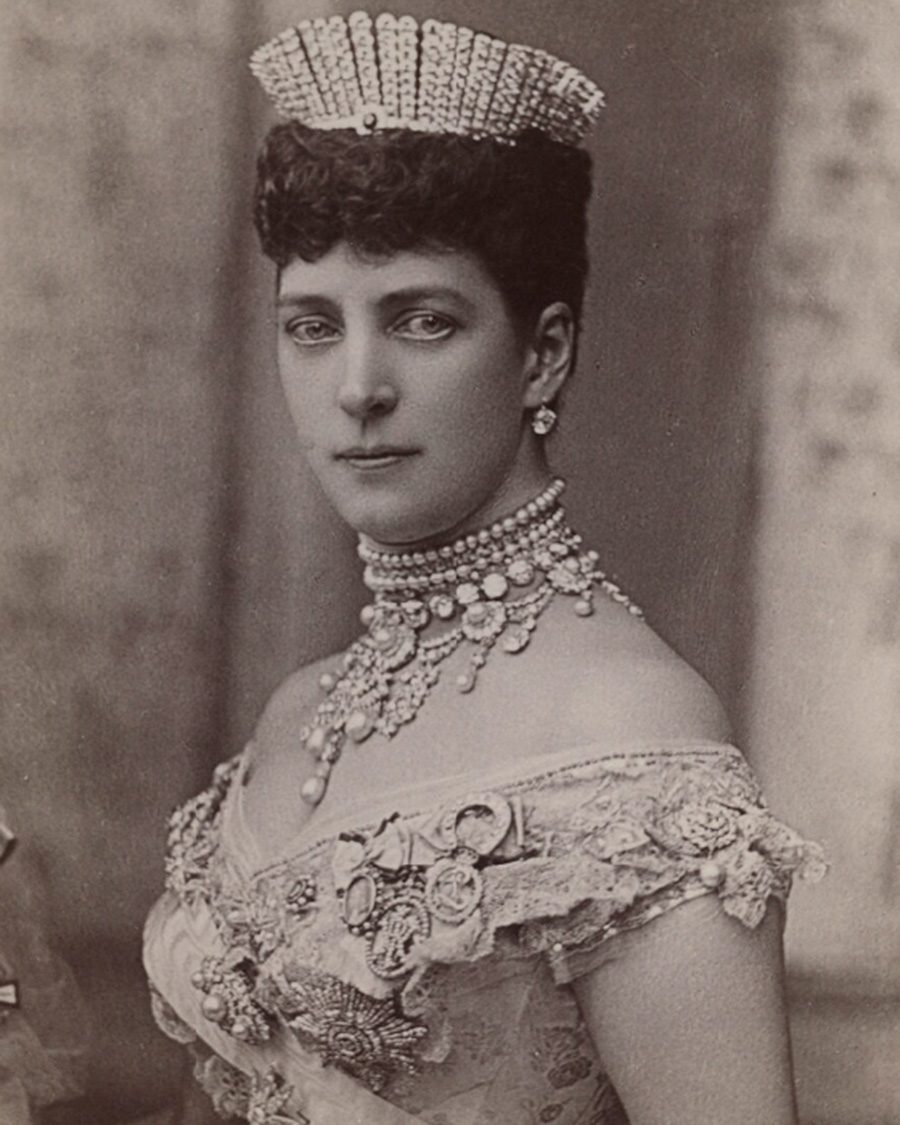
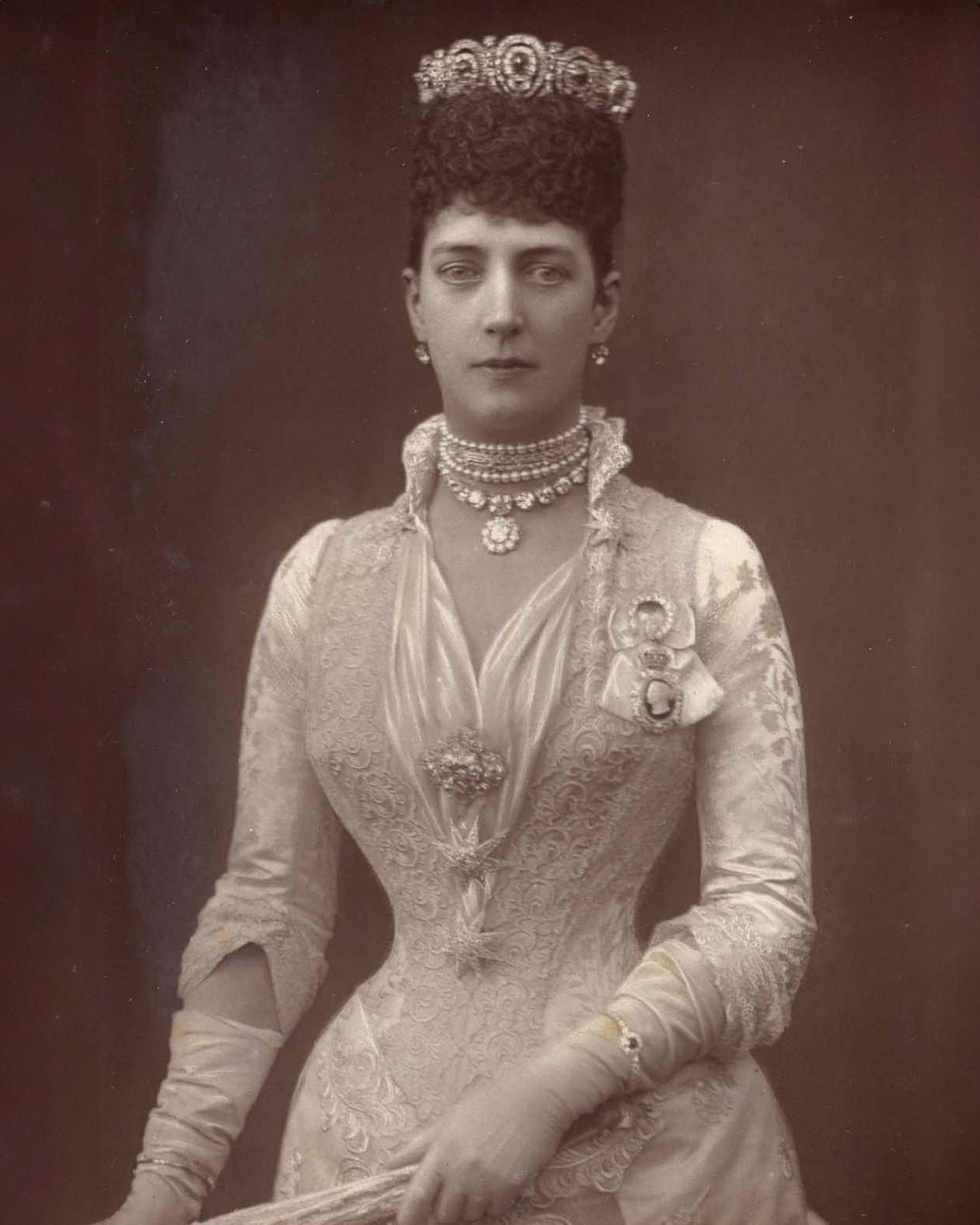
Though Queen Alexandra inherited many of Queen Victoria’s magnificent jewels, she gave the royal collection an entirely new identity. Rather than preserving the status quo, she approached jewelry as an expression of fashion, movement, and modern femininity. According to Daughters, Alexandra “laid the groundwork for how the British Royal Family presents its historical wealth today: as a living, wearable archive rather than static museum displays.”
Daughters also sees Alexandra’s style as a dramatic departure from both Queen Victoria and Queen Mary. Where Victoria’s jewels reflected personal sentiment and mourning, and Mary’s emphasized structure and imperial grandeur, Alexandra embraced movement, lightness, and fashion.
“Alexandra understood fashion and movement; she loved the airy, organic curves of the garland style, the soft texture of pearls against the hard fire of natural diamonds, and pieces that shimmered dynamically under the newly introduced electric lighting of ballrooms.”
Queen Alexandra’s Lasting Influence on Royal Jewelry
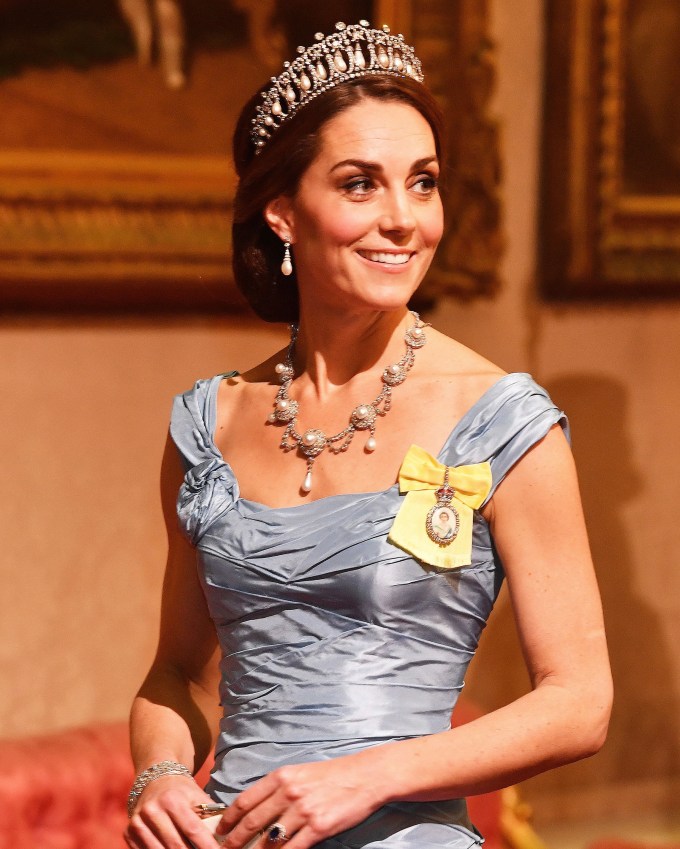
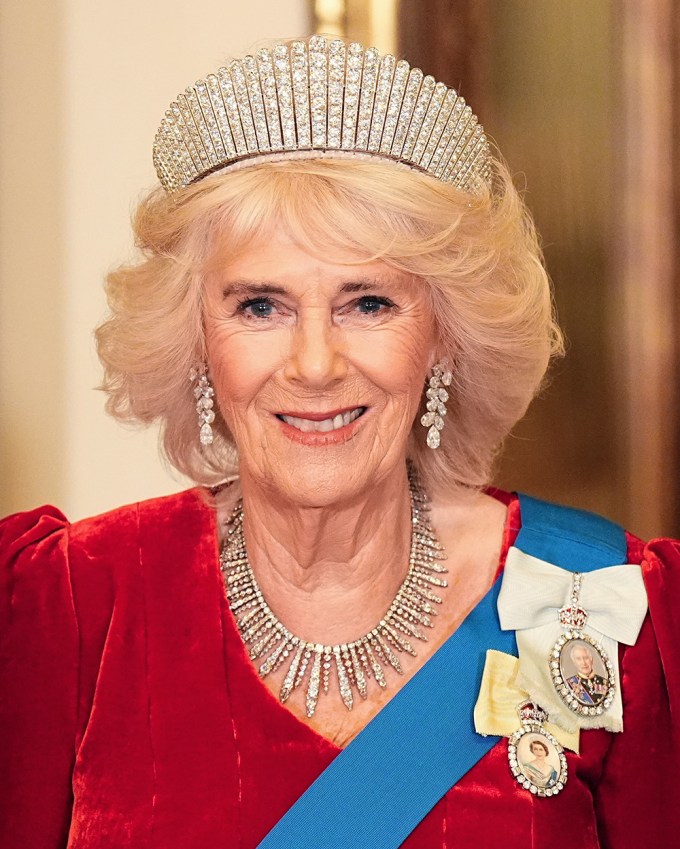
More than a century after her death, Queen Alexandra’s influence can still be seen throughout the British royal jewelry collection. Her heirlooms continue to be worn by Queen Camilla and the Princess of Wales, while her love of natural diamonds, pearls, and versatile jewels helped establish a distinctly modern approach to royal dressing that endures today.
According to Daughters, the continued use of Alexandra’s jewels is about more than tradition. Each time a royal wears a necklace or tiara once owned by Alexandra, Queen Mary, or Queen Elizabeth II, it reinforces the continuity of the monarchy. “It reminds the public that the monarchy is a continuous, unbroken chain, utilising natural diamonds as permanent, unchanging markers of that heritage.”
Though modern audiences often credit Queen Mary or Queen Elizabeth II with defining the grandeur of the royal vault, Berganza argues that Alexandra transformed the collection into something far more fashion-forward. Rather than treating royal jewels as symbols of rank alone, she used them as tools of personal expression, styling them with creativity and individuality.
“She was the one who broke the rigid rules of Victorian jewelry etiquette… treating high jewelry as an extension of a woman’s individual spirit rather than just an institutional uniform,” Daughters says.
