
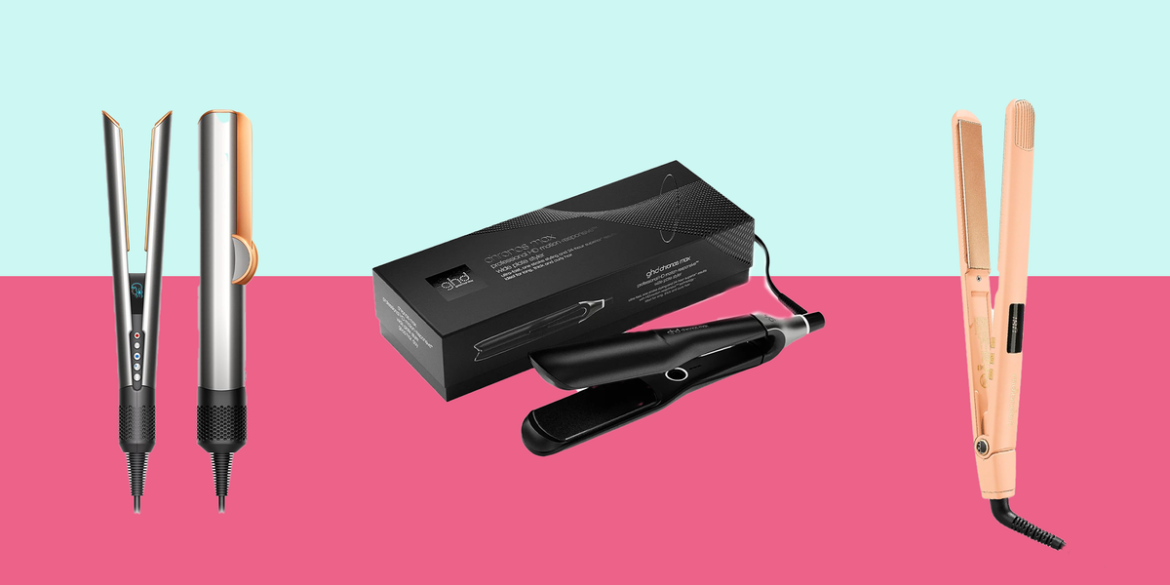
Which hair straighteners are best for my hair type?
- Fine hair: Look for ceramic plates that distribute heat evenly and more gently. Use lower temperature settings to minimise heat damage.
- Frizzy hair: Ionic technology is a must to stop water and humidity “fluffing up” your hair and creating more frizz.
- Thick hair: Larger plates will save you time and reduce heat damage. Metal plates will give you the best and most long-lasting results.
- Afro hair (3C-4C curl types): Consider ceramic-coated plates, which offer a good balance of effectiveness and protection. Steam hair straighteners are a good alternative for powerful styling that do less damage. There’s a set (the L’Oréal Professionnel New Generation Steampod 3.0) on our list above.
How do I choose a good hair straightener?
Straighteners are a big investment, so you need to make sure you’ve got all your hair needs covered in one tool before you make the commitment to buy. If you’re not sure what all those buzzwords mean on the side of the box, we’ve simplified them below, so you can figure out what to prioritise.
Variable temperature settings: this is useful if you’re planning on sharing your device. Lower heat suits fine hair best, while thick or coarse tresses may need more heat to be effective.
Ionic technology: when there’s too much positive charge on each hair strand, they begin to repel each other, making hair static and flyaway. This technology helps to neutralise the charge, smoothing strands down instead.
Ceramic plates: they are slower to warm up than other materials, but they distribute heat more evenly. They tend to be cheaper too, but are more prone to chipping.
Titanium/metal plates: these get very hot quickly but tend to be expensive. Improper usage can cause heat damage, too. We recommend leaving these hair straighteners on your locks for only a few seconds at a time.
Ceramic-coated plates: they usually have a metal base topped with a ceramic layer, combining the best qualities of both materials. The outer layer can chip and wear away over time, but a good-quality model should last you at least three years if stored properly.
Additional accessories: higher priced straighteners may come with accessories such as a heat mat, gloves and a travel case.
How do I know if I need a new pair of straighteners?
Your trusted pair of straighteners should last you between two to three years (depending on how well you look after them).
However, there are a few things to look out for if you’re worried your pair are on their way out.
Scratched plates: after a few years, you may start to notice scratches or even dents on the plates. This can lead to snagging (ouch) and means your hair is more likely to experience heat damage. Hair products can often sink into the dents too, which not only smells unpleasant, but won’t help your hair either.
Struggling to straighten hair: straighteners should get the job done quickly, but if you’re finding it takes longer than normal, it may mean the power has been compromised, which isn’t good for your hair or your plug sockets.
Irregular temperatures: taking longer to straighten your hair may also mean the temperature settings aren’t what they used to be. Failing to reach the max temperature might be kinder on your hair, but it won’t give you the silky-smooth results you’re after.
What are tourmaline hair straighteners?
Hair straighteners with tourmaline plates contain the gem itself. It adds moisture and shine to your ends and leaves strands looking healthier and sleeker. However, it’s not the most durable material, and won’t last as long as titanium or ceramic plates.
Are titanium straighteners better than ceramic?
Hair straighteners may all look fairly similar, but the tech can vary. The big question is: ceramic or titanium plates?
While ceramic plates gradually heat up – making them a safer option for fine hair or those prone to damage – titanium will be your saviour if you’re in a rush, making them not only quick but effective at tackling thicker, more hard-to-style strands.
How to prevent damaging your hair
Hair is most fragile when it’s wet, so make sure it’s completely dry before heat styling. Wet locks can only withstand temperatures of 40-60C, but dry (undamaged) hair can handle up to 185C. Always use the best heat protection spray, too.
How to curl your hair with straighteners
For many, this is a trick as old as time, yet one that seems hard to master. Luckily, our beauty team have written a full fool-proof guide on how to curl your hair with straighteners.
Can you take hair straighteners in hand luggage?
In short, yes! You can take them in hand luggage and in your hold luggage, should you wish. We recommend the ghd wet-to-dry or the Dyson if you want a multi-tasking tool (hair dryer and straightener) for your trip. We doubt you’ll have the baggage allowance for both!
