
1. Introduction
As the mobile ecosystems are getting more mature in 2026, tech accessories are not just functional add-on they are becoming customizable, connected extensions of brand identity.
With the proliferation of Near Field Communication (NFC) and whole integration within the Android ecosystem, tangible things are becoming interactive, designable, programmable, and brand-controlled interfaces.
Almost all Android phones now support NFC natively, and you can now do simple tap-based actions with physical objects without having to download an app.
This transition opens a new that is the physical accessories as a channel are becoming more frequent and more personalized in terms of brand engagement.
2. What Are NFC-Enabled Tech Accessories?
NFC tech products are tangible goods containing NFC chips, which allow immediate communication between the product and the smartphone app.
However, its worth in 2026 is way more than connectivity.
The real transformation lies in customization:
Modern NFC accessories can now be:
– Fully customized in shape, material, and finish
– Programmed with brand-specific interaction logic
– Connected to dynamic, updatable digital content
This represents a structural shift in the industry:
Instead of distributing generic promotional items, brands are now creating programmable physical touchpoints that evolve.
3. The Rise of Custom NFC Identity Accessories
A clear industry trend is emerging:
→ From standardized merchandise → to fully customized identity carriers
Below are some of the most impactful product categories driving this shift.

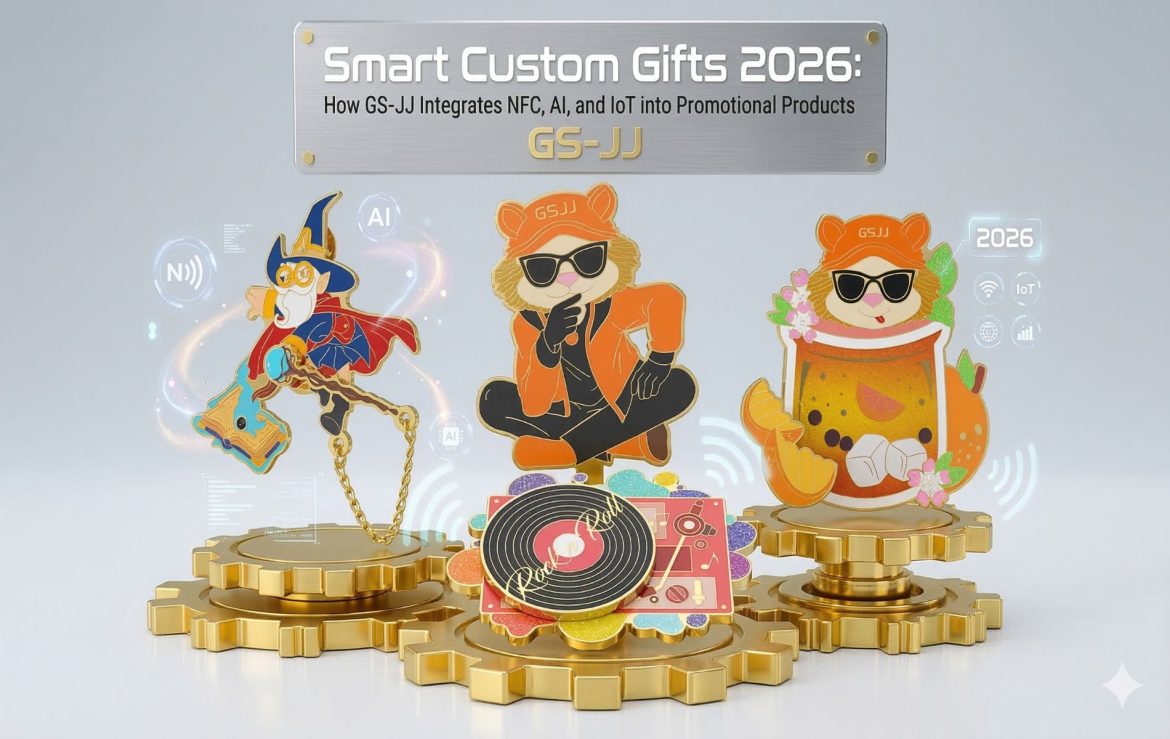
3.1 NFC Smart Lapel Pin: Wearable Brand Identity
NFC Lapel pin is becoming a lightweight but powerful branding tool.
These products are no longer limited to decorative use. When customized with embedded NFC chips, they can link directly to:
– Campaign pages
– Digital portfolios
– Membership systems
And since they are worn out in the open – at events, campuses, communities – they marry visual identity with accessible digital interactivity, making them among the most effective tools for brand recall and user engagement.
3.2 NFC Personalized Keychains: High-Frequency Brand Interaction Points
Among NFC accessories, Personalized keychains stand out due to their daily usage frequency.
Modern Personalized keychains can be programmed to perform multiple digital actions, such as:
– Opening landing pages
– Triggering app downloads
– Sharing digital profiles
– Activating loyalty or access systems
Because they are carried continuously, they function as always-on brand interaction nodes, enabling repeated exposure and long-term engagement.
NFC Metal business cards represent the convergence of premium physical design and digital functionality.
Unlike traditional business cards, they allow:
– Full visual customization aligned with brand identity
– Dynamic digital profiles linked via NFC
– Real-time content updates without reprinting
This is why they are more relevant than ever for professionals and brands that want to convey a high-end, tech-forward identity experience.
3.4 NFC Custom Name Badges: Enterprise-Grade Identity Systems
In enterprise environments, custom name badges are evolving into scalable tools for identity infrastructure.
Beyond basic identification, they can be fully customized in:
– Visual branding (logos, colors, layouts)
– Material and form factor
– NFC interaction logic
When integrated into backend systems, they enable:
– Real-time authentication
– Access control
– Employee or attendee identification
This transforms smart badges from simple identifiers into secure digital identity nodes within organizational ecosystems.
3.5 NFC Custom Lanyards: Continuous Event Interaction Layer
Custom lanyards are now a fundamental part of today’s event-scapes.
When used in conjunction with NFC-enabled pins or embedded with chips, they enable:
– Event check-ins
– Access permissions
– Booth interactions
– Gamified engagement experiences
Because they are worn throughout the entire event journey, they function as continuous, high-visibility interaction channels between brands and participants.
4. Why Customization Is Becoming the Competitive Advantage
4.1 Generic Products vs. Branded Experiences
Standardized accessories offer limited differentiation, while custom NFC products enable immersive brand experiences.
4.2 Static vs. Dynamic Interaction
Traditional products remain static, while NFC-enabled accessories can be continuously updated with new content and functions.
4.3 One-Time Exposure vs. Continuous Engagement
Conventional merchandise delivers one-time exposure, whereas NFC products create long-term engagement loops.
5. The Role of NFC Product Partners
As demand for customization grows, selecting the right production and technology partner becomes critical.
Leading suppliers such as GS-JJ support brands by offering:
– End-to-end customization
– Integrated NFC solutions
– Scalable manufacturing capabilities
– Application-specific deployment for events, marketing, and communities
– Fast-turn production with low or even no minimum order quantity supported by AI-assisted design workflows that accelerate prototyping and customization cycles
This allows brands to go beyond traditional merchandise and create interactive physical-digital brand experiences.
6. Real-World Applications in 2026
Innovative companies are already rolling out NFC-enabled accessories for various use cases:
Events & Exhibitions → smart badges for seamless networking
Creator Economy → NFC pins for identity sharing
Communities (crypto, gaming, fandom) → exclusive interactive merchandise
Campus & Enterprises → access and membership systems
Across all these use cases, customization remains the core driver of value creation.
Industry data further highlights the momentum behind this shift:
- NFC-enabled interaction in event environments has been shown to generate up to 4–5× higher engagement rates compared to QR-code-based interactions, due to frictionless “tap-to-open” behavior.
- Event technology studies indicate that brands using interactive NFC touchpoints report approximately 20–30% higher post-event conversion or follow-up engagement ROI, driven by improved data capture and re-engagement flows.
7. Conclusion
In 2026, tech accessories with NFC are no longer just products, but a new era of tech.
They function as:
– Brand touchpoints
– Identity carriers
– Interaction interfaces
With excellent customised options and the use of NFC, physical things are becoming parts of digital ecosystems.
The way we interact with brands in the future will no longer be limited to the screen — it will be built into the very objects we carry, wear, and use every day.
