
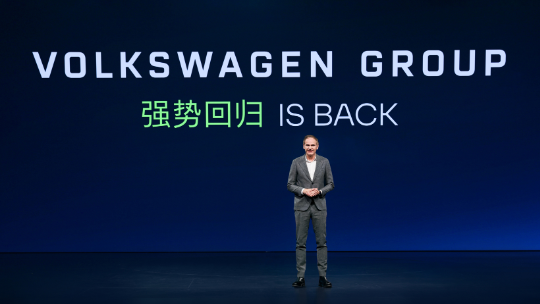
Gasgoo Munich-On April 21, Volkswagen Group kicked off the 2026 Beijing Auto Show with a media night. Having deepened its roots in China for over forty years, the multinational automaker is declaring a “strong return” with the largest product offensive in its history in the country.
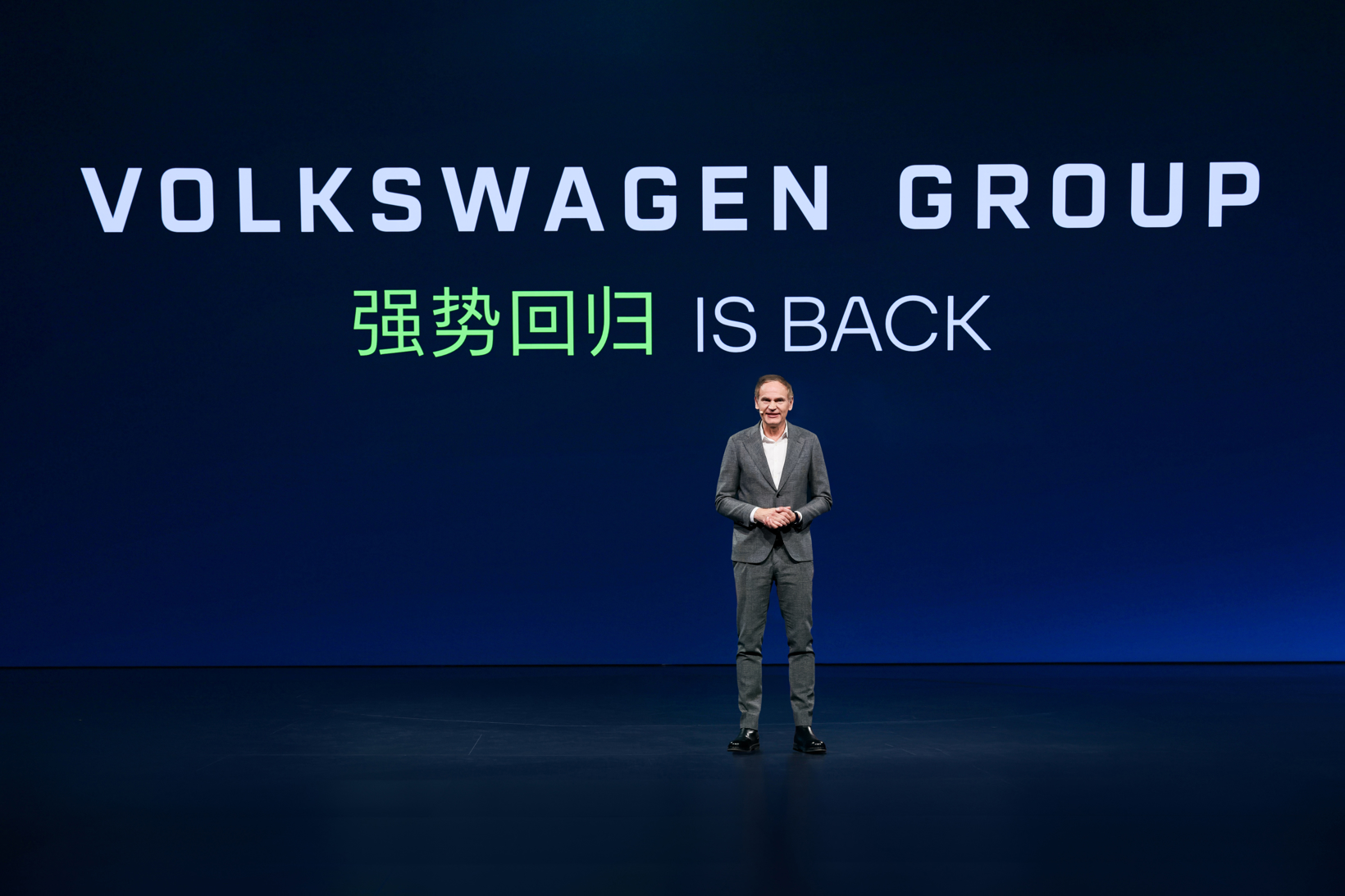
Image Source: Volkswagen Group
Four global debuts, a tech roadmap dubbed “Agentic AI for All,” and a product plan stretching to 2030—behind these headlines lies a systematic bid to seize the initiative after seeing sales slide and market share squeezed in China.
A Two-Pronged Offensive: Product and Technology
Over the past three years, China’s new-energy vehicle market has exploded, with domestic brands and startups rapidly grabbing share. By contrast, while Volkswagen Group launched its ID. series of pure electric models back in 2020, it consistently fell short of Chinese expectations in smart features and OTA update speeds. That dynamic is shifting.
In 2026, the largest product offensive in Volkswagen Group’s China history fully unfolds. Official disclosures reveal the group will launch over 20 new-energy models in China this year across pure electric, plug-in hybrid, and range-extended technologies. By 2027, that number will reach about 30; by 2030, it expands to roughly 50, including about 30 pure electric models.
“In just 36 months, we have created a completely new product roadmap,” Ralf Brandstätter, Executive Director for China at Volkswagen Group, said at the media night. This means the group’s China R&D system has completed a capability shift from “following” to “parallel development” from strategy formulation to product launch.
The four global debuts come from the Volkswagen brand, the Jetta sub-brand, and the AUDI brand, covering different segments from entry-level to high-end:
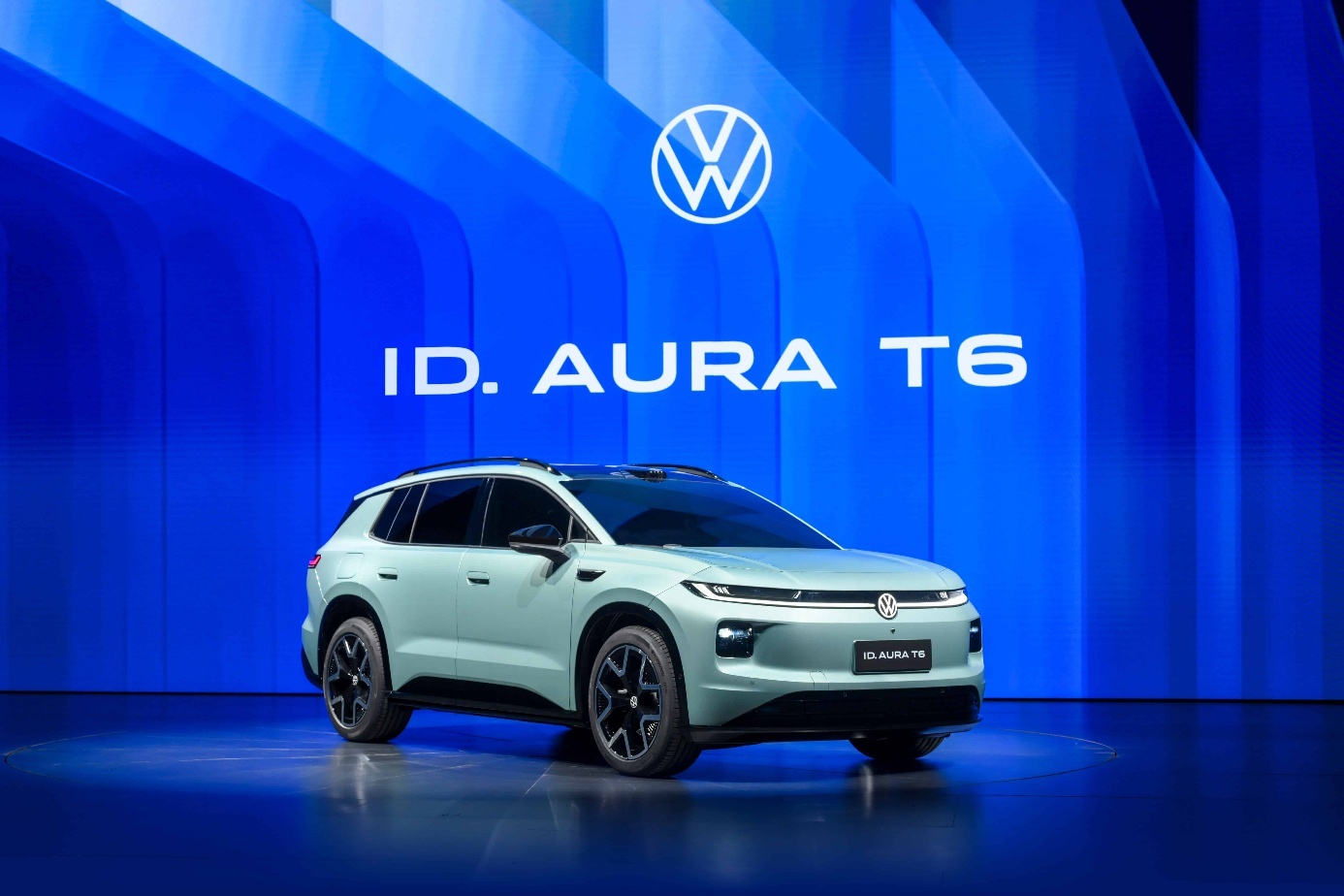
Image Source: Volkswagen Group
The ID. AURA T6 is a pure electric mid-size SUV produced by FAW-Volkswagen. Built on the CEA electronic and electrical architecture, it features an enhanced Level 2 advanced driving assistance system and supports OTA remote upgrades.
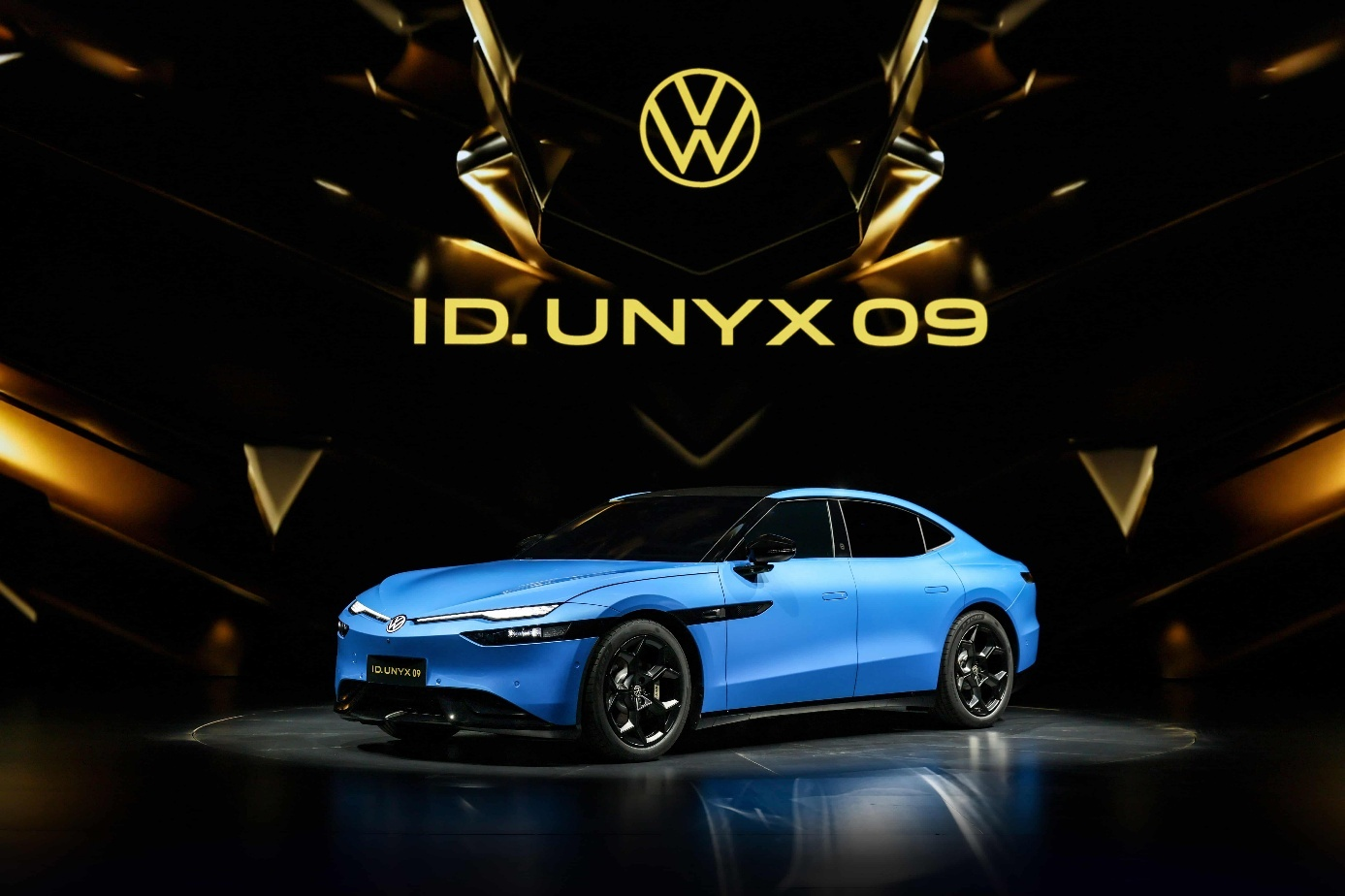
Image Source: Volkswagen Group
The Yu Zhong 09 is a pure electric sedan produced by Volkswagen Anhui and the second model resulting from the partnership with XPENG. The 5-meter-long car is equipped with enhanced Level 2 driver assistance, a high-performance computing platform, and an AI smart assistant.
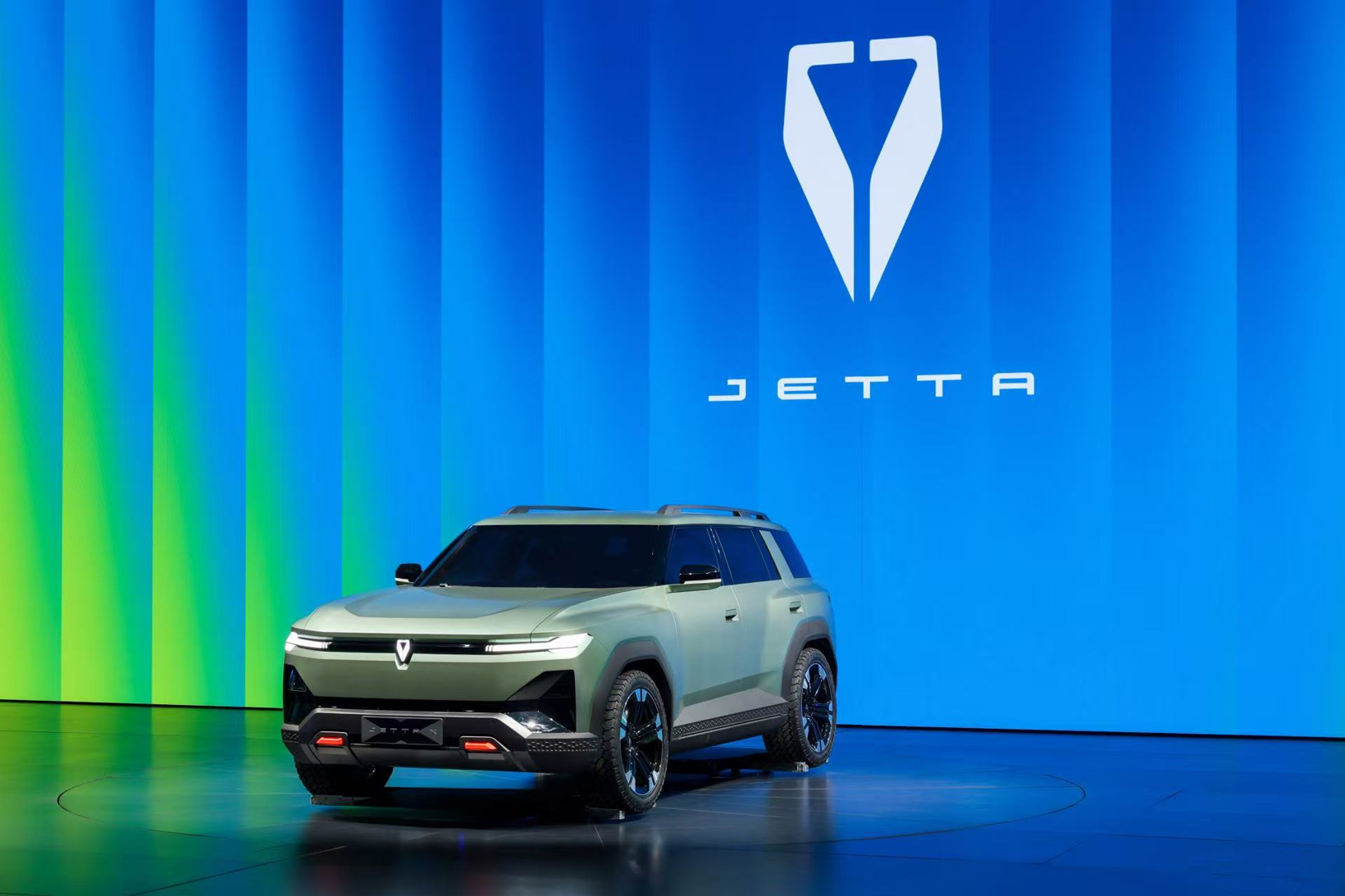
Image Source: Volkswagen Group
The JETTA X is the Jetta brand’s first pure electric concept car, adopting a new “Modern Robust” design language with a boxy silhouette. According to a Jetta executive, the brand plans to launch four new-energy models by 2028. The JETTA X concept will be the second, hitting the market next year with a price tag around 100,000 yuan, while its first product will arrive within 2026, with details expected at this Beijing Auto Show.
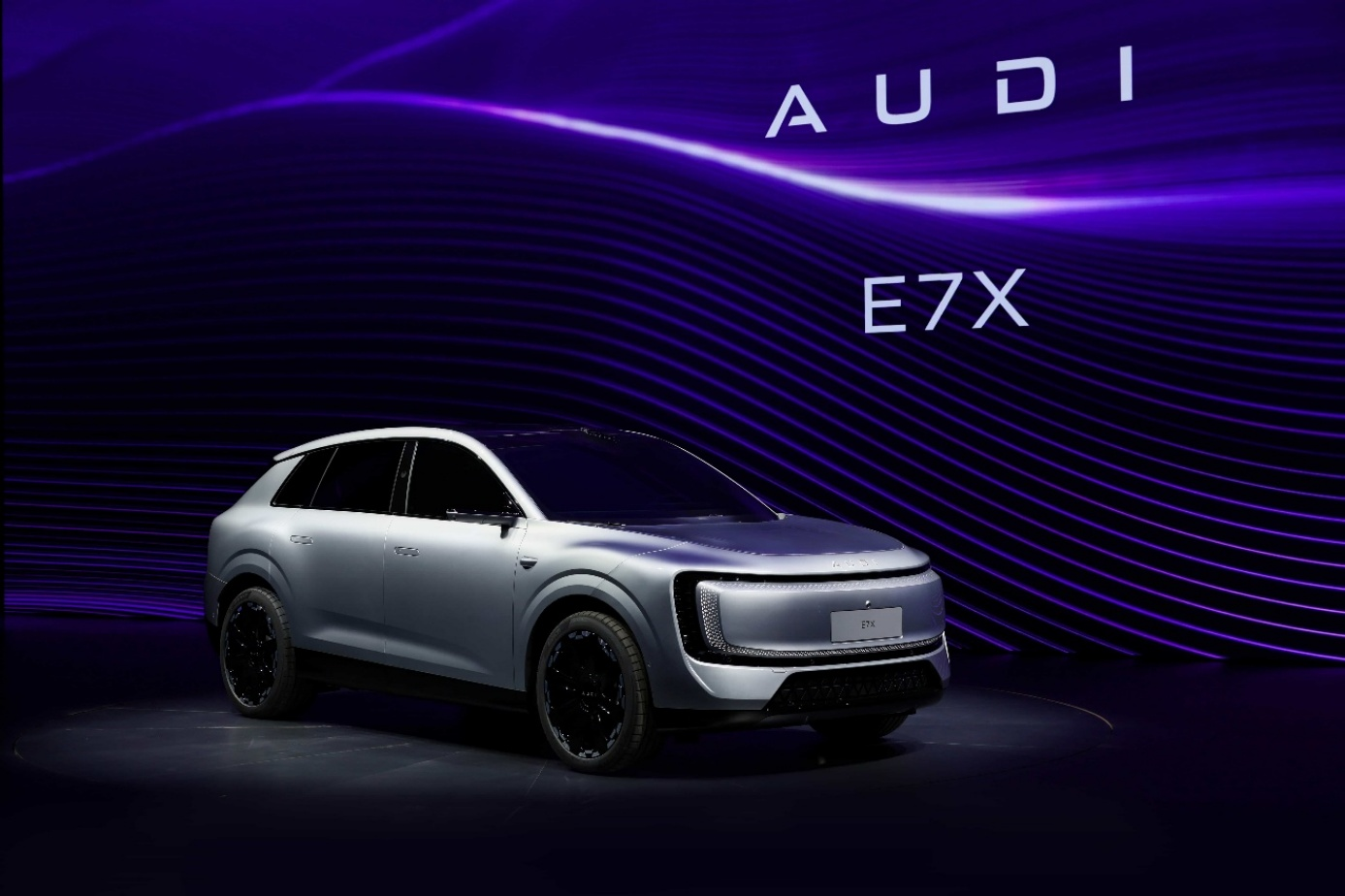
Image Source: Volkswagen Group
The Audi E7X is the AUDI brand’s second mass-production model and its first SUV. Built on the Advanced Digital Platform (ADP) jointly developed with SAIC Motor, it offers 300kW and 500kW power versions and plans to feature Level 3 driver assistance in the future.
Taken together, the four models span different price bands and customer groups, signaling Volkswagen Group’s strategic intent to achieve “full-lineup coverage” in the new-energy market—a marked difference from the past two years when the ID. series focused primarily on the 200,000 to 300,000 yuan segment.
Beyond the four global debuts, the media night saw Volkswagen Group unveil its “Agentic AI for All” roadmap, clarifying the timeline for scaling AI capabilities in vehicle systems:
Starting in the second half of 2026, all models based on the CEA architecture will feature on-board AI agents. Using locally trained large language models for natural language interaction, these agents differ from current command-based voice assistants by actively understanding user needs and executing complex tasks across vehicle operating systems through natural dialogue. The system runs entirely on the vehicle, keeping data local;
From 2027, a new generation of CEA 2.0 architecture will launch, creating a “cockpit and driving integration” experience on a more powerful central computing platform. This will enable coordinated operation of multiple on-board AI agents and gradually cover all powertrain types, making Volkswagen Group the first foreign automaker to deploy on-board AI agents at scale in China.
In terms of implementation, Volkswagen Group isn’t starting from scratch. By the end of 2025, CARIZON, the group’s intelligent driving competency center in China, had delivered its first-generation Level 2 advanced driving assistance system, enabling highway navigation assist and memory parking functions on the Yu Zhong 07 model.
Multiple models launching in the second half of 2026 will carry the enhanced Level 2 system, with navigation assist expanding from highways to urban roads to deliver “point-to-point” driving assistance. This marks the entry of Volkswagen’s local intelligent driving R&D into the mass application stage. Unlike the early reliance on supplier turnkey solutions, CARIZON gives Volkswagen complete capabilities from algorithm development to system integration.
A Qualitative Leap in Localization and Competitive Pressure
Judging by product and technology alone, Volkswagen Group’s release might not seem “disruptive”—domestic brands are already ahead in smart cockpits and navigation assist. But what deserves attention is the shift in the R&D system behind these capabilities.
In 2023, Volkswagen Group established VCTC in Hefei, its largest R&D center outside Germany, focusing on intelligent connected vehicles. This institution changed the previous model where R&D in China had “two ends outside”—decision-making and technical verification both happened in Germany.
The core value of VCTC lies in shortening the decision chain. Previously, getting approval and verification for the electronic architecture and smart cockpit solutions of Volkswagen’s China models took over 18 months from the German headquarters. With VCTC, local teams can interface directly with China’s supply chain and user needs, compressing the development cycle to under 24 months—the “Yu Zhong 09” debuted here is a case in point.
Additionally, CARIZON, the joint venture with Horizon Robotics, and partnerships with ThunderSoft in smart cockpits form a localized technology ecosystem. This hybrid model of “self-development + joint venture + partnership” maximizes the advantages of China’s intelligent supply chain while ensuring technological control.
Brandstätter’s mention of “complete forward development capability from concept innovation to technical verification” at the media night effectively summarizes this shift. In the past, Volkswagen in China focused on “local adaptation”; now, it is about “local definition.”
However, it must be noted that China’s new-energy market in 2026 is highly polarized: the 200,000 to 300,000 yuan bracket is contested by Tesla, BYD, XPENG, and NIO; the 300,000+ yuan range is held by Li Auto, NIO, and Huawei-backed brands; while the 100,000 to 200,000 yuan segment is dominated by BYD, Aion, and Geely Galaxy.
Volkswagen’s four new cars target these segments, but the core challenge is whether they can cure the ID. series’ chronic lack of localization—infotainment experience, OTA frequency, and smart driving features have all drawn criticism. The CEA architecture and on-board AI agents offer a technical solution, but their actual effectiveness remains to be seen.
The Ultimate Test of Scale and Execution
Despite fierce competition, Volkswagen Group retains two hard-to-replicate advantages: scale and channel.
In 2025, Volkswagen Group China, together with its joint ventures, delivered approximately 2.69 million vehicles, with a cumulative customer base of about 50 million. This volume gives Volkswagen significant cost advantages in supply chain procurement, manufacturing, and after-sales service. For an entry-level model like the JETTA X, economies of scale are key to controlling costs and achieving competitive pricing. Meanwhile, Volkswagen boasts over 2,000 dealerships in China, covering first- to fifth-tier cities. By comparison, startup brands typically have 300 to 500 stores, concentrated in higher-tier cities.
Volkswagen’s channel advantage means that when its new-energy product lineup is sufficiently rich, it can rapidly penetrate from top-tier cities down to lower-tier markets. But that advantage relies on product strength. If products cannot match competitors in smart experiences, wide channel coverage will not translate into sales.
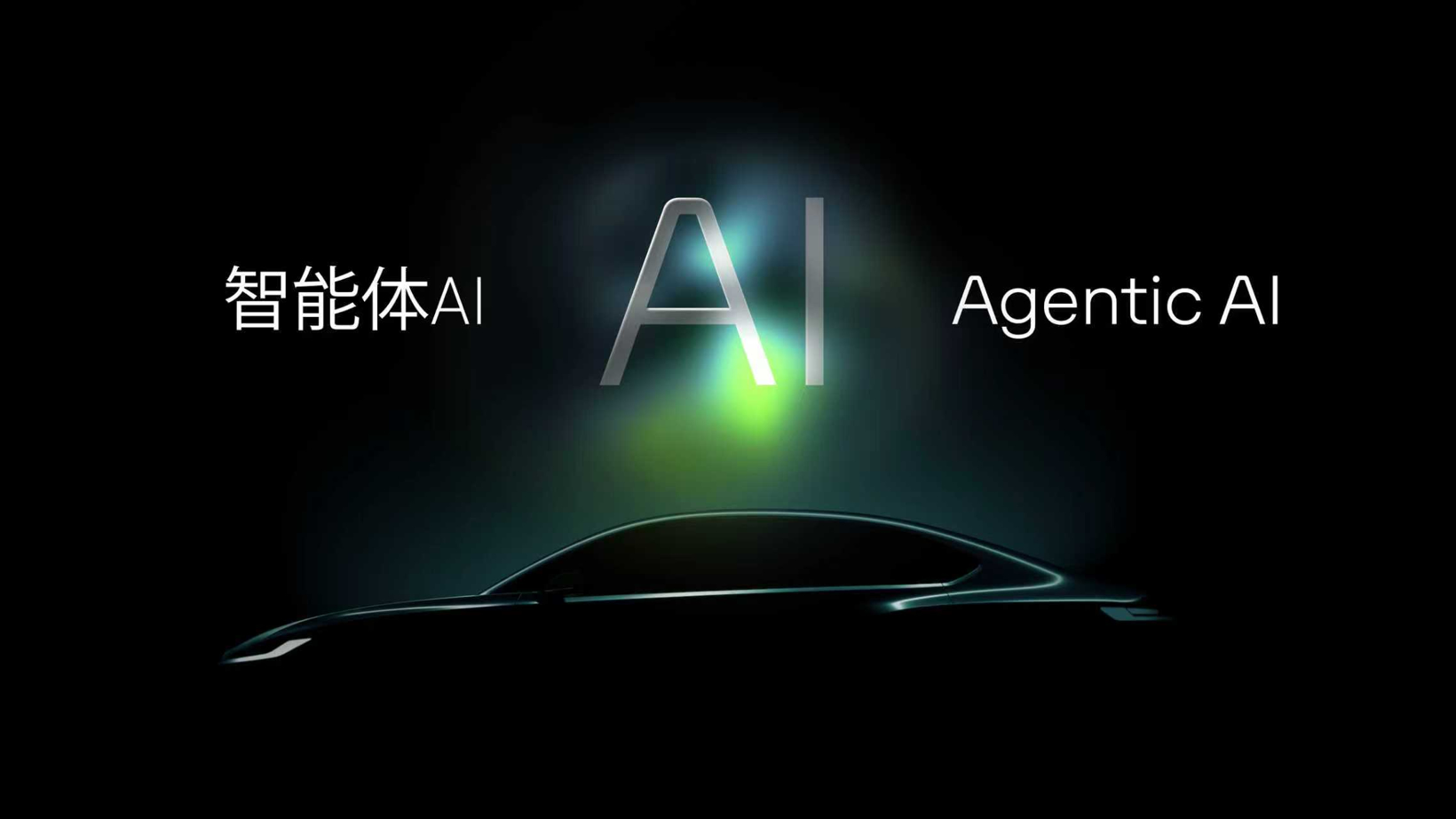
Image Source: Volkswagen Group
Strategically, the signal from Volkswagen Group’s media night is clear: the product offensive has started, the AI roadmap is defined, and the local R&D system is built. But whether a “strong return” materializes depends on three key variables:
First, can the delivery rhythm stay on schedule? Launching over 20 new-energy models within a year is a massive test of supply chain management, production ramp-up, quality control, and dealer training. Any delay in a single link could disrupt the overall tempo.
Second, can the intelligent experience truly achieve “localization”? The performance of the on-board AI agent, the reliability of the enhanced Level 2 system in urban conditions, and the frequency of OTA updates—these are tangible differences for users. If these experiences fail to meet Chinese expectations, the technological sophistication won’t translate into market competitiveness.
Third, balancing price and value. In a market gripped by a price war, Volkswagen Group must find a reasonable balance between brand premium, product capability, and pricing. Set the price too high and market share slips; too low, and brand value and profitability suffer.
Oliver Blume, Chairman of the Board of Management of Volkswagen Group, stated at the media night: “China is the core of Volkswagen Group’s global transformation.” This line has been repeated for the past two years; now is the moment to verify execution.
The 2026 Beijing Auto Show officially opens on April 24. At that time, Volkswagen Group brands—including Volkswagen, Jetta, Audi, and Porsche—will showcase their product matrices. For Chinese consumers and industry observers, the real highlight isn’t how many new cars are launched, but whether these products can actually alter Volkswagen’s competitive position in China’s new-energy market after they go on sale. After all, in today’s Chinese auto market, “launches” are no longer scarce; “deliveries” and “experiences” are the true touchstones.
