
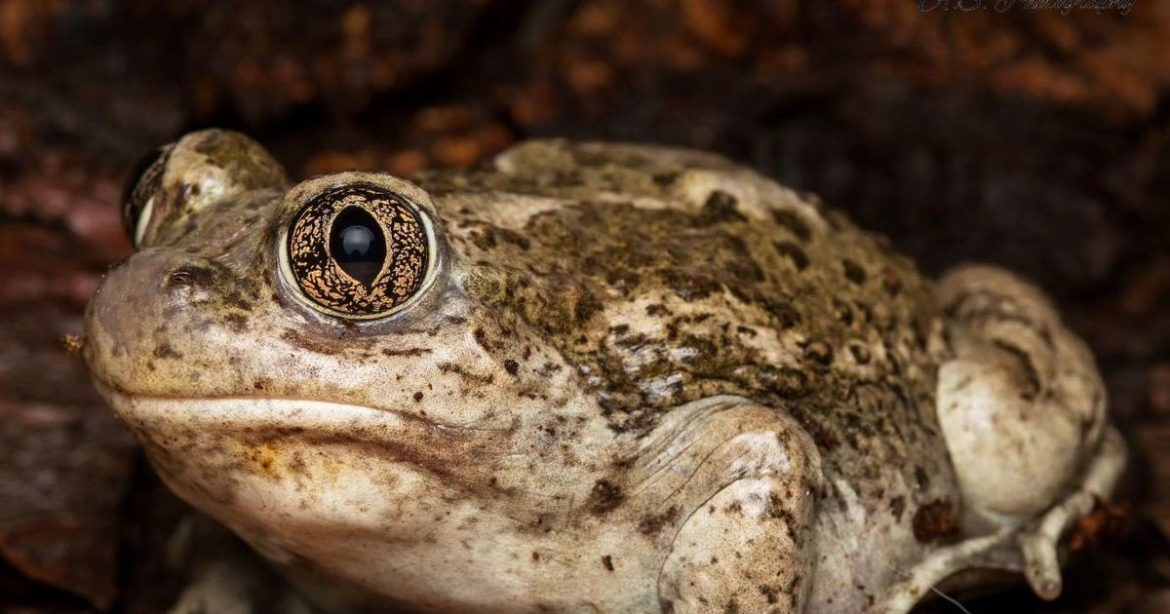
The Great Basin spadefoot toad reeks of peanuts, has shovels on its feet and likes to hunker below ground until it rains or thunders overhead. It also makes a sound akin to a dozing duck.
And since today marks the first day of Amphibian Week 2026, it is a perfect time to highlight one of the weirder critters found in the Inland Northwest. From the Spokane and Tri-Cities areas to Clarkston and the Palouse, they live in semiarid habitats and covet the little rainfall we receive.
“They’re fairly common, but not easy to find,” said Charles Peterson, professor emeritus of herpetology at Idaho State University. “They can remain buried in sandy or loose soils for months at a time and emerge to eat and breed only in certain conditions.”
Great Basin spadefoots (or is it spadefeet?) burrow underground anywhere from several inches deep to several feet, Peterson explained. It takes sounds and vibrations caused by falling rain or claps of thunder to lure them to the surface.
Because our region experiences drought conditions later in summer, you’re most likely to see or hear spadefoots this time of year and into early summer when it rains.
Less than the size of a quarter, the Great Basin spadefoot is among seven spadefoot species found in North America. And you know what? It isn’t truly a toad, according to the U.S. Fish and Wildlife Service, even though it’s frequently labeled as one.
Instead, the spadefoot hails from a family of toad-like amphibians named for the hard, spade-shaped protrusions on their hind feet that function like shovels to dig their burrows. These protrusions, called tubercles – along with their vertical, cat-like pupils that give them great night vision – distinguish the spadefoot from true toads.
During rainfall, hundreds and even thousands of these shovel-wielding amphibians hop toward standing pools of water to participate in a breeding frenzy. Water sources can be temporary or permanent, ranging from ponds and flooded fields to puddles and even tire ruts on dirt roads.
Once the males arrive to a water body suitable for breeding, they produce a loud mating call to attract prospective sexual partners. To get an idea of what they sound like, imagine a flock of snoring ducks.
Qua-qua-qua.
“Their duck-like calls really carry at night,” Peterson said. “You can hear them from a significant distance away.”
To seal the deal, spadefoots must mate quickly to produce offspring before water dries up, he added. Eggs hatch in just two to three days. Then the tadpoles need to remain underwater for several weeks to transform into lung-breathing adults that will spend most of their lives on land.
Migrating en masse to and from breeding areas, spadefoots risk getting struck by vehicles or snatched by predators, such as garter snakes, owls and coyotes, Peterson said. Those that survive can live up to 13 years.
With their plump little olive-green bodies, relatively smooth skin and large golden-yellow eyes, you might be tempted to pick up a Great Basin spadefoot. If so, keep in mind that they can emit a skin secretion that smells “similar to peanuts that can also make you sneeze,” according to the University of Washington’s Burke Museum.
