
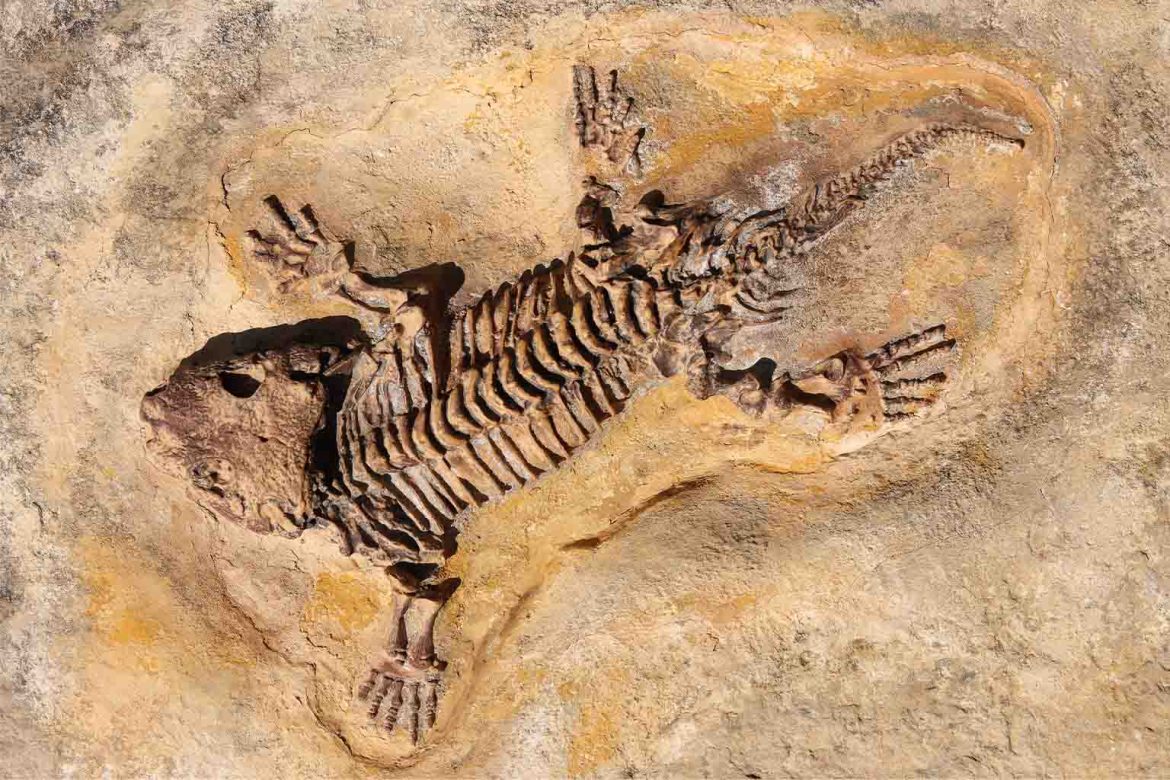
Canberra, May 6 (SANA) Researchers in Australia have identified a rare fossil of a giant predatory amphibian dating back around 240 million years after it was discovered embedded in a garden retaining wall, according to a study published by the University of New South Wales and the Australian Museum.
According to ScienceDaily, the extinct species, named Arenaerpeton supinatus, lived in freshwater environments during the Triassic period and is considered one of the most significant fossil discoveries in Australia in recent decades.
The fossil was originally uncovered in the 1990s by a local resident collecting stones from a quarry to build a garden wall before later being transferred to the Australian Museum in Sydney.
Researchers said recent analysis showed the specimen was exceptionally well preserved, containing an almost complete skeleton along with rare traces of skin and soft tissue. The find is regarded as one of the most important examples of extinct amphibians known as temnospondyls.
Scientists described the animal as a river predator measuring about 1.2 meters in length, resembling a giant modern salamander with sharp teeth and prominent fangs. They said it was among the dominant predators in its ecosystem at the time.
The species is believed to have lived in what is now the Sydney Basin, feeding on ancient fish and adapting to major environmental changes during that geological period.
Researchers said the discovery offers valuable insight into Australia’s geological and biological history and contributes to understanding the evolution of life before the age of dinosaurs.
N.J/ABD
