
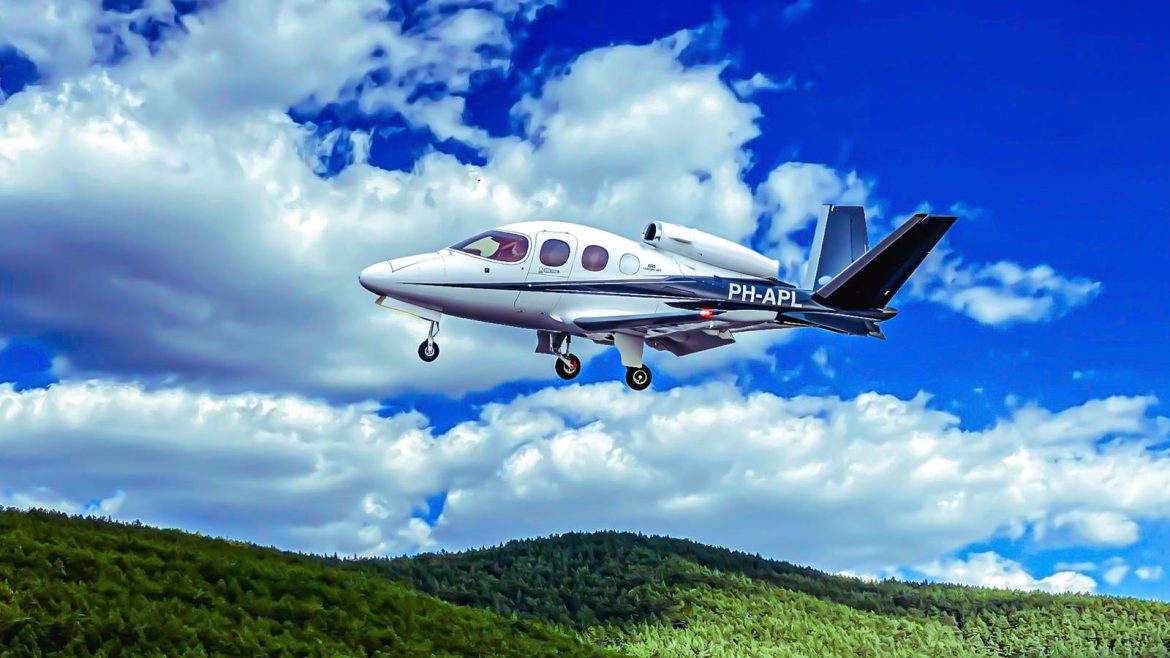
Small business jets have attracted many individuals and corporate customers in recent years. With the jets’ ability to carry 4–6 passengers, these are some of the most fuel-efficient jets in aviation. This article highlights the five smallest business jets.
5
HondaJet
Length: 42 ft 7 in (13 m)
- Crew: 1 or 2 pilots
- Capacity: 4 or 5 passengers
- Wingspan: 39 ft 9 in
- Height: 14 ft 11 in (4.54 m)
- Max takeoff weight: 10,600 lb (4,808 kg)
- Maximum speed: Mach 0.7
- Cruise speed: 422 kn (782 km/h; 486 mph) at FL300
- Range: 1,223 NM (2,265 km; 1,407 mi)
At the bottom of our list of smallest private jets is the HondaJet HA-420, which measures 13 meters long. The light business jet produced by Honda Aircraft Company can accommodate up to six people, including pilots. The type performed its maiden flight in December 2003 and received FAA certification in 2015.

Two GE Honda HF120 turbofan engines power the jet, producing 2,050 lbf (9.1 kN) of takeoff thrust. It is one of the most technologically advanced jets in the private aviation market, featuring a unique over-the-wing engine design. The manufacturer has delivered over 250 examples of the HondaJet.
What Makes The HondaJet 2600 So Special?
The HondaJet 2600 is special because it surpasses the offerings of traditional light jets with its incredible range, speed, and fuel efficiency.
4
Embraer Phenom 100EV
Length: 42 ft 1 in (12.8 m)
- Crew: 1 or 2 pilots
- Capacity: 4 or 5 passengers
- Wingspan: 12.3 m (40 ft 4 in)
- Height: 4.35 m (14 ft 3 in)
- Max takeoff weight: 4,800 kg (10,582 lb)
- Maximum speed: Mach 0.7
- Cruise speed: 750 km/h (470 mph, 400 kn)
- Range: 2,182 km (1,356 mi, 1,178 NM)
- Service ceiling: 12,497 m (41,001 ft)
Number four on our list is the Embraer Phenom 100EV, another light jet with a length of 12.8 meters. Designed and developed by the Brazilian aerospace manufacturer Embraer, the jet can accommodate up to six people, including pilots. The type performed its maiden flight in July 2007 and received the FAA certification in December 2008.

Two Pratt & Whitney Canada PW617F1-E turbofan engines power the Phenom 100EV, each producing 1,730 lbf (7.7 kN) of takeoff thrust. More than 400 examples of the Phenom 100 have been delivered since the production began in 2008.
5 Changes That Were Made On The Embraer Phenom 100EV
The aircraft is much superior to the original Phenom 100.
3
Stratos 716X
Length: 41 ft 1 in (12.5 m)
- Crew: one or two pilots
- Capacity: 6 seats max (including flight deck)
- Wingspan: 41.5 ft (12.7 m)
- Height: 11.9 ft (3.7 m)
- Max takeoff weight: 8,580 lb (3,900 kg)
- Maximum speed: 0.7 Mach
- Range: 1,489 NM (1,712 mi, 2,740 km)
- Service ceiling: 41,000 ft (12,500 m)
Number three on our list is the Stratos 716X jet, which is 12.5 meters long. The jet, designed and developed by Stratos Aircraft, can accommodate six people, including pilots. The aircraft was launched in 2018 and has since been in the testing phase. The 716 has been tested at speeds up to Mach 0.73 at altitudes reaching 41,000 ft.

According to Stratos Aircraft,
“With an unwavering dedication to meticulous engineering and an unrelenting commitment to excellence, the Stratos 716 raises the bar and sets new industry standards for speed, range, and overall performance.”
2
Eclipse 500
Length: 33 ft 6 in (10.2 m)
- Crew: one or two pilots
- Capacity: 6 seats max (including flight deck) / 2,400 lb (1,089 kg) useful load
- Wingspan: 37.9 ft (11.6 m)
- Height: 11.0 ft (3.4 m)
- Max takeoff weight: 6,000 lb (2,722 kg)
- Maximum speed: 370 kn (430 mph, 690 km/h) Max Cruise
- Range: 1,125 NM (1,295 mi, 2,084 km)
- Service ceiling: 41,001 ft (12,497 m)
The runner-up on our list is the Eclipse 500, with a length of 10.2 meters. Designed and developed by Eclipse Aviation, the jet can accommodate up to six people, including pilots. The type performed its first flight in August 2002 and was introduced to the market in December 2006.

Two Pratt & Whitney Canada PW610F turbofan engines power the Eclipse 500, each producing 900 lbf (4.0 kN) of takeoff thrust. Between December 2006 and November 2008, the manufacturer produced 260 examples of the jet.
The Rise And The Fall Of The Eclipse 500 Light Business Jet
Over 250 business jets were produced from 2006 to 2008.
1
Cirrus Vision Jet
Length: 30 ft 11 in (9.4 m)
- Crew: one
- Capacity: six passengers
- Wingspan: 38 ft 9 in (11.8 m)
- Height: 10 ft 11 in (3.32 m)
- Gross weight: 6,000 lb (2,722 kg)
- Maximum speed: 311 kn (358 mph, 576 km/h) maximum cruise speed
- Cruise speed: 305 kn (351 mph, 565 km/h)
- Range: 600 NM (690 mi, 1,100 km) with 1,200 lb (544 kg) \
- Service ceiling: 31,000 ft (9,400 m)
Topping our list of smallest private jets is the Cirrus SF50 Vision Jet, which measures just 9.4 meters in length. This light business jet produced by Cirrus Aircraft can accommodate up to seven people, including a pilot. The prototype first flew in July 2008, and the first production aircraft took to the skies in May 2016.

A single Williams FJ3–5A turbofan engine powers the aircraft, generating up to 1,850 lbf (8.2 kN) of takeoff power. The jet features some of the most unique safety features, including the Cirrus Airframe Parachute System® (CAPS®) and Safe Return™ emergency autoland system. The manufacturer has delivered over 500 examples of the Vision Jet.
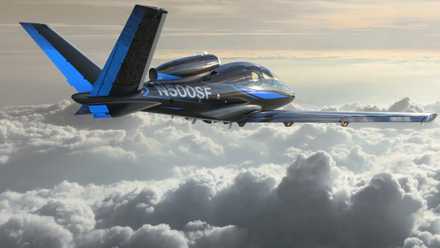
Single-Engine Private Jet: How The Cirrus Vision Jet Came To Be
The notion of a single-engine jet was once seen as improbable, if not impossible – until the Vision Jet.
