
Introduction
Jewelry has long represented more than adornment. Across cultures and generations, it has symbolized wealth, status, love, celebration, and personal identity. Whether crafted from gold, silver, diamonds, gemstones, or innovative alternative materials, jewelry continues to hold a unique place in societies around the world.
Today, the jewelry industry stands at a fascinating crossroads where traditional craftsmanship meets modern technology. Consumers are increasingly seeking personalized designs, sustainable sourcing practices, and seamless digital shopping experiences. At the same time, rising disposable incomes and expanding urban populations are creating new opportunities for manufacturers and retailers worldwide.
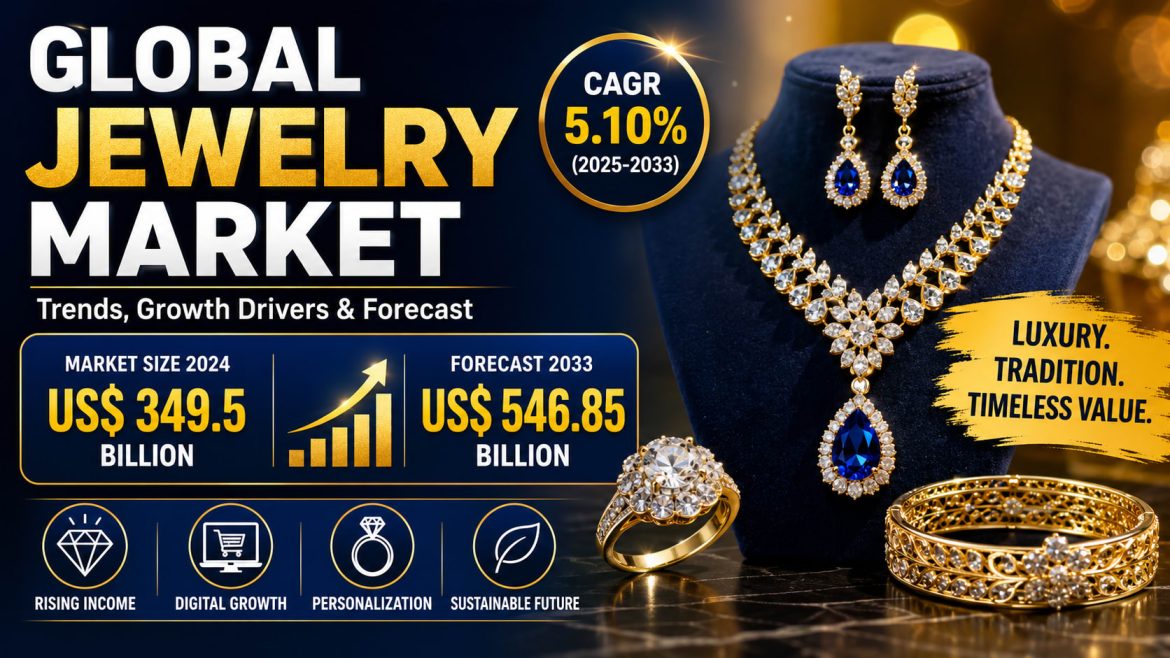
According to Renub Research, the Global Jewelry Market was valued at US$ 349.5 billion in 2024 and is projected to reach US$ 546.85 billion by 2033, growing at a CAGR of 5.10% during 2025–2033. This steady growth highlights the industry’s resilience and its ability to adapt to changing consumer preferences.
Rising Disposable Income Continues to Fuel Jewelry Demand
One of the strongest factors supporting market expansion is increasing disposable income, particularly in emerging economies. As economic conditions improve across countries such as India, China, Indonesia, and several Middle Eastern nations, consumers are allocating more spending toward lifestyle and luxury products.
Jewelry remains a preferred purchase because it serves both emotional and financial purposes. Gold jewelry, for example, is often viewed as a long-term investment while simultaneously functioning as a fashion accessory.
Urbanization is also influencing purchasing behavior. As more people move into cities, exposure to global fashion trends increases, encouraging consumers to explore contemporary jewelry designs and premium brands. Growing middle-class populations are becoming increasingly willing to invest in fine jewelry that reflects their personal style and social status.
Digital Transformation Is Reshaping Jewelry Retail
The jewelry industry has experienced significant changes due to the rapid growth of e-commerce platforms. Consumers can now browse thousands of products, compare prices, read reviews, and make purchases without visiting physical stores.
Technology has enhanced online shopping experiences through virtual try-on tools, augmented reality applications, and personalized recommendations. These innovations help customers visualize products before purchasing, reducing uncertainty associated with online jewelry shopping.
Social media platforms have become essential marketing channels for jewelry brands. Influencers, celebrities, and digital creators regularly showcase collections to millions of followers, generating brand awareness and driving consumer engagement.
Millennials and Generation Z consumers, in particular, prefer digital-first shopping experiences. Their purchasing decisions are heavily influenced by online content, making digital transformation a critical growth driver for the industry.
Cultural Significance Sustains Global Demand
Jewelry maintains deep cultural and emotional importance in many regions worldwide. In countries such as India, jewelry is closely associated with weddings, religious ceremonies, festivals, and family traditions.
Gold remains especially significant across South Asia and the Middle East, where it symbolizes prosperity, success, and good fortune. Families often purchase jewelry as part of long-standing cultural practices, ensuring consistent demand regardless of short-term economic fluctuations.
As global migration increases, cultural traditions are spreading across international markets. Communities living abroad continue purchasing jewelry for weddings and celebrations, creating new opportunities for retailers in North America, Europe, and other regions.
This cultural foundation provides a level of market stability that many other luxury industries struggle to achieve.
Personalization Is Emerging as a Powerful Trend
Modern consumers increasingly seek products that reflect their individuality. Personalized jewelry has become one of the industry’s fastest-growing segments, driven by demand for unique and meaningful pieces.
Customized necklaces featuring names, engraved bracelets, birthstone rings, and symbolic pendants have gained significant popularity. These products allow consumers to express personal stories and commemorate important milestones.
Technological advancements such as 3D printing and digital design software have enabled manufacturers to offer customized solutions more efficiently than ever before. Customers can now participate directly in the design process, creating pieces tailored to their preferences.
Younger consumers especially value authenticity and individuality, making personalization a major growth opportunity for jewelry brands worldwide.
Branded Jewelry Gains Consumer Trust
The market is witnessing strong growth in branded jewelry sales. Consumers increasingly prefer established brands that provide quality assurance, certification, and reliable customer service.
Luxury brands have successfully leveraged their reputation for craftsmanship and exclusivity to attract affluent consumers. At the same time, mid-range jewelry companies are expanding their product offerings to appeal to aspirational buyers seeking premium experiences.
Brand recognition plays an important role in purchase decisions, particularly for high-value items such as diamond rings and luxury watches. Many consumers view branded jewelry as a safer investment due to guaranteed authenticity and resale value.
As a result, both international and regional brands are expanding their retail footprints and strengthening their online presence.
Men’s Jewelry Segment Continues Expanding
The men’s jewelry market is experiencing remarkable growth as changing fashion trends encourage greater acceptance of jewelry among male consumers.
Products such as bracelets, chains, rings, cufflinks, and luxury watches are becoming increasingly popular among younger demographics. Fashion brands and luxury houses are introducing dedicated men’s collections designed to meet evolving consumer preferences.
Social media, celebrity endorsements, and changing perceptions of masculinity have all contributed to the growth of this segment. Gender-neutral and contemporary jewelry designs are further broadening market opportunities.
Industry analysts expect men’s jewelry to remain one of the fastest-growing categories throughout the forecast period.
Challenges Facing the Jewelry Industry
Despite strong growth prospects, the industry faces several challenges that could affect profitability and long-term sustainability.
Volatility in Precious Metal Prices
Jewelry manufacturers remain highly dependent on raw materials such as gold, silver, platinum, and diamonds. Price fluctuations can significantly impact production costs and retail pricing strategies.
Sharp increases in gold prices often influence consumer purchasing behavior, encouraging buyers to opt for lighter pieces or alternative materials.
Ethical Sourcing Concerns
Consumers today are more aware of environmental and ethical issues surrounding jewelry production. Concerns regarding conflict diamonds, mining practices, labor conditions, and environmental damage are placing pressure on brands to improve transparency.
Companies are responding by adopting responsible sourcing programs, utilizing recycled materials, and promoting sustainable manufacturing practices.
Brands that fail to meet growing consumer expectations regarding sustainability risk reputational damage and declining customer loyalty.
Regional Market Insights
United States
The United States remains one of the world’s largest jewelry markets. High consumer spending, strong gifting traditions, and advanced retail infrastructure continue supporting demand.
Online sales are expanding rapidly, while sustainability and lab-grown diamonds are gaining popularity among environmentally conscious consumers.
The U.S. market also benefits from major seasonal shopping events, including Valentine’s Day, Mother’s Day, and Christmas.
France
France occupies a prominent position in the global luxury jewelry industry. Renowned for exceptional craftsmanship and heritage brands, the country continues attracting affluent consumers from around the world.
Tourism remains an important contributor to jewelry sales, while sustainability initiatives are gradually influencing purchasing decisions among younger luxury buyers.
India
India is one of the largest jewelry-consuming nations globally. Weddings, festivals, and cultural traditions drive significant demand for gold jewelry throughout the year.
Government hallmarking initiatives and increased participation from organized retailers are improving transparency and consumer confidence.
Growing urbanization and digital adoption are accelerating market modernization across the country.
Saudi Arabia
Saudi Arabia’s jewelry sector is evolving rapidly due to economic diversification efforts and changing consumer lifestyles.
Younger consumers are increasingly embracing international brands and modern jewelry designs. Meanwhile, traditional gold and diamond jewelry continue maintaining strong cultural relevance.
Vision 2030 initiatives are expected to support further growth through retail expansion and increased tourism.
10 Recent Developments from Leading Jewelry Companies
Tiffany & Co. expanded its high-jewelry collections with exclusive luxury experiences targeting affluent consumers.
Pandora increased investments in lab-grown diamond collections to strengthen sustainability commitments.
Chow Tai Fook accelerated digital transformation initiatives across Asian markets.
Louis Vuitton expanded its fine jewelry portfolio with new premium gemstone collections.
Richemont strengthened omnichannel retail capabilities across multiple luxury brands.
Graff introduced limited-edition diamond collections targeting ultra-high-net-worth individuals.
Signet Jewelers enhanced AI-powered customer personalization tools across its retail network.
H. Stern expanded its sustainable sourcing programs and ethical gemstone procurement initiatives.
CaratLane launched its first international retail store in New Jersey, marking a major global expansion milestone.
Angara officially entered the Indian market through a digital-first strategy with plans for physical retail expansion.
Future Outlook
The future of the global jewelry market appears highly promising. Consumer demand for luxury products, personalized designs, sustainable sourcing, and digital shopping experiences continues creating new growth opportunities.
Brands that successfully combine craftsmanship, innovation, transparency, and customer engagement will be best positioned to capture market share in an increasingly competitive environment.
Emerging technologies, evolving fashion trends, and expanding middle-class populations across developing economies are expected to shape the industry’s next phase of growth.
Final Thoughts
Jewelry has remained relevant for thousands of years because it transcends simple fashion. It represents emotions, memories, cultural traditions, and personal expression. As consumers continue seeking meaningful and customized products, the industry is adapting through innovation and digital transformation.
With the Global Jewelry Market expected to grow from US$ 349.5 billion in 2024 to US$ 546.85 billion by 2033, the sector is entering a new era where tradition and technology coexist. Companies that embrace sustainability, personalization, and customer-centric experiences will likely emerge as the industry’s strongest performers throughout the coming decade.
