
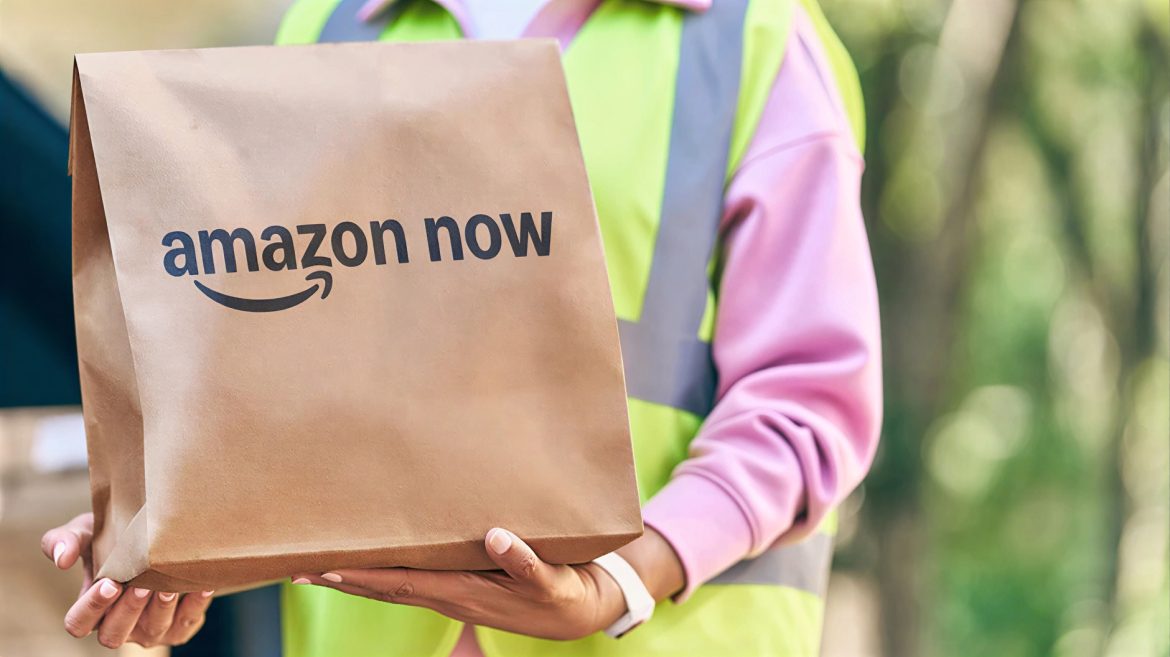
Running out of diapers at 11 PM used to mean a convenience store trek, but Amazon Now eliminates that panic. The retail giant launched 30-minute delivery for household essentials in Seattle and Philadelphia, with Atlanta and Dallas-Fort Worth following close behind. This isn’t about revolutionizing commerce—it’s Amazon solving the “emergency milk run” problem while quietly training consumers to expect instant everything.
How the Ultra-Fast Service Actually Works
Amazon Now operates like a 24/7 convenience store through your phone, using micro-fulfillment centers to minimize delivery time.
The service lives inside your existing Amazon app under “30-Minute Delivery” for eligible areas. You’ll find thousands of curated essentials—milk, eggs, toothpaste, electronics, over-the-counter medicines—with real-time order tracking and driver tipping options. Amazon achieves this speed through strategically placed micro-fulfillment centers that keep popular items close to urban customers, then dispatches Amazon Flex drivers on shortened routes.
Prime Members Get the Real Deal on Pricing
The cost structure heavily favors Prime subscribers, making this essentially another membership perk.
- Prime members pay $3.99 to $4 per order
- Non-Prime customers face a $13.99 to $14 fees
- Both groups hit a $1.99 to $2 small order surcharge for baskets under $15
That pricing gap isn’t accidental—it’s designed to make Prime feel essential for urban convenience.
The service slots into Amazon’s existing delivery portfolio alongside 1-hour drone deliveries and same-day options across 10,000+ cities.
Walmart’s Drone Competition Heats Up
The grocery delivery wars now feature flying robots versus human drivers racing against 30-minute clocks.
Walmart isn’t conceding the speed race, expanding its Wing drone program to San Francisco’s Bay Area for similarly rapid deliveries. The competition reflects broader shifts in urban shopping habits—consumers are increasingly unwilling to plan for necessities when technology promises instant solutions.
Amazon’s expansion plans include Austin, Houston, Minneapolis, and Orlando throughout 2026, suggesting this convenience-store-in-your-pocket model will soon define city living.
Your relationship with emergency shopping has just fundamentally changed. Whether that’s progress or peak instant-gratification culture depends on how often you find yourself buying midnight Band-Aids.
