
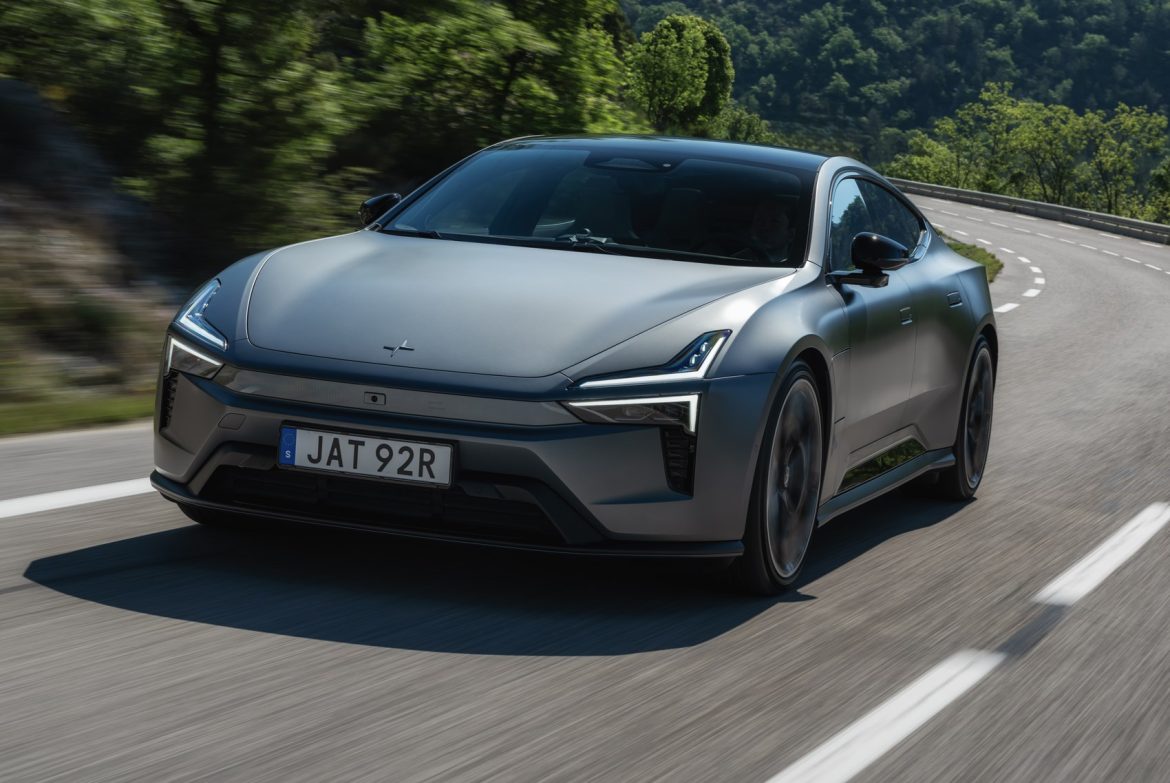
► Polestar’s 5 grand tourer driven
► Road-tripping from Nice to Montpellier
► It could be the best EV in its class…
Cor, this one feels like a long time coming, doesn’t it? It feels almost like Polestar showed us the 5 just as the Roman Empire fell. And yet, here and finally in production form is the brand’s four-door grand tourer in all its glory.
After we were limited to driving a prototype on test tracks at Millbrook in the UK in mid-2025, we’ve now spent two days road-tripping from Nice to Montpellier in a production-spec 5 right here. So, no more messing around – let’s get right to it.
Should you buy a Polestar 5? Yes. The market for electric four-doors might be wobbly right now, but the new 5 feels like the best of a competitive bunch. You sure about that Taycan order…?
At a glance
Pros: Excellent ride balance; supreme refinement; high-quality interior, quick
Cons: Some interior UI grumbles, smaller boot than the competition
What’s new?
We could continue the above joke and say ‘nothing’, because the Polestar 5 has had such a long gestation period it almost feels like it’s been part of the four-door electric GT furniture for years. Alas, here we are with a full production car officially launching for the first time.
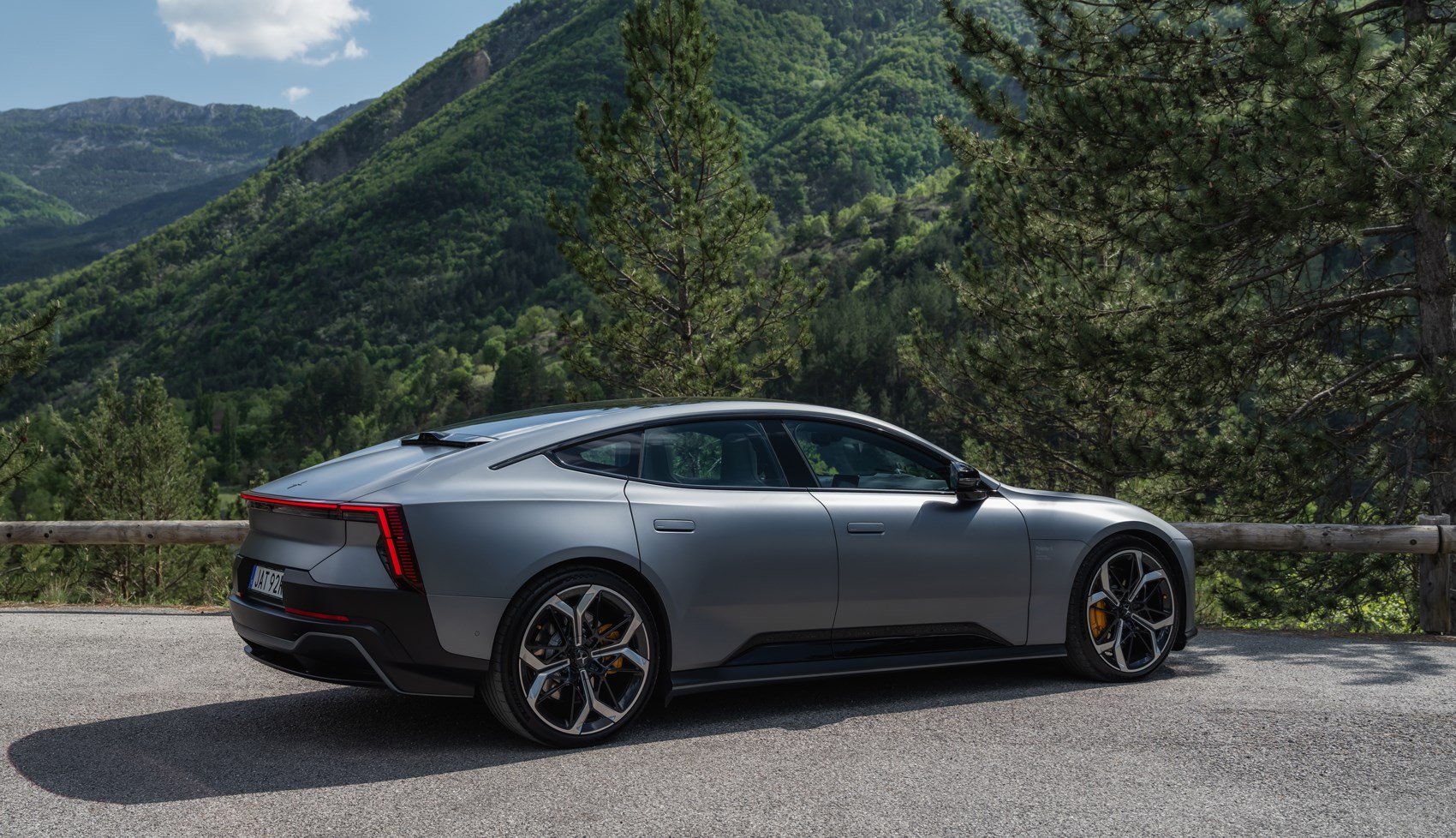
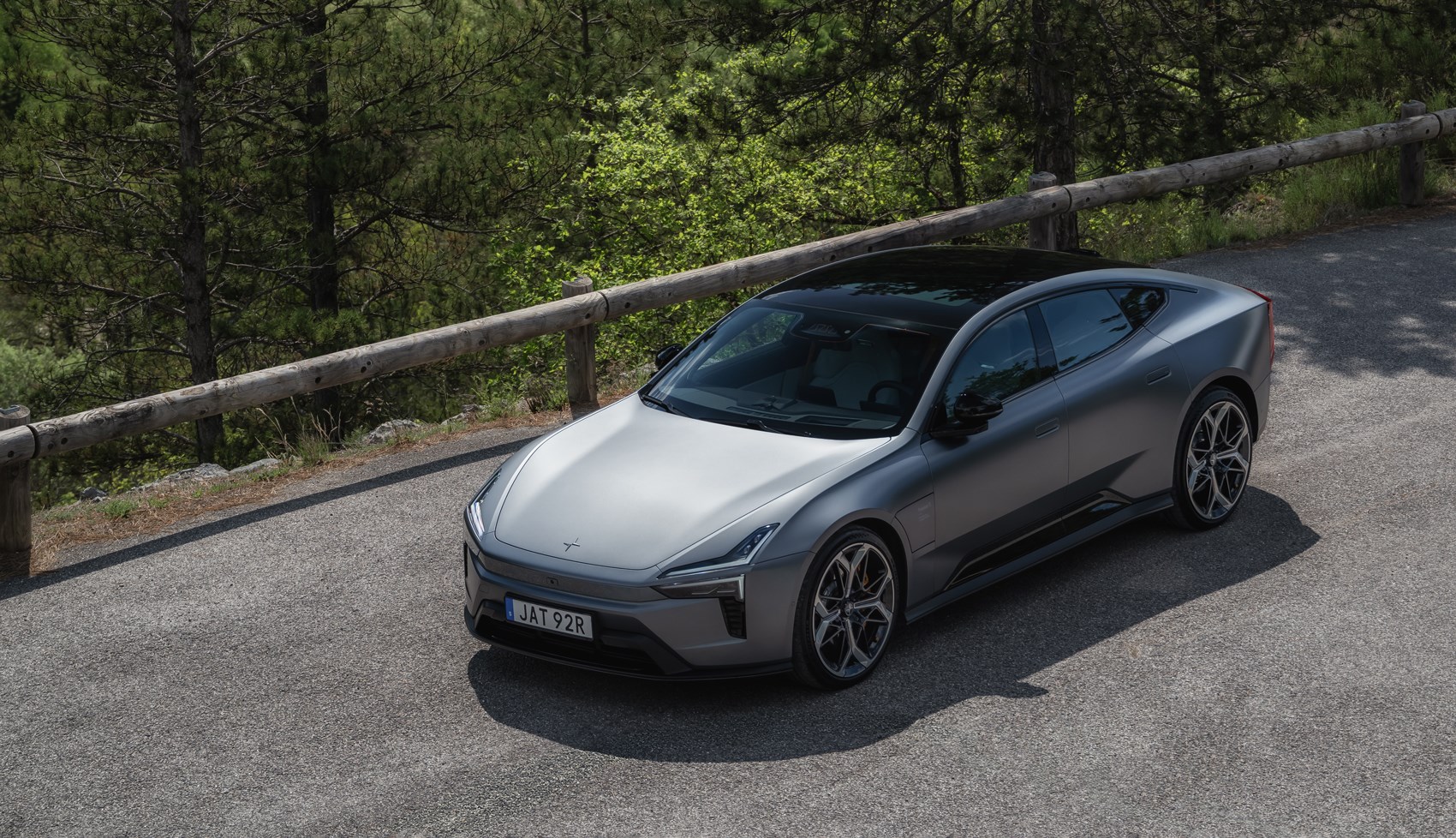
So, here’s a quick reminder: the Polestar 5 is a concept car made real, with the brand’s Precept show car paving the way to the showstopper-looking production model you see here. Under the crisp bodywork is a new platform, new electric motors, a plusher interior concept than the likes of the 3 and 4… and an aim to hit the likes of Porsche, Lotus and Audi where it hurts with competitive pricing.
What are the specs?
The 5 uses the Polestar Performance Architecture developed (at great, and some may say unwise, expense) exclusively for the brand’s future cars, with this and the currently shelved 6 convertible planned to run on it. It’s a bonded aluminium architecture, meaning better rigidity and refinement potential than one that’s conventionally welded, and Polestar says the 5 has a perfect 50:50 weight distribution for the best handling balance possible.
Two power variants launch for now – Dual Motor and Performance – with both using a huge 112kWh NMC battery pack with 800-volt electronics that enable up to 350kW charging speeds.
There isn’t that much in the two variants in terms of output. The Dual Motor model develops 737bhp and 599lb ft, good for a 3.9sec 0-62mph sprint, with Polestar claiming a 421-mile range potential. The Performance model, meanwhile, ups that to 871bhp and 749lb ft, dropping the launch time to 3.2sec and range claims to 346 miles.
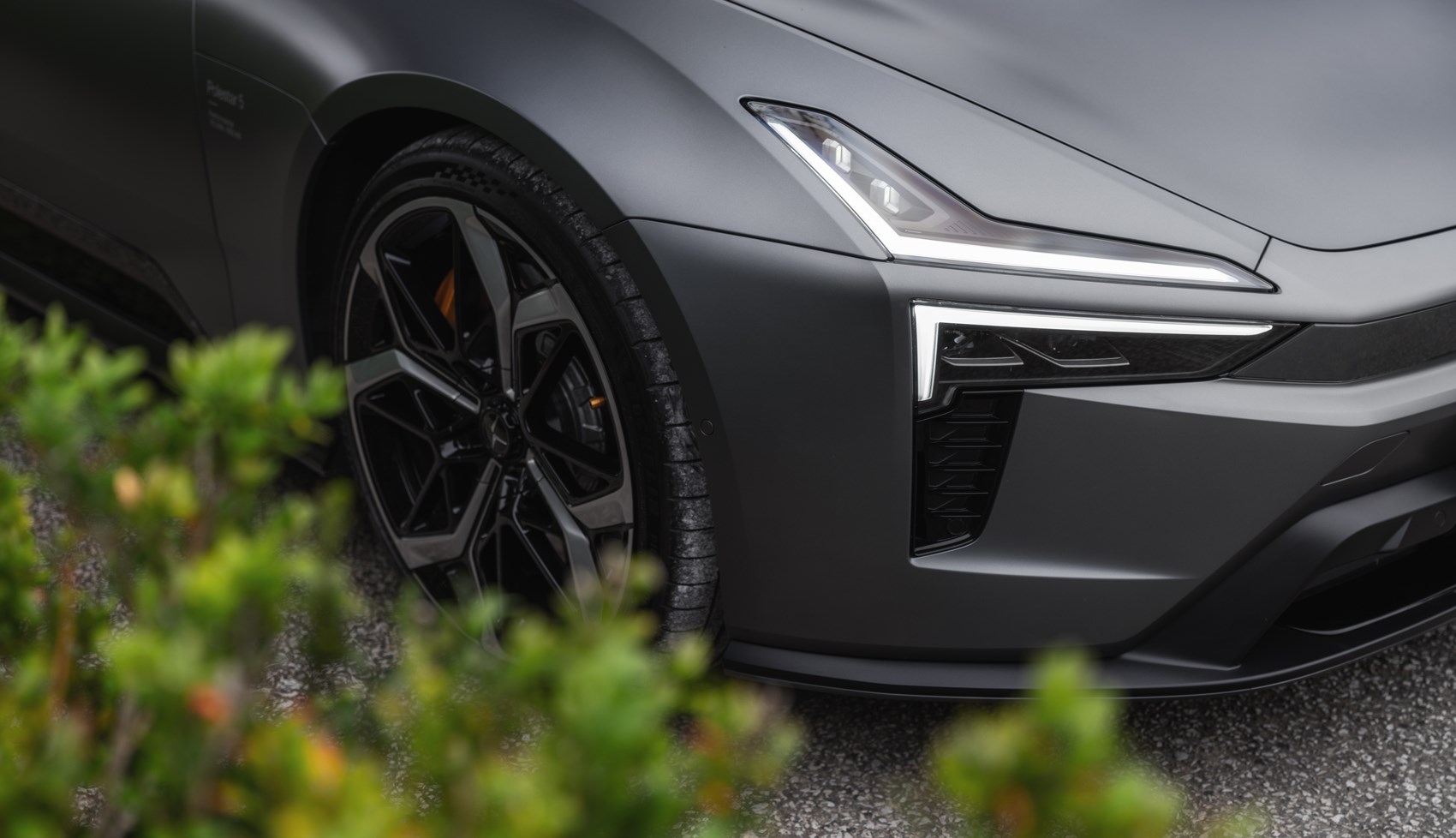
The difference between the specifications is more about the engineering; Dual Motor models get 20-inch wheels and passive dampers, while Performance models have larger 21s as standard, bespoke chassis tuning and a MagneRide adaptive damper setup.
What’s it like to drive?
Quite possibly one of the most well balanced and measured cars on the market. Polestar’s treading a thin line here, aiming for the 5 to be a comfortable day-to-day cruiser but also be athletic enough in twisty roads to not be a handful and actually feel fun. Overall, we’d say it has succeeded in splitting the two.
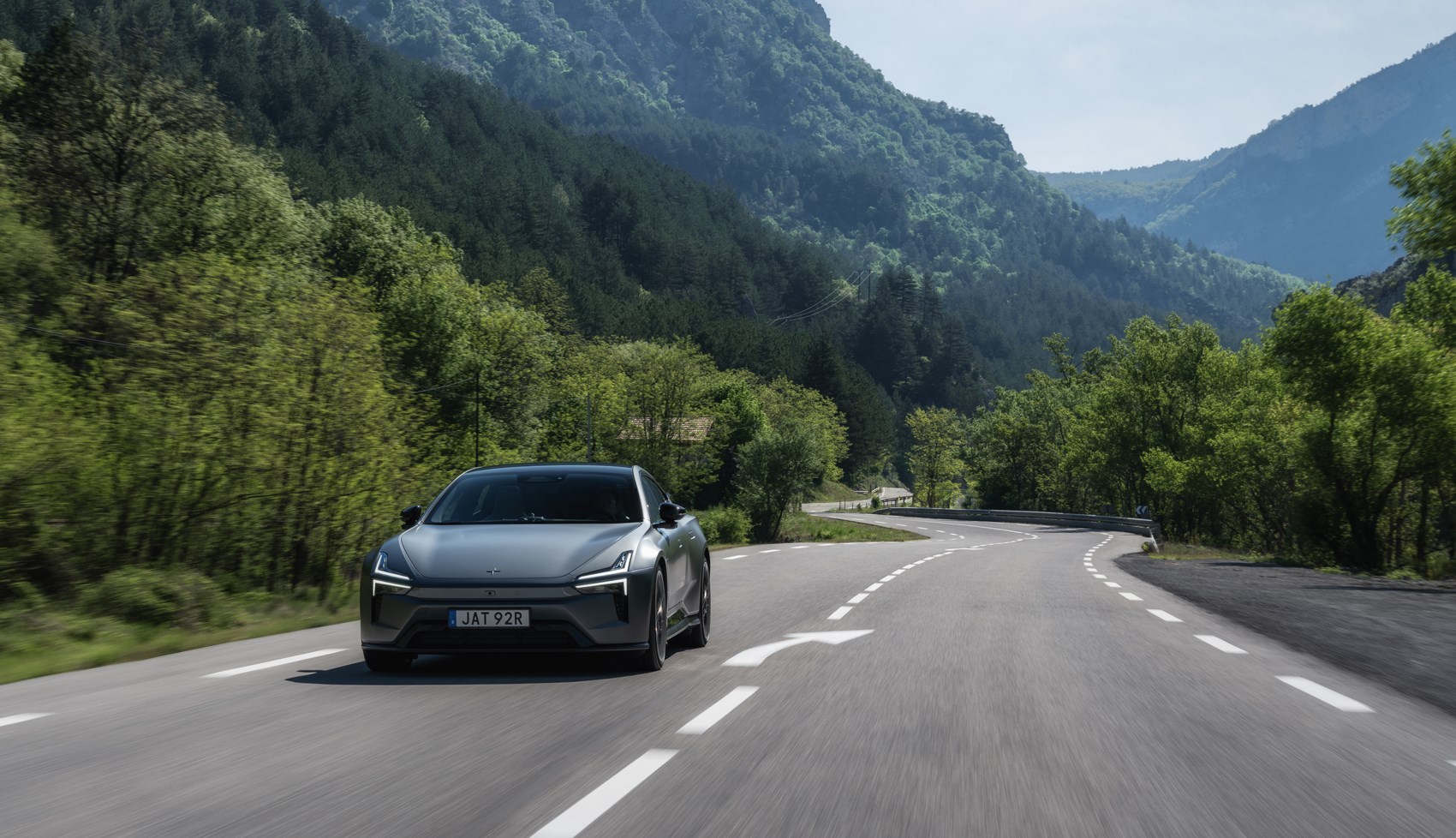
Power and grip is plentiful no matter which version you choose, with the Performance model having that little extra gut punch that makes your eyes widen. It’s quick with a capital F, with impressively well-modulated throttle and brake pedal configurations that encourage you to trust the car quickly. You can set your level of regen via buttons on the steering wheel, as well as set the car between power-saving Range and tarmac-shredding Performance mode.
The steering itself is neat and tidy, with the option to change the amount of weight applied to it in three stages. Light naturally works best in low-effort situations like motorway drives, with Firm at the other end feeling welcome on a twisty backroad. We’d like a smidge more directness from the rack, mind, but – again – Polestar is treading a thin line to make the 5 as accessible as possible.
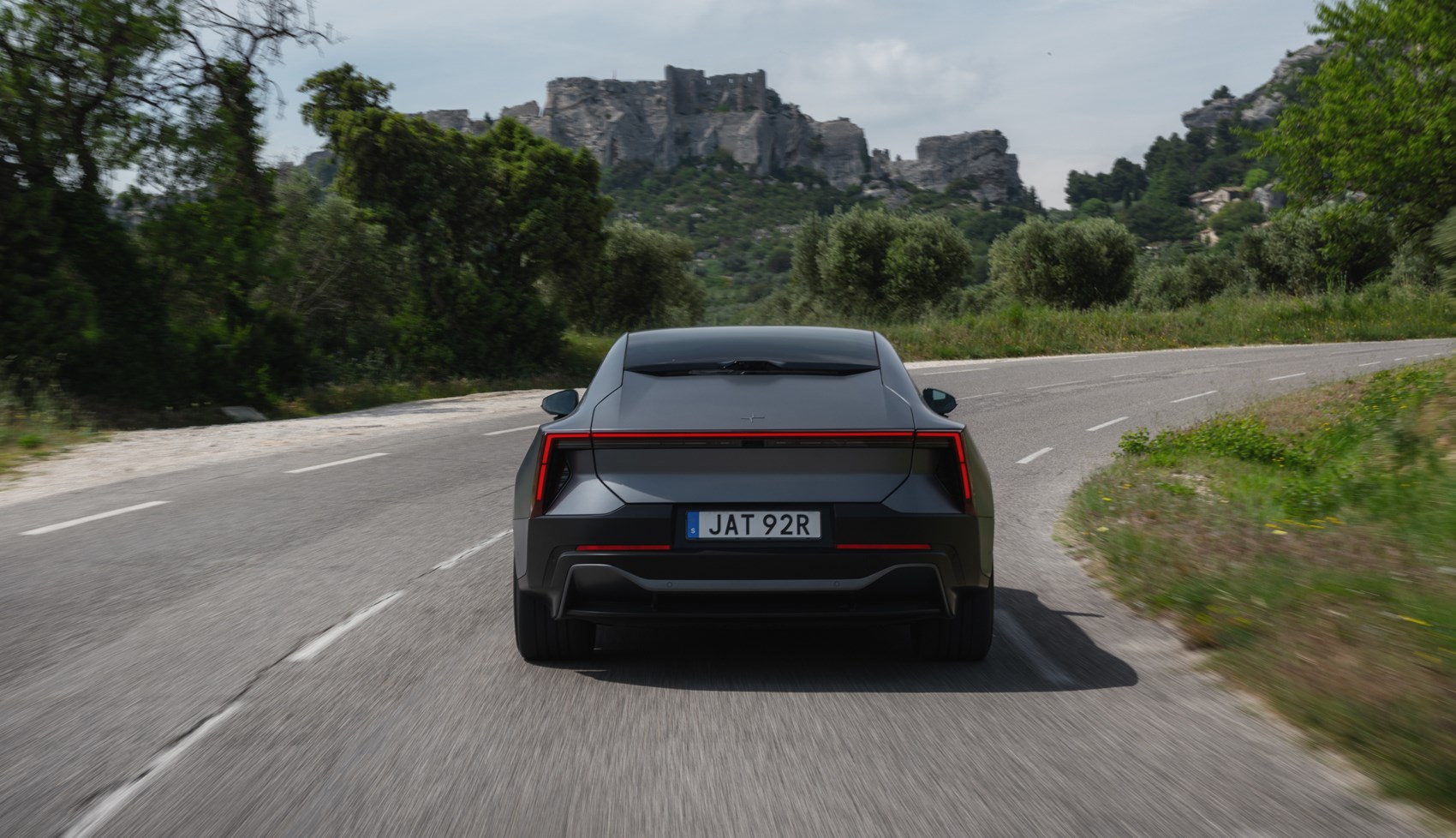
Star of the show on the Performance model is the impressively calibrated MagneRide setup, which can enable the 5 to be a floaty grand tourer if you’re going the distance or a little more tied down and taut enjoying your favourite cliffside jaunt. Refinement is impeccable, too. Long distance motorway drives feel calm and collected, with precious little wind noise and a suspension setup that can entirely handle large highway road undulations, bridge expansion joints or sudden lumps. Road noise, too, is remarkably well damped – even on our Performance model running on Michelin Pilot Sport 5 S tyres.
There is more of an edge to the Dual Motor’s ride quality, given its passive dampers. Rough tarmac does present itself that more openly through the seat of your pants and your fingertips, but it’s not enough to be uncomfortable.
What’s the interior like?
If you’ve sat inside a 3 or 4, you won’t really be surprised by the design or ambience of the interior here, with the 5 riffing on that whole theme but applying it to a five-seat, four-door GT body style.
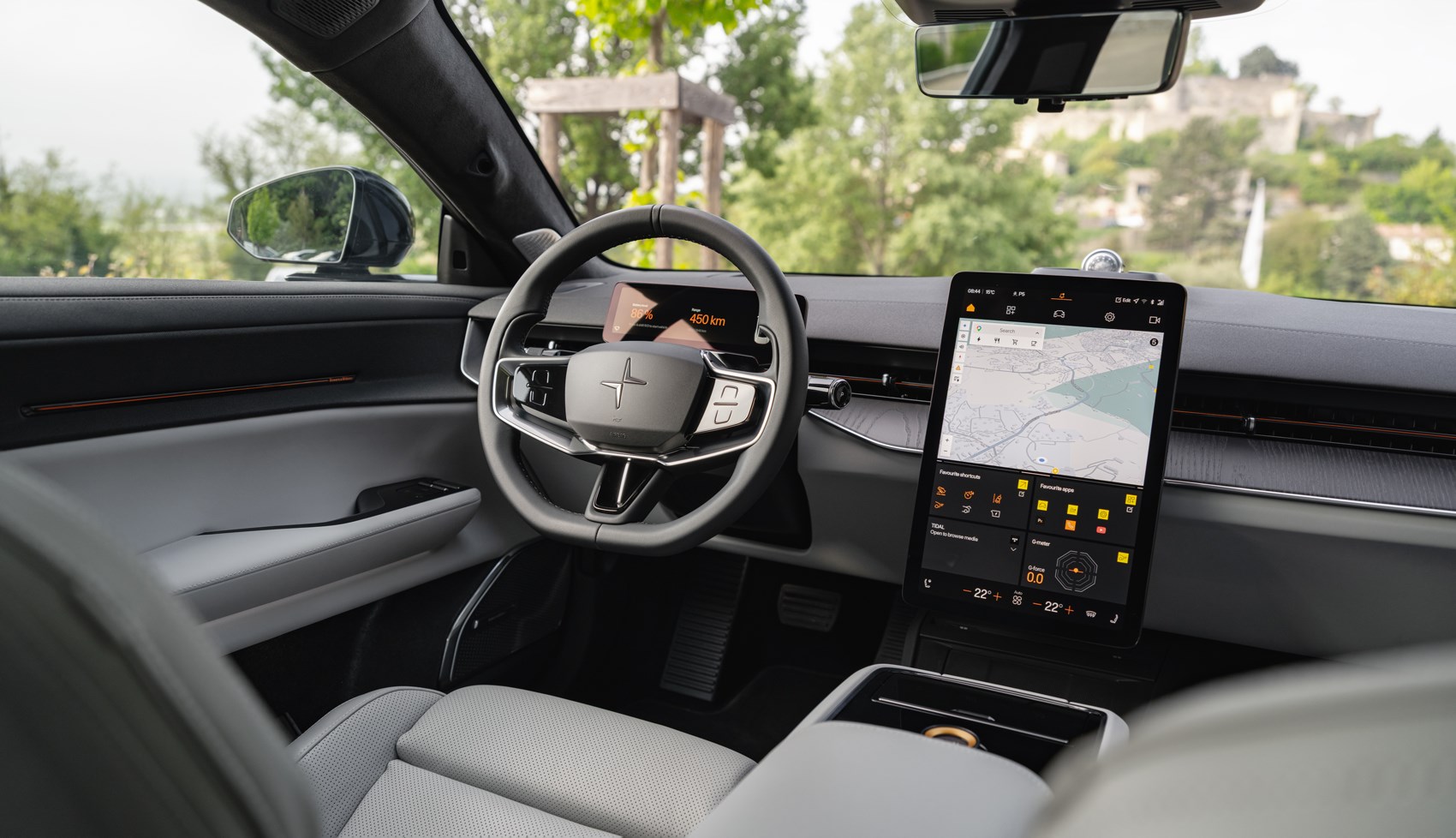
It’s reductive and neat inside, with some sweet design details and impressively high-quality materials everywhere you look. Everything you touch feels solid and tied down and it feels good to run your fingers across the stitching on the centre console, for example, or pull the chunky stalks. There’s also plenty of adjustment and support in the seats, with huggy side bolsters and flexible lumbar.
It’s also worth pointing out that we weren’t really that bothered by the fact the 5 has no rear window. Polestar’s engineers have made efforts to make that element of driving the GT an improvement over the 4 SUV, mainly by moving the rear view mirror further away from your face (which means you can focus quicker on the display) – and the mirror itself has a higher frame rate. Of course, none of this would be an issue at all if it did have a rear window, but it’s less of a weird quirk than with the Polestar 4.
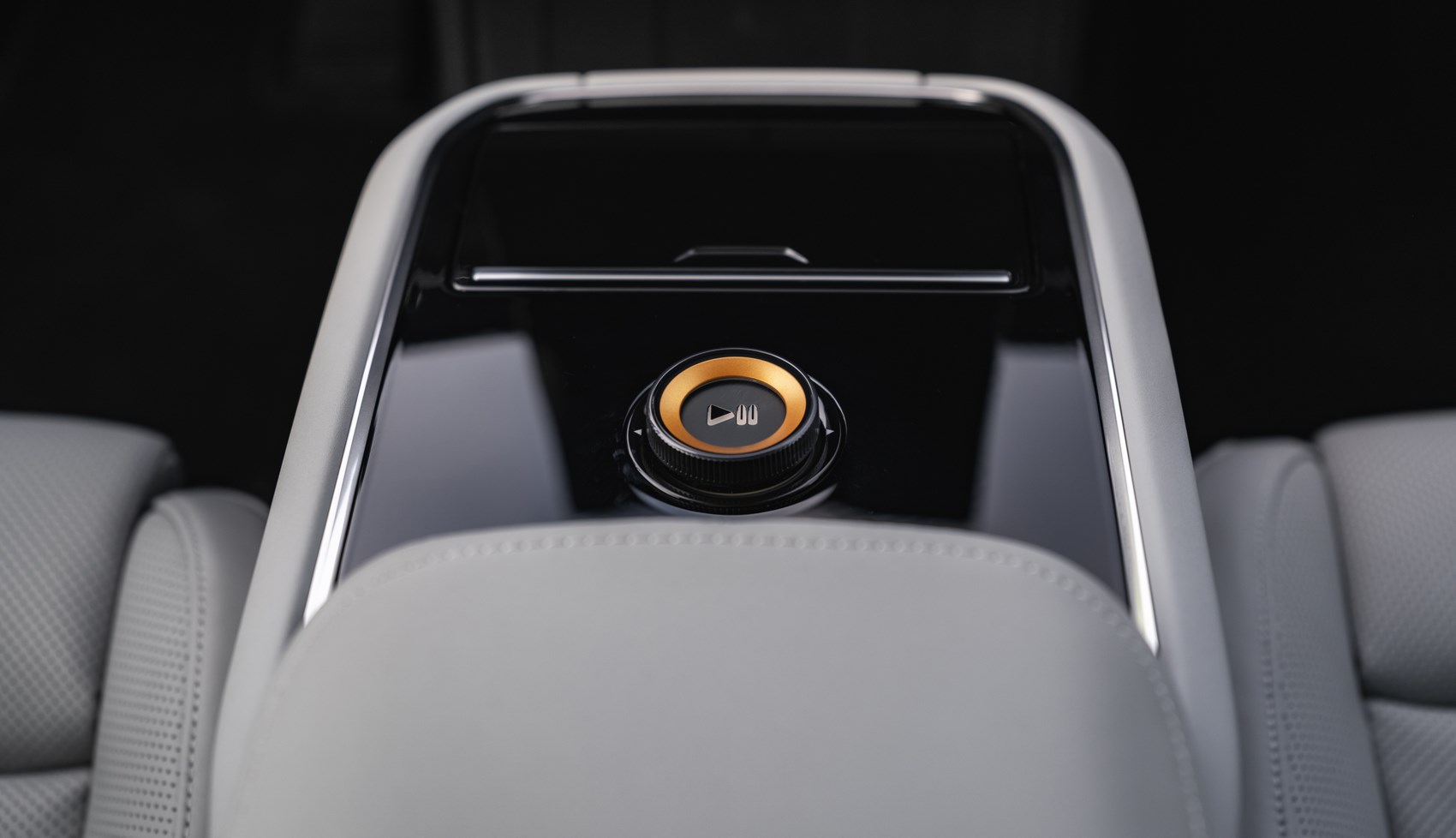
Any real grumbles? The only ones we really have aren’t exclusive to the 5 but more a wider Polestar thing. The steering wheel buttons lacking any backlit icons on them (instead, you rest your thumb on them and what the button is shows up on the instrument cluster) is just plain unnecessary. I’d also prefer it if the centre console wasn’t made of gloss black panelling and the infotainment takes some getting used to (but I did start to get more in sync with it as the miles piled on).
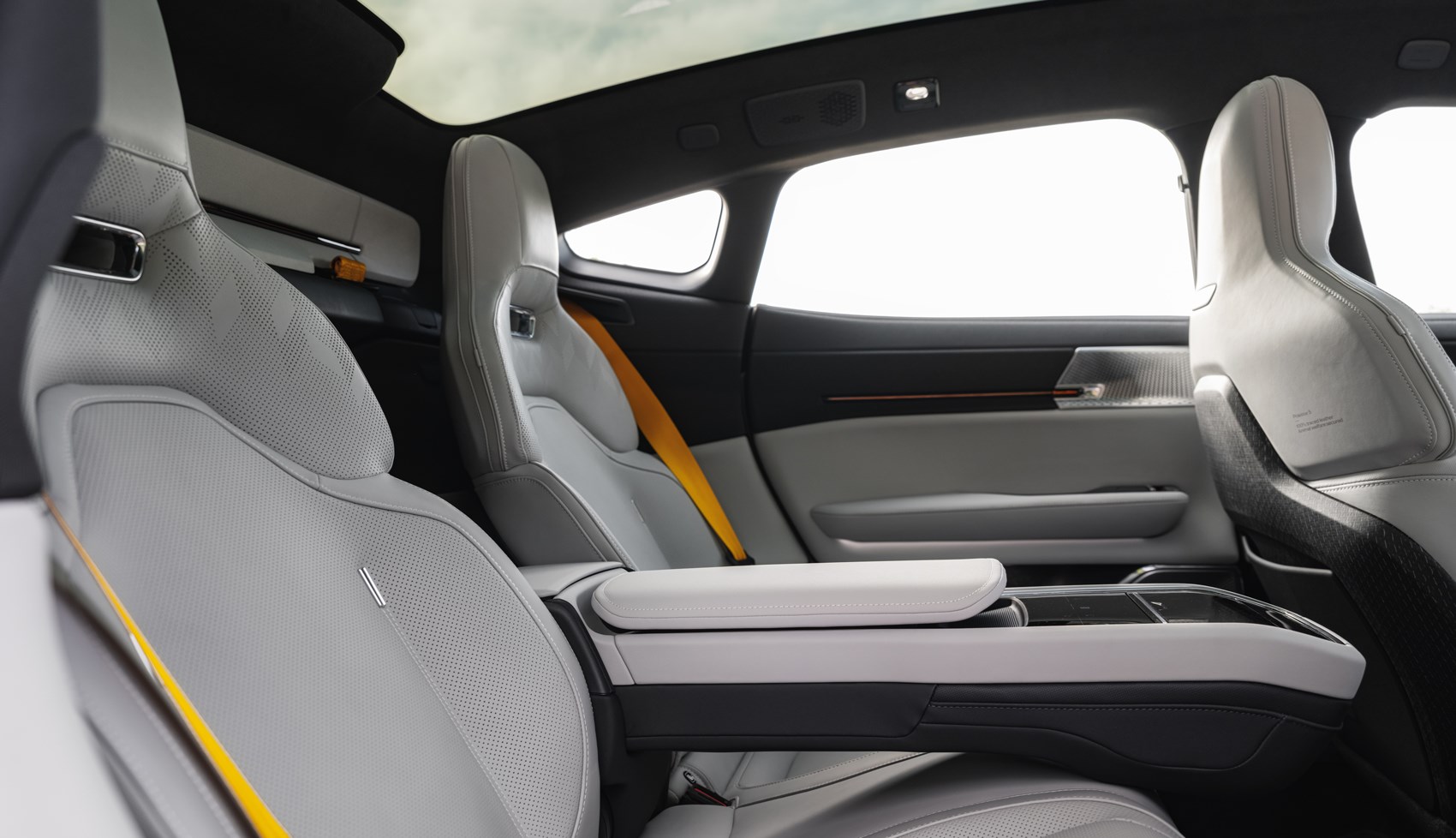
Rear legroom is good for adults, while headroom is just about right for the taller among us. The boot volume is the smallest against its three closest competitors, though; big enough for two large suitcases, but a bit of a squeeze otherwise.
Before you buy
For now, you can choose from a Dual Motor Launch Edition (priced from £89,500) and a Performance Launch Edition (costing £104,900). Aside from the engineering differences between the two specifications, the Performance model benefits from more gold accents (like the seatbelts, brake calipers and tyre valve caps), a Bowers & Wilkins audio upgrade, suede headliner and more gloss black exterior details over grey ones. Which one would we choose? You’d be happy with either, but the extra flexibility from the MagneRide in the Performance model makes it our pick.
It’s definitely a big chunk of money, and it’s for the kind of car that’s slumping in popularity; Taycan sales have fallen off a cliff, for example, while Lotus is having to entirely reassess its product plan because cars like the Emeya aren’t selling.
But there’s some context to be applied here. The fact these 5s are currently being sold as launch editions implies a price drop will come soon enough when some of the optional equipment is crossed off in a year or so. Launch Edition cars come with the brand’s Pilot Assist semi-autonomous driving tech, lane change assist, heated rear seats, a heated steering wheel and head-up display included – all tech that is arguably optional.
And even before that happens, the Polestar 5’s like-for-like offer against cars like the Porsche Taycan, Audi e-Tron GT and Lotus Emeya is competitive. For example: want the same amount of ballistic power and engineering you get in a Polestar 5 Performance from a Taycan? You’re looking at a GTS, which is at least £15k more expensive before options. An RS e-Tron GT is £22k more. An Emeya 900 Sport is £25k more. All very good cars, but the Polestar feels as competitive and as high quality for less.
Verdict: Polestar 5
Late to the party, yes, but Polestar’s 5 feels all the better for it. It’s a show-stopper to look at, feels impressively upmarket inside and has some hugely desirable handling characteristics that make both long-distance drives and B-road blasts satisfying.
We’d need to group test the 5 to be absolutely sure, but I’d personally have over a Taycan – our current benchmark for the class – in a heartbeat for its cool factor, great ride and high-quality interior. Nice one, Polestar.
Specs are for Polestar 5 Performance Launch Edition
