
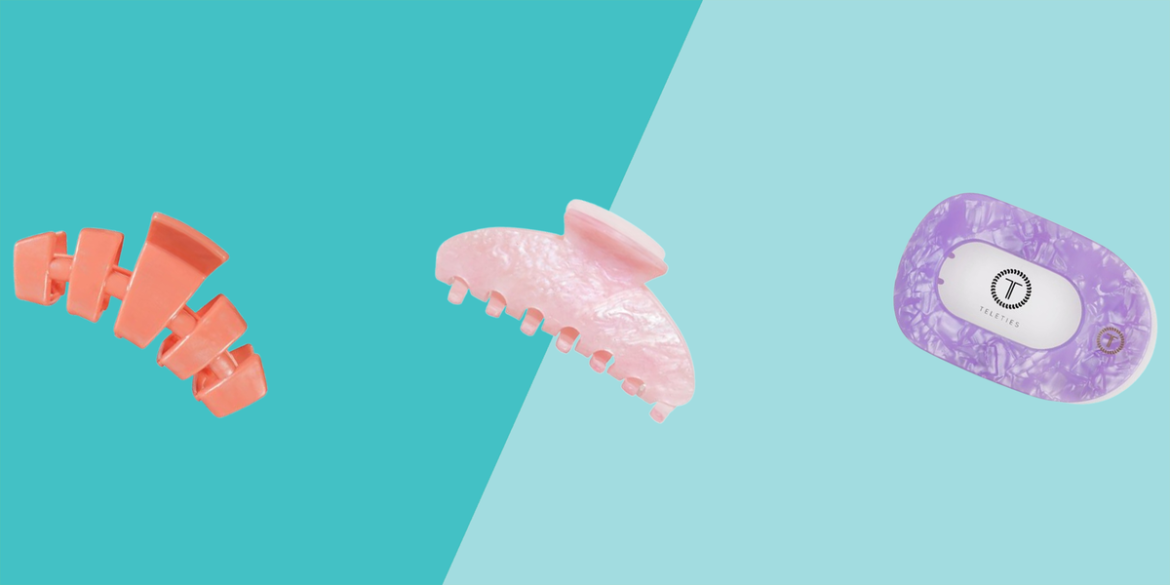
✔️ Consider your hair type. “You definitely want to consider your hair density and thickness first,” Hingorani explains. “If you have thick hair, look for larger clips with strong springs and wider teeth. Fine hair usually does better with smaller clips that have a tighter grip.” Hakim adds that “One of the most common mistakes is choosing a clip that is too small for the amount of hair, which leads to slipping or breakage.”
✔️ Note the materials. Hakim stresses the importance of quality materials and construction in a durable claw clip. “Higher quality acetate or reinforced plastic clips with strong springs tend to hold better and last longer than thinner, lower quality alternatives,” she says. “The spacing of the teeth is another detail that makes a big difference. Wider teeth are often better for thick hair, while finer spacing can help grip finer hair more securely.”
✔️ Comfort is key. If your claw clip is giving you some version of a ponytail headache or tugging at your strands, it’s probably not the one for you. “Comfort is another factor that gets overlooked,” Hakim says. “A well-designed clip should feel secure without digging into the scalp or pulling strands.”
✔️ Ponder your go-to styles. “Some clips are designed for full updos while others are better suited for half-up or low, relaxed styles, so choosing based on your routine makes a big difference,” Hakim explains.
