
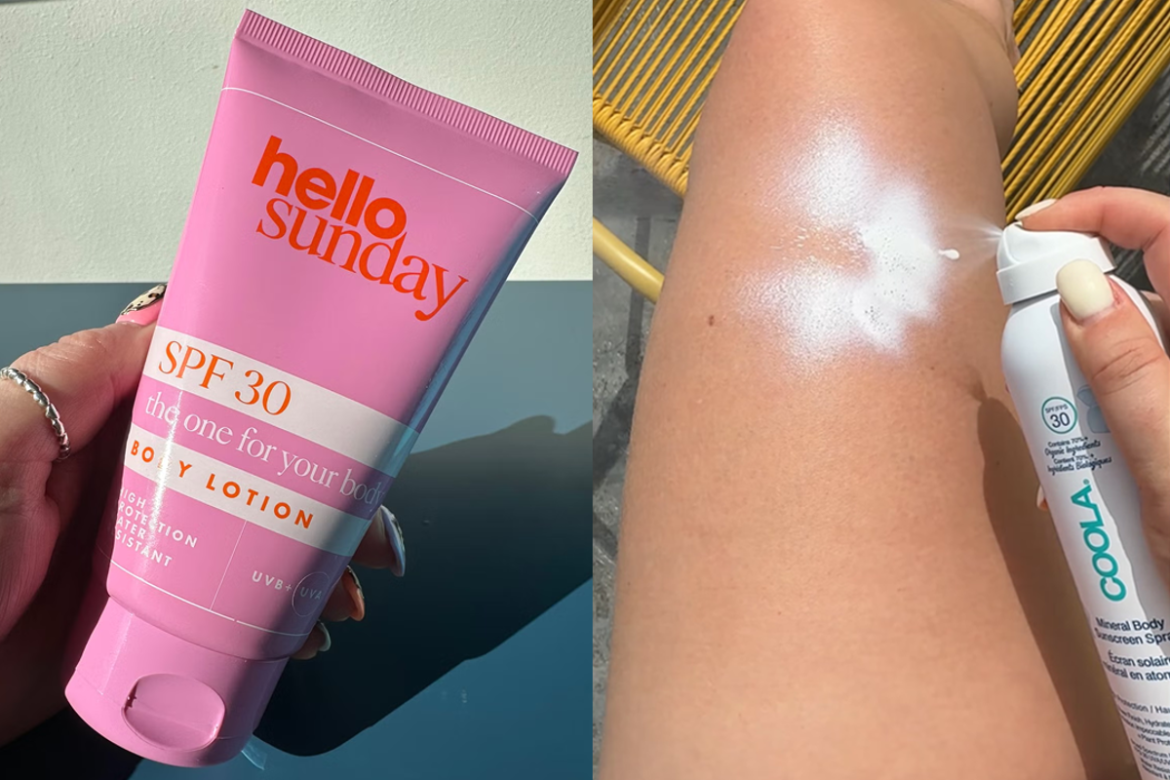
Your body sunscreen questions answered
What is the best body sunscreen?
If I had to choose just one, P20’s original sun cream SPF50+ spray would be the body sunscreen I’d pack again and again, thanks to its high protection, dry-oil texture and barely-there finish – all of which made the applying and wearing SPF feel easy. It struck the best balance of comfort, value and practicality, but it wasn’t the only one to impress me.
Soltan’s protect and moisturise formula was hard to fault for the price, while Clarins’s youth-protecting sunscreen felt more like body care with SPF benefits. For mineral devotees, Sol de Janeiro’s Rio radiance is one of the most lovely formulas I’ve tried and doesn’t feel heavy like a typical physical SPF. Ultimately, the best sunscreen is the one you’ll apply generously and reapply often, but for sheer all-round performance, P20 takes the crown.
How I tested body sunscreens
To find the best body sunscreens, I took all the formulas featured (plus a handful more that didn’t make the cut) down to the beach over the course of a month. I wore them through long days in the direct sun and even put their water resistance claims to the test while braving a number of spring sea dips. Each sunscreen was applied, re-applied and worn for several hours at a time. I paid close attention to how each formula behaved on my skin and judged them on the following criteria:
- Application: I assessed how easily each formula spread across the skin, whether it dragged, pilled or required excessive rubbing, and how it felt on initial contact – from lightweight and fluid to thick, greasy or sticky.
- Dry-down and finish: I considered how quickly each sunscreen absorbed, whether it left a white cast, and how skin looked and felt once settled, including shine, glow, tackiness or residue.
- Wearability: I evaluated how comfortable each formula felt over time, including whether it felt hydrating or drying, heavy or barely-there.
- Protection: Where possible, I assessed how each sunscreen held up through swimming and extended time outdoors. No sunscreen that left my skin pink after using as directed landed a spot in the final round-up.
- Scent: I considered fragrance strength and quality, noting whether aromas were subtle, nostalgic or overpowering.
- Practicality: I assessed packaging, ease of application (sprays, pumps and lotions), portability and how well each product would realistically perform on a long holiday.
Does sunscreen prevent tanning?
“Sunscreen does not completely prevent tanning, but it does significantly reduce the intensity of UV exposure, which in turn limits the degree of tanning,” reveals Dr. Perrett.
“It’s important to understand,” he adds, “that a tan is actually a sign of skin damage. Even when tanning occurs, DNA damage is happening at a cellular level, which contributes to premature ageing and increases skin cancer risk.”
How often should you reapply sunscreen?
“Sunscreen should be reapplied every two hours as a general rule, and more frequently if you are swimming, sweating or towel drying,” explains Dr. Perrett. He cautions, “Even ‘water-resistant’ sunscreens lose effectiveness over time, so consistent reapplication is key to maintaining adequate protection throughout the day.”
Does sunscreen expire?
“Yes, sunscreen does expire,” confirms Dr. Perrett. Expanding on this, he tells me, “Most formulations are designed to remain stable for around two to three years, but this can be shortened if the product is exposed to heat or direct sunlight, such as being left in a beach bag.”
Dr. Perrett warns that “Expired sunscreen may not provide the level of protection stated on the label, so it’s important to check the expiry date and replace it regularly.”
If your SPF doesn’t have an expiration date, he suggests looking out for the following:
- Changes in texture such as separation, clumping or a thinner, watery consistency
- Any noticeable change in colour or smell
If you’re really not sure, he advises, “As a general rule, if you’ve had a sunscreen open for more than a year, particularly if it’s been used in warm conditions, it’s safest to replace it to ensure reliable protection.”
How much sunscreen should I apply to my body?
“As a guideline, an adult should use approximately 30-35 millilitres of sunscreen to cover the entire body, this is roughly equivalent to a shot glass full,” Dr. Perrett informs me.
For anyone guilty of slapping on their SPF carelessly, he alerts me that, “Most people significantly under-apply, which can reduce the level of protection by up to half, so being generous with application is essential.”
Why you can trust IndyBest reviews
Lucy Smith is a senior shopping writer and has been with IndyBest since 2024. She’s covered sun protection on numerous occasions, including reviewing the best SPF moisturisers and speaking to medical expert Dr Marko Lens to discover how much sun cream we should be using. Lucy regularly reviews a broader range of skincare products, from hyaluronic acids to moisturisers for oily skin, meaning she knows the industry standard for skin-loving ingredients and – importantly – when a product is form over function. What’s more, living by the sea (which intensifies UV exposure), Lucy was just the person to put a variety of body sunscreens to test – without leaving UK shores.
This affordable SPF gave a ‘flattering finish’ – and it’s less than £8
