
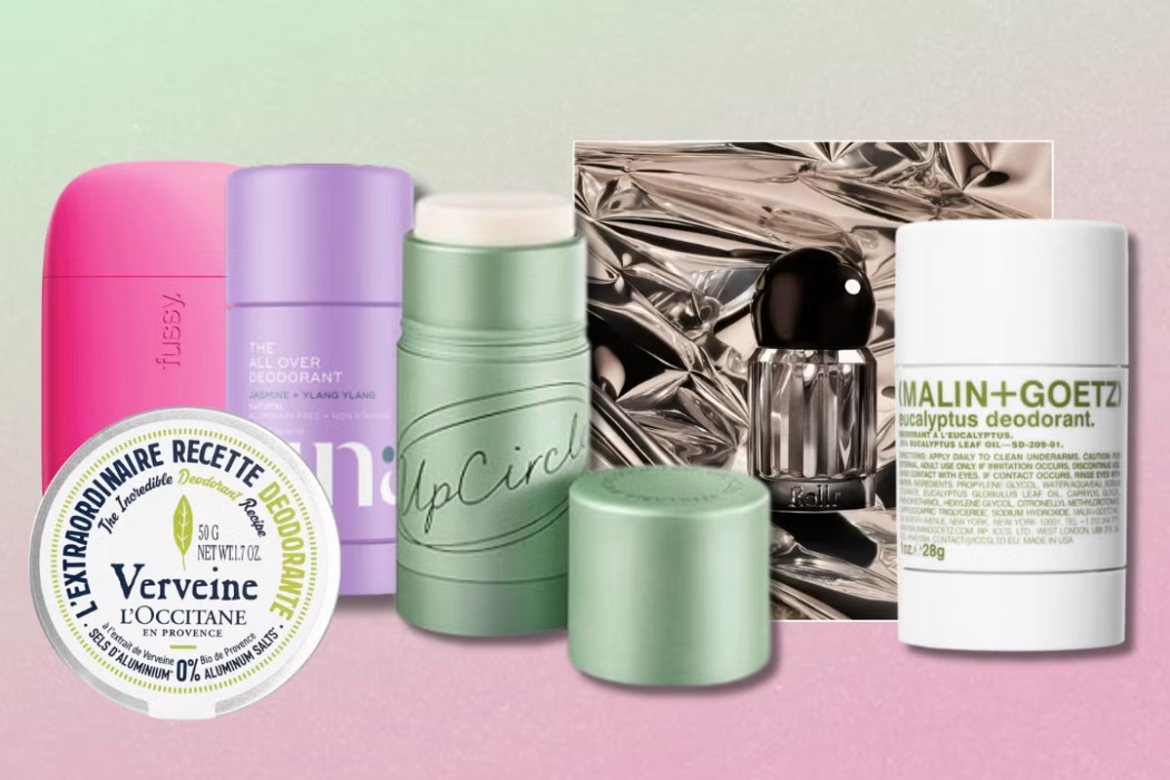
Your questions about natural deodorants answered
What is the best natural deodorant?
It can take between two to six weeks for your body to adjust to using a natural deodorant, so before you jump in thinking it doesn’t work, you need to have a bit of patience – and maybe schedule it in over WFH days or a holiday. But, to get you well on your way, my favourite pick was the Fussy coconut milk deodorant thanks to its nourishing formula, easy-to-apply design and BO-busting result.
Those prioritising efficacy and natural ingredients should turn to Agent Nateur Cap D’Antibes holi deodorant, while anyone looking to really battle the sweats on any part of the body should definitely pay closer attention to the Luna-daily all over deodorant. If you want to splash the cash, Rollr is a definite must-have if you’re seeking a luxury experience that’s as kind to the environment as it is on your underarms. Looking for a spray? Ditch the aerosol and go for the Neal’s Yard lavender and aloe vera deodorant.
What is a natural deodorant?
Analytical chemist Emma Dawes, who boasts decades of experience working on the international COSMOS standard for Organic and Natural cosmetics explains that, “currently ‘natural’ is a highly unregulated term in cosmetics and personal care, and ‘natural deodorants’ could in practice have very little natural material in them”.
Consultant dermatologist, Dr Aiza Jamil offers some clarity on what we mean when we use the term ‘natural’. She says: “Generally, ‘natural deodorant’ means it is made with fewer chemicals and more natural ingredients – such as baking soda to neutralise odour rather than block it.”
However, there is no single legal definition of what makes a deodorant ‘natural’. Dr Jamil points out that, “there are no hard rules that are universally followed to define a ‘natural’ deodorant, but rather industry standards and consumer watchdog groups such as the Environmental Working Group, which monitor whether a product adheres to more general criteria”.
She adds that, generally speaking, a natural deodorant should have ingredients of natural origin, such as from plants, minerals or animals, rather than synthetic or man-made products. “Think shea butter and essential oils rather than heavy fragrances and preservatives,” Dr Jamil explains. “In the same vein, there should be no synthetic additives such as parabens or artificial colours and fragrances. There should also be minimal processing on the raw materials, such as filtration, steam distillation or grinding, for example. It is not a necessity, but many natural products should be biodegradable to be more environmentally friendly.”
How to pick a natural deodorant
Dr Jamil advises that the best way to choose a natural deodorant that works and is skin safe is “to not just trust any ‘natural’ claims, but to actually check the ingredient list”. She explains: “Baking soda is quite popular in natural deodorants, however it can be irritating for sensitive skin. Arrowroot powder or cornstarch can be an alternative ingredients that still help to absorb moisture with less chance of blocking pores. Look for antibacterial agents such as tea tree oil and conditioning ingredients such as shea butter.”
She adds that she would try to avoid any deodorants with alcohol, as this can be very drying on the skin. Essentially though, the main thing is that you find something that works for you, so if you’re worried about any ingredients, try a patch test on your skin beforehand.
“When searching for a natural deodorant, it is generally a green flag when the list is quite short and easily recognisable” Dr Jamil says. “It is good if you can find antibacterial agents such as coconut oil or probiotics like Lactobacillus in the ingredient list, to kill odour-causing bacteria.” She goes on to explain that strong fragrances can be quite irritating on the skin, even when using essential oils. Similarly, she adds that while many people look to natural deodorant to avoid aluminium, some formulas still contain alum salts, “which can cause irritation and clogged pores, so I would look to avoid natural deodorants that contain them”.
Dawes agrees, adding: “If you see the term ‘fragrance’ or ‘parfum’ on a label, this could be made of thousands of synthetic chemicals and could contain phthalates. Unless the brand is certified to a standard like COSMOS (in which the components of the fragrance blend have to be checked) or the brand gives extra-assurances on phthalate testing, it may be best to avoid.”
She points out that “natural deodorant is not inherently superior, but for consumers seeking ingredient simplicity, reduced synthetic exposure and improved sustainability, certified formulations offer a credible alternative”.
Is deodorant bad for you?
Skin safety is another area often clouded by marketing jargon. Dr Jamil explains that ‘natural’ doesn’t necessarily mean ‘non-toxic’. In fact, many natural ingredients can be very toxic when used incorrectly, whereas many man-made or synthetic products are completely safe for use. “With the problem of greenwashing, some deodorants that claim to be ‘natural’ may still include added fragrance or chemicals, which can be harmful,” she explains.
Dawes adds that, while some synthetic chemicals are safe, some in products like deodorants have been linked to health issues like endocrine disruption with prolonged use. Concerns around aluminium and parabens continue to influence purchasing decisions and the concept of ‘toxic load’ is a consideration for many people opting to swap to deodorants and personal care products classed as natural.
“Toxic load is the belief that heavy metals, harmful chemicals and pollutants can build and accumulate on the skin over time from various environmental and lifestyle sources,” explains Dr Jamil. “Our skin is our body’s largest organ and is highly absorbent, so chemicals can be absorbed into our bloodstream through skincare and deodorant, for example. Generally, small doses of harmful chemicals and metals are safe for the average person, however toxic load refers to the continuous daily buildup of ingredients and products that may cause more damage over time.”
Dawes suggests that if we want to reduce our load of toxic chemicals, thinking about what we put on our bodies, including our underarms is important. “The underarms are even more absorbent than other areas of the skin, with many ingredients that we put here being absorbed directly into the bloodstream.”
How the best natural deodorants were tested
During my testing period I paid attention to the following criteria:
- Preventing body odour: The most important test, I assessed each of these deodorants by whether or not they prevented body odour.
- Skin sensitivity: Some natural deodorants cause irritation, so I made sure each of these deodorants did not cause or exacerbate skin issues.
- Scent: Natural deodorants can deodorise but smell a little strange in their own right. I was looking for deodorants with pleasant smells.
- Consistency and texture: Some natural deodorants apply as a stick or roll-on, but others are applied as a cream. I wanted natural deodorants that felt light on my skin.
- Sustainability credentials: ‘Natural’ is a very vague term, and some products which claim to be eco-friendly actually have unrecyclable plastic packaging. The best natural deodorants had sustainable packaging and ingredients.
- Price: Wellness products like these can be expensive, so I wanted effective deodorants at a fair price.
Why you can trust IndyBest reviews
Our beauty and wellness experts know everything there is to know about natural product swaps, which brands to invest in and which to avoid. Emilie Lavinia, our fitness and wellbeing editor, is an expert on low-tox living and has tried every natural deodorant on the market to round up the best.
Meet the experts
- Dr Aiza Jamil: Consultant dermatologist in medical and surgical dermatology, laser and aesthetics
- Emma Dawes: Analytical chemist, health and beauty specialist at the Soil Association and COSMOS technical committee member
Keep your make-up bag cruelty free with the 22 best vegan and cruelty-free skincare brands
