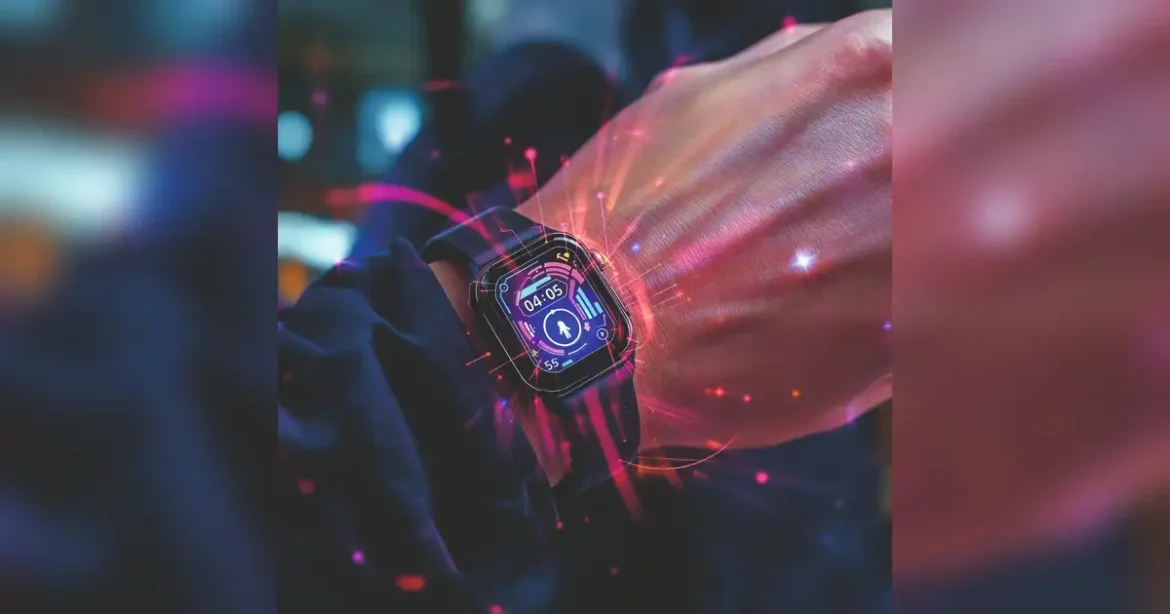
Wearable technology is moving well beyond its early focus on fitness tracking. As artificial intelligence becomes more integrated into these devices, wearables are being used to understand patterns in health, behaviour and everyday activity, giving users information that is more relevant to their individual needs.
Their growing capabilities are also widening their role in healthcare and wellbeing. Devices that once largely recorded activity can now provide a more continuous view of a person’s health, creating new possibilities for early intervention, preventive care and more personalised health management.
In the UAE, interest in wearable technology is growing alongside wider investment in artificial intelligence, digital health and connected technologies. Healthcare providers are increasingly adopting technology-enabled care, while consumers are becoming more accustomed to using personal health data as part of their daily lives.
From Tracking to Predicting
One of the most significant shifts shaping the wearable technology sector is the move from raw data collection to meaningful, actionable intelligence.

“The next generation of wearables is shifting from raw data tracking to intelligent interpretation, and from phone accessories to standalone lifestyle companions,” says Debo Zhang, General Manager, HONOR GCC.
According to Zhang, users are no longer satisfied with viewing metrics alone. Instead, they want technology that can help them make informed decisions about their health and daily routines.
“Users no longer just want a heart-rate graph; they want actionable insights — whether they need to push harder today or focus on recovery,” he explains.
At the same time, expectations around accuracy are rising. Consumers increasingly expect wearable devices to deliver clinical-grade monitoring capabilities while maintaining premium design standards.
“There is a massive shift toward clinical-grade health monitoring and premium craftsmanship. Users expect medical-level accuracy for metrics like SpO₂ and sleep analysis, wrapped in an elegant design,” Zhang adds.
This evolution is being driven by advances in artificial intelligence and sensor technologies that allow devices to move beyond measurement and towards interpretation.
“The most important shift is that wearables are moving beyond simply tracking information to delivering personalised results and benefits,” says Murat Gebeceli, Marketing Director at Sony Middle East and Africa.
While earlier generations of wearables focused on metrics such as steps taken, sleep duration, and heart rate, newer devices are increasingly capable of analysing trends and delivering context-aware recommendations.
“Today’s wearables are increasingly able to analyse data, recognise patterns, and provide insights that are relevant to the user in real time,” says Gebeceli.
He notes that consumers are becoming more selective about the role technology plays in their lives. “Consumers are no longer looking for data alone; they want devices that help them better understand their habits, support their wellbeing, and integrate naturally into their daily lives.”
The growing emphasis on simplicity and usability is also influencing product development across the sector.
According to Fuyang Sun, Head of Marketing, Xiaomi Gulf & Levant Region, consumers increasingly expect wearables to provide meaningful guidance rather than simply present information.
“Wearables are moving from basic tracking to more meaningful daily insights. Users no longer expect a device that only counts steps or records heart rate; they want a wearable that helps them understand their sleep, stress, activity, and overall wellbeing in a simple and practical way,” she says.
Sun believes the next phase of innovation will focus on three key pillars: intelligence, comfort, and connectivity. “The next shift will be about intelligence, comfort, and ecosystem connection. A wearable needs to be easy to wear all day, provide useful real-time guidance, and work seamlessly with the user’s smartphone and connected lifestyle.”
This is particularly relevant in markets such as the UAE and wider Gulf region, where consumers have demonstrated strong appetite for new technologies and connected experiences.
“In the UAE and Gulf, consumers are very tech-forward, but they also value convenience, design, and real-world usability,” Sun adds.
The AI Factor
Artificial intelligence is increasingly redefining what wearable technology can do. While earlier generations of devices focused primarily on recording activity, sleep, and health metrics, AI is enabling wearables to move beyond observation towards prediction, personalisation, and proactive support.
According to Zhang, most wearable devices today still operate reactively. “Most wearables today remain passive, telling you what you did rather than what you should do,” he says.
He believes artificial intelligence is fundamentally changing that model by enabling devices to identify subtle changes in an individual’s health profile before noticeable symptoms emerge.
“Instead of generic ‘10,000-step’ targets, AI learns your unique baseline over weeks to detect subtle physiological anomalies before symptoms even appear,” he explains.
He notes that this evolution is making wearable experiences increasingly personalised, with AI capable of analysing lifestyle patterns to deliver proactive recommendations and alerts. At the same time, privacy remains a critical consideration.
“Trust is our foundation. All AI insights are processed via strict on-device encryption, ensuring data ownership belongs entirely to the user, never to the cloud,” Zhang adds.
The growing role of AI is also helping wearables become more responsive to individual habits and behaviours. “AI is helping wearables become more personalised and proactive,” says Gebeceli.
Gebeceli notes that wearable devices have traditionally focused on reporting historical information such as activity levels, sleep quality, and health indicators. Today, however, AI is enabling them to recognise patterns and provide recommendations that are more relevant to each user.
“AI is enabling wearables to identify trends, anticipate user needs, and provide recommendations that are more relevant to individual lifestyles,” he says.
As these capabilities mature, he believes wearables will play a more active role in supporting everyday wellbeing and productivity.
“Wearables will increasingly move from monitoring behaviour to actively supporting everyday wellbeing, productivity, and decision-making in a more seamless way,” Gebeceli adds.
A similar transformation is taking place across the broader wearable technology market, where AI is increasingly being positioned as the engine behind more intuitive user experiences.
“AI is changing wearables from passive tracking devices into more intelligent personal companions,” says Sun.
Rather than overwhelming users with large volumes of data, Sun believes the focus is shifting towards translating information into practical guidance that can be applied in everyday life.
“The real value is not just collecting more information, but turning it into simple, useful guidance,” she explains.
This could include helping users understand how their sleep patterns, stress levels, or activity habits are affecting their overall wellbeing and providing recommendations accordingly. “As AI becomes more advanced, wearables will become more predictive and proactive, supporting users before they even need to ask,” Sun adds.
Beyond Health and Fitness
While health monitoring remains at the heart of the wearable technology market, the scope of these devices is expanding rapidly. Increasingly, wearables are being designed to support a much broader range of everyday activities, from productivity and payments to environmental adaptation, smart home integration, and lifestyle management.
For Zhang, the future of wearables lies in their ability to address everyday challenges in a seamless and unobtrusive manner. “The next wave of mass adoption won’t come from the gym; it will come from wearables that quietly solve friction points in everyday life for everyone,” he says.
Zhang points to emerging applications in preventive healthcare, including continuous hydration monitoring and advanced sleep diagnostics, alongside growing use cases in smart living.
“We see massive growth in preventive healthcare and smart living logistics, where the watch acts as a secure wallet, smart key, and digital ID for daily commutes.”
Rather than functioning solely as fitness devices, wearables are increasingly becoming personal assistants that help users navigate their routines more efficiently.
“Wearables are evolving into quiet, intelligent companions,” Zhang adds.
Health and wellbeing may continue to dominate consumer interest, but new use cases are emerging across productivity, comfort, and environmental adaptation.
Gebeceli believes this broader functionality will play an important role in driving future adoption. “Health and wellbeing will remain key drivers of wearable adoption, particularly as consumers become more proactive about managing their overall quality of life,” he says.
At the same time, he points to growing demand for solutions that address practical, everyday challenges.
“Climate-adaptive technologies are a strong example of this shift, particularly in regions where environmental conditions can directly impact daily routines.”
As wearable innovation continues to advance, Gebeceli expects technologies that improve comfort and interaction with surrounding environments to gain greater traction.
The growing importance of connected ecosystems is another trend shaping the sector. Sun says consumers increasingly expect wearables to support a wide range of daily activities beyond health monitoring.
“Users want wearables to help them understand sleep, recovery, stress, and daily energy levels, but also support practical scenarios such as notifications, payments, navigation, remote camera control, and smart home interaction.”
Sun believes the future lies in deeper integration between wearables and broader digital ecosystems. “Wearables are an important part of a wider connected ecosystem. Through Xiaomi HyperOS and our ‘Human x Car x Home’ vision, wearables can become a natural bridge between the user, smartphone, home devices, and other smart services. The future is not only about tracking workouts, but helping users live more efficiently, comfortably, and intelligently throughout the day.”
The Future on Your Wrist
While smartphones are expected to remain central to the digital ecosystem, wearables could assume a more prominent role as always-on interfaces that enable faster, more seamless interactions throughout the day.
Zhang believes wearables are well positioned to become a primary touchpoint for everyday digital engagement.
“Wearables will absolutely become a primary, first-touch interface for daily digital interactions, though they will coexist with smartphones rather than replace them. The phone remains the powerhouse for heavy processing, while the wearable sits closer to the body, asks for less attention, and handles more tasks ambiently, he says.
However, he notes that several technological advances are still required before this vision can be fully realised, including improvements in voice and gesture recognition, battery performance, and security.
“The industry needs breakthroughs in richer ambient inputs, higher battery efficiency, and ironclad on-device security,” Zhang adds.
The growing importance of wearables within connected ecosystems is also evident in the way devices are increasingly supporting users throughout the day.
“Wearables are becoming an increasingly important interface between people and digital ecosystems because they can provide continuous, contextual support throughout the day,” says Gebeceli.
For Xiaomi, the future of wearables is closely tied to the development of broader connected ecosystems that link devices, homes, mobility solutions, and digital services.
Sun believes wearables are uniquely positioned to become one of the most natural interfaces between users and technology. “Because they are always with the user, wearables can provide quick access to health insights, notifications, payments, smart home controls, and personalised services without interrupting daily life,” she says.
Sun sees this as a natural extension of Xiaomi’s wider ecosystem strategy, where wearables act as a constant touchpoint connecting users with multiple devices and services. “As Xiaomi HyperOS continues to connect smartphones, wearables, smart home devices, and future mobility experiences, wearables can play a more important role as a personal, always-on touchpoint.”